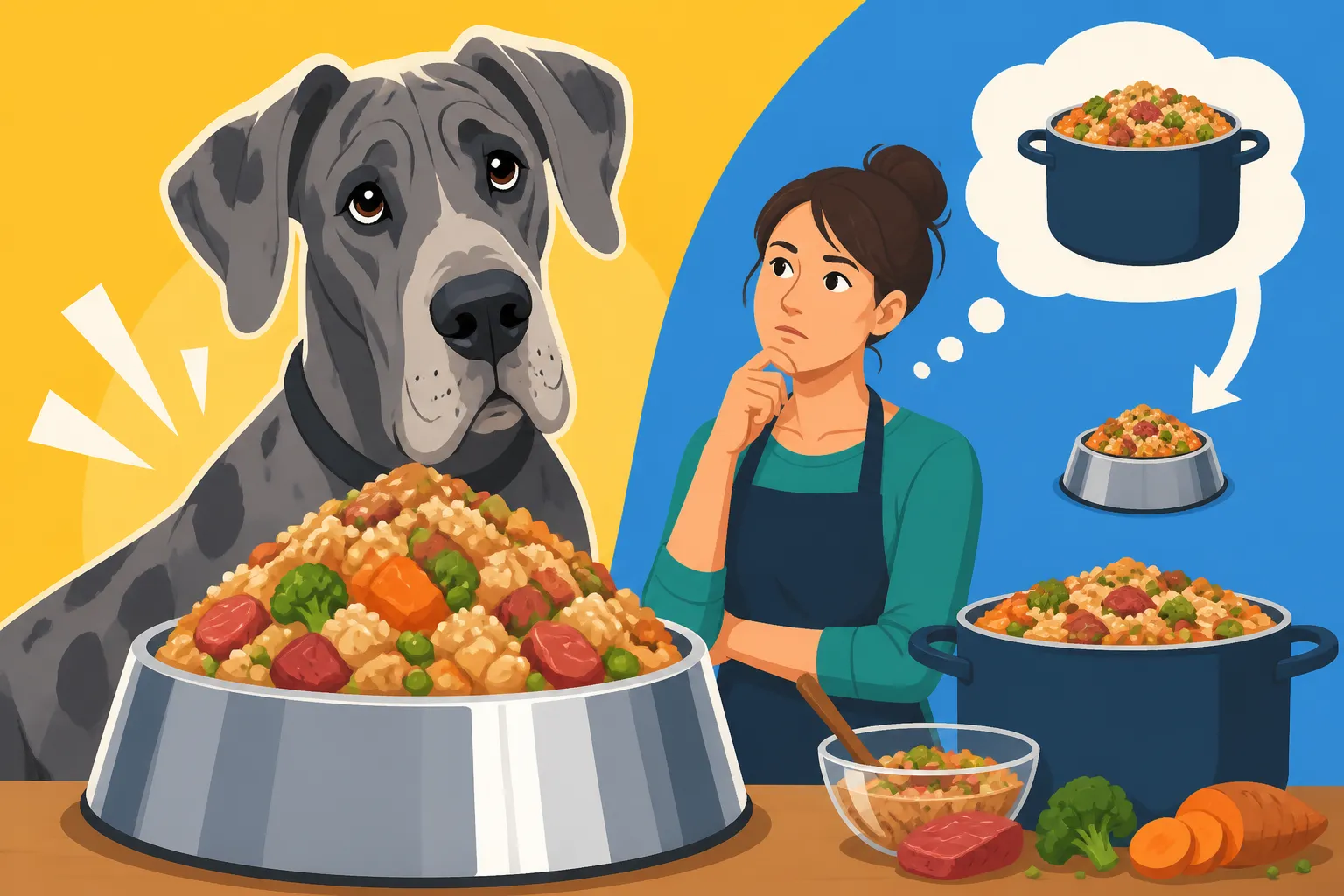
Cooking for a Great Dane and the Volume Problem
We all want the absolute best for our beloved Great Danes, and often that leads us to wonder if we should be preparing their meals right in our own kitchens. The idea of serving up fresh, wholesome food sounds wonderful, doesn't it? But then reality hits: the sheer size of a Great Dane means a monumental "volume problem" when it comes to home-cooked meals. This guide is here to walk you through the immense undertaking of cooking for a giant breed, tackling the practical challenges, nutritional considerations, and honest truths about making it work.
The Sheer Scale of Feeding a Great Dane
When you look at your magnificent Great Dane, it's easy to forget just how much sustenance their enormous bodies demand. This isn't like cooking for a Chihuahua where a chicken breast and a spoonful of veggies suffice. We're talking about feeding a dog that can easily outweigh an adult human, and their dietary needs scale up dramatically.
Understanding Their Daily Calorie and Nutrient Needs
Great Danes, especially during their intense growth phase, require a precise balance of calories, protein, fats, vitamins, and minerals to support their rapid development without causing undue stress on their bones and joints. A typical adult Great Dane might consume anywhere from six to ten cups of high-quality kibble daily, depending on their activity level, age, and metabolism. Translating that into home-cooked food means dealing with an incredible amount of raw ingredients each day. Imagine cooking a full meal, sometimes twice a day, that rivals the portion size of a human family's dinner – but it's all for one dog. The Calorie Load a Great Dane Actually Needs is far greater than many first-time giant breed owners anticipate, and guessing at it can lead to problems. Their larger muscle mass and overall body weight mean higher energy expenditure, even if they appear to be couch potatoes.
Moreover, the nutritional profile isn't just about raw quantity; it's about density and correct ratios. Great Dane puppies, for example, have very specific requirements for calcium and phosphorus to support healthy bone growth, and an imbalance can lead to serious orthopedic issues. For an adult Dane, adequate protein is crucial for maintaining muscle mass, while healthy fats provide concentrated energy and support skin and coat health. Skipping crucial micronutrients because you're simply boiling chicken and rice might seem like a healthy alternative, but it can quickly lead to deficiencies that manifest as serious health problems down the line. It's a delicate dance between providing enough and providing the right kind of nutrition.
The Practicalities of Sourcing and Storage
The "volume problem" truly hits home when you consider the logistics of buying, preparing, and storing ingredients. Sourcing meat, vegetables, and grains in quantities large enough to last your Great Dane even a few days can be a challenge. You might find yourself making weekly trips to bulk stores, local farmers' markets, or even connecting with butchers directly to purchase cuts in larger, more economical quantities. Retailers like Amazon and Chewy offer some bulk dry goods, but fresh meat and produce are a different story. Planning your shopping list suddenly becomes a strategic operation, not just a casual stroll through the grocery store aisles.
Once you have all those ingredients, where do you put them? A single week's worth of cooked meals for a Great Dane can easily fill a standard-sized refrigerator, and often requires significant freezer space if you're batch cooking. We're talking about multiple large containers of cooked meat, several pounds of chopped vegetables, and substantial portions of grains. This demands serious consideration of your kitchen's capacity. Beyond storage, the prep itself is a huge time commitment. Imagine spending hours chopping, cooking, and mixing ingredients, only to repeat the process a few days later. It's not just a labor of love; it's a labor-intensive commitment that requires dedicated kitchen time and ample counter space.
Nutritional Balance: More Than Just 'Food'
It's tempting to think that if you're feeding your Great Dane "real food," it must be better than kibble. While the intention is wonderful, the reality of achieving a nutritionally complete and balanced diet for such a large and unique breed is far more complex than many realize. There's a science to canine nutrition, and giant breeds have their own specific quirks that need careful attention.
The Dangers of Unbalanced Home-Cooked Diets
One of the biggest pitfalls of home-cooked diets is the risk of nutritional deficiencies or excesses. Simply feeding cooked chicken, rice, and a few vegetables, while seemingly healthy, often lacks the complete spectrum of vitamins, minerals, and trace elements a Great Dane needs. Common deficiencies include calcium, phosphorus (or an incorrect calcium-to-phosphorus ratio), Vitamin D, Vitamin A, zinc, and other crucial micronutrients. For a growing Great Dane puppy, these imbalances can be catastrophic, leading to orthopedic conditions like hypertrophic osteodystrophy (HOD) or panosteitis. Growth Disorders in a Great Dane Puppy are often linked to improper nutrition, specifically uncontrolled calcium intake or imbalanced nutrient profiles in rapidly growing giant breeds.
An adult Great Dane on an unbalanced diet might develop long-term issues like bone density problems, weakened immune function, poor coat quality, or even organ damage over time. It's not about making a single meal perfect; it's about ensuring every meal, over months and years, contributes to a complete and balanced nutritional intake. Without careful formulation, a well-intentioned home-cooked diet can inadvertently cause more harm than a quality commercial kibble. The lack of specific essential amino acids, fatty acids, or the wrong ratios of macro- and micronutrients can lead to insidious health problems that may not be apparent until they've become serious.
Working with a Veterinary Nutritionist
Given the complexities, the safest and most recommended route for anyone seriously considering a home-cooked diet for their Great Dane is to consult with a board-certified veterinary nutritionist. These professionals have specialized training in animal nutrition and can formulate personalized recipes tailored to your dog's specific age, weight, activity level, and any existing health conditions. They consider the raw ingredients you plan to use and meticulously calculate the precise amounts of each nutrient, often recommending specific supplements to ensure complete balance.
A veterinary nutritionist will typically take a detailed history of your Great Dane, including their current diet, medical records, and your goals for home cooking. They can then create several recipes for you, often with different protein and carbohydrate sources to provide variety. This service does come with a cost, but it's an investment in your dog's long-term health and peace of mind. Without their expertise, you're essentially guessing, and with a giant breed whose lifespan is already Why a Great Dane Only Lives Seven to Ten Years, you want to ensure every factor, especially nutrition, is optimized. You can often find certified nutritionists through university veterinary teaching hospitals or via online directories.
DIY Home-Cooking: A Realistic Approach
So, you've decided to tackle home-cooking for your Great Dane, or at least explore it. It's certainly not for the faint of heart, but with the right strategy and realistic expectations, it can be a rewarding endeavor. The key is to approach it with organization and a clear understanding of the commitment involved.
Batch Cooking Strategies for Great Danes
To make home-cooking feasible for a Great Dane, batch cooking is non-negotiable. Trying to prepare a fresh meal every day or even every other day will quickly become overwhelming. The strategy involves dedicating a significant block of time, perhaps once or twice a week, to prepare all your dog's meals for the upcoming days. This means cooking large quantities of protein, grains, and vegetables simultaneously. Imagine having several large pots simmering on the stove, ovens roasting pans full of meat, and your counters covered in chopped produce.
You'll need substantial kitchen equipment: think commercial-sized stockpots, large baking sheets, powerful food processors to handle big batches of vegetables, and ample storage containers. My friends who cook for their Danes often describe their kitchens looking like a small commissary once a week! After everything is cooked and cooled, you'll need to portion it out into individual meal sizes, which can then be refrigerated for a few days or frozen for longer storage. This systematic approach, while demanding on prep day, frees up your daily routine significantly, allowing you to simply scoop and serve balanced meals without daily fuss.
Supplementing for Completeness
Even with a well-formulated recipe from a nutritionist, it's highly probable you'll need to incorporate specific supplements to ensure your Great Dane's home-cooked diet is truly complete. It's incredibly difficult to hit every single micronutrient target using only whole food ingredients, especially when you consider the nuances of giant breed requirements. These supplements often come in powdered form and are added to the cooked food at the time of feeding.
It’s crucial to use supplements specifically designed for dogs and to follow the guidance of your vet or nutritionist precisely. For instance, while some human supplements might seem appropriate, the ratios and forms of nutrients can differ significantly and even be harmful. Remember Why Calcium Supplements Damage a Great Dane? Too much or too little calcium, or an improper ratio with phosphorus, can be detrimental to their skeletal health. These supplements bridge the gap, providing essential vitamins, trace minerals, and sometimes additional fatty acids like omega-3s, which are vital for joint health and inflammation management. Choosing high-quality, reputable brands for these supplements is just as important as the food itself.
Integrating Commercial Options for Convenience
Let's be real: 100% home-cooked, nutritionally complete meals for a Great Dane, day in and day out, can be an immense undertaking. Many owners find a hybrid approach to be more sustainable. This might involve using a high-quality commercial kibble as the base of their diet, and then supplementing it with specific home-cooked additions like cooked lean meats, certain vegetables, or healthy oils. This can boost palatability and add variety without the full burden of meal formulation.
Alternatively, some Great Dane owners opt for commercially prepared "fresh food" services that deliver pre-portioned, balanced meals. Brands like Ollie, for example, offer human-grade fresh food options that are formulated by veterinary nutritionists. While these options tend to be more expensive than kibble, they eliminate the prep and formulation burden. Other online retailers like Chewy also offer a wide array of fresh, frozen, and dehydrated raw food options that can complement or form the bulk of a Great Dane's diet, offering a middle ground between full DIY and traditional kibble. It's about finding what fits your lifestyle, budget, and ensures your giant companion is getting the best nutrition possible, even if it's not all from scratch. Whether Any Fresh Food Company Serves a Great Dane is a question many owners ponder, and thankfully, options are growing.
Common Challenges and Solutions
Embarking on a home-cooked diet journey for a Great Dane comes with its own unique set of hurdles. It's important to anticipate these challenges and have strategies in place to overcome them, ensuring both your sanity and your dog's well-being.
Time Commitment and Cost Considerations
The time commitment for home-cooking a Great Dane's food cannot be overstated. Beyond the dedicated batch cooking sessions, there's the shopping, the cleanup, and the daily portioning. If you have a busy work schedule or other family commitments, carving out this time can be a significant challenge. This is where a clear schedule and family involvement become crucial. Some families designate one person as the "dog chef" for the week, while others divide tasks, making it a shared responsibility.
Financially, cooking for a Great Dane can sometimes be comparable to, or even more expensive than, feeding premium kibble. While buying ingredients in bulk can help, the sheer volume of meat, vegetables, and often higher-quality, human-grade components adds up. Monthly Food Spending on a Great Dane is already a significant line item in a typical budget, and home-cooking can push it higher. You might save on processed fillers, but you're investing in raw ingredients, and potentially specialist supplements. This is why careful budgeting and weighing the pros and cons against commercially available options (like high-quality kibble or fresh-delivered meals) is essential. For many, the cost analysis of Raw Feeding at Great Dane Volume versus home-cooking versus kibble is an ongoing debate, and it really comes down to individual priorities and resources.
Picky Eaters and Recipe Rotation
Just like humans, Great Danes can develop preferences, and sometimes even become picky eaters. Imagine spending hours preparing a huge batch of food, only for your Dane to turn their nose up at it! This can be incredibly frustrating. One solution is to have a few different nutritionally balanced recipes on rotation, using varying protein and carbohydrate sources, to keep things interesting. If your dog gets bored of chicken and rice, maybe a beef and sweet potato recipe will hit the spot next time.
For a truly picky eater, a few tricks can help. Warming the food slightly can enhance its aroma and appeal. Adding a dollop of plain yogurt, a little low-sodium bone broth, or a sprinkle of a favorite high-value treat can sometimes entice them to eat. If your Great Dane is consistently refusing food, especially if it's a new diet, it's always best to consult your vet to rule out any underlying health issues. A Great Dane Puppy That Refuses Food can be particularly concerning due to their rapid growth needs, so vigilance is key. It's a balance of encouraging them to eat what's good for them without reinforcing overly picky behavior.
Traveler's Dilemmas
Maintaining a home-cooked diet when you're traveling, boarding your Great Dane, or if an emergency arises, presents another layer of complexity. You can't exactly pack an entire week's worth of frozen food for a road trip without a serious cooler and constant re-icing. And what about boarding kennels? Many are not equipped to handle custom fresh diets or don't allow outside food due to facility policies or the risk of cross-contamination.
Solutions involve planning ahead. For short trips, you might pre-portion and freeze meals, bringing a travel-sized cooler. For longer trips or boarding, consider temporarily transitioning your Great Dane back to a high-quality commercial kibble that they tolerate well. This requires introducing the kibble gradually before the trip to avoid stomach upset. You'll need to communicate clearly with any pet sitter or boarding facility about their diet and any specific feeding instructions. Some fresh food delivery services offer travel packs or smaller portions, which could be an option if your dog is accustomed to them. Flexibility and preparation are your best friends when juggling a Great Dane's home-cooked diet with life's unpredictable moments.
Disclaimer
This article is for general informational purposes only and does not constitute professional advice. Laws, prices and regulations vary by location and change over time. Consult a qualified professional for guidance on your specific situation.