Changing a Great Dane’s Food Gradually
One of the most common worries Great Dane owners face, beyond the obvious health concerns, is how to manage their giant's incredibly sensitive digestive system. Suddenly swapping out their regular kibble for a new brand can quickly lead to a stomach rebellion, leaving you with unpleasant messes and a very uncomfortable pup. This guide is all about how to smoothly transition your Great Dane to a new food, helping you avoid tummy troubles and ensure their continued health and happiness.
Why a Gradual Food Transition is Essential for Great Danes
It's tempting, when you've just bought that fancy new bag of kibble, to just pour it into their bowl. But for a Great Dane, that's almost always a recipe for disaster. Their digestive systems, while robust in many ways, are surprisingly delicate when it comes to sudden dietary changes. Ignoring this can lead to a whole host of problems, from mild discomfort to more serious issues.
Understanding Your Great Dane's Sensitive Digestive System
Great Danes aren't like some other breeds that can handle a quick food swap with barely a burp. Their gastrointestinal tracts are often more sensitive, needing time to adjust to new proteins, fats, and fiber levels. Think of it like a finely tuned machine – you wouldn't just throw a different kind of fuel in without slowly acclimating it. The microorganisms in their gut, which are crucial for digestion, need time to adapt to the new ingredients. A sudden influx of unfamiliar food can disrupt this delicate balance, leading to an overgrowth of certain bacteria or an inability to properly break down nutrients. This is why you often see signs like loose stools, gas, or even vomiting. It's their body saying, "Whoa there, slow down!"
The Link Between Food Changes and Bloat Risk
This is the big one, the concern that keeps many Great Dane owners up at night. While a direct, scientifically proven link between sudden food changes and bloat (Gastric Dilatation and Volvulus, or GDV) is still debated, any significant digestive upset can be a stressor on their system. Bloat is a terrifying condition where the stomach fills with gas and can then twist, becoming a life-threatening emergency. Rapid consumption of food, excessive gas production, and stress on the gastrointestinal tract are all factors that can contribute to bloat risk. While a slow food transition won't eliminate the risk of bloat entirely, minimizing any digestive upset is always a smart move. The Lifetime Bloat Risk in a Great Dane is something every owner should understand, and taking steps like a gradual food change helps mitigate potential triggers.
Avoiding Nutrient Imbalances and Deficiencies
When you switch food too quickly, especially from a carefully formulated puppy or adult diet to something new, there's a risk your Dane isn't absorbing all the nutrients they need. Their system might struggle to break down the new ingredients efficiently, meaning essential vitamins, minerals, and amino acids could be passing right through them. This isn't usually a long-term issue if the transition is only for a few days, but prolonged digestive upset can lead to temporary deficiencies, impacting their energy levels, coat health, and overall well-being. Ensuring a smooth transition means their body has the best chance to properly utilize all the goodness in their new diet.
The Step-by-Step Process for a Smooth Food Transition
So, you've decided on a new food for your Great Dane. Maybe you're switching to a senior formula as they get older, or perhaps you're trying a different brand. The key is patience and a structured approach. This isn't a race; it's a marathon, and taking your time will pay off in a happy, healthy Dane and a cleaner home.
Choosing the Right New Food for Your Great Dane
Before you even start the transition, make sure you've picked a food that's appropriate for your Great Dane's age, activity level, and any specific health needs. If you're looking for The Calorie Load a Great Dane Actually Needs, ensure the new food aligns with those requirements. Look for large breed formulas, especially for puppies, to support their unique growth needs. Read ingredient labels carefully – ideally, you want a high-quality protein source as the first ingredient, and appropriate fat and fiber content. Brands available on platforms like Chewy or Amazon often provide detailed nutritional information, and you can also check out specialty fresh food services like Ollie if you're exploring different options. Don't be afraid to talk to your vet about recommendations; they know your dog best.
Implementing the 7-10 Day Transition Schedule
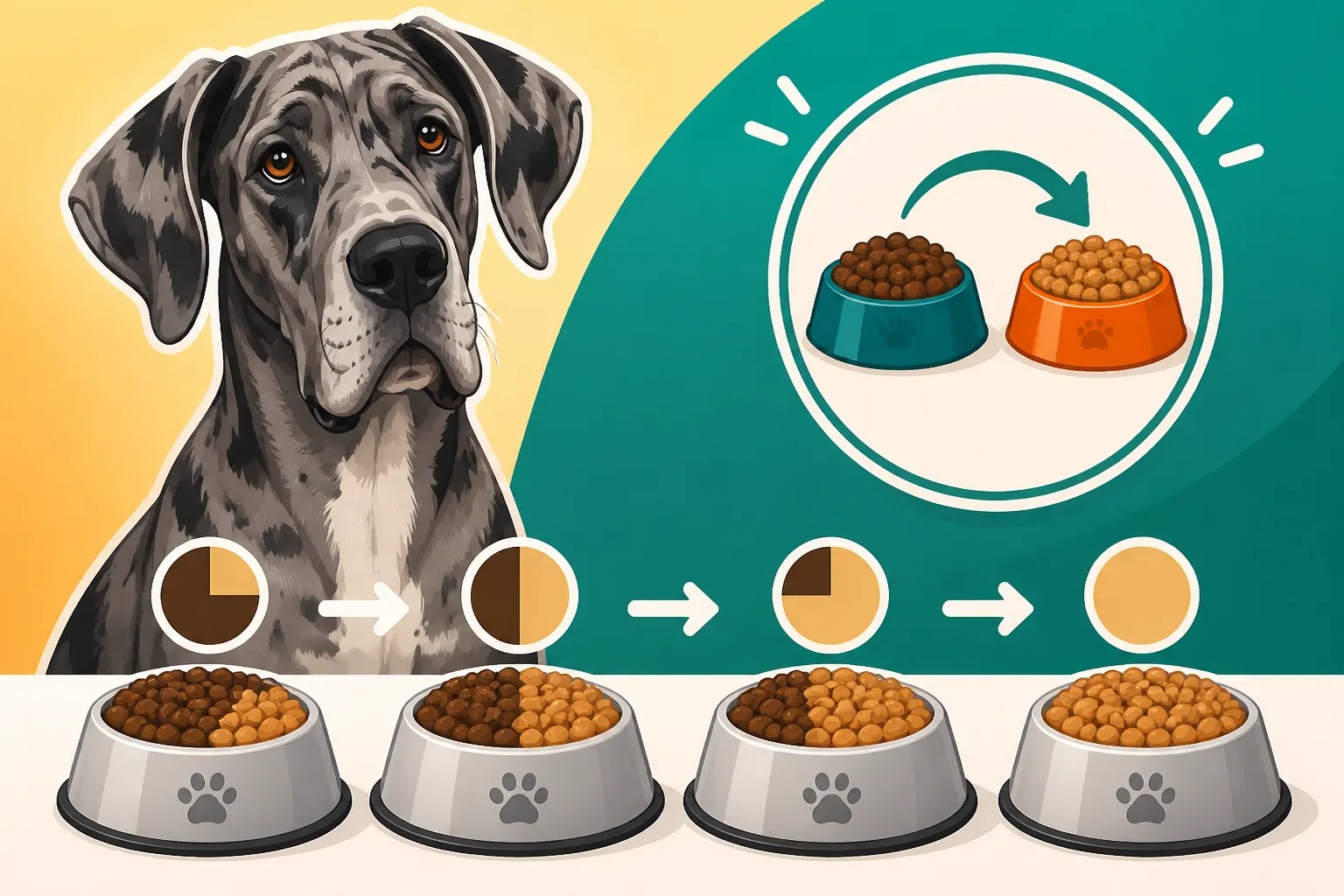
This is the golden rule for switching dog food. A slow, gradual introduction allows your Great Dane's digestive enzymes and gut bacteria to adjust to the new ingredients without becoming overwhelmed. For most Danes, a 7 to 10-day schedule works best, but some particularly sensitive dogs might need two weeks or even more. The idea is to slowly replace their old food with increasing amounts of the new food, as shown in the table below.
| Day | Old Food Percentage | New Food Percentage | Notes |
|---|---|---|---|
| 1-2 | 75% | 25% | Introduce a small amount of new food, monitor for any changes. |
| 3-4 | 50% | 50% | Equal parts old and new. Watch stool consistency and energy levels. |
| 5-6 | 25% | 75% | Mostly new food now. Any minor upset should be resolving. |
| 7+ | 0% | 100% | Full switch. Continue monitoring for a few more days. |
Always make sure you're measuring accurately. You can use a kitchen scale or consistent measuring cups. If your Dane typically eats Six to Ten Cups a day, ensure the total volume remains consistent throughout the transition. Remember that Splitting a Great Dane's Meals in Two or even three smaller meals can also aid digestion and potentially reduce bloat risk, regardless of the food being new or old.
Monitoring Your Dane's Response During the Switch
During this transition period, become a super sleuth of your Great Dane's bodily functions. Pay close attention to their stool: is it firm and well-formed, or is it getting softer, perhaps even liquidy? Are they straining, or showing signs of discomfort when going to the bathroom? Also, notice any changes in gas production – a little extra flatulence is common, but excessive, foul-smelling gas could indicate issues. Beyond the obvious, watch their energy levels, appetite, and general demeanor. A normally enthusiastic eater suddenly turning up their nose at mealtime could be a sign of digestive upset. If you notice a particular problem, don't hesitate to slow down the transition or even revert to the previous step for a day or two. Remember, this process is flexible and should be adapted to your individual dog.
What to Watch For During the Transition
Even with the most careful approach, your Great Dane might show some signs of adjustment. It's crucial to know what's normal and when to be concerned. Catching minor issues early can prevent them from escalating and ensure your Dane stays comfortable and healthy.
Common Digestive Upset Signs to Observe
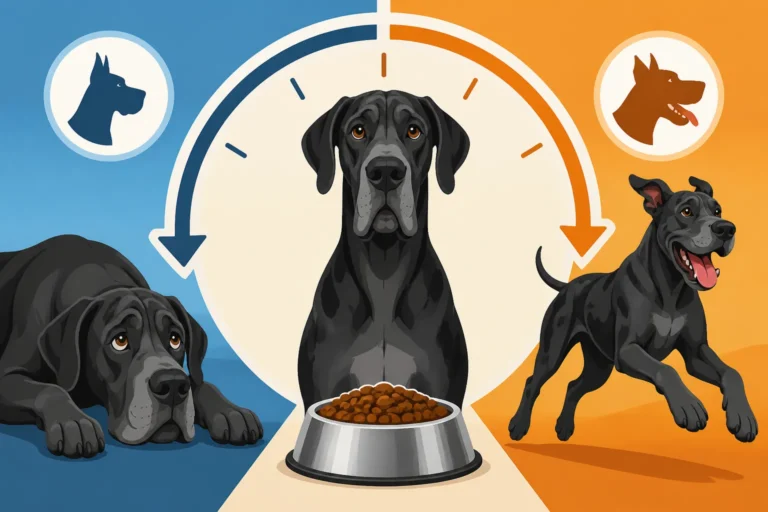
As your Great Dane adjusts to a new diet, it's not uncommon to see some mild signs of digestive upset. The most frequent culprits are loose stools or a slightly softer consistency than usual. You might also notice a bit more gas, which, let's be honest, can be quite noticeable with a giant breed! Some Danes might experience a mild decrease in appetite for a day or two as they get used to the new taste and texture, or they might seem a little more prone to throwing up bile if their stomach is empty or irritated. Pay attention to how long these symptoms last. A day or two of slightly soft stool isn't usually cause for panic, but persistent diarrhea or repeated vomiting absolutely warrants closer attention. If you notice A Great Dane That Cannot Keep Kibble Down, especially if it's accompanied by other symptoms, it's a sign to slow down.
Behavioral Changes to Look Out For
Sometimes, digestive upset can manifest in subtle behavioral changes. A Great Dane feeling uncomfortable might be less playful or more lethargic than usual. They might seem restless, constantly shifting positions, or having trouble settling down. Some dogs become a bit more clingy or seek out extra comfort, while others might become a little withdrawn. You might also notice changes in their Water Intake for a Great Dane; if they're drinking significantly more or less than usual, it could be a symptom. Keep an eye on their energy levels during walks and playtime. If your normally energetic Dane seems less keen on their usual activities, it's worth considering if their tummy is bothering them. These behavioral cues are often your Dane's way of telling you something isn't quite right, even if there aren't obvious physical symptoms yet.
When to Consult Your Veterinarian
While minor symptoms are common, there are definitely red flags that mean it's time to call your vet. If your Great Dane experiences severe diarrhea (especially if it contains blood or mucus), frequent vomiting, or seems to be in significant pain or distress, don't wait. Extreme lethargy, refusal to eat or drink for more than 24 hours, or any signs that resemble bloat – like a distended abdomen, pacing, excessive drooling, or unproductive retching – are emergencies. If you're ever worried about Bloat in a Great Dane and the One in Three Odds, consult your vet immediately. Even if the symptoms are less severe but persist for more than a few days despite slowing down the transition, a vet visit is a good idea. They can rule out underlying health issues and offer guidance or prescribe medication to ease the transition for your sensitive Dane.
Troubleshooting Common Transition Issues
Sometimes, even with the best intentions and a gradual schedule, things don't go perfectly. Don't get discouraged! There are steps you can take to address common problems and help your Great Dane adjust more comfortably.
Slowing Down the Transition Even Further
If your Great Dane is showing significant signs of digestive upset, the first and easiest step is to simply slow down the process. Instead of a 7-day schedule, stretch it out to 10, 14, or even 21 days. This might mean staying at the 75% old food / 25% new food ratio for 3-4 days instead of 1-2, or even going back a step if symptoms are severe. For example, if you moved to 50/50 and your Dane developed loose stools, revert to 75/25 for another few days until things firm up, then slowly try to increase the new food again. There's no prize for finishing fastest; the goal is a smooth transition for your dog. Remember, every Great Dane is an individual, and some just need more time than others. Patience is truly a virtue here.
Introducing Probiotics and Digestive Aids
Sometimes, a little extra help can make all the difference. Probiotics, which introduce beneficial bacteria to the gut, can help rebalance your Great Dane's digestive system during a food change. You can find canine-specific probiotic supplements at pet supply stores like Chewy or on Amazon, or your vet might recommend a particular brand. Always check the dosage for a large breed like a Great Dane, as their size means they often need a higher amount. Digestive enzymes can also sometimes assist in breaking down new food components more efficiently. Discuss these options with your vet before introducing them, especially if your Dane has any existing health conditions. A little probiotic boost can often calm an unsettled tummy and make the transition much easier.
When to Revert or Try a Different Food Entirely
If, after extending the transition period and perhaps adding probiotics, your Great Dane is still experiencing significant or persistent digestive issues, it might be time to consider reverting to their old food or trying a different new food altogether. Sometimes, a specific ingredient in the new formula simply doesn't agree with your dog, or perhaps the protein source is too novel for their system. If you suspect this, go back to their previous food completely to stabilize their digestion. Once they are back to normal, you can then restart the search for a new food. This time, perhaps look for a formula with different primary ingredients or a limited ingredient diet if your vet suspects sensitivities. It's frustrating, and can feel like a step backward, but finding the right food is worth the effort for your Great Dane's long-term health and comfort. Checking Whether Grain-Free Kibble Belongs in a Dane Bowl or consulting about other specific dietary needs might be your next step.
Disclaimer
This article is for general informational purposes only and does not constitute professional advice. Laws, prices and regulations vary by location and change over time. Consult a qualified professional for guidance on your specific situation.