Nail Care on a Great Dane That Cannot Balance
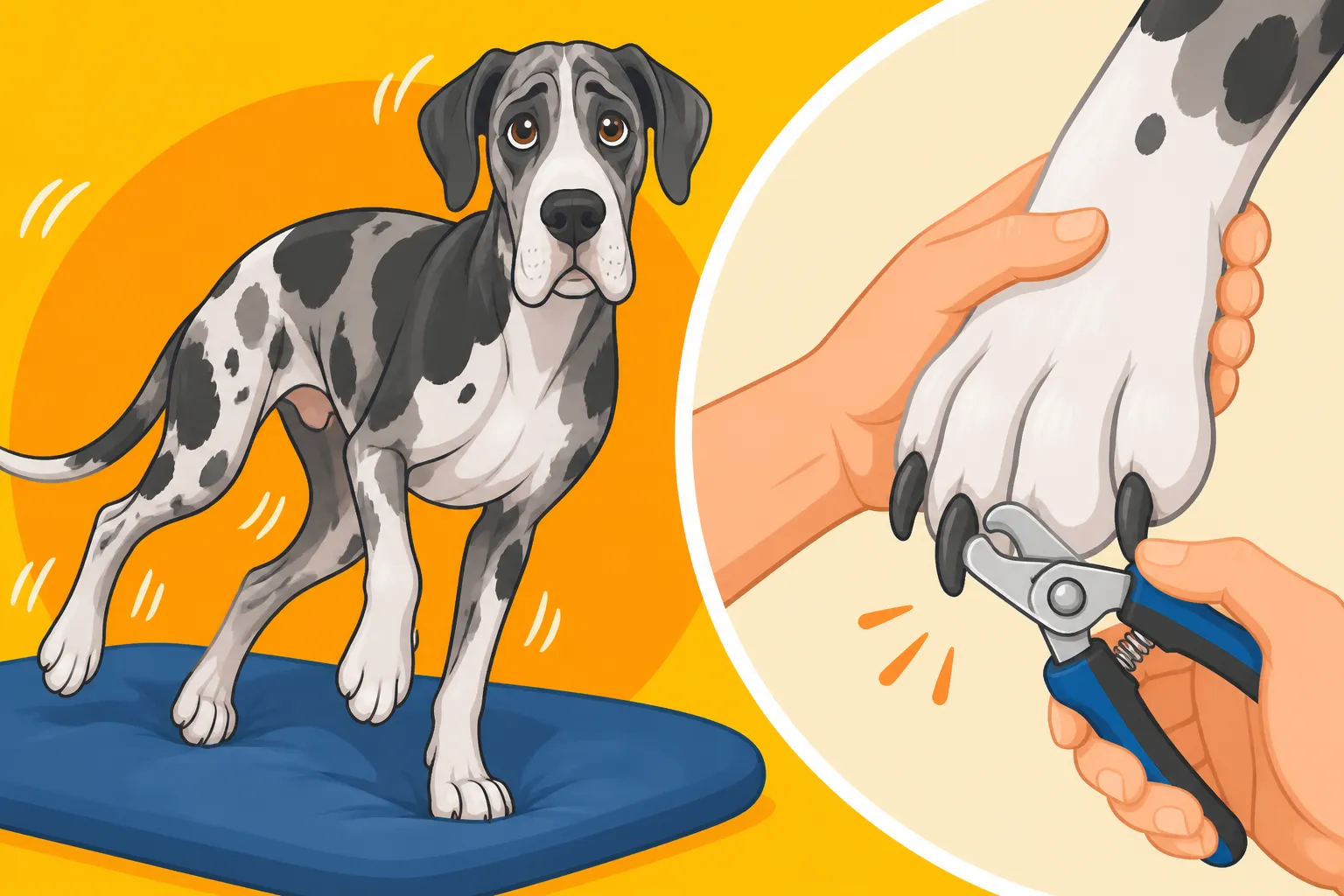
Trimming a Great Dane's nails can feel like an Olympic sport even when they're perfectly cooperative, but when your big, beautiful companion struggles with balance, it quickly becomes a daunting and often terrifying ordeal. The sheer size and weight of a Dane mean that an unsteady paw during a nail trim isn't just a minor wobble; it can lead to a fall for them, or even an injury for you. This guide is here to walk you through how to manage nail care for your Great Dane when balance is an issue, offering practical tips and empathetic understanding for a situation many large dog owners face.
Understanding Why Your Great Dane Might Struggle with Balance During Nail Care
Before we even touch a clipper or grinder, it's really important to understand why your Great Dane might be struggling to keep their footing. It's rarely just 'being difficult.' More often than not, there's a genuine reason behind their instability, and acknowledging that is the first step toward finding a kinder, more effective approach.
Common Causes of Instability in Great Danes
Great Danes are prone to certain health conditions and growth phases that can directly impact their balance and comfort during seemingly simple tasks like nail trims. Young Danes might just be inherently clumsy during their intense growth spurts. They're literally growing into their paws, and their coordination can lag behind their rapid physical development, making them feel a bit like Bambi on ice. It's a temporary phase, but it can be challenging.
For adult or senior Danes, the reasons can be more complex and require veterinary attention. Arthritis and joint pain are incredibly common in larger breeds as they age. Conditions like hip or elbow dysplasia, or general age-related arthritis, can make standing still or shifting weight onto three legs excruciating. Imagine trying to balance on one leg when your knees or hips ache – it's just not going to happen comfortably, or safely. If your senior Great Dane is struggling, they might be experiencing significant discomfort. You might notice them limping or moving stiffly in general, not just during nail trims. Arthritis in a Six-Year-Old Great Dane is a very real concern, and it can affect their willingness to stand.
Neurological issues, such as Wobbler Syndrome, can also manifest as significant instability. This condition, which affects the neck and spinal cord, can cause a Great Dane to stumble, appear uncoordinated, or even collapse. If you've ever seen a dog with Wobblers, their gait can be very distinctive, often with a "drunken sailor" sway in their hindquarters. Obviously, trying to trim nails on a dog with this kind of underlying issue is going to be incredibly difficult and risky. The Neck Condition That Trips a Great Dane Up often means their proprioception – their sense of where their body is in space – is compromised, making balancing a huge effort.
Finally, intense anxiety or fear of the nail trimming process itself can make a dog tense up, brace, or try to pull away, inadvertently throwing themselves off balance. If past experiences have been painful or scary, even a healthy Dane might exhibit resistance that looks like instability. Muscle weakness from lack of exercise, illness, or even prolonged recovery from surgery can also play a role, making holding still for any length of time a real challenge.
The Importance of Regular Nail Trims for Great Danes
It might feel like a battle every time, but keeping your Great Dane's nails trimmed is non-negotiable for their long-term health and comfort. When nails grow too long, they push the toes upwards, forcing the foot into an unnatural position. This constant pressure can put immense strain on the joints, leading to pain in the paws, hocks, stifles, and even up into the hips and spine. It's like walking in shoes that are too small and push your toes back constantly; it's uncomfortable and can cause damage over time.
Overgrown nails can also snag on carpets, furniture, or rough terrain, leading to painful tears or even avulsions (when the nail is ripped right off). These injuries are not only excruciating but often require veterinary attention, which means more stress for your Dane and more expense for you.
Proper nail length allows your Great Dane to walk with a natural, even gait, distributing their weight correctly. Long nails prevent their paw pads from making proper contact with the ground, reducing traction and potentially contributing to their balance issues even further. They can develop splay foot, where the toes spread apart, or other foot deformities that lead to chronic pain. The familiar clicking sound of nails on hard floors is actually a clear indicator that they're already too long. A well-maintained nail should ideally not touch the ground when your dog is standing normally. Getting a handle on Nail Length and How a Great Dane Stands is crucial for preventing these cascading issues.
Essential Preparations for Stress-Free Nail Trims
When your Great Dane struggles with balance, preparation isn't just helpful; it's absolutely critical. Going into a nail trim session unprepared is a recipe for disaster, potentially reinforcing negative associations and making future trims even harder. Thinking through your setup, tools, and support system beforehand can make a world of difference.
Creating a Safe and Supportive Environment
The environment where you attempt nail trims needs to be as stress-free and secure as possible. The floor surface is paramount for a balance-challenged Dane. Hardwood, tile, or laminate floors are notoriously slippery and will only exacerbate their instability. Lay down yoga mats, non-slip bath mats, or a thick carpeted runner. Even doing the trim outdoors on a patch of grass or a textured concrete patio can offer better grip. The goal is to give them maximum traction and confidence underfoot.
Ensure the area is well-lit so you can clearly see the nails and, crucially, the quick (the pink part containing nerves and blood vessels). Good lighting minimizes the risk of accidental nicks, which can set back all your progress. Minimize distractions: turn off the TV, put away noisy toys, and ask other family members or pets to give you space. A calm, quiet atmosphere will help keep your Dane more relaxed.
Consider their comfort as well. If your Dane is more comfortable lying down for parts of the trim, ensure they have a soft, supportive surface. A large, orthopedic dog bed can be a game-changer. These beds provide excellent cushioning for joints and can help them feel more secure while you manipulate their paws. Many owners find robust, high-quality orthopedic beds from places like Chewy or Amazon. A good quality bed is also essential for general comfort and joint health, as detailed in Beds That Cushion a Great Dane's Joints.
Choosing the Right Tools for Great Dane Nails
Great Danes have substantial, often thick nails that require robust tools. Your average small dog clipper simply won't cut it, literally. You'll need heavy-duty clippers designed for large breeds. There are two main types:
- Scissor-style clippers: These resemble scissors and provide good leverage. Many people find them easier to handle and more precise for very thick nails. Brands like Safari or Resco make excellent heavy-duty versions.
- Guillotine-style clippers: These have a small hole you insert the nail into, and a blade slides across to cut. While popular for smaller dogs, finding a guillotine clipper strong enough and large enough for a Great Dane's thick nails can be a challenge. Ensure it's explicitly designed for giant breeds.
Alternatively, a rotary grinder (like a Dremel-style tool) can be an excellent option, especially for anxious dogs or those with black nails where the quick is hard to see. Grinders file the nail down gradually, reducing the risk of cutting too deep. The downsides are the noise and vibration, which can initially be scary for some dogs, and the potential for heat buildup if you don't use it correctly (short bursts). Many professional groomers prefer grinders for giant breeds because they allow for more control and a smoother finish.
No matter which tool you choose, styptic powder is a non-negotiable item to have on hand. Even the most careful owner can nick the quick, especially with black nails. Styptic powder instantly stops the bleeding and helps soothe the area. Keep it close by! High-value treats are also crucial. These are the "payment" for their cooperation and help create a positive association with the process. Think cheese, cooked chicken, or peanut butter.
Enlisting Help and Utilizing Support Devices
Trying to trim a balance-challenged Great Dane's nails alone is incredibly difficult, often impossible. Don't be a hero; enlist help! A second person can be invaluable. One person can gently hold, steady, and distract the dog, offering continuous treats and praise, while the other focuses on the nail trimming. This division of labor reduces stress for everyone.
For Danes with hind-end weakness or severe balance issues, specialized support devices can be a godsend. A simple towel sling looped under their belly can provide significant support, allowing them to bear less weight on their wobbly legs. More advanced Mobility Aids for a Failing Great Dane like proper harnesses with handles can offer a more secure grip and better distribution of support. Some people even use dedicated grooming slings or hammocks, where the dog's body is partially suspended, taking pressure off their legs. These can be very effective for ensuring stability, but they require careful setup and introduction to avoid frightening your dog. They also need to be appropriately sized for a Great Dane – no small feat!
For Danes who might try to snap or mouth out of fear or pain, a well-fitted muzzle is a safety tool, not a punishment. It protects you and allows you to focus on the task without fear of being bitten. Introduce it positively with treats and practice wearing it for short periods before the actual trim.
Step-by-Step Guide to Trimming Nails on a Balance-Challenged Great Dane
Alright, you've assessed the situation, gathered your tools, and maybe even recruited a helper. Now it's time to actually tackle those nails. Remember, the key here is patience, positivity, and prioritizing your Great Dane's comfort and safety above all else. This isn't about getting a perfect trim in one go; it's about making progress without trauma.
Gentle Positioning and Handling Techniques
How you position your Great Dane can make a huge difference. Avoid forcing them into uncomfortable or unstable positions.
- Lying Down: For many Danes, especially those with severe joint pain or anxiety, lying on their side can be the most stable and least stressful option. Encourage them to lie down on their orthopedic bed or a soft rug. One person can sit behind them, offering gentle reassurance and treats, while the other works on the paws. This removes the balance challenge entirely for that moment.
- Leaning Support: If standing is necessary, position your Dane so they can lean against a sturdy wall, a sofa, or even a willing human. This provides an external point of stability. For instance, you could stand directly in front of them, with their chest gently pressed against your legs, providing forward support, while your helper works on the back paws, or vice versa.
- Focused Support: When working on a paw, gently cup the paw in your hand, supporting the joint you're manipulating. Avoid twisting or pulling at awkward angles, which can cause pain or further instability. The goal is to make them feel secure, not like their limb is being yanked around.
- Breaks are Your Friend: Don't try to do all four paws, or even all nails on one paw, in a single session if your Dane is struggling. Do one or two nails, offer a huge reward, and then take a break. You can pick up where you left off later that day or the next. Small, frequent sessions are far better than a single, marathon ordeal that leaves everyone exhausted and stressed. This is especially true if you have a Great Dane that makes Trimming Nails a Great Dane Will Not Give You a challenge.
The Art of the Trim: Clippers vs. Grinders
Whether you're using clippers or a grinder, the fundamental principle is the same: take off small amounts at a time.
Using Clippers:
- Hold the Paw Securely: Gently hold the paw, extending the nail forward. Make sure your Great Dane feels steady.
- Identify the Quick: On clear or white nails, you'll see the pink quick. On black nails, it's trickier. Look at the underside of the nail; you'll see a small, darker spot that indicates the quick. The nail will also typically look "drier" and chalkier towards the tip, then become denser and shinier closer to the quick.
- Small Nips: Take tiny, thin slices off the very tip of the nail. Think "shaving" rather than "cutting." After each tiny cut, look at the exposed end of the nail. If you see a light grey or white center, keep going. Once you start to see a tiny dark dot or "bullseye" in the center, stop. That's the beginning of the quick.
- Angle: For most dogs, aim to cut at a slight angle, following the natural curve of the nail.
- Immediate Praise and Treat: After each successful trim (even one nail!), lavish praise and offer a high-value treat.
Using Grinders:
- Introduction: If your Dane is new to grinding, introduce the tool slowly. Let them sniff it, turn it on nearby (but not touching them) to get them used to the sound, and give treats.
- Short Bursts: Touch the grinder to the tip of the nail for just a second or two, then pull away. This prevents heat buildup, which can be uncomfortable or even painful.
- Round the Edges: Grinders are excellent for rounding off sharp edges left by clippers, or for gently shortening the entire nail.
- Black Nails: For black nails, a grinder is often safer as you can gradually expose the quick without the suddenness of a clipper. Again, look for the 'bullseye' as you grind.
- Treats, Treats, Treats: Just like with clippers, constant positive reinforcement is key.
Remember to be calm and confident. Your Great Dane picks up on your emotions. If you're stressed, they'll be stressed. Deep breaths for both of you!
Making it a Positive Experience (Even When It's Tough)
Transforming nail care from a dreaded chore into something tolerable, or even mildly positive, requires consistent effort and a lot of empathy.
- Consistency is Key: Short, frequent sessions (even just grinding one nail per day) are far more effective than trying to do everything at once every few weeks. This prevents nails from getting excessively long and builds positive associations gradually.
- Pairing with Pleasure: Always follow nail care with something your Dane absolutely loves. A walk, a game of fetch, a special chew toy (you can find these on Chewy or Amazon), or a lick mat smeared with peanut butter or a bit of their favorite fresh food, like from Ollie. The idea is to make the good stuff immediately follow the less-than-good stuff.
- Desensitization and Counter-Conditioning: This involves slowly getting your Dane used to the tools and handling. Start by just touching their paws without any tools, giving treats. Then, introduce the clippers/grinder (without actually trimming) and give treats. Progress to touching the tools to their nails (still no trim), followed by treats. Gradually, you'll work up to actual trimming, always pairing it with positive reinforcement.
- Knowing When to Stop: If your Dane is showing signs of extreme stress, aggression, or pain (excessive panting, yawning, lip-licking, whale eye, growling, yelping), stop immediately. Pushing through will only worsen their fear and make future sessions harder. Sometimes, calling it a day and trying again when everyone is refreshed is the best strategy.
- Professional Intervention: Don't hesitate to seek professional help if you're truly struggling. A professional groomer experienced with giant breeds might have techniques you haven't considered, or your veterinarian might offer sedated nail trims if anxiety or pain is severe. This is often an option when you need to perform other procedures that require sedation, like Sedating a Great Dane for a Dental, and you can often bundle nail care into that visit.
When to Seek Professional Help and Alternative Solutions
It's important to recognize your limits, both for your sanity and your Great Dane's well-being. There's absolutely no shame in admitting that some tasks are just too big or too stressful to handle on your own, especially when dealing with a giant breed with specific challenges.
Recognizing When You Need a Professional Groomer or Vet
If your attempts at nail trimming are consistently met with extreme resistance, fear, or aggression from your Great Dane, it's time to call in the cavalry. If you feel you might injure your dog or yourself, a professional is your best bet. Severely overgrown nails, especially if they're curling into the paw pads or causing splay foot, often require a more experienced hand to address safely and effectively. These cases can be painful to correct, and a vet might even suggest light sedation to make the process humane.
For Danes with complex health issues, like advanced Wobbler Syndrome, severe arthritis, or other mobility challenges, a professional groomer or veterinary technician often has specialized equipment and techniques. They might have a lifting table, or a specific way of supporting a dog that you don't have access to at home. Caring for a Great Dane Past Six often means a shift in approach for all routine care, including nails, as their bodies change. A professional will be adept at working around pain points and making the experience as swift and low-stress as possible.
In cases of extreme anxiety or pain, your veterinarian can perform what's called a "sedated nail trim." This isn't something to do every week, but for a desperately overdue trim that's causing your dog discomfort or risking injury, it can be a humane solution. It ensures your Great Dane isn't traumatized, and the nails can be cut back to a more manageable length, giving you a fresh start for a positive reinforcement training approach at home.
Discussing Underlying Health Issues with Your Vet
Remember, your Great Dane's balance issues aren't just an inconvenience; they might be a symptom of a deeper, underlying health concern. If your dog has recently developed instability, or if their balance has worsened, it's crucial to have a conversation with your veterinarian. They can conduct a thorough examination to rule out or diagnose conditions like arthritis, hip/elbow dysplasia, intervertebral disc disease, or neurological disorders. The Neck Condition That Trips a Great Dane Up is a serious condition that requires veterinary diagnosis and management, and early intervention can make a significant difference.
Depending on the diagnosis, your vet might recommend medication to manage pain or inflammation, supplements to support joint health, or even physical therapy to improve strength and coordination. Addressing the root cause of the balance problem could make future nail trims much easier and more comfortable for your Dane. They might also suggest specific Mobility Aids for a Failing Great Dane to assist them in daily life, which can also be leveraged during grooming. Sometimes, improving their general comfort and stability outside of grooming sessions naturally translates to better cooperation during trims.
Regular vet check-ups are always important, but they become even more critical when a giant breed like a Great Dane starts showing signs of mobility or balance issues. Don't let nail trimming be the only indicator; a complete health picture is essential for their overall well-being.
| Feature | Traditional Nail Clippers (Heavy-Duty) | Rotary Grinder (e.g., Dremel-style) |
|---|---|---|
| Pros | Quick, efficient for thick nails; relatively inexpensive to purchase. | Less risk of cutting the quick; smooth finish; good for black nails; can be less startling for some dogs. |
| Cons | Higher risk of cutting the quick; can splinter nails if dull; can be intimidating to use; sudden cutting motion can be alarming. | Noise and vibration can scare some dogs; generates heat if used too long; takes longer per nail; higher initial cost. |
| Balance Issues | Can be difficult if dog pulls away suddenly; requires precise timing and stability. | Slower process allows for more gradual shifts in weight; can be done with dog lying down for added stability. |
| Best For | Confident owners/groomers; dogs with light-colored nails; quick touch-ups. | Anxious dogs; dogs with black nails; owners who prefer a smoother finish; long-term nail maintenance. |
| Safety Note | Always have styptic powder ready. | Ensure tool is charged/has fresh batteries; use short bursts to avoid heat; always have styptic powder. |
Disclaimer
This article is for general informational purposes only and does not constitute professional advice. Laws, prices and regulations vary by location and change over time. Consult a qualified professional for guidance on your specific situation.