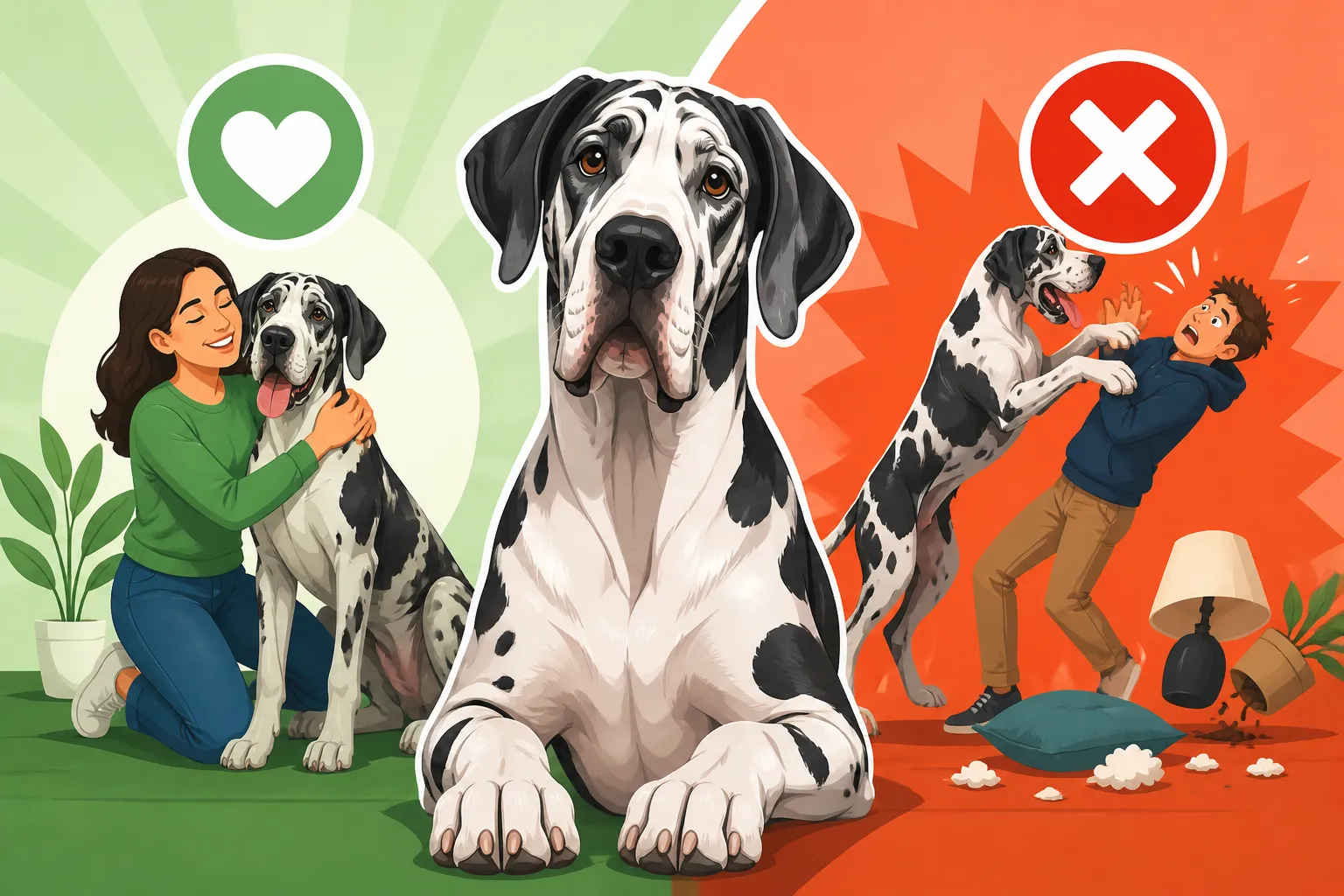
Whether Anyone Is Ready for a Great Dane
Many people fall in love with the majestic appearance and "gentle giant" reputation of a Great Dane, envisioning a calm, loving companion. However, the reality of living with a dog of such immense size, with their unique needs and potential health challenges, often hits hard after they've already brought one home. This guide isn't here to scare you, but rather to offer a truly honest look at the commitment involved, helping you genuinely assess whether your life and resources are truly ready for a Great Dane.
The Sheer Scale of Great Dane Ownership
It's easy to look at a cute Great Dane puppy and imagine a slightly larger version of a regular dog. But Great Danes aren't just big; they are enormous. Every aspect of their existence is magnified, from their physical presence to their care requirements, making their ownership a truly unique experience that demands significant preparation. You aren't just getting a dog; you're welcoming a four-legged horse into your home, and that comes with a whole new set of considerations.
Physical Space and Your Home Environment
A fully grown male Great Dane can stand over 32 inches at the shoulder and weigh upwards of 175 pounds, sometimes even more. This isn't a dog you can easily tuck into a small corner or expect to nap on a tiny dog bed. Your home needs to accommodate their massive size in every single room. Think about hallways – can your Dane comfortably turn around without knocking over lamps or bumping into furniture? What about doorways? It sounds silly, but a Great Dane's wagging tail at full force can clear a coffee table in seconds, and they often operate at counter-height. They need ample floor space for lounging, stretching, and just existing. Even a seemingly spacious home can feel cramped with a Dane trying to navigate.
Beyond indoor space, consider your yard, if you have one. While Great Danes are often surprisingly calm indoors, they still benefit from outdoor access. A small patch of grass won't cut it for a quick romp or stretch. You'll also need a fence that's genuinely secure and tall enough to contain a dog of their stature, even if they aren't known for jumping. Remember, any time your Dane gets zoomies, it’s a full-body experience that requires room to move without running into obstacles or people. This also includes their sleeping arrangements; you'll be looking at Beds That Cushion a Great Dane's Joints specifically designed for giant breeds, which take up considerable space.
The Non-Negotiable Need for Early and Consistent Training
Because of their sheer size and power, a Great Dane must be impeccably trained from the moment they come home. This isn't optional; it's a matter of safety for both your dog and everyone around them. A 150-pound dog jumping up to greet a guest, even playfully, can knock an adult off their feet, let alone a child or an elderly person. A Dane that pulls on the leash isn't just a nuisance; it's a dragging force that can easily injure you. You simply cannot physically overpower a full-grown Great Dane if they decide to go their own way.
Therefore, puppy classes are not just recommended, they are essential. Focus on basic obedience commands like "sit," "stay," "down," and especially "off" for jumping. Leash manners are paramount; mastering Getting a Great Dane to Walk on a Loose Leash is a lifelong endeavor. Socialization, too, needs to start early and be ongoing, exposing your puppy to various sights, sounds, people, and other dogs in a positive way. This helps foster their naturally gentle temperament and prevent fear-based reactions later on. Without consistent training, a Great Dane's size can quickly turn from an awe-inspiring trait into an overwhelming challenge.
The Financial Reality Beyond Puppy Price
Many prospective owners look at the initial cost of a Great Dane puppy and prepare for that figure, which can be substantial from a reputable breeder. However, the purchase price is merely the tip of a very large, expensive iceberg. Owning a Great Dane means facing significantly higher ongoing costs in almost every category compared to a smaller dog. This isn't just about "more food"; it's about exponential increases across the board that can truly strain a budget if you're not prepared.
Exponential Food and Supply Costs
Let's talk about food. A growing Great Dane puppy, and later an adult, can easily consume 6 to 10 cups of high-quality kibble per day. We're not talking about a small bag lasting a month; we're talking about massive bags disappearing in a week or two. And because Great Danes have specific nutritional needs, especially as puppies, to ensure slow, healthy growth and prevent joint issues, you can't just feed them any cheap dog food. You need a formula balanced for large or giant breeds, which often comes with a higher price tag. Consider checking out large online retailers like Chewy for bulk food options and auto-ship programs, which can sometimes offer slight savings and the convenience of not having to haul huge bags from the store.
Beyond food, every single supply item needs to be "Great Dane sized," and that almost always means "more expensive." Collars, harnesses, leashes, toys – they all need to be robust enough to withstand the strength and enthusiasm of a giant breed. Small, flimsy toys will be destroyed in minutes. Beds, as mentioned, are specialized and costly. Crates, if you choose to use one, need to be industrial strength and can take up a significant footprint, representing a major upfront investment. Even routine items like poop bags will be used in greater quantity.
Vet Bills and the Cost of Giant Breed Health
This is perhaps the biggest financial shock for many Great Dane owners. Their large size comes with a predisposition to several serious health conditions, and treating a giant breed is inherently more expensive. Medications are dosed by weight, so a Great Dane requires significantly larger quantities, driving up costs. Anesthesia for any procedure is also more complex and therefore Why Great Dane Anesthesia Is Billed Higher.
Consider conditions like bloat (gastric dilatation-volvulus), which is a life-threatening emergency common in deep-chested breeds. Treatment for The Overnight Bill When a Great Dane Bloats can run into thousands, and even preventive measures like a gastropexy surgery have a substantial cost. Great Danes are also prone to certain heart conditions, like dilated cardiomyopathy (DCM), which can require ongoing medication and frequent specialist visits, with Yearly Cardiology Costs for a Great Dane quickly adding up. Joint issues, like hip and elbow dysplasia, are also prevalent, and treatments can range from expensive supplements to surgeries. Having pet insurance that covers major medical expenses is almost a necessity, but even premiums for Great Danes are typically higher due to their health risks. This article on The Short Expensive Life of a Great Dane provides an even deeper dive into the financial realities.
| Expense Category | Small to Medium Dog (Avg. Monthly) | Great Dane (Avg. Monthly) | Key Difference |
|---|---|---|---|
| Food & Treats | $30 – $70 | $80 – $150+ | Volume and specialized large-breed formulas |
| Routine Vet Care | $20 – $40 | $50 – $100+ | Weight-based medication, specialized health checks |
| Supplies (Toys, Beds) | $10 – $30 | $40 – $80+ | Durability, size, and replacement frequency |
| Flea/Heartworm Meds | $15 – $30 | $40 – $70+ | Higher doses due to weight |
| Pet Insurance | $30 – $60 | $70 – $120+ | Higher risk profile, especially for major illnesses |
| Total (Estimate) | $105 – $210 | $290 – $520+ | Exponential increase across all categories |
Note: These are illustrative averages and can vary greatly based on location, brand choices, and individual dog needs. Emergency costs are not included in monthly estimates.
Lifestyle Changes and Daily Demands
Bringing a Great Dane into your life isn't just about opening your home and wallet; it's about fundamentally altering your daily routines, leisure activities, and even your social life. Their presence is so significant that it becomes a central part of your identity as a dog owner. This isn't a dog you can easily ignore or leave alone for extended periods without consequences.
Exercise Requirements and Managing a Growing Giant
Despite their imposing size, Great Danes are not typically hyperactive dogs. They need moderate exercise, but it must be managed carefully, especially during their crucial growth phases. Over-exercising a Great Dane puppy can put immense strain on their developing joints, leading to serious orthopedic problems later in life. So, while they need walks and playtime, intense running, jumping, or long hikes are usually off-limits until they are fully mature, often around 18-24 months. You might be surprised to learn Why a Great Dane Puppy Should Not Jog.
As adults, daily walks are important for physical and mental stimulation. They enjoy being with their people, whether that's a leisurely stroll in the neighborhood or a supervised romp in a secure park. However, consider the logistics: walking a large, powerful dog means you need to be physically capable of handling them. Even a well-trained Dane can react to a squirrel or another dog, and you need to be able to hold your ground. If you're someone who enjoys long-distance running or intense dog sports, a Great Dane might not be the right fit unless those activities are tailored to their capabilities.
Daily Care and Grooming Challenges
While Great Danes have short coats that are relatively low-maintenance in terms of professional grooming, their sheer size makes even basic care a bigger task. Brushing a Great Dane still takes more time and effort than brushing a Chihuahua. Bathing a Great Dane often requires a dedicated shower or even outdoor setup, as they certainly won't fit in a kitchen sink. Drying them thoroughly is also a project in itself. You might find yourself needing a portable grooming tub or even taking them to a professional groomer who has facilities to handle giant breeds, adding another expense.
Then there's the drool. Oh, the drool! Many Great Danes are champion droolers, especially after drinking water, eating, or getting excited. You'll quickly learn to strategically place "drool rags" around your home and get used to wiping slobber from furniture, walls, and sometimes even your ceiling. Managing Great Dane Slobber Indoors becomes an art form. Nail trimming is another challenge; their nails are thick and strong, and you'll need heavy-duty clippers and a dog willing to cooperate for what can be a wrestling match if not trained early. Getting them comfortable with Trimming Nails a Great Dane Will Not Give You is crucial.
Travel and Social Integration
Your travel plans and social life will also feel the impact of a Great Dane. Spontaneous trips become more complicated. Finding accommodations that accept giant breeds can be a challenge, and the logistics of fitting a Great Dane into your vehicle require careful planning, often needing a large SUV, van, or even a truck. Car seats are out, and even crates for travel are massive.
When it comes to social outings, a Great Dane attracts attention wherever they go. Be prepared for countless questions, comments, and requests to pet them. While most people are enchanted, some are intimidated, and you always need to be mindful of your dog's manners and comfort level in public. Dog parks, for instance, might not always be the best environment for a Great Dane, as their play style can be too rough for smaller dogs, and their sheer size can make them a target for nervous or aggressive canines. Consider whether A Great Dane Is Welcome at a Dog Park in your area.
Emotional Investment and Commitment
Beyond the tangible costs and practical adjustments, owning a Great Dane demands a profound emotional investment and a deep level of commitment. These aren't dogs that can be casually integrated into a busy, hands-off lifestyle. They thrive on companionship and become deeply attached to their families, expecting to be central to your daily life.
The "Velcro" Trait and Need for Companionship
Great Danes are renowned for their "Velcro dog" tendencies. They want to be with you, near you, or ideally, on you, whenever possible. Despite their size, they often see themselves as lap dogs and will try to wedge their enormous bodies onto any available couch or even your lap. This constant desire for proximity means they generally do not do well with being left alone for long periods. If you work long hours away from home or travel frequently, a Great Dane might not be the best fit unless you have robust arrangements for their care and companionship, such as a dedicated pet sitter or doggy daycare.
Their emotional sensitivity means they can become anxious or destructive if not given enough attention or if left isolated. A Great Dane experiencing separation anxiety can do significant damage to a home, simply because of their size and strength. Understanding A Great Dane That Panics When Left is crucial. They crave interaction, affection, and being an integral part of the family unit. Their gentle nature means they generally respond best to positive reinforcement and a calm, consistent approach.
The Bittersweet Reality of Their Lifespan
Perhaps one of the most heartbreaking aspects of Great Dane ownership is their tragically short lifespan. While smaller dogs can live well into their teens, a Great Dane's life is often compressed into just seven to ten years. This reality weighs heavily on owners, and it's a factor you must confront before bringing one home. Knowing that your time with this magnificent creature will be fleeting can make every moment precious but also tinged with sadness. You can learn more in Why a Great Dane Only Lives Seven to Ten Years.
Preparing for this short window means maximizing every year you have together. It means being vigilant about their health, seeking veterinary care proactively, and cherishing their presence every single day. The emotional toll of losing such a devoted, larger-than-life companion can be immense. Are you ready for a love that burns brightly but often extinguishes too soon? This profound commitment requires a strong heart and an acceptance of this bittersweet truth.
In conclusion, deciding whether you're ready for a Great Dane is a significant undertaking that goes far beyond simply loving dogs. It requires an honest appraisal of your finances, living situation, daily schedule, and emotional capacity. If you can confidently meet these challenges, you'll be rewarded with one of the most loyal, loving, and magnificent companions you could ever wish for. But if any of these areas feel like a stretch, it's essential to reconsider, not just for your sake, but for the well-being of a Great Dane who deserves nothing less than a fully prepared and committed home.
Disclaimer
This article is for general informational purposes only and does not constitute professional advice. Laws, prices and regulations vary by location and change over time. Consult a qualified professional for guidance on your specific situation.