When a Great Dane Should Have Its First Echo
One of the most heartbreaking realities of owning a Great Dane is knowing they are predisposed to serious health issues, with heart disease, particularly Dilated Cardiomyopathy (DCM), being a silent threat. The worry about when and how to screen for these conditions can feel overwhelming, leaving you wondering if you're doing enough to protect your gentle giant. This guide will walk you through the crucial timeline for your Great Dane's first echocardiogram, helping you understand when to schedule this vital diagnostic test and what it means for their long-term health.
The Alarming Reality of Great Dane Heart Health
If you're a Great Dane owner, you've likely heard the whispered fears about heart disease. It's not just an abstract concept; it's a very real and prevalent issue that can significantly impact their quality of life and shorten their already too-brief existence. Understanding this predisposition is the first step in being a proactive advocate for your dog's health.
Understanding Dilated Cardiomyopathy DCM in Danes
Dilated Cardiomyopathy, or DCM, is a devastating heart condition that affects many large and giant breeds, with Great Danes being particularly vulnerable. Essentially, the heart muscle becomes thin and weak, losing its ability to pump blood efficiently. Over time, this leads to an enlarged heart that struggles to supply the body with enough oxygenated blood. It's a progressive disease, meaning it tends to get worse over time, and tragically, many Danes show no outward signs until the disease is quite advanced, often leading to sudden collapse or heart failure. This is why discussing The Heart Muscle Disease Great Danes Are Prone To is so important for every Great Dane owner.
The onset of DCM is often insidious. You might not notice your dog is slowing down or tiring easily until the condition has already progressed significantly. It's a frustration many owners face—wanting to do everything right, yet feeling helpless against a disease that can strike without obvious warning. This silent progression is precisely why early and regular screening is not just recommended, but absolutely critical for Great Danes.
Why Early Detection is a Game-Changer for Prognosis
The thought of your dog having a serious heart condition is terrifying, but detecting DCM early, before your Great Dane shows any clinical signs, can dramatically alter their prognosis. When caught in its asymptomatic stage (meaning no symptoms are visible yet), veterinarians can often prescribe medications that help manage the condition, slow its progression, and improve your dog's quality of life for a longer period.
Early intervention isn't about curing DCM—there's currently no cure—but it's about buying precious time and maintaining comfort. It allows your vet to monitor your dog closely, adjust medications as needed, and provide guidance on lifestyle modifications, like appropriate exercise limits and diet. This proactive approach gives you, the owner, a sense of empowerment, knowing you're actively fighting for your Dane, rather than reacting to a crisis. It's a stark contrast to the despair of discovering the disease only when it's already caused significant damage, often requiring emergency intervention and offering a much shorter window for management. This highlights the importance of understanding How a Great Dane Heart Enlarges.
Deciphering the Ideal Age for a Great Dane's First Echo
Given the serious implications of DCM, the question isn't if your Great Dane should have an echocardiogram, but when. Pinpointing the right age can feel like a moving target, especially with varying opinions and guidelines. However, there are established recommendations aimed at maximizing the chances of early detection.
The Standard Recommendation for Initial Screening
For Great Danes, the consensus among veterinary cardiologists and the Great Dane Club of America (GDCA) is that the first baseline echocardiogram should ideally be performed between 18 months and two years of age. This timeframe is considered optimal because it's when many Danes begin to mature physically, and if DCM is going to develop, this is a common window for its earliest detectable signs to emerge on an echo, even before any physical symptoms appear. This initial screening is invaluable, establishing a benchmark for your dog's heart health.
Many responsible breeders will even include language in their contracts requiring or strongly recommending this initial cardiac screening, reflecting their commitment to the health of the breed. It's part of what constitutes The Health Testing a Great Dane Breeder Owes You and ensures that potential issues are identified as early as possible. If your Great Dane is already past this age and hasn't had an echo, don't despair! It's never truly too late to start monitoring their heart health; simply schedule one as soon as you can.
Individual Factors That Might Shift the Timeline
While the 18-24 month window is a solid general guideline, several individual factors might lead your veterinarian or a canine cardiologist to recommend an earlier or slightly later first echocardiogram.
- Family History: If your Great Dane comes from a lineage with a known history of early-onset DCM or sudden cardiac death, your vet might suggest an echo as early as 12-15 months. This is a critical piece of information that a reputable breeder should provide. Knowing the health history of your dog's parents and grandparents is essential for personalized screening advice.
- Auscultation Findings: Sometimes, during a routine physical exam, your primary care veterinarian might detect a heart murmur or an arrhythmia (irregular heartbeat) when listening to your Great Dane's chest. These findings, even if seemingly minor, warrant an immediate referral for a cardiac evaluation, including an echocardiogram, regardless of your dog's age. These could be early indications of underlying issues, making it important to recognize Early Heart Signs in a Great Dane.
- Unexplained Symptoms: Although we strive for asymptomatic detection, if your Great Dane, at any age, starts exhibiting subtle signs like decreased exercise tolerance, coughing, unexplained lethargy, or changes in breathing, an echocardiogram should be performed without delay. These could be the first overt signs that something is amiss with their heart.
It's always best to discuss your specific Great Dane's situation with your veterinarian. They can help you determine the most appropriate timing for the initial echo based on their individual health profile and any risk factors.
The following table summarizes recommended initial echo ages based on different scenarios:
| Factor | Recommended Age for First Echo | Rationale |
|---|---|---|
| Standard / No Known Risk | 18-24 months | General guideline for breed maturation and DCM onset window. |
| Known Family History of DCM | 12-15 months (or earlier) | Increased genetic predisposition warrants earlier screening. |
| Heart Murmur or Arrhythmia Detected | Immediate referral | Suspicious findings require prompt investigation regardless of age. |
| Unexplained Clinical Signs | Immediate referral | Possible active heart disease requires urgent diagnosis and treatment. |
What to Expect During a Great Dane Echocardiogram
Hearing the term "echocardiogram" might sound intimidating, but for your Great Dane, it's a relatively non-invasive and painless procedure. Understanding what happens during the appointment can help ease your concerns and prepare you for the experience.
The Procedure: A Closer Look
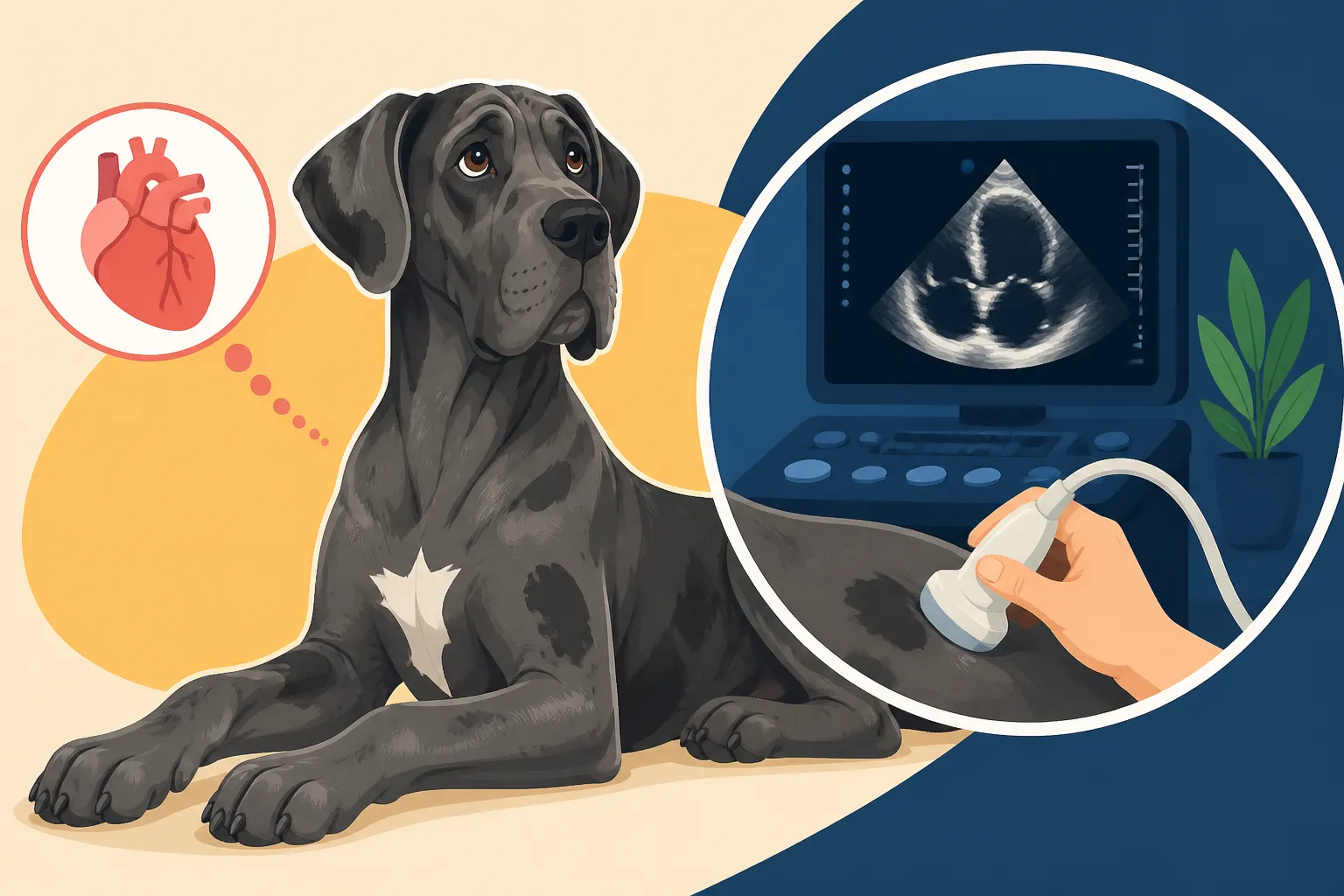
An echocardiogram is essentially an ultrasound of the heart. During the procedure, your Great Dane will typically be gently laid on their side on a padded table with a small cutout for their chest. A veterinary technician or cardiologist will then shave a small patch of fur on their chest to ensure good contact with the ultrasound probe. This isn't usually a large shave, and it helps get the clearest image of the heart. A special ultrasound gel is applied to the skin, which helps the sound waves travel effectively.
The cardiologist then uses a transducer (the ultrasound probe) to scan your dog's chest. The probe emits sound waves that bounce off the heart structures and return to the probe, creating real-time images on a monitor. They'll measure various parameters, such as the size of the heart chambers, the thickness of the heart walls, and how well the valves are functioning. They'll also assess the blood flow through the heart, looking for any abnormalities indicative of DCM or other heart conditions. The entire process usually takes 30 to 60 minutes, and most Great Danes tolerate it very well without sedation, though a mild sedative might be used for anxious individuals to ensure a clear reading. This is part of What a Cardiologist Measures in a Great Dane Heart.
Interpreting the Results and Next Steps
Once the echocardiogram is complete, the cardiologist will analyze the images and measurements. They're looking for specific changes that signify DCM, such as thinning of the ventricular walls, enlargement of the heart chambers, and reduced contractility (how forcefully the heart muscle squeezes). The results will be discussed with you, often immediately after the procedure or once a formal report is prepared.
If the results are normal, it's wonderful news! It establishes a baseline for future comparisons. However, remember that a normal echo at two years old doesn't mean your Dane is immune to DCM for life. Annual or biennial follow-up screenings are still crucial, as the disease can develop later. If abnormalities are detected, the cardiologist will explain the findings, discuss the stage of the disease, and outline a treatment plan. This might involve starting heart medications immediately, such as pimobendan or ACE inhibitors, and scheduling follow-up echoes to monitor the heart's response to treatment. The cost of these diagnostics and potential ongoing medications can be significant, which is why pet insurance, like plans from Healthy Paws, can be incredibly beneficial in managing the financial aspect of your Great Dane's heart health journey.
Integrating Echoes into a Lifelong Health Plan
A Great Dane's first echocardiogram is a milestone, but it's just the beginning of a proactive approach to their cardiac health. Maintaining a vigilant stance through regular follow-up screenings and comprehensive care is paramount to their well-being.
Follow-up Screening Recommendations
Even if your Great Dane's first echo is perfectly normal, regular follow-up screenings are highly recommended throughout their life, especially given the breed's predisposition to DCM. The general recommendation from veterinary cardiologists for Great Danes is to have an echocardiogram performed annually once they reach two years of age. Some may suggest every 18 months, but annual screening offers the best chance for early detection of any changes. This consistent monitoring allows for the earliest possible detection of any developing DCM, enabling prompt intervention.
These yearly check-ups, often combined with a Holter monitor (a wearable device that records heart rhythm over 24 hours), help create a comprehensive picture of your Great Dane's heart function and rhythm. It allows the cardiologist to track subtle changes over time, even if they aren't clinically significant yet. This ongoing vigilance gives you peace of mind and your Great Dane the best possible chance at a longer, healthier life. You can learn more about this by researching Screening a Great Dane's Heart Each Year. These routine screenings, while an investment, can truly extend the lifespan and quality of life for your beloved companion, making them an essential part of caring for your Great Dane.
Proactive Care Beyond the Echocardiogram
While regular echocardiograms are the cornerstone of proactive heart health for Great Danes, they are part of a larger picture of care. There are other important considerations you can implement into their daily routine and overall lifestyle to support their heart and general well-being.
- Optimal Nutrition: Feeding a high-quality, vet-approved diet that is appropriate for large breeds and their specific life stage is crucial. Discussing dietary needs, especially in relation to ingredients like taurine, can be important for breeds prone to DCM. Recent studies have looked into potential links between certain "boutique" or grain-free diets and DCM in some breeds, so it's vital to discuss your Great Dane's diet with your vet.
- Appropriate Exercise: While Great Danes need regular exercise, intense, prolonged exertion, especially in hot weather, should be managed carefully. A sudden increase in exercise could put undue stress on a heart that might have subclinical issues. Consistent, moderate activity is usually best.
- Weight Management: Keeping your Great Dane at a healthy, lean weight reduces strain on their joints and, importantly, their heart. Obesity can exacerbate many health conditions, including cardiac disease.
- Regular Veterinary Check-ups: Beyond the cardiologist, routine visits with your primary care veterinarian are essential. They can monitor overall health, listen for heart sounds, and discuss any changes you've observed in your Great Dane's behavior or energy levels. Early recognition of signs is crucial, as is understanding how to financially prepare for potential medical needs. Many responsible Great Dane owners find value in looking into Insuring a Great Dane Against Bloat and Heart Bills to help manage these costs, and comprehensive plans from providers like Healthy Paws often cover specialist visits and diagnostics like echoes.
- Knowing the Signs: Even with regular screening, remain observant. Be aware of signs like coughing (especially at night or after exertion), reduced stamina, difficulty breathing, or fainting spells. These could indicate progression of heart disease. If you notice any of these, contact your vet immediately. Being prepared for the potential Medication for a Great Dane With DCM means being ready for the financial commitment as well, underscoring the benefits of a robust pet insurance policy.
By combining regular echocardiograms with thoughtful daily care and keen observation, you are giving your Great Dane the very best chance at a full and happy life, even with the looming shadow of DCM.
Disclaimer
The information provided in this article is for general informational purposes only and is not a substitute for professional veterinary advice. Always consult with a qualified veterinarian or veterinary cardiologist for any health concerns or before making any decisions about your Great Dane's medical care.