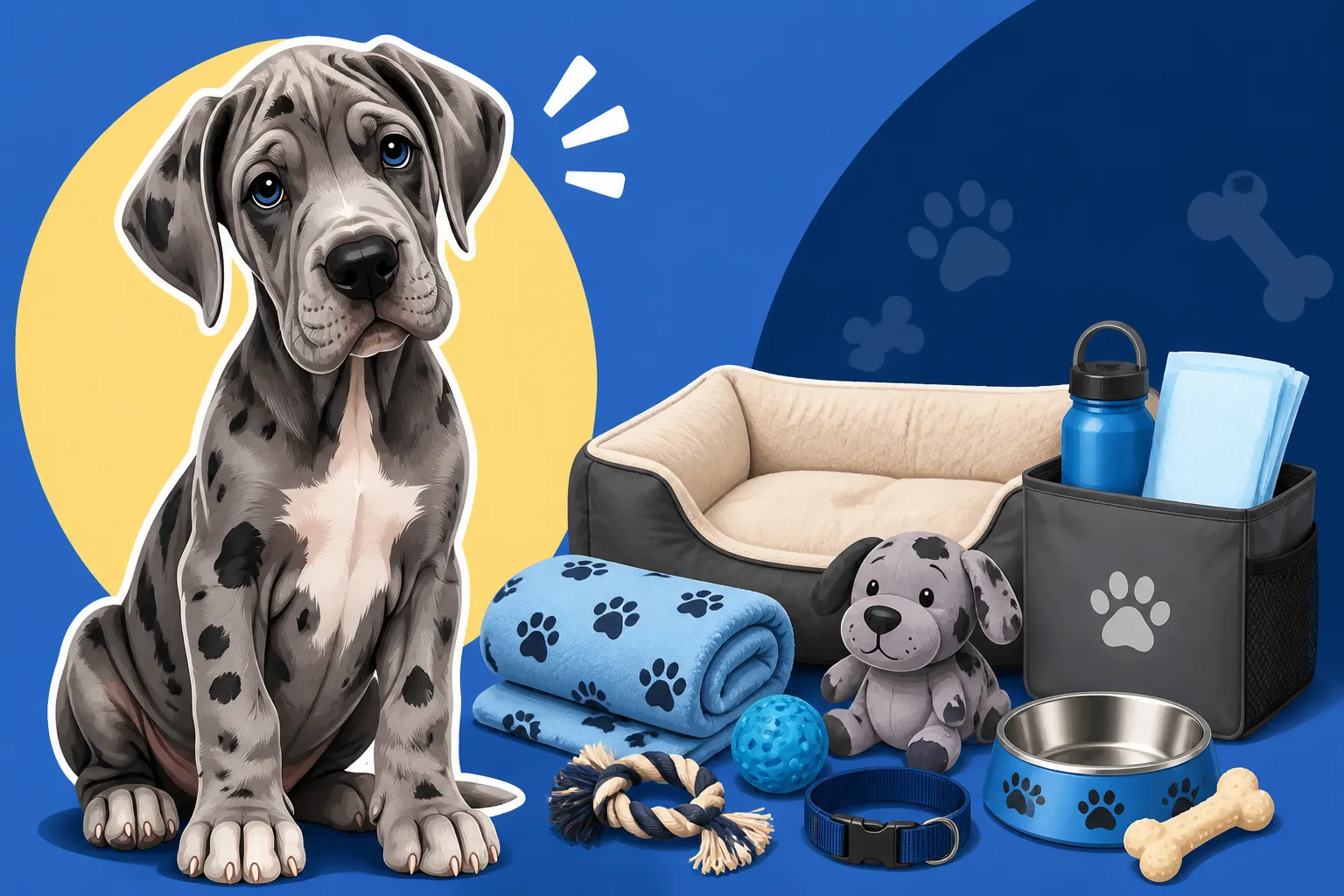
The Kit a Great Dane Puppy Needs First
Bringing home a Great Dane puppy is an incredibly exciting time, but if you've ever stood in a pet store aisle, utterly overwhelmed by the sheer volume of products, you know the struggle is real. What exactly does a giant breed puppy need versus what's just marketing fluff? It's easy to feel lost trying to prepare for a dog that will soon outweigh most grown adults. This guide aims to cut through the confusion, meticulously detailing the essential kit every Great Dane puppy needs to thrive from day one in their new home, ensuring you're ready for your magnificent new companion.
Feeding Your Giant in Training
One of the most immediate and impactful decisions you'll make for your Great Dane puppy is what to feed them and how. Their rapid growth rate means their nutritional needs are vastly different from smaller breeds, and mistakes made in their early months can have long-lasting consequences for their joints and overall health. Getting this right from the start is absolutely crucial.
Choosing the Right Puppy Food
This isn't just about picking any "puppy food" off the shelf. Great Dane puppies, like other giant breeds, require a specific type of large breed puppy formula. The main difference lies in the carefully controlled calcium and phosphorus levels, and often, a slightly lower protein and fat content. Why is this so important? Because rapid growth, especially in terms of bone development, can lead to serious orthopedic issues such as osteochondritis dissecans (OCD) or hypertrophic osteodystrophy (HOD). Standard puppy foods, designed for smaller, faster-maturing breeds, can sometimes accelerate growth too quickly, putting undue stress on developing joints.
You're looking for a food that supports a slow and steady growth curve, allowing bones and joints to mature properly without being overstressed. Brands like Purina Pro Plan Large Breed Puppy or Royal Canin Giant Puppy formulas are often recommended because they've been specifically formulated to meet these precise needs. Always check the nutritional analysis carefully to ensure it meets the AAFCO (Association of American Feed Control Officials) guidelines for large breed growth. Remember, the goal isn't to get them huge as fast as possible; it's to get them healthy and well-developed. If you're wondering about the nuances, our guide on Why Great Dane Puppy Food Is Different delves deeper into this vital topic.
Selecting Appropriate Food and Water Bowls
Given their eventual size, your Great Dane puppy will quickly outgrow standard dog bowls. Investing in appropriately sized, durable bowls from the get-go saves you money and hassle in the long run. Stainless steel bowls are often the top choice for several reasons: they are hygienic, easy to clean, durable, and don't harbor bacteria like some plastic bowls can. They also won't break like ceramic if your puppy decides to play with them. You'll need at least two – one for food and one for water. Given their eventual height, many Great Dane owners opt for raised feeders or stands.
The debate around raised bowls for Great Danes and bloat risk is ongoing. While some believe they can help, recent studies suggest they might actually increase the risk of Gastric Dilatation-Volvulus (GDV), more commonly known as bloat, which is a life-threatening condition for Great Danes. It’s a complex issue, and many vets now recommend feeding on the floor. However, if you do choose a stand, ensure it's sturdy enough not to be knocked over by a clumsy, growing puppy and that the bowls are large enough to accommodate their future meal sizes and water intake. Regardless of your choice, make sure they are heavy or have non-slip bottoms to prevent your energetic pup from sliding them around the kitchen.
Addressing Fast Eaters and Bloat Concerns
Great Danes, like many dogs, can be enthusiastic eaters, sometimes inhaling their meals in mere minutes. This rapid ingestion of food, along with air, is a significant risk factor for bloat. To mitigate this, incorporating slow feeder bowls into your Great Dane puppy’s routine is an excellent idea. These bowls feature obstacles or mazes that force your dog to eat around them, significantly slowing down their mealtime. Many brands offer extra-large slow feeders designed for giant breeds, available from retailers like Chewy.
Beyond slow feeders, establishing a consistent feeding routine is paramount. Instead of one large meal, splitting your Great Dane puppy’s daily ration into two or three smaller meals can reduce the volume of food in their stomach at any one time, potentially lessening bloat risk. Avoid strenuous exercise or rough play immediately before or after meals. Give them at least an hour to digest their food quietly. Understanding the signs of bloat and having an emergency plan is also critical, as is considering preventive measures like gastropexy surgery, which our article on The Age to Tack a Great Dane's Stomach covers in detail.
Comfort and Containment: Beds and Crates
Providing adequate comfort and safe containment is essential for a Great Dane puppy, not just for their well-being but also for the preservation of your sanity and furniture! Their rapidly growing bodies need proper support, and their curious, clumsy nature means they need designated safe spaces.
Investing in a Durable, Supportive Bed
A high-quality, orthopedic bed isn't a luxury for a Great Dane; it's a necessity. From puppyhood, their large, heavy frames put considerable stress on their joints, even when they're just resting. Choosing a bed with dense, supportive foam (like memory foam or orthopedic foam) that won't flatten out quickly is paramount. Cheap, thin beds offer little to no support and will wear out in weeks, leaving your giant pup resting on the hard floor. Look for beds designed for giant breeds, with removable, washable covers for easy cleaning. Many brands offer extra-large sizes specifically for dogs up to 200+ pounds.
Consider the placement of the bed as well. Great Danes often seek out cool, hard surfaces to lie on, but prolonged lying on hard floors can lead to pressure sores or hygromas on their elbows and hocks. A good bed provides that cushioning. While your puppy might initially chew on everything, including their bed, some "chew-proof" or highly durable options exist. However, supervision and proper training are still the best defense. Remember, this bed isn't just for comfort; it's an investment in their long-term joint health, which is vital for preventing issues like Great Dane Hips, Elbows and Growing Joints.
Crate Training with a Giant-Sized Crate
Crate training is invaluable for Great Danes, fostering independence, aiding in house training, and providing a safe, den-like space. However, finding a crate that's truly "Great Dane sized" can be a challenge. You'll need an extra-large or XXL crate. For a full-grown male Great Dane, a crate measuring at least 54 inches long, 37 inches wide, and 45 inches high is often recommended. Even a puppy will grow into this size quickly.
When selecting a crate, durability is key. Heavy-gauge wire crates are generally preferred over plastic carriers for their breathability and the fact that a strong, determined Great Dane won't easily bust out of them. Some crates come with dividers, allowing you to adjust the internal space as your puppy grows, which is helpful for house training; too much space and they might soil one end and sleep in the other. Ensure the crate has a secure latch that your intelligent Dane won't figure out. Our guide on Crate Training a Great Dane That Fills the Room offers more tips on making this a positive experience for your big pup. Place the crate in a central area of your home where your puppy can still feel like part of the family, but won't be constantly disturbed.
Managing Space with Gates and Playpens
Even if you plan to crate train, baby gates and sturdy playpens are indispensable for managing a Great Dane puppy’s access to your home, especially during critical training periods or when you simply can't supervise them 100%. Standard baby gates will be laughably small for a Great Dane; they'll either step right over them or plow through them. You'll need extra-tall and extra-wide pressure-mounted or hardware-mounted gates. Hardware-mounted gates are often the safest and most reliable for a strong, large breed.
Consider areas you want to restrict, such as the kitchen when you're cooking, or specific rooms with delicate items. A well-placed gate can prevent counter surfing or destructive chewing. Large outdoor playpens can also be useful for supervised outdoor time, providing a safe, enclosed space where they can't wander too far or get into trouble. Just ensure the pen is robust enough that your puppy can't knock it over or climb out. Thinking ahead about how to manage their size and strength within your home environment will save you a lot of headaches and potential damage.
Grooming Essentials for a Short Coat
While Great Danes have relatively short coats, they definitely aren't maintenance-free. They shed, they drool, and their sheer size means that simple tasks like nail trims can become a wrestling match if you're not prepared with the right tools and training.
Brushing Away the Dane Shed
Don't let the short coat fool you – Great Danes shed! They may not leave behind tumbleweeds of hair like a Golden Retriever, but you'll certainly find fine, stiff hairs clinging to furniture, clothes, and pretty much everywhere. Regular brushing is key to minimizing this shedding and keeping their coat healthy and shiny. A good quality rubber curry brush (like a Kong ZoomGroom) or a shedding blade (used gently) works wonders on their short, dense coats. These tools help remove loose hair, stimulate circulation, and distribute natural skin oils, which contributes to a healthy coat.
Aim for a few brushing sessions a week, or even daily during peak shedding seasons. This routine also serves as an excellent opportunity to bond with your puppy and get them accustomed to being handled, which is invaluable for future vet visits and grooming sessions. Plus, it's a chance to check their skin for any irritations, bumps, or parasites. Our detailed guide on Brushing a Short-Coated Great Dane offers more specific advice on techniques and tools.
Bathing Your Massive Muffin
Bathing a Great Dane can be quite an undertaking, especially once they're fully grown. As puppies, it’s easier to get them accustomed to the process. You'll need a good quality dog shampoo and conditioner, ideally formulated for sensitive skin if your pup has any issues. Avoid human shampoos, as they can strip natural oils and irritate canine skin. You'll also need plenty of towels, a non-slip mat for the tub or shower, and a detachable showerhead if possible, to make rinsing easier.
Start bathing your puppy early and make it a positive experience with treats and praise. The goal is to make them tolerate it, even enjoy it, so it's less of a battle later on. Due to their size, many Great Dane owners eventually opt for professional groomers who have dedicated large dog bathing facilities, or even consider portable outdoor dog washes. Unless they've rolled in something particularly foul, Great Danes don't need frequent bathing, usually every 4-8 weeks or as needed. Over-bathing can dry out their skin.
Tackling Those Tough Nails and Ear Care
Great Danes have thick, strong nails that grow quickly and need regular trimming. Neglecting nail care can lead to painful cracked nails, splayed toes, and even affect their gait and joint health. Starting early with nail trims is absolutely essential to desensitize your puppy to the process. You'll need heavy-duty nail clippers (like Miller's Forge) or, even better, a Dremel-style rotary tool for grinding. The latter is often preferred for large breeds as it allows for a smoother, shorter trim without the risk of cutting the quick.
Keep some styptic powder on hand in case you accidentally cut too close. If you're unsure how to trim them, ask your vet or a professional groomer for a demonstration. For ear care, whether your Great Dane has natural floppy ears or cropped ears, regular inspection and cleaning are important. Floppy ears can trap moisture and debris, making them prone to infections. Use a veterinarian-approved ear cleaner and cotton balls (never cotton swabs deep in the ear canal) to gently wipe the visible parts of the ear. Again, starting this routine early makes it a non-issue for your adult Dane. For specific advice on tools, see our guide on The Clippers a Great Dane Nail Needs.
Training and Safety Gear from Day One
Training a Great Dane puppy cannot wait. Their sheer size and strength mean that good manners are not optional – they are absolutely critical for a harmonious life together. Investing in the right training and safety gear from the start will set you up for success.
Finding the Right Collar and Leash
For a Great Dane puppy, you'll need a sturdy, adjustable collar that can grow with them for a few months. While they're small, a standard buckle collar is fine. As they get bigger and stronger, you might consider a martingale collar, which offers more control without being a choke collar, or a well-fitting front-clip harness. The latter can be particularly effective for teaching a Great Dane to walk nicely on a leash without pulling, as it redirects their momentum towards you. Avoid retractable leashes, as they offer little control over a large, fast-moving dog and can be dangerous.
Invest in a durable, static leash, preferably 6 feet long, made of nylon or leather with strong hardware. You’ll be holding onto this for a long time, so comfort for you is important too. A good, strong leash and collar or harness are foundational for Great Dane Leash Manners at a Hundred and Fifty Pounds, teaching them how to walk politely alongside you from a young age. Remember, their strength develops quickly, so whatever you use must be capable of safely managing a powerful dog.
Indestructible Chew Toys for Growing Jaws
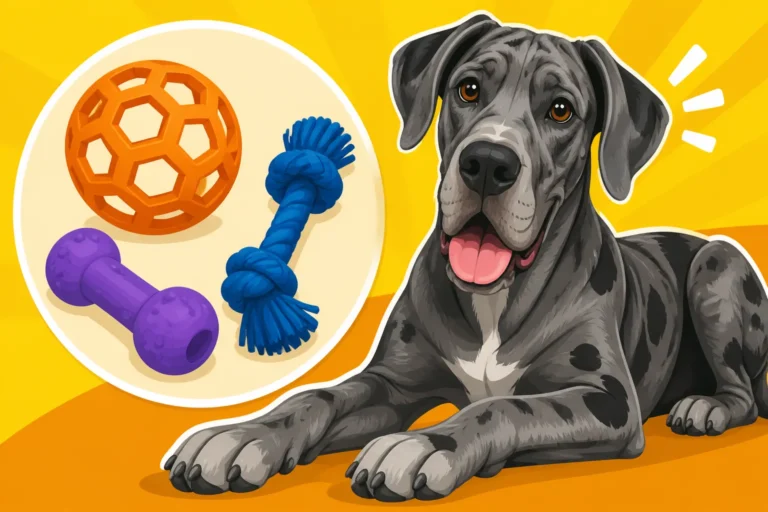
Great Dane puppies, like all puppies, explore the world with their mouths and have a strong urge to chew, especially during teething. However, their powerful jaws mean that many standard "durable" chew toys won't last five minutes. Investing in truly indestructible, large-sized chew toys is crucial to prevent them from ingesting pieces of toys, which can lead to costly and dangerous gastrointestinal blockages. Brands like Kong (their Extreme line), Nylabone (their largest, hardest chews), and durable rubber toys are excellent choices.
Puzzle toys, where you can hide treats, are also fantastic for mental stimulation and slow eating, keeping your puppy engaged and preventing boredom-induced chewing. Always supervise your puppy with new toys, especially if they are aggressive chewers. Rotate toys to keep them interesting, and inspect them regularly for damage, discarding any that start to break apart. Chew toys protect your furniture and shoes, but more importantly, they keep your Great Dane puppy safe and entertained.
Baby Gates and Containment for a Curious Dane
We touched on this briefly under comfort and containment, but it's worth reiterating in the context of training and safety. Extra-tall, sturdy baby gates are essential for creating safe zones within your home and for teaching boundaries. Imagine a Great Dane puppy, full of beans, tearing through your living room or "helping" you in the kitchen – it can be a recipe for disaster. Gates allow you to manage their access to different areas, which is vital for house training, preventing destructive behavior, and ensuring their safety around things like stairs or delicate items.
For outdoor safety, especially when you can’t have your puppy on a leash, a securely fenced yard is paramount. If you don't have a secure fence, a large, heavy-duty outdoor kennel or tie-out stake (used with caution and only for very short periods with supervision) might be necessary for brief bathroom breaks or supervised playtime. Remember, a Great Dane can clear many standard fences with ease once they get bigger. Preventing unsupervised access to potentially dangerous areas is a fundamental part of responsible Great Dane ownership.
First-Aid and Health Supplies
Bringing home a Great Dane puppy means committing to their health and well-being, which includes preparing for both routine care and unexpected emergencies. Being proactive with a first-aid kit and understanding their unique health considerations is vital.
Assembling a Basic First-Aid Kit
Every Great Dane owner should have a well-stocked first-aid kit specifically for their dog. Given their size, some items might need to be larger than standard pet first-aid kit components. Here’s a basic list of what to include:
| Item | Purpose | Notes |
|---|---|---|
| Non-stick bandages/gauze pads | Covering wounds | Large sizes are best for bigger paws or body areas |
| Self-adhering wrap | Securing bandages | Doesn't stick to fur |
| Antiseptic wipes/spray | Cleaning minor cuts and scrapes | Povidone-iodine or chlorhexidine based (vet-approved) |
| Hydrogen peroxide | Induce vomiting (ONLY under vet direction!) | For ingested toxins. Never use without vet guidance. |
| Tweezers | Removing splinters, ticks | Fine-tipped |
| Doggie paw booties | Protecting injured paws or preventing licking | Get a giant-breed size |
| Styptic powder | Stopping bleeding from nail quicks | Essential for nail trimming accidents |
| Digital thermometer | Checking temperature (rectal) | Normal is 100-102.5°F (37.8-39.2°C) |
| Petroleum jelly | Lubricant for thermometer | |
| Saline solution | Flushing eyes, cleaning wounds | Plain sterile saline, contact lens solution without additives |
| Medication (as prescribed) | Any regular medications your vet recommends | Keep dosages clearly labeled |
| Benadryl (Diphenhydramine) | Allergic reactions (dosage based on weight, vet advice needed) | Keep it on hand, but always consult vet for proper dosing. |
| Emergency vet contact | Quick access in a crisis | Your vet, emergency clinic, and poison control number |
Remember, this kit is for minor issues or to stabilize your dog until you can reach a vet. For any serious injury or illness, prompt veterinary attention is paramount.
Understanding Early Vet Care Needs
Your Great Dane puppy will have a series of initial vet visits for vaccinations, deworming, and general health check-ups. It's crucial to stick to the veterinarian's schedule for these, as they build immunity against common and dangerous diseases. Your vet will also discuss preventative medications for heartworm, fleas, and ticks, which are vital for a dog of any size but come at a higher dose (and cost) for a Great Dane. Our guide on What a Great Dane Puppy's Shot Course Costs can give you an idea of the financial outlay for these initial visits.
These early visits are also an excellent opportunity to discuss nutrition, growth expectations, and any behavioral concerns you might have. Your vet can monitor your puppy's growth rate to ensure they're developing appropriately and not growing too fast, which can put strain on their joints. Don't hesitate to ask questions; an informed Great Dane owner is the best advocate for their dog's health.
Planning for Future Health Costs
Great Danes, unfortunately, are prone to several serious health conditions, including bloat, dilated cardiomyopathy (DCM), and various orthopedic issues. While we hope for the best, it's realistic to plan for potential significant veterinary expenses down the line. One of the best ways to prepare for this is through pet insurance. Enrolling your Great Dane puppy in a comprehensive pet insurance plan early on, before any conditions manifest and are deemed "pre-existing," can save you thousands of dollars over their lifetime. Providers like Healthy Paws offer coverage for accidents, illnesses, and emergencies, which can be a lifesaver when you face a major Great Dane health crisis.
Beyond insurance, setting up an emergency fund specifically for your dog is a wise decision. Even with insurance, you'll still have deductibles and co-pays. The cost of an emergency bloat surgery, for example, can easily run into thousands, as outlined in our article The Night a Great Dane Bloats and What It Costs. Investing in good nutrition, proper exercise, and regular vet check-ups can help minimize some risks, but the reality is that Great Danes are a breed with inherent health vulnerabilities, and proactive financial planning is a cornerstone of responsible ownership. Some Great Dane owners also consider services like Ollie for fresh, customized food options, which, while not a direct insurance replacement, can contribute to overall health and well-being.
Essential Great Dane Puppy Kit Checklist
To help you keep track, here's a handy checklist of the core items you'll need before your Great Dane puppy arrives:
| Category | Item | Quantity | Notes |
|---|---|---|---|
| Feeding | Large Breed Puppy Food | 1 bag | Specific formula for giant breeds |
| Stainless Steel Food Bowl | 1 | Large, sturdy, non-slip | |
| Stainless Steel Water Bowl | 1 | Large, sturdy, non-slip (or water fountain if preferred) | |
| Slow Feeder Bowl | 1 | To prevent rapid eating and reduce bloat risk | |
| High-Value Training Treats | 1 bag | Small, soft, easily digestible | |
| Comfort & Containment | Orthopedic Dog Bed (XXL) | 1 | Dense foam, washable cover, provides joint support |
| Wire Crate (XXL) | 1 | 54" L x 37" W x 45" H or larger, with divider | |
| Extra-Tall, Sturdy Baby Gates | 2-3 | Hardware-mounted preferred for high-traffic areas | |
| Soft Blanket/Crate Pad | 1-2 | For comfort in crate or bed | |
| Grooming | Rubber Curry Brush / Shedding Blade | 1 | For weekly coat maintenance |
| Dog Shampoo & Conditioner (large breed) | 1 bottle | Gentle, pH-balanced formula | |
| Heavy-Duty Nail Clippers / Dremel | 1 | Essential for thick Great Dane nails | |
| Styptic Powder | 1 | For quick bleeding | |
| Ear Cleaner (vet-approved) | 1 bottle | For regular ear hygiene | |
| Dog Toothbrush & Toothpaste (enzymatic) | 1 set | Start early for dental health | |
| Training & Safety | Adjustable Collar (puppy size, then martingale) | 1-2 | Sturdy nylon or leather |
| 6-foot Sturdy Leash | 1 | Nylon or leather with strong clasp | |
| Front-Clip Harness (optional, for pulling) | 1 | If needed for leash training | |
| Indestructible Chew Toys (XXL) | 3-5 | Kong Extreme, Nylabone Dura Chew, etc. | |
| Interactive/Puzzle Toys | 1-2 | For mental stimulation | |
| ID Tag with Contact Information | 1 | Essential, even for chipped dogs | |
| Health | Pet First-Aid Kit | 1 | Pre-assembled or custom-made, with large components |
| Pet Insurance (enroll early) | Consider comprehensive coverage from providers like Healthy Paws | ||
| Vet Records & Vaccine Schedule | 1 folder | Keep organized | |
| Dog Waste Bags | 1 pack | You'll need many! |
This list provides a solid foundation for welcoming your Great Dane puppy. While it might seem like a lot, each item serves a vital purpose in ensuring their health, safety, and successful integration into your family. Being prepared is the first step towards a long, happy life with your gentle giant.
Disclaimer
This article is intended for informational purposes only and does not constitute veterinary advice. Always consult with a qualified veterinarian for any health concerns or before making any decisions about your pet’s health or treatment.