Orthopedic Beds a Great Dane Needs
Finding a comfortable, supportive bed for a Great Dane can feel like a never-ending quest. Standard dog beds just don't cut it – they flatten instantly under all that majestic weight, leaving your gentle giant sprawled on hard floors, which can lead to uncomfortable pressure points and joint issues. This guide will walk you through everything you need to know about choosing the perfect orthopedic bed designed to give your beloved Dane the rest and support they truly deserve.
Why a Great Dane Absolutely Needs an Orthopedic Bed
Let's be honest, living with a Great Dane means living with a lot of dog. Their sheer size and weight, while awe-inspiring, come with unique physical demands, especially concerning their joints. A proper orthopedic bed isn't just a luxury; it's a vital piece of equipment for their long-term health and comfort.
Protecting Growing Joints from Impact and Pressure
Great Dane puppies grow at an astonishing rate. They can go from a tiny bundle of wrinkles to a towering adolescent in what feels like mere months. This rapid growth, while exciting, places immense stress on their developing bones and joints. Conditions like Hypertrophic Osteodystrophy (HOD) and panosteitis, often referred to as "Growing Pains in a Great Dane at Eight Months", are unfortunately common during this period. Hard sleeping surfaces provide zero shock absorption and place direct pressure on these vulnerable areas, exacerbating potential issues.
Imagine a growing child sleeping on a wooden floor every night; it's just not conducive to healthy development. For a Great Dane puppy, an orthopedic bed acts as a protective shield, cushioning their joints from the constant impact of lying down and getting up. It distributes their weight evenly, preventing undue strain on hips, elbows, and shoulders as they mature. This early investment in quality bedding can significantly contribute to their overall "Great Dane Hips, Elbows and Growing Joints" health, potentially reducing the severity of future orthopedic challenges down the line.
Supporting Aging Bodies and Alleviating Arthritis Pain
As our Great Danes transition into their senior years – which, heartbreakingly, can start as early as six years old given their shorter lifespan – joint pain and stiffness become an undeniable reality. Just like us, older Danes are prone to arthritis, hip dysplasia, and elbow dysplasia, making every movement a deliberate effort. A conventional bed, or worse, the bare floor, offers no relief, and can even make getting up after a nap a painful ordeal. This is where the magic of an orthopedic bed truly shines.
The superior support offered by high-quality orthopedic foam helps alleviate the aches and pains associated with "Arthritis in a Six-Year-Old Great Dane". It cradles their body, reducing pressure on inflamed joints and allowing for deeper, more restorative sleep. This enhanced comfort can lead to improved mobility, a better mood, and a higher quality of life for your aging companion. Think of it as providing them with their very own supportive cloud, helping them enjoy their golden years with as much comfort as possible.
Preventing Calluses and Hygromas on Pressure Points
One common and frustrating issue Great Dane owners often face is the development of elbow calluses and hygromas. These are tough, thickened patches of skin, or fluid-filled sacs, that form over bony prominences, especially the elbows and hocks, due to repeated trauma from lying on hard surfaces. It’s not just unsightly; these can become quite painful, prone to infection, and require veterinary intervention if left unchecked.
The simple truth is that "Hard Floors and a Great Dane's Elbows" are a recipe for trouble. An orthopedic bed, specifically one designed with ample cushioning, acts as a critical preventative measure. By providing a soft, resilient surface that distributes pressure evenly, it eliminates the constant friction and impact that causes calluses and "Elbow Hygromas on a Great Dane" to form. Investing in a good bed is a far more pleasant and less expensive solution than dealing with chronic skin issues or surgery down the line.
What Makes a Bed Truly "Orthopedic" for a Great Dane
The term "orthopedic" gets thrown around a lot in the pet product world, but for a Great Dane, it means something very specific. It's not just about having a fancy label; it's about the construction, materials, and how well it stands up to the demands of a giant breed.
The Importance of High-Density Memory Foam
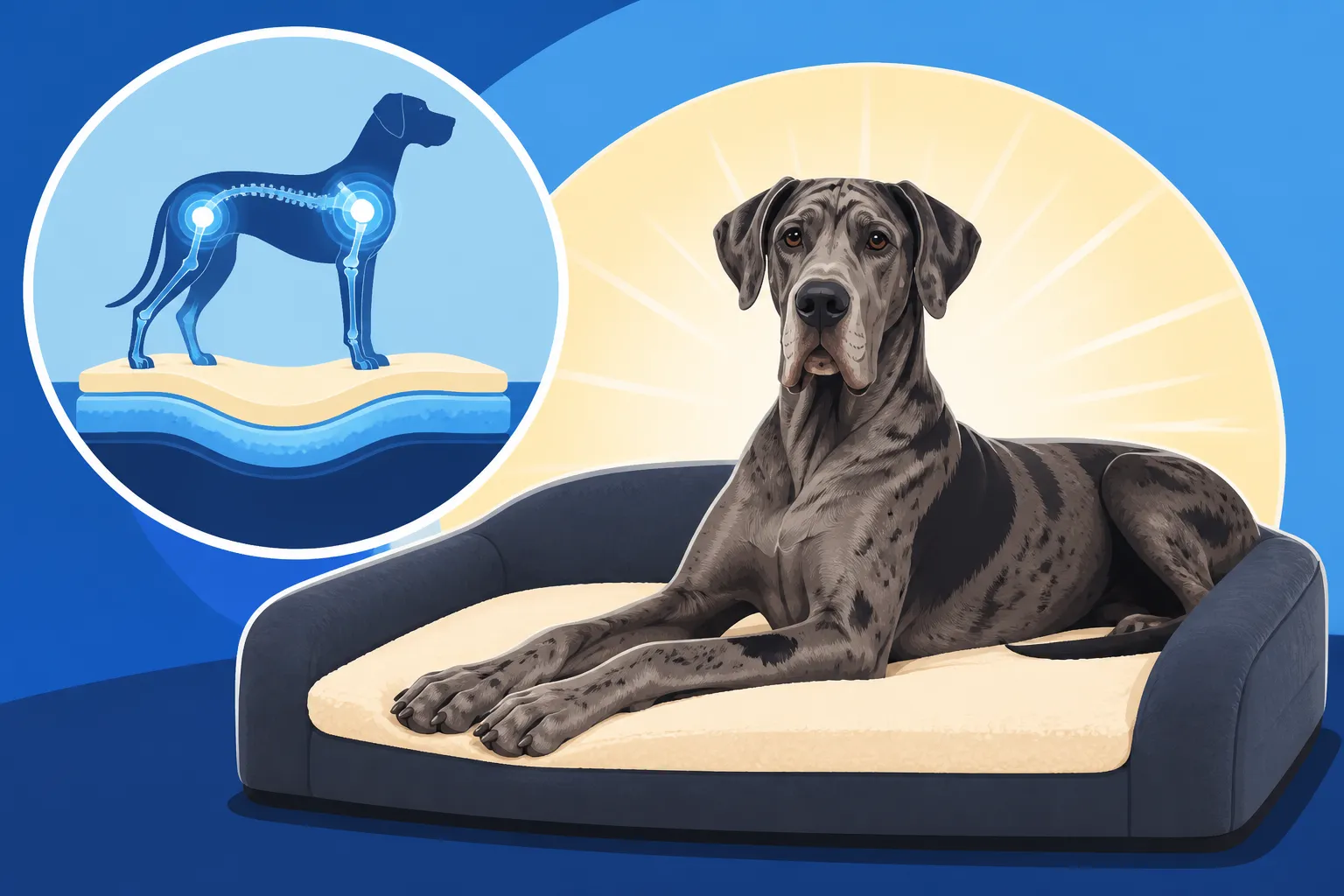
When we talk about true orthopedic support for a Great Dane, we're talking about high-density memory foam. This isn't your average fluffy pillow or a flimsy piece of egg crate foam that flattens out after a week. High-density memory foam is designed to conform to your dog's body, providing customized support by distributing weight evenly across the surface. This minimizes pressure points, which is crucial for large dogs prone to joint problems.
The density of the foam is key here, even more so than just its thickness. A cheap, thick foam might feel soft initially, but it will quickly compress and lose its supportive qualities under a Dane's weight. Look for beds that specify "medical grade" or "human-grade" memory foam. This usually indicates a higher density and better resilience. It means the bed will bounce back after use, maintaining its structural integrity and support for years, rather than turning into a pancake. Some top-tier brands even incorporate a supportive base foam layer beneath the memory foam, ensuring the bed doesn't bottom out, even when a 150-pound Dane plops down with enthusiasm.
Ideal Thickness and Support for a Giant Breed
Thickness definitely matters, but it needs to be combined with density. For a Great Dane, you're looking for an orthopedic bed that is typically at least 5-7 inches thick, with some premium options going up to 10 inches or more. This substantial depth ensures that even when your Dane settles in, their weight doesn't compress the foam so much that they're effectively lying on the floor.
Imagine trying to sleep on a thin camping mat versus a plush mattress; the difference in support is night and day. A bed that's too thin, regardless of its density, simply won't have enough material to cradle their entire body weight effectively. The goal is for the bed to keep them elevated and supported without allowing their heavier sections, like hips and shoulders, to sink through. This robust support is essential for preventing the kind of chronic joint strain that can shorten their comfort and overall health.
Durable Covers and Easy Cleaning for Giant Messes
Let's face it, Great Danes are magnificent, but they can also be messy. Drool, shedding, muddy paws, and occasional accidents are just part of the package. Therefore, the cover of an orthopedic bed is almost as important as the foam inside. You need something that can withstand heavy use, regular washing, and resist tears from enthusiastic nesting or digging.
Look for covers made from durable, tightly woven fabrics like heavy-duty canvas, microsuede, or even ballistic nylon. These materials are more resistant to snagging and wear. Crucially, the cover must be removable and machine washable. Bonus points for covers that are water-resistant or have a separate waterproof liner underneath to protect the foam itself from moisture. A high-quality zipper that's robust and perhaps even hidden will ensure the cover can be easily removed and replaced without breaking. This thoughtful design ensures that keeping your Dane's bed clean and hygienic, despite the inevitable giant messes, is a manageable task.
Sizing Up the Perfect Orthopedic Bed for Your Gentle Giant
Choosing the right size bed for a Great Dane is critical. You can have the most expensive, highest-density foam in the world, but if your Dane can't stretch out comfortably, it's not truly serving its purpose. They aren't small dogs who can curl up into a tight ball; they need ample space.
Measuring Your Great Dane for the Right Fit
This might sound obvious, but you'd be surprised how many people eyeball it. To get the perfect size, observe your Great Dane when they're truly relaxed and sprawled out. This might be in a deep sleep, or just lounging on the rug. Measure them from nose to the base of their tail when fully extended. Then, measure them from the top of their head to their paws when they're lying on their side. Add at least 6-12 inches to the longest of these measurements.
The idea is to ensure that when your Great Dane lies in their favorite sprawling position – whether that's on their side with legs outstretched, or on their back like a big, goofy couch potato – they are entirely on the bed. No limbs hanging off, no head resting on the floor. A bed that's too small forces them into cramped positions, negating the very purpose of orthopedic support by creating new pressure points. It's about accommodating their full, majestic length and breadth.
Common Dimensions and Shapes for Large Dog Beds
Most orthopedic beds for giant breeds come in extra-large (XL), XXL, or even XXXL sizes. Rectangular beds are the most common and often the most practical, fitting well into rooms and allowing for full extension. Some Danes enjoy bolster beds, which have raised edges that provide a sense of security and a place to rest their head, similar to a pillow. However, ensure the bolster doesn't eat too much into the actual sleeping surface, making the functional area too small.
Here's a general guide for Great Dane sizing, but always measure your individual dog:
| Bed Size | Approximate Dimensions (L x W) | Suitable For |
|---|---|---|
| XL | 44" x 35" | Smaller female Danes, dogs who prefer to curl up |
| XXL | 50" x 38" | Most average-sized Great Danes |
| XXXL | 55" x 47" or larger | Larger male Danes, dogs who love to sprawl completely |
| Giant | 60" x 48" or larger | Very large Danes, multiple dogs |
Remember, a circular or oval bed might look appealing, but it can be harder for a Great Dane to stretch out fully compared to a rectangular shape. The goal is maximum surface area for their expansive bodies.
Considering Bed Placement in Your Home
Once you've found the perfect bed, where you put it matters. Great Danes thrive on being part of the family, so placing their bed in a common area where they can observe you without being in the direct path of foot traffic is ideal. A quiet corner of the living room, near your desk, or at the foot of your bed are all popular choices. Some owners even opt for multiple beds strategically placed throughout the house.
Consider temperature: avoid placing the bed directly in front of a drafty door or a blazing heating vent. Also, think about accessibility, especially for "Caring for a Great Dane Past Six". If your senior Dane struggles with stairs, a comfortable bed downstairs means they don't have to navigate them as often to find a cozy spot. The right placement enhances their comfort and ensures they actually use the wonderful bed you've chosen for them, rather than opting for the cold, hard floor out of convenience.
Top Features to Look for in a Great Dane Orthopedic Bed
Beyond the core components of foam and size, several other features can significantly enhance the functionality, durability, and overall value of an orthopedic bed for your Great Dane. These are the details that make daily life easier for you and more comfortable for your dog.
Waterproof Liners and Removable Washable Covers
This is a non-negotiable feature for any Great Dane bed. As mentioned, Danes drool, shed, and occasionally have accidents, especially as puppies or seniors. A removable, machine-washable cover is essential for maintaining hygiene and keeping the bed fresh. Without it, you'd be battling odors and stains constantly, and the bed would quickly become unsanitary.
Even with a washable cover, an internal waterproof liner is the true hero. This liner encases the memory foam itself, creating a barrier against liquids. If an accident happens, or if water seeps through the outer cover, the waterproof liner protects the expensive foam from damage, odor absorption, and mold growth. Many brands, like those found on Chewy, often highlight this critical feature because they understand the realities of giant dog ownership. This protective layer drastically extends the life of the bed and makes cleaning up inevitable messes much less of a headache.
Non-Slip Bottoms and Heavy-Duty Zippers
Imagine a 150-pound Great Dane launching themselves onto their bed, only for it to slide across the polished hardwood floor. Not only is this annoying, but it can also be a safety hazard, especially for older dogs with mobility issues. A non-slip bottom, often made from textured rubberized material, is a simple yet crucial feature that keeps the bed securely in place, preventing unwanted movement and potential slips or falls.
Equally important are heavy-duty zippers. Cheaper beds often come with flimsy zippers that break or jam after only a few washes, making it impossible to remove or replace the cover. Look for metal zippers, double-stitched seams around the zipper, and perhaps even a zipper garage (a small fabric flap that hides the zipper pull). These details might seem minor, but they speak volumes about the overall quality and longevity of the bed, ensuring that "Replacing a Bed a Great Dane Has Worn Through" isn't a biannual event. A well-constructed zipper ensures you can easily maintain the bed without frustration.
Bolsters and Headrests for Extra Comfort
While a large, flat surface is crucial for full extension, many Great Danes absolutely adore beds with bolsters or raised edges. These soft, supportive bumpers provide a sense of security, mimicking the feeling of sleeping against a pack mate or in a den. More practically, they offer a comfortable place for your Dane to rest their head, chin, or paws, which many dogs prefer over a flat surface.
The key is finding a bed where the bolsters are well-stuffed and integrated but don't significantly reduce the actual sleeping area. Some designs feature bolsters on three sides, leaving one open for easy access, which can be particularly helpful for senior Danes who might struggle to step over a full perimeter. These subtle additions cater to a dog's natural nesting instincts and add an extra layer of coziness, making their orthopedic bed even more inviting and luxurious.
Popular Orthopedic Bed Brands for Great Danes
The market for dog beds is vast, but when it comes to Great Danes, you need to filter down to brands that genuinely understand the needs of giant breeds. This means focusing on quality, durability, and true orthopedic support, not just clever marketing.
High-Quality Memory Foam Options
When searching for the best, you'll encounter several brands that consistently deliver on high-quality memory foam. Brands like Big Barker are almost legendary in the giant breed community for their multi-layered, human-grade orthopedic foam beds. They often come with a 10-year warranty, promising that the bed won't flatten or sag by more than a certain percentage. This kind of commitment speaks volumes about the quality of their foam.
Other brands, often found on platforms like Chewy, also offer excellent memory foam options. Look for specifications that clearly state the density (e.g., 4lb or 5lb density foam) and construction, such as a top layer of gel-infused memory foam for cooling and a dense support foam base. These beds are designed to cradle heavy bodies without collapsing, making them perfect for maintaining joint health in Great Danes of all ages. Remember, it's about "Choosing Foam Thick Enough for a Great Dane" that provides lasting support.
Beds Designed for Extreme Durability and Size
Beyond just foam, some brands specialize in overall robust construction, knowing that a Great Dane can be hard on a bed. Orvis, for example, offers a range of tough dog beds, including their "ToughChew" line, which boasts tear-resistant fabric that can stand up to even the most determined nesters. While not exclusively orthopedic, many of their large beds incorporate memory foam or supportive polyfill that is denser than standard.
For sheer size, some custom or semi-custom manufacturers will make beds explicitly designed for dogs over 100 pounds, ensuring ample space and support. These brands understand that a Great Dane isn't just a "large" dog; they're in a league of their own. They use heavy-duty stitching, reinforced corners, and robust materials that are built to last against years of Great Dane exuberance and weight. This is particularly important for durability, especially considering the investment required for a proper giant breed bed.
Budget-Friendly Yet Effective Choices
While premium orthopedic beds can be a significant investment, it's possible to find budget-friendly options that still offer decent support. Sometimes, these involve slightly less dense foam or simpler covers, but they can still be a vast improvement over standard beds. Brands like BarkBox (through their various bed lines) or beds available through retailers like Amazon and Chewy often have sales or more economical choices.
When on a tighter budget, prioritize the foam quality above all else. You might sacrifice some aesthetic appeal or fancy features, but ensure the core support is still there. Look for beds with at least a 4-inch base of solid, supportive foam, even if the top layer is a slightly less dense memory foam. Reading reviews from other large dog owners is crucial here, as they can provide real-world insights into how the bed holds up over time. Sometimes, you can find excellent value by opting for a brand that might not be as well-known but focuses on delivering good core features. Companies like Healthy Paws, while an insurer, often have partnerships or recommendations for durable pet products, including bedding. Also, consider the longevity; a slightly more expensive bed that lasts five years is more cost-effective than a cheap one you replace annually.
Making the Most of Your Great Dane's Orthopedic Bed
Getting a fantastic orthopedic bed is only half the battle. To ensure your Great Dane truly benefits from it, you need to introduce it properly, maintain it diligently, and know when it's time for an upgrade.
Introducing the Bed and Encouraging Use
Some dogs take to a new bed instantly, but others might need a little encouragement, especially if they're used to sleeping on the floor or an old, unsupportive bed. Start by placing the new bed in a familiar spot where your Dane already enjoys resting. Make it inviting by tossing in their favorite blanket or toy.
Use positive reinforcement: lure them onto the bed with treats, praise them enthusiastically when they lie down, and offer gentle pets. You can even make it a designated "relax" spot during training sessions. Consistency is key. Soon, they'll associate the orthopedic bed with comfort and security, choosing it over other less supportive spots in the house. This foundational comfort is part of setting up "The Kit a Great Dane Puppy Needs First" for a lifetime of well-being.
Regular Maintenance for Longevity and Hygiene
To maximize the life of your investment and keep things fresh, regular maintenance is crucial. Establish a routine for cleaning the bed cover. For most orthopedic beds with removable, washable covers, aim to wash them every 2-4 weeks, or more often if your Dane is particularly messy or prone to allergies. Always follow the manufacturer's washing instructions to prevent shrinking or damaging the fabric.
Additionally, vacuum the bed surface between washes to remove loose hair and dander. Periodically inspect the foam itself for any signs of wear, compression, or moisture, especially if you don't have a waterproof liner. Rotating the foam insert, if possible, can also help distribute wear evenly, much like rotating a human mattress. This proactive approach ensures the bed remains supportive and hygienic, contributing to your Great Dane's overall health and well-being for as long as possible.
When to Replace an Orthopedic Bed
Even the best orthopedic beds don't last forever, especially under the considerable weight of a Great Dane. Knowing when to replace it is important to ensure your dog continues to receive the support they need. The most obvious sign is when the foam no longer springs back to its original shape and remains compressed, particularly in the areas where your dog lies most often. If you can feel the floor through the bed when your dog is lying on it, it's definitely time for a new one.
Other indicators include noticeable sagging, tears or irreparable damage to the cover, or a persistent odor that won't wash out. If your Great Dane starts avoiding their bed in favor of the floor, or seems restless and uncomfortable when lying on it, these are clear signals. As your Dane ages, their needs might also change; a bed that was adequate in their youth might not provide enough cushioning for their arthritic joints as a senior. Regularly assessing the condition of the bed and your dog's comfort levels will ensure they always have the best possible place to rest.
Disclaimer
The information provided in this article is for general informational purposes only and does not constitute veterinary advice. Always consult with a qualified veterinarian for any health concerns or before making any decisions about your Great Dane's care or treatment.