Picking a Deductible Against Great Dane Surgery
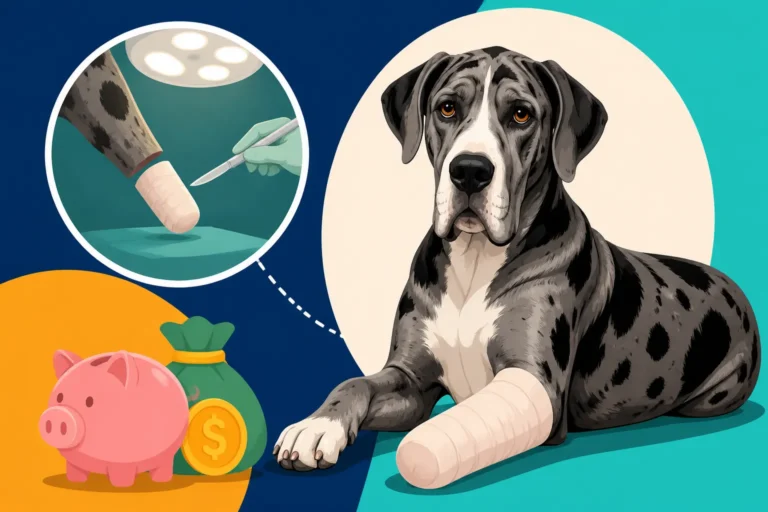
One of the most terrifying realities for any Great Dane owner is the thought of a sudden, critical illness or injury that requires surgery. The bills for a dog of this size can be astronomical, leaving many of us in a panic trying to figure out how to cover the costs. This guide is here to walk you through one of the most crucial decisions when it comes to pet insurance for your giant companion: picking the right deductible to cushion the blow of those inevitable, substantial veterinary expenses.
Understanding Pet Insurance Deductibles for Giant Breeds
Let's face it, Great Danes are magnificent, but their size often means everything costs more when it comes to their health care. From medication dosages to surgical supplies, the scale of their needs directly impacts the final bill. This is precisely why understanding your pet insurance deductible is so vital.
What Exactly Is a Deductible?
In the simplest terms, a deductible is the amount of money you have to pay out of your own pocket before your pet insurance company starts paying for covered veterinary expenses. Think of it like this: if your Great Dane needs a surgery that costs a few thousand dollars and you have a $500 deductible, you would pay the first $500 of that bill, and then your insurance would cover a percentage (typically 70-90%) of the remaining cost, up to your policy's annual or per-incident limit.
It's absolutely crucial to distinguish between an annual deductible and a per-incident deductible. An annual deductible means you pay that amount once per policy year, no matter how many separate illnesses or accidents your Great Dane experiences. This is often the preferred choice for Great Dane owners because these dogs can, unfortunately, be prone to multiple health issues. A per-incident deductible, on the other hand, means you pay that specific amount each time a new condition arises. Imagine your Dane has a bout of pancreatitis, and then a few months later needs surgery for a torn cruciate ligament – with a per-incident deductible, you'd pay the deductible for the pancreatitis claim and then again for the cruciate surgery. This can quickly add up and often catches owners by surprise. Generally, a higher deductible typically translates to a lower monthly premium, but it also means a larger upfront cost when a covered event occurs.
Why Great Dane Surgery Bills Are Different
The sheer magnitude of a Great Dane's body means that procedures and treatments aren't just scaled up; they often involve specialized considerations and higher material costs. For instance, anesthesia for a 150-pound dog is a far more complex and expensive undertaking than for a 20-pound terrier. Medications are dosed by weight, so a larger dog requires significantly more medication, whether it's antibiotics, pain relief, or cardiac drugs. You can learn more about this in our article Why Great Dane Anesthesia Is Billed Higher.
Common Great Dane-specific surgeries, such as a life-saving bloat surgery (gastric dilatation-volvulus or GDV), can run into the thousands very quickly. The threat of bloat is very real for our breed, with Bloat in a Great Dane and the One in Three Odds detailing just how prevalent it is. Orthopedic issues, like osteosarcoma, a form of bone cancer common in giant breeds, also require extensive and costly interventions, as discussed in Osteosarcoma Treatment Costs for a Great Dane. These aren't minor procedures; they are intensive, often overnight hospitalizations with extensive monitoring and recovery needs. A single major surgery for your Great Dane can easily reach the upper echelons of veterinary costs, making your deductible choice a pivotal financial safeguard.
The Impact of Deductible Choice on Your Wallet and Peace of Mind
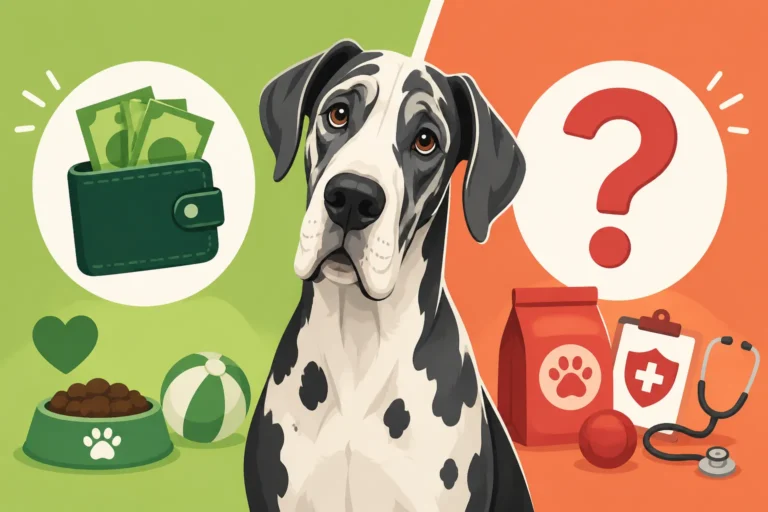
Choosing your deductible isn't just about numbers; it's about balancing your immediate financial outflow (monthly premiums) with your potential financial vulnerability during an emergency. It's about how much stress you're willing to absorb when your beloved Great Dane is in crisis.
The Trade-off: Premiums vs. Out-of-Pocket Max
This is the classic balancing act. If you opt for a lower deductible, say $250, your monthly pet insurance premium will likely be higher. However, when your Great Dane needs a $6,000 emergency surgery, your initial out-of-pocket payment before insurance kicks in is "only" $250 (plus your reimbursement percentage for the remaining balance). This can be a huge relief in a high-stress situation, allowing you to focus on your dog's recovery rather than scrambling for funds.
On the flip side, if you choose a higher deductible, perhaps $1,000, your monthly premiums will be lower, saving you money on a month-to-month basis. But if that same $6,000 emergency surgery arises, you're responsible for the first $1,000 before insurance contributes. While the lower premiums might seem appealing in the short term, you need to be absolutely certain you have that $1,000 readily available in an emergency fund. Many Great Dane owners find themselves building a dedicated fund just for these scenarios, which we explore in Building a Fund Before a Great Dane Needs It. The last thing you want is to be facing a dire medical situation and simultaneously trying to figure out how to pay a hefty deductible.
Real-World Scenarios and Deductible Strategies
Let's imagine a few common scenarios for Great Dane owners:
-
The "Small Emergency Fund, Many Potential Claims" Owner: If you know your emergency savings are limited, and you want to ensure minimal upfront costs during a crisis, a lower deductible (e.g., $250 or $500) might be your best bet. While your monthly premium will be higher, it provides significant peace of mind knowing you won't be hit with a large surprise bill during an already stressful time. For breeds like Great Danes, who can unfortunately encounter various health challenges like Growth Disorders in a Great Dane Puppy or later-life joint issues, this approach minimizes the immediate financial impact of each new issue (especially with an annual deductible).
-
The "Robust Emergency Fund, Few Claims Expected" Owner: If you have a substantial savings account specifically earmarked for your Great Dane's potential medical needs, or you're betting on your dog being exceptionally healthy, a higher deductible (e.g., $750 or $1,000) could save you money on premiums over time. This strategy works well if you're confident you can comfortably cover that larger upfront cost should a major surgery be necessary. Many owners find a comfortable medium, perhaps a $500 deductible, strikes a good balance between premium costs and emergency readiness.
-
The "Bloat Anxiety" Owner: For many Great Dane owners, the specter of bloat is a constant concern. A bloat emergency is often a five-figure bill, and the initial The Overnight Bill When a Great Dane Bloats can be staggering. If this particular risk weighs heavily on you, a lower deductible could make that initial shock much more manageable. Alternatively, if your Great Dane has already had a prophylactic gastropexy (stomach tacking), which significantly reduces the risk of twist but not necessarily bloat itself, your overall risk profile might change, potentially influencing your deductible comfort level for other potential surgeries.
Ultimately, the best strategy involves choosing a deductible amount that you could realistically pay without undue financial strain if a significant surgery or emergency happened tomorrow. It should be an amount that allows you to make medical decisions for your Great Dane based on their needs, not solely on your wallet.
Factors to Consider When Setting Your Great Dane's Deductible
There's no universal "perfect" deductible. What works for one Great Dane family in California might not work for another in Florida. It's a deeply personal decision influenced by several key factors.
Your Personal Financial Situation
This is perhaps the most critical determinant. You need to take an honest look at your monthly budget and your emergency savings. Can you comfortably afford a higher monthly premium to have a lower deductible? Or would a lower monthly premium make your budget more manageable, even if it means stashing away more cash for potential emergencies? Some pet insurance providers, like Healthy Paws, offer various deductible options precisely because they understand financial situations differ. It's about assessing what you can truly commit to without stretching yourself too thin. Remember, the goal of pet insurance is to alleviate financial stress, not add to it. Consider how much cash a Great Dane owner should keep ready for unexpected events beyond what insurance might cover.
Your Great Dane's Age and Health Profile
Your Great Dane's stage of life and current health play a huge role.
- Puppies and Young Adults: A young Great Dane might be more prone to accidental injuries, sudden illnesses, or even growth-related issues. For these dogs, a mid-range deductible, or even a lower one, might be beneficial, as you're covering a wide range of potential unexpected events. They're still growing, and sometimes that growth comes with its own set of orthopedic concerns.
- Middle-Aged to Senior Danes: As Great Danes age, the likelihood of developing chronic conditions, requiring ongoing management, or needing age-related surgeries (like those for arthritis, cancer, or heart disease) increases significantly. For a senior Great Dane, a lower annual deductible might be highly advantageous, as you could potentially hit that deductible multiple times throughout the year with various claims. If you're Caring for a Great Dane Past Six, you're well into The Great Dane Years That Count as Senior, and health issues become more common.
It's also essential to remember that pet insurance typically doesn't cover pre-existing conditions. So, if your Great Dane has already been diagnosed with a chronic illness, your deductible choice will only apply to new illnesses or injuries that arise after your policy's waiting period.
The "Annual vs. Per-Incident" Deductible
I cannot stress this enough: know the difference between an annual and a per-incident deductible. This is arguably one of the most critical distinctions for Great Dane owners, given the breed's predispositions.
| Deductible Type | How It Works | Pros | Cons |
|---|---|---|---|
| Annual | You pay once per policy year, regardless of the number of unique conditions/claims. | Ideal for Great Danes, who may have multiple health issues in a year. Once met, insurance pays for all. | Monthly premiums might be slightly higher than per-incident deductibles for the same dollar amount. |
| Per-Incident | You pay the deductible each time a new, distinct condition arises and is claimed. | Monthly premiums might appear lower upfront. | Can be much more expensive if your Great Dane has several different health problems/surgeries within a single year. |
For a Great Dane, which can face multiple challenges like bloat, orthopedic issues, and heart conditions, an annual deductible often offers far better financial protection. Imagine your Dane needs a cruciate repair, then a few months later suffers from bloat. With an annual deductible, you meet it once and then your reimbursement percentage applies to both. With a per-incident deductible, you'd be paying it twice, significantly increasing your out-of-pocket costs. Always ask your pet insurance provider, like those found through Chewy's pet insurance offerings or other dedicated pet insurers, which type of deductible they provide.
Making the Best Deductible Choice for Your Great Dane
The decision might feel overwhelming, but with careful consideration and comparison, you can arrive at the best choice for your Great Dane and your household budget.
Reviewing Policy Details and Comparing Providers
Never settle for the first quote you receive. It's prudent to get detailed quotes from several reputable pet insurance providers. When comparing, don't just look at the monthly premium; dig into the deductible options they offer, whether they are annual or per-incident, and what reimbursement percentages are available (typically 70%, 80%, or 90%). For example, Healthy Paws is known for its annual deductible structure and high reimbursement rates, which can be very appealing for Great Dane parents.
Ask about any specific exclusions for giant breeds or conditions common in Great Danes, such as Dilated Cardiomyopathy (DCM) or Wobbler Syndrome. Always read the fine print regarding waiting periods, especially for orthopedic conditions, as these can be longer. This detailed comparison will allow you to construct a full picture of what you're actually paying for and what protection you'll receive. This diligence is part of understanding Insuring a Great Dane Against Bloat and Heart Bills.
What if I Can't Afford a Deductible?
The reality is that sometimes even a chosen deductible can be a stretch, especially if an unexpected emergency hits at a bad time. If you find yourself in this situation, it’s not hopeless. Many veterinary offices offer payment plans, or you might look into third-party financing options like CareCredit, which acts like a credit card specifically for healthcare expenses, often with deferred interest options if paid off within a certain timeframe.
This highlights the critical importance of planning ahead. Even if you don't have pet insurance, setting up a dedicated "Great Dane Emergency Fund" with regular contributions can act as your own self-insurance and help cover deductibles when they arise. Remember, while pet insurance is a fantastic tool, it's not a magic bullet, and a solid financial plan is paramount. We delve into this more in Whether Pet Insurance Is Essential for a Great Dane.
Reassessing Your Choice Over Time
Your Great Dane's needs and your financial situation are not static. It's a wise practice to review your pet insurance policy annually, ideally around renewal time. As your Great Dane ages, their health profile changes, and so might their susceptibility to certain conditions. For instance, a deductible that made sense for your rambunctious two-year-old Dane might not be ideal for your dignified seven-year-old who is starting to slow down and show signs of age.
If your financial situation improves, you might consider lowering your deductible to reduce future out-of-pocket expenses. Conversely, if you've built up a robust emergency fund, you might opt for a higher deductible to lower your monthly premiums. Pet insurance providers, including those like Ollie that focus on wellness and meal plans but often partner with insurance providers, understand that flexibility is key. Keeping your policy aligned with your current circumstances ensures you're always getting the best value and protection for your giant companion.
Disclaimer
This article is for general informational purposes only and does not constitute professional advice. Laws, prices and regulations vary by location and change over time. Consult a qualified professional for guidance on your specific situation.