The Manners a Great Dane Needs Before It Grows
Bringing a Great Dane into your home is an incredible joy, but many new owners quickly realize that the adorable, gangly puppy they fell in love with is going to become a truly massive dog. The challenge lies in teaching appropriate behavior before that size makes everyday interactions difficult, even dangerous. This comprehensive guide will walk you through the essential manners your Great Dane needs to learn from a young age to ensure a harmonious, safe, and happy life for everyone in your household and beyond.
Why Early Training Isn't Optional for a Great Dane
It's easy to get caught up in the sheer cuteness of a Great Dane puppy. They are undeniably charming, often clumsy, and have an innocent gaze that can melt even the sternest heart. However, it's precisely because of their eventual immense size that training cannot wait. What might be a minor annoyance in a smaller dog—like jumping up or pulling on the leash—becomes a significant, potentially dangerous problem when you're dealing with a dog that can easily outweigh an adult human.
The "Gentle Giant" Misconception
We often hear Great Danes referred to as "gentle giants," and in temperament, they often are. They are typically known for their sweet, affectionate, and patient nature. This reputation, while largely true, can inadvertently lead owners astray. It might make them think that formal training isn't as crucial because the dog will naturally be "gentle." The reality is, "gentle" refers to their disposition, not necessarily their inherent understanding of human rules or their ability to control their powerful bodies. A Great Dane doesn't mean to knock a toddler over, but if they haven't been taught otherwise, a playful jump can have serious consequences due to their sheer mass.
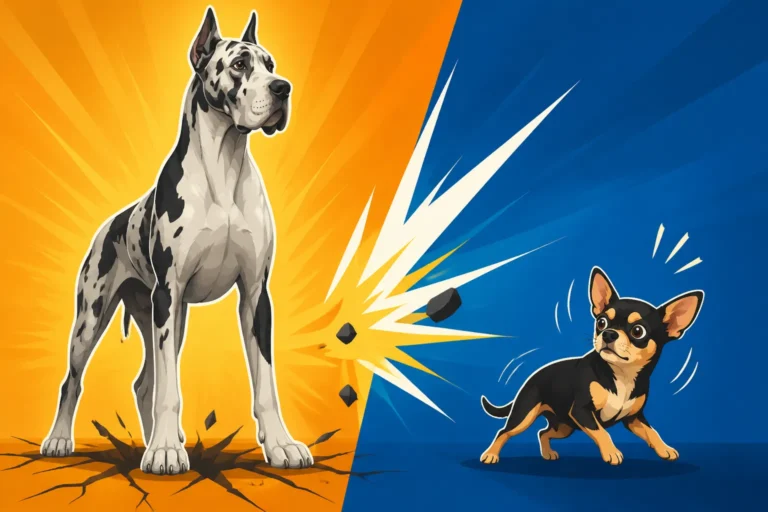
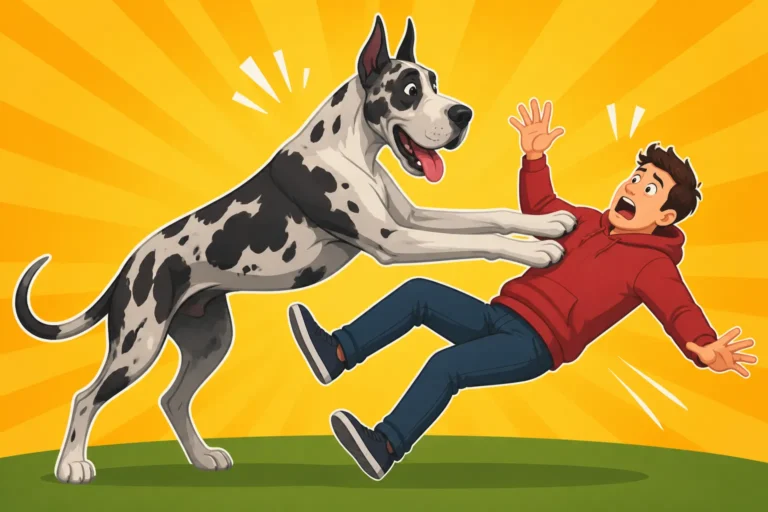
Think about it: a small terrier jumping up might get your clothes dirty, but a fully grown Great Dane, weighing 150 pounds or more, jumping to greet you can easily knock you off your feet, send an elderly relative sprawling, or injure a small child. Their size amplifies every behavior, good or bad. Relying solely on their "gentle" nature without reinforcing good manners is like expecting a car to drive itself politely without any steering input. The potential for accidental injury or property damage is simply too high to leave to chance. This is why the foundation for The Manners a Great Dane Needs Before It Grows must be laid early and consistently.
The Physical Reality of an Untrained Giant
The sheer physics of a full-grown Great Dane demand early intervention. Imagine trying to physically restrain a happy, untrained 180-pound dog that decides it wants to chase a squirrel across a busy street, or one that decides your dinner plate looks more appealing on the floor. It's not just difficult; it's often impossible for many people, regardless of their own physical strength. A large, untrained Great Dane can pull even a strong adult off their feet with little effort, making walks stressful and potentially hazardous.
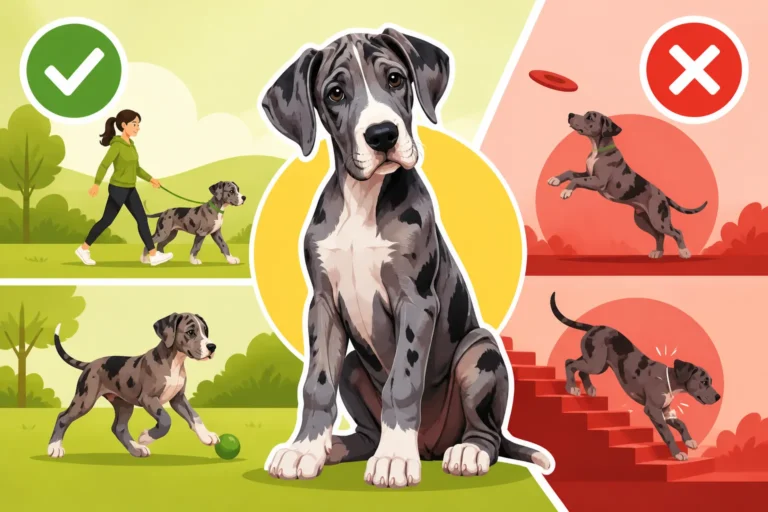
Consider also the long-term impact on their health. Exercise Limits While a Great Dane Is Still Growing are crucial to protect their developing joints. If your Dane isn't leash trained, forcing them into uncontrolled sprints or sudden stops to manage their pulling can put undue stress on their hips and elbows. Early training ensures that even their physical exercise is managed in a way that promotes their overall well-being, rather than exacerbating potential breed-specific joint issues. It's about setting them up for success, both behaviorally and physically, throughout their comparatively Why a Great Dane Only Lives Seven to Ten Years.
Foundation Cues: The Bare Minimum for Safety
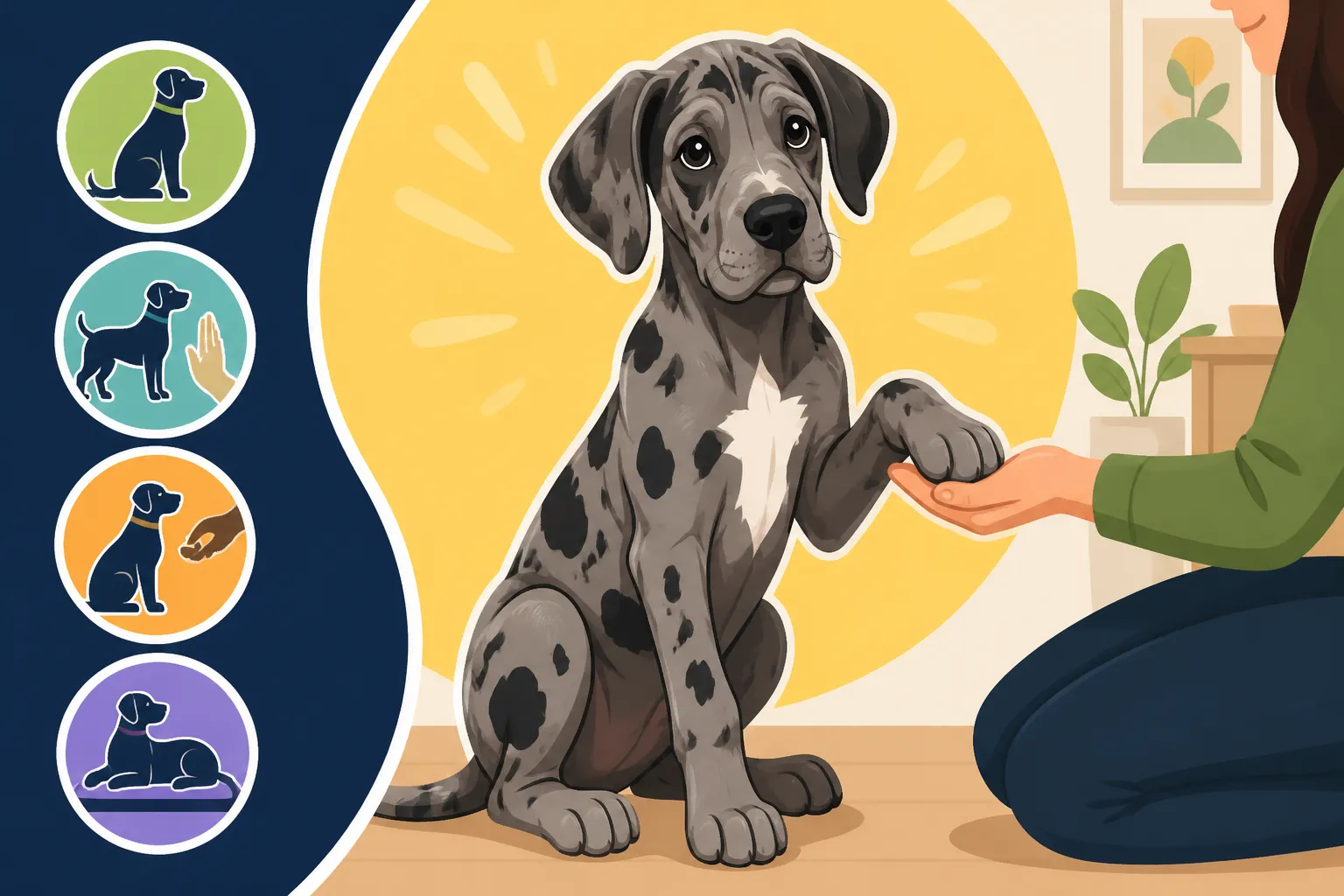
Before you start dreaming of advanced tricks, your Great Dane needs to master a few fundamental cues. These aren't just for show; they are vital for their safety and for maintaining a respectful household dynamic. These basic commands create a language you and your dog share, allowing you to communicate expectations and ensure they respond reliably in various situations.
"Sit," "Stay," and "Down" – More Than Just Tricks
These three cues form the cornerstone of all good manners. "Sit" is invaluable for polite greetings, waiting at doorways, and simply asking for a moment of calm. Instead of letting your enthusiastic giant bowl over guests, a simple "Sit" command provides an alternative, polite behavior. You can have them sit before you put their food bowl down, sit before going out the door, or sit to be petted. This teaches impulse control, a critical skill for a large dog who might otherwise act on every whim.
"Stay" is the ultimate safety net. Imagine opening the front door to grab a package, and your Great Dane, still a playful puppy at heart, attempts to bolt past you. A solid "Stay" can prevent them from running into traffic or getting lost. It also allows you to control their proximity to tempting items, like a dropped snack on the floor, or to maintain a safe distance from other dogs or people who might be nervous around large breeds. Teaching them to "Stay" patiently, even when you walk away briefly, builds their confidence and teaches them self-control.
"Down" is often a more submissive posture for a dog, and it's fantastic for settling them down in public places or at home when you need them out of the way. A Great Dane lying calmly on their mat or bed is far less imposing than one standing and milling about. It's also a great way to manage their energy during times when you can't actively engage with them, such as when you're cooking dinner or hosting company. Practicing these cues repeatedly in different environments, starting in low-distraction areas, will build their reliability as they grow.
The Critical "Come" and "Leave It" Commands
If "Stay" is the safety net, "Come" is the emergency brake. A reliable recall is arguably the most important command any dog, especially a Great Dane, can learn. There will be times when your dog is off-leash in a safe, designated area, or perhaps they've managed to slip out the door or gate. In these moments, their ability to "Come" immediately when called could literally save their life. Start practicing "Come" in a quiet, fenced area with high-value treats and make it a game, always ending on a positive note. Never use "Come" to punish them or to do something they dislike; you want them to associate it only with good things.
"Leave It" is another indispensable cue for Great Danes, given their height and inquisitive nature. From keeping them away from potentially toxic dropped food to preventing them from snatching items off counters, "Leave It" empowers you to control their interactions with their environment. A Great Dane can easily reach items on kitchen counters, coffee tables, and even some shelves. Teaching them to ignore tempting items and redirect their attention to you is crucial. You might use this when walking past tempting garbage on the sidewalk, or when they eye the delicate figurine on your end table. With consistency, a strong "Leave It" command will become a lifesaver in managing their interactions with the world around them. This command is especially important for preventing issues like Why a Great Dane Steals Food Off Counters.
Preventing the "Jumping Bean" Dane
It's sweet when a little puppy jumps up to greet you, paws landing lightly on your knees. It's far less endearing, and frankly, dangerous, when a 150-pound Great Dane launches itself at you, your guests, or an unsuspecting stranger. Preventing this behavior from solidifying is paramount for Great Dane owners.
Understanding Why Great Danes Jump
Dogs jump primarily for attention or excitement. When a tiny puppy jumps, we often instinctively bend down, pet them, and coo at them. This, inadvertently, teaches them that jumping is an effective way to get what they want: our notice, affection, or even play. As they grow, this learned behavior continues. They don't understand that their intent is playful and loving, but their execution is now potentially harmful. For a Great Dane, jumping can also be a display of over-excitement, especially when greeting people they adore, like their primary human when they return home.
Sometimes, jumping can also be a lack of impulse control. They might be so overwhelmed by the presence of a new person or the thrill of an arrival that they simply can't contain themselves. Understanding the motivation behind the jump—whether it's attention-seeking, excitement, or a lack of manners—is the first step in addressing it effectively. It’s rarely malicious, but that doesn't make the impact any less serious.
Proactive Strategies for Polite Greetings
The key to Stopping a Great Dane Jumping Up on People is to prevent the behavior from ever taking root. From the moment your puppy comes home, decide that four paws must stay on the floor for all greetings. When your puppy approaches and starts to lift their paws, turn your back, cross your arms, and completely ignore them. The moment all four paws are on the floor, turn around, praise them calmly, and offer a gentle pet. This teaches them that politeness earns attention, while jumping makes you disappear. Consistency is absolutely crucial, with every member of the household and any visitors reinforcing this rule.
You can also proactively teach an alternative behavior. For instance, ask your Dane to "Sit" as someone approaches, then reward them with praise and a treat for remaining seated during the greeting. If they offer a sit automatically, even better! This provides a clear, polite action for them to perform instead of jumping. Consider keeping a small jar of treats by the door for this purpose, making it easy for everyone to reward good behavior immediately. Using a leash during greetings in the early stages can also give you more control to prevent jumping and guide them into a sit.
Managing an Already Established Jumper
If your Great Dane has already established a jumping habit, don't despair, but be prepared for consistent effort. The principle remains the same: jumping earns no attention, polite behavior earns everything. This means everyone who interacts with your dog must follow the rule. If Aunt Carol comes over and encourages the jumping because "he's just so excited to see me!", you're undermining weeks of training. Politely educate your guests on how to interact with your Dane.
For persistent jumpers, you might need to manage their environment more closely. When guests arrive, put your Dane on a leash, or even in another room temporarily, until they've calmed down. Then, reintroduce them on leash, asking for a "Sit" and rewarding calm behavior. If they jump, gently guide them away, turn your back, or momentarily remove them from the interaction. Some owners find tools like a front-clip harness can provide better control during these training sessions, as it redirects their forward momentum when they try to jump. The goal is to make jumping completely unrewarding and make standing or sitting calmly the most rewarding option.
Mastering the Leash: Walking a Hundred-Fifty-Pound Dog
Walking a Great Dane should be an enjoyable experience for both of you, a chance to explore and bond. However, an untrained Great Dane can turn a leisurely stroll into a battle of wills, pulling you down the street and making you dread walks. Mastering leash manners is non-negotiable for such a powerful breed.
Equipment That Makes a Difference
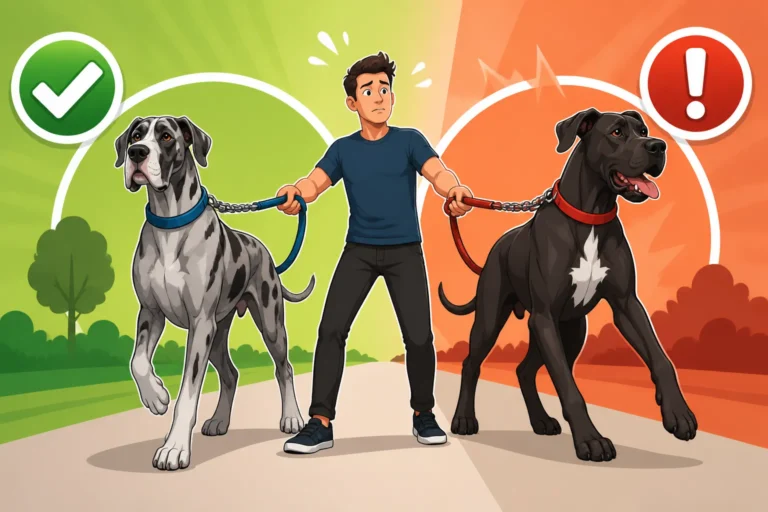
When you're dealing with a dog that can easily outweigh you, the right equipment isn't just helpful; it's essential for safety and effective training. A standard flat collar often provides little control over a determined Great Dane. Many owners find success with a front-clip harness, which attaches the leash at the dog's chest. When the dog pulls, it gently redirects them to the side, making it much harder for them to pull forward with full force. Brands like Easy Walk or Freedom Harness are popular choices that can be found on platforms like Amazon.
Another option is a head halter, sometimes called a head collar. This fits over your dog's muzzle, similar to a halter on a horse, and gives you excellent control over their head, and therefore, their direction. It allows for gentle steering and can be very effective for strong pullers. It's crucial, however, to introduce head halters slowly and positively, associating them with treats and praise, as some dogs initially find them odd. Never use a choke chain or prong collar without professional guidance, as these can cause physical harm and rarely address the root cause of pulling. The goal is communication and control, not pain or fear.
Teaching a Loose-Leash Walk
The dream is a Great Dane trotting politely by your side, leash slack. The reality often involves being dragged like a kite. Start teaching loose-leash walking in a quiet area with minimal distractions. The core principle is that pulling gets you nowhere, and a loose leash earns rewards. Every time your dog pulls ahead, stop moving. Stand still, like a tree, until the leash slackens, even for a moment. The instant there's slack, praise them and start walking again. If they pull, you stop. This can feel tedious, but consistency is key. Your dog will quickly learn that forward motion is tied directly to a loose leash.
Reward your Great Dane frequently when they are walking nicely beside you. Use high-value treats and praise, especially when they check in with you or maintain a relaxed pace. You can also use a "heel" command, rewarding them for staying in a specific position next to you. Practice short sessions, gradually increasing duration and introducing more distractions as they improve. Remember that Great Dane Leash Manners at a Hundred and Fifty Pounds require patience and a calm, assertive demeanor from you.
Handling Distractions and Reactivity
Once your Great Dane masters loose-leash walking in quiet environments, it's time to tackle distractions. Other dogs, squirrels, children, loud noises – these can all trigger a Great Dane to pull, lunge, or bark. The key is to manage their exposure and build their ability to remain calm. Start with mild distractions at a distance they can still manage, gradually moving closer as they succeed. For instance, if another dog at 50 feet causes them to react, practice loose-leash walking when the other dog is 100 feet away, rewarding heavily for calm behavior.
If your Great Dane tends to lunge or react strongly to specific triggers, consider professional help from a certified dog trainer or behaviorist. They can offer personalized strategies and help you understand the underlying causes of their reactivity. You might learn techniques like "look at that," where you reward your dog for simply noticing a distraction without reacting, or engage them in a "touch" command to redirect their focus to your hand. Managing reactivity is a process, but with consistent effort and the right tools, your Great Dane can learn to navigate the world calmly.
| Command | Purpose | Importance for Great Danes |
|---|---|---|
| Sit | Polite greetings, waiting, impulse control | Prevents jumping, keeps paws off guests, creates calm around food. |
| Stay | Holding position, safety, preventing bolting | Crucial for open doors, public places, avoiding dangerous situations. |
| Down | Settling, relaxation, out-of-the-way | Great for guests, restaurants, vet visits, prevents tripping hazards. |
| Come | Emergency recall, off-leash safety | Potentially life-saving if they get loose or bolt in a dangerous area. |
| Leave It | Ignoring tempting/dangerous items, counter surfing | Essential for keeping paws off counters, away from dropped food/toxins. |
| Loose-Leash | Enjoyable walks, control in public | Prevents pulling and injury to handler, keeps walks pleasant for everyone. |
Counter Surfing and Food Stealing: The "Table Hunter" Dane
One of the unique challenges of owning a Great Dane is their sheer height. What's safely out of reach for most dogs is often at eye-level or within easy snatching distance for a curious Great Dane. This makes counter surfing and food stealing a common, and often frustrating, problem.
The Reach of a Great Dane
It's not an exaggeration to say that a Great Dane can easily reach items on kitchen counters, dining tables, and even some shelves. Picture this: you've just plated a delicious dinner, turned your back for a second to grab drinks, and when you turn around, half your meal is gone, or a massive head is delicately sampling your masterpiece. This isn't just annoying; it can be dangerous. Your Dane could ingest something toxic, hot, or sharp, leading to an emergency vet visit.
Their height and reach mean that traditional dog-proofing strategies, like placing items "out of reach," often don't apply. You have to adjust your entire understanding of what "out of reach" means. This is why prevention through training and management is so critical. They are often incredibly observant and will quickly learn the routine: if you leave the room, the counter becomes a buffet.
Environmental Management and Training for "Off"
The first line of defense against counter surfing is strict environmental management. If it's on the counter and edible, assume your Great Dane can and will try to get it. This means developing new habits for yourself: never leave food unattended on counters or tables, especially when your dog is unsupervised. Clear dishes immediately after meals. If you're cooking and need to step away, either put your Dane in another room or crate them temporarily, or put all tempting items completely away. Baby gates (tall ones, of course!) can also be useful to block access to the kitchen during vulnerable times, like meal prep.
Simultaneously, you need to train a solid "Leave It" and "Off" command. "Off" means all paws off the counter or table. Practice this by placing a low-value item on the edge of the counter (something your dog isn't intensely interested in, but might sniff). When your Dane investigates, say "Off!" and immediately reward them with a treat from your hand away from the counter when their paws hit the floor. Gradually increase the value of the item on the counter and extend the duration they need to stay "Off." The goal is for them to understand that ignoring the counter and looking to you brings a better reward. Consistency and managing the environment are the dynamic duo here.
Socialization: Building a Confident, Calm Great Dane
A well-socialized Great Dane is a joy to live with and a wonderful ambassador for their breed. An undersocialized one, however, can be fearful, reactive, or overly boisterous, which can become problematic due to their size. Socialization isn't just about meeting other dogs; it's about positive exposure to the world around them.
Beyond Puppy Classes: Real-World Experiences
Puppy classes are a fantastic start, offering controlled environments for your Great Dane to meet other puppies and people, and learn basic manners. However, socialization extends far beyond the classroom. It's about exposing your puppy to a wide variety of sights, sounds, smells, people, and experiences in a positive, controlled way before they develop fear or reactivity. Think about everything they might encounter in their adult life: children, men with beards, people in hats, skateboards, bicycles, different floor textures, car rides, vet visits, loud city noises, quiet park trails.
The key is quality over quantity. A single scary experience can undo weeks of positive exposure. Focus on calm, positive interactions. For example, instead of letting your puppy be mobbed by enthusiastic strangers, have them sit calmly a short distance away while people pass by. Reward them for simply observing without reacting. Take them for short, positive car rides to various places, even if it's just to sit outside a coffee shop for a few minutes, observing the world. This helps to build a confident, adaptable dog who sees new experiences as interesting rather than frightening. This early and consistent effort is part of Socializing a Great Dane Puppy Early.
Introducing Your Dane to Children and Smaller Pets
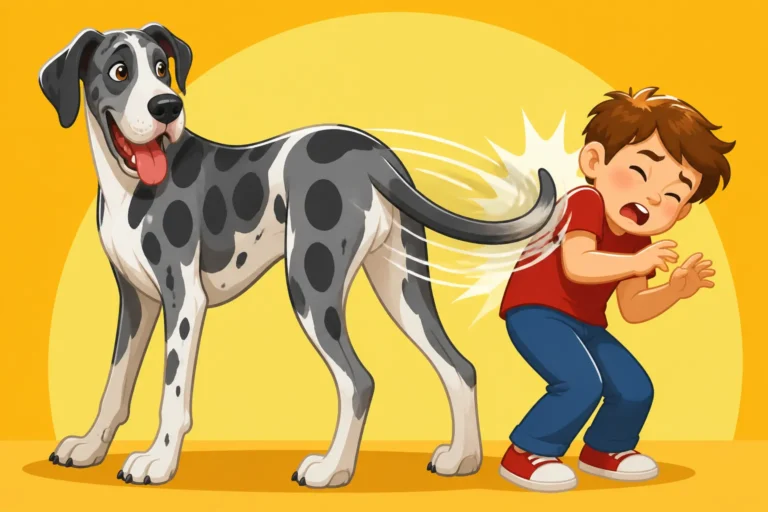
Great Danes are often wonderful with children and smaller pets, earning them their "gentle giant" moniker. However, this doesn't mean you can skip introductions and supervision. For children, teach both your Great Dane and the kids how to interact safely. Teach your Dane to be gentle, to respect personal space, and not to jump or mouth. Teach children to be calm, to avoid pulling ears or tails, and always to ask an adult before approaching a dog. Always supervise interactions, especially with toddlers, who can be unpredictable. Even a gentle tail wag from a Great Dane can knock a small child over. Great Danes With Children and Small Dogs thrive when clear boundaries and respectful interactions are established early.
When introducing your Great Dane to smaller dogs or cats, do so slowly and under controlled conditions. Start with them on leash, perhaps with a gate or barrier between them, allowing them to sniff and observe each other from a safe distance. Reward calm behavior. Gradually decrease the distance, always ready to intervene if either animal shows signs of stress or aggression. Ensure smaller pets have escape routes or high places they can retreat to if they feel overwhelmed. The goal is mutual respect and peaceful coexistence, understanding that even the gentlest giant can accidentally injure a smaller creature if boundaries aren't clear.
Alone Time and Independence: Preventing Separation Anxiety
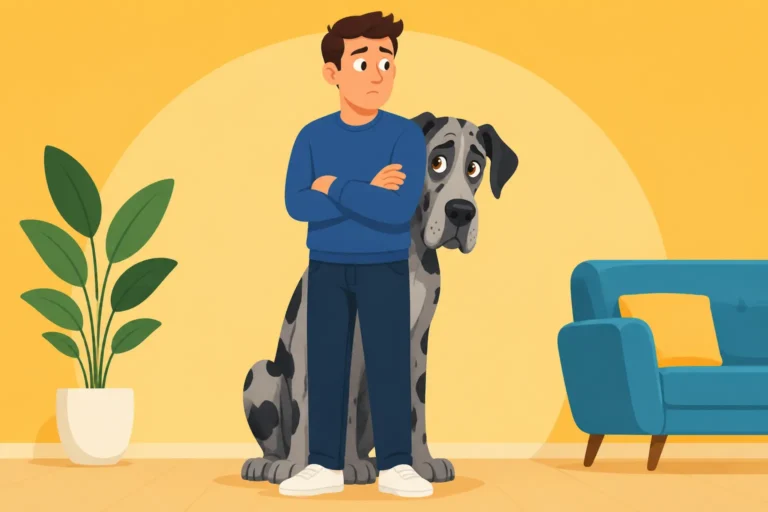
Great Danes are incredibly devoted companions and often thrive on human interaction. While this is one of their most endearing qualities, it can also make them prone to separation anxiety if they aren't taught to be comfortable and confident when left alone. A Great Dane with separation anxiety can be destructive, loud, and deeply unhappy, making it a critical aspect of their training.
Crate Training a Mammoth Puppy
Crate training is an invaluable tool for Great Danes, serving multiple purposes beyond just potty training. A crate, when introduced correctly and positively, becomes your dog's safe den—a place where they can feel secure and relax. For a Great Dane, a crate needs to be appropriately sized, allowing them to stand, turn around, and lie down comfortably. This means investing in one of the largest crates on the market, often requiring careful measurement and selection from retailers like Amazon.
Introduce the crate gradually by making it a positive place. Feed meals in the crate, offer high-value chew toys inside, and never use it for punishment. Start with short periods, even just a few minutes, with the door closed while you are still in the room. Gradually increase the duration and your absence from the room. A well-crate-trained Great Dane can be left alone without fear of destructive behavior, and they have a comfortable, secure place to rest. This is especially important for preventing a scenario where A Great Dane That Cannot Be Left in the House.
Gradually Building Tolerance for Solitude
The goal isn't just to make them okay with the crate; it's to teach them that being alone is not a scary event. This requires building their tolerance for solitude incrementally. Start by leaving them for very short periods, literally seconds, and gradually increase the time. Practice "mock departures" where you go through your leaving routine (grabbing keys, putting on shoes) but then simply sit back down. This desensitizes them to the cues that typically trigger anxiety.
Provide stimulating activities for when you're gone. Puzzle toys stuffed with treats, long-lasting chews, or even a radio or TV left on can provide comfort and distraction. Ensure they have had adequate exercise and a potty break before you leave. Observe their behavior closely. If they start to show signs of anxiety (pacing, whining, barking excessively, destructive behavior) when you increase alone time, you've gone too fast. Dial back the duration and progress more slowly. The aim is to build up their resilience and comfort with being on their own, little by little. Building Up a Great Dane's Alone Time is a critical skill for their emotional well-being and your peace of mind.
The Lifelong Commitment to Training
Training a Great Dane isn't a one-and-done event. It's a continuous journey that evolves with your dog through different life stages. Just as you don't stop teaching your child manners once they hit adolescence, your Great Dane will always benefit from ongoing reinforcement and new learning.
Adolescent Challenges and Regression
Ah, adolescence! Just like human teenagers, Great Danes between roughly 6 months and 2 years old can experience a period of behavioral regression. They might "forget" commands they once knew perfectly, test boundaries, or become more easily distracted. This isn't usually defiance; it's often a combination of hormonal changes, increased independence, and their developing brain sorting things out. During this time, patience is your greatest virtue.
You might need to go back to basics with certain commands, practicing in low-distraction environments before reintroducing them to more challenging situations. Consistency from all family members becomes even more vital. Don't assume they're doing it "on purpose"; simply reinforce the desired behavior calmly and clearly. Continue with short, fun training sessions to keep them engaged and remind them of what they know. This phase can be frustrating, but it's a normal part of their development. A Great Dane Adolescent That Ignores Everything might just need a little refresher course and a lot of understanding.
Continuing Education and Advanced Skills
Once your Great Dane has mastered basic obedience, consider exploring advanced training or dog sports. These activities provide mental stimulation, strengthen your bond, and give your Dane a "job" to do, which is often deeply satisfying for them. Rally obedience, canine good citizen classes, therapy dog work, or even just learning fun tricks can be excellent ways to continue their education.
Many online training platforms, such as BAXTER & Bella, offer comprehensive courses that you can do from the comfort of your home, allowing you to work at your own pace and revisit lessons as needed. This can be particularly convenient for Great Dane owners, as getting a large dog to and from classes can sometimes be a logistical challenge. Consistent mental engagement helps keep your Great Dane sharp, prevents boredom (which can lead to destructive behaviors), and ensures they remain a well-behaved and adaptable companion throughout their life. Even an old dog can learn new tricks, and continuing to challenge your Great Dane mentally will contribute significantly to their overall happiness and longevity.
Disclaimer
This article is for general informational purposes only and does not constitute professional advice. Laws, prices and regulations vary by location and change over time. Consult a qualified professional for guidance on your specific situation.