Stopping a Great Dane Pushing Through a Doorway
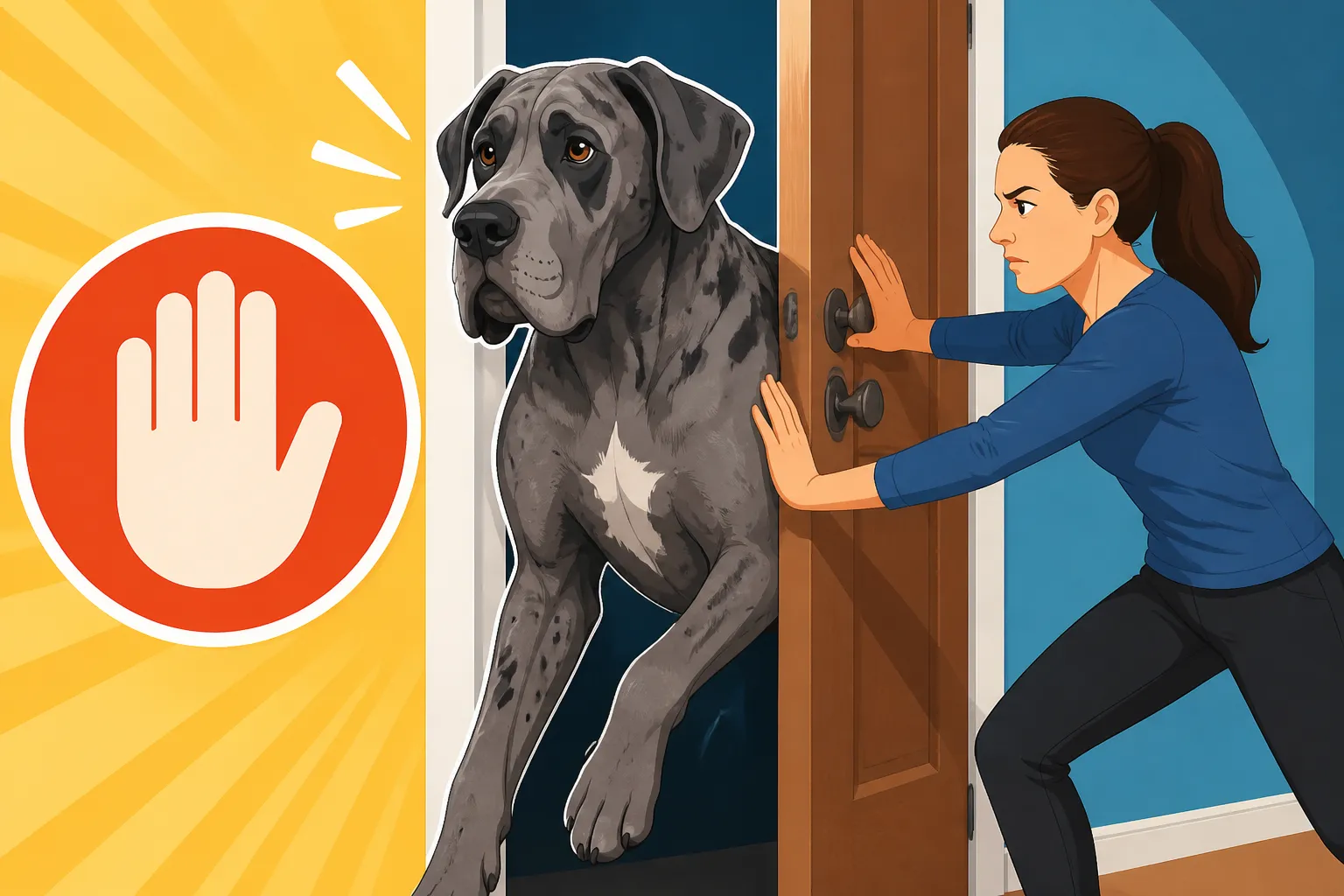
There’s almost nothing more frustrating (or potentially embarrassing, if you have guests) than a massive Great Dane who barrels through doorways as if they own the place. You try to step out, and suddenly you’re in a game of chicken with 150 pounds of excited dog, all because they haven't quite grasped the concept of personal space or polite entry. This guide will walk you through practical, empathetic strategies to teach your gentle giant impeccable doorway manners, ensuring a calmer, safer household for everyone.
Understanding Why Your Great Dane Pushes Through Doorways
Before we can fix the behavior, it's really helpful to understand why your Great Dane is acting this way. It's rarely out of malice or disobedience; more often, it's a combination of instinct, excitement, and a lack of clear communication from us, their human companions. When you're dealing with a dog of this size, even a well-meaning push can send an adult sprawling, let alone a child or an elderly person.
The Instinct for the Lead
Dogs, by nature, are creatures who often seek to be in front, especially when there's an exciting destination on the other side of a door, be it the yard for playtime or the front door for a walk. Your Great Dane isn't trying to challenge your authority by going first; they're simply responding to that primal urge to explore and move forward. They perceive the opening door as an invitation to the next adventure, and in their enthusiasm, their sheer size becomes a weapon, albeit an accidental one. They might see you hesitate, interpret that as a green light, and simply power through.
Excitement and Lack of Impulse Control
Great Danes, despite their imposing size, can be incredibly exuberant, especially when they're younger. The sight of a leash, the jingle of keys, or the sound of the doorbell can send them into a frenzy of anticipation. This excitement often overrides any fleeting thought of good manners. They just haven't learned to control that surge of energy and wait patiently. For a giant breed, developing good The Manners a Great Dane Needs Before It Grows is paramount, precisely because their sheer mass amplifies every behavioral hiccup. Without teaching impulse control, that "gentle giant" reputation can quickly feel like a myth when they're steamrolling you to get outside.
Unclear Boundaries and Inconsistent Training
Sometimes, the biggest culprit is us. We might inadvertently encourage the behavior by letting them push through sometimes, or by not consistently enforcing a "wait" command. A Great Dane thrives on consistency and clear boundaries. If one day they can barge out and the next they can't, it creates confusion. They learn that pushing sometimes works, so why not try it every time? This is especially true with Great Dane Leash Manners at a Hundred and Fifty Pounds; if they learn they can pull you out the door, they'll likely pull you down the street too. Establishing rules means everyone in the household needs to be on the same page, all the time.
Laying the Groundwork for Polite Doorway Behavior
Teaching your Great Dane to respect doorways is less about punishment and more about consistent, patient communication and positive reinforcement. It's about establishing a clear routine and making the "correct" behavior more rewarding than the "incorrect" one.
Basic Obedience: Sit and Stay
Before you can tackle the doorway directly, your Great Dane needs a solid foundation in basic obedience commands like "sit" and "stay." These commands are the building blocks of impulse control. If your dog can reliably sit and stay in a calm environment, you can then transfer that skill to more exciting situations, like approaching a door. Practice these commands frequently throughout the day, in various locations, and with different distractions. For instance, ask them to sit and stay while you walk around the room, or while someone else walks by. The more solid these basics are, the easier everything else will be. Teaching a Great Dane to Sit Before It Weighs Eighty Pounds is crucial; waiting until they are a full-grown powerhouse makes everything harder.
Impulse Control Exercises Away From the Door
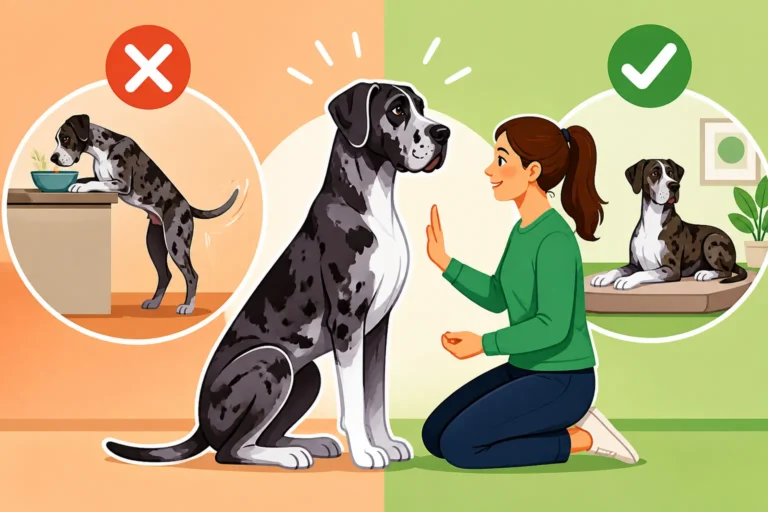
Start teaching impulse control in low-distraction environments first. One excellent exercise is the "leave it" command, which can be generalized to many situations, including waiting at a doorway. Practice "leave it" with a treat on the floor, then gradually increase the challenge. Another simple exercise is teaching them to wait for their food bowl. Place the bowl down, but make them sit and wait until you give a release command like "okay" before they can eat. This teaches them that good things come to those who wait, and that your cues are important. This kind of consistent work, often covered in puppy classes or through online programs like BAXTER & Bella, sets the stage for success at the door.
Establishing the "Threshold Rule"
The "threshold rule" simply means your Great Dane isn't allowed to cross a doorway until you give permission. This applies to every doorway in your home – internal doors, the front door, crate doors, even car doors. This isn't about being dominant; it's about establishing a clear boundary and teaching them self-control. To start, walk towards a doorway with your Great Dane on a leash. As you approach, stop before the threshold. If your dog tries to forge ahead, simply stop, or even take a step back. Wait for them to relax, sit, or look at you for direction. Only when they are calm and waiting should you proceed through the door. If they rush, simply close the door slightly (not hitting them!) or step back, resetting the exercise. This takes patience, but it’s incredibly effective.
Practical Strategies for Doorway Management
Once the groundwork is laid, you can start applying these principles directly to doorways. Remember, consistency is key, and every interaction is a training opportunity.
The "Wait" Command at Every Door
The "wait" command is your best friend when it comes to doorways. It's distinct from "stay" because it implies a temporary pause, often followed by movement.
Here’s how to teach it:
- Approach the Door: With your Great Dane on a leash, approach any door in your home.
- Give the Command: As you reach the threshold, say "wait" clearly and firmly.
- Hold the Door: Open the door just a crack. If your dog tries to push through or even step forward, immediately close the door slightly and say "oops" or "too bad," then try again. The door never opens fully if they are pushing.
- Reward the Pause: The instant they hesitate, or show any sign of waiting, even for a second, praise them calmly and offer a high-value treat.
- Release and Cross: Once they consistently wait for a few seconds, give your release command (e.g., "free" or "okay") and step through the door. Reward them again on the other side.
- Increase Duration: Gradually increase the amount of time they have to wait before you give the release command.
This teaches them that the door opening is your signal, not theirs. It reinforces that patience is rewarded.
Using a Leash and Body Blocking
A leash is an invaluable tool for teaching doorway manners, especially for a powerful breed like a Great Dane. Even if you're just going from the living room to the kitchen, putting them on a leash can help you guide them and enforce the "wait" command.
- Leash Control: Hold the leash short enough so they can't physically surge past you. When you approach a door, ask for a "sit" or "wait." If they try to push, the leash gives you immediate, gentle control to keep them behind the threshold.
- Body Blocking: Use your body as a barrier. If your Great Dane starts to crowd the doorway, simply step into their path, turning your body slightly to block them. This isn't aggressive; it's just physically occupying the space you want them to respect. For a dog that's always a Great Dane that pushes against your legs, this can be a natural extension of teaching them personal space. They'll quickly learn that pushing into you doesn't get them through the door.
Enforcing Manners with Guests and Deliveries
This is often where doorway manners truly break down. An excited Great Dane who loves people might try to A Great Dane That Jumps on Visitors or push past them in a flurry of excited greetings.
Here's how to manage it:
- Confinement First: When you know guests are arriving, or you're expecting a delivery, put your Great Dane on a leash, or even better, in their crate or a separate room with a chew toy. This removes them from the chaotic initial greeting.
- Controlled Introduction: Once your guests are inside and settled, bring your Great Dane out on a leash. Ask them to "sit" and "wait" a few feet from the door. Have your guests approach calmly and greet your dog only when they are sitting politely. If your dog jumps or pushes, calmly remove them from the situation and try again after a few minutes.
- Practice with "Visitors": Ask friends or family to help you practice. Have them knock or ring the doorbell, and work through the routine of having your Great Dane wait calmly. This consistent practice is vital.
It’s important that your Great Dane learns that exciting things don't happen if they are rude.
Avoiding Common Mistakes
| Mistake | Why it's a problem | Solution |
|---|---|---|
| Inconsistency | Confuses the dog; they learn pushing sometimes works. | Everyone in the household must enforce the "wait" command every single time. |
| Yelling/Physical Correction | Damages trust, can make dog anxious or reactive. | Use calm, firm cues and body language. Step back, reset, try again. Positive reinforcement. |
| Not Using a Leash | Loses control, especially with an excited giant breed. | Use a leash for practice, even inside. It provides immediate, gentle control. |
| Rushing | You accidentally reward pushing if you give in quickly. | Be patient. If they push, you wait longer. The door only opens for calm behavior. |
| Rewarding Excitement | They learn high energy gets them what they want. | Only reward calm, quiet waiting. Praise and treats come when they are settled. |
Advanced Doorway Etiquette and Long-Term Consistency
Once your Great Dane has a good grasp of the basics, you can refine their doorway manners and ensure these good habits stick for the long haul.
Respecting the Car Door and Other Exits
The principles of doorway manners apply to any threshold. This includes the car door, which can be an even more exciting prospect for many dogs. Teach your Great Dane to Teaching a Great Dane to Get Into a Car politely. Just like a house door, they should wait for your permission before jumping in or out of the car. This is not only good manners but a critical safety measure, preventing them from bolting into traffic or surprising passersby. Practice the "wait" command before opening the car door, and again before allowing them to exit. If they try to rush, simply close the door or step back, just as you would at home.
Walking Through Narrow Spaces Politely
Beyond just the immediate doorway, Great Danes need to learn to navigate narrow spaces without barging. This could be a tight hallway, a crowded vet office, or even just passing between furniture. The general rule here is for your Great Dane to walk beside you, not in front, and certainly not to push. This requires consistent Teaching a Great Dane to Heel Beside You practice. When approaching a narrow space, slow down, ask for a close heel, and reinforce staying by your side. If they push, gently correct them back into position with the leash and praise when they comply.
Maintaining Consistency Over Time
This is arguably the most challenging part of any training. Life gets busy, we get tired, and it's easy to let standards slip. But with a Great Dane, even a few lapses can quickly undo weeks of hard work.
- Everyone on Board: Ensure every person who interacts with your Great Dane understands and consistently applies the doorway rules. Family members, dog walkers, and even frequent guests should be briefed.
- Daily Reinforcement: Don't just practice at the front door. Use internal doors as opportunities for quick, mini-training sessions. A simple "wait" before going into the kitchen or the bedroom keeps the skill fresh.
- Dealing with Relapses: If your Great Dane starts pushing again, don't get discouraged. Simply go back to basics. Use the leash, practice the "wait" command, and be extra vigilant for a few days. They're not being stubborn; they're just testing the boundaries, which is normal dog behavior. Think of it as reviewing their The Cues a Great Dane Needs Before Six Months.
- Utilize Tools: Consider using high-quality training aids. A sturdy, appropriately sized front-clip harness, available on sites like Amazon, can give you better control without causing discomfort. For more in-depth guidance, online training programs like those offered by BAXTER & Bella can provide structured lessons and support to help you stay on track with consistency.
Teaching your Great Dane impeccable doorway manners is a continuous process, but it's one that pays off immensely in a calmer, safer home. It reinforces your bond, establishes clear communication, and ensures that your beloved giant can be a polite member of any household, no matter how exciting the other side of the door might be.
Disclaimer
This article is for general informational purposes only and does not constitute professional advice. Laws, prices and regulations vary by location and change over time. Consult a qualified professional for guidance on your specific situation.