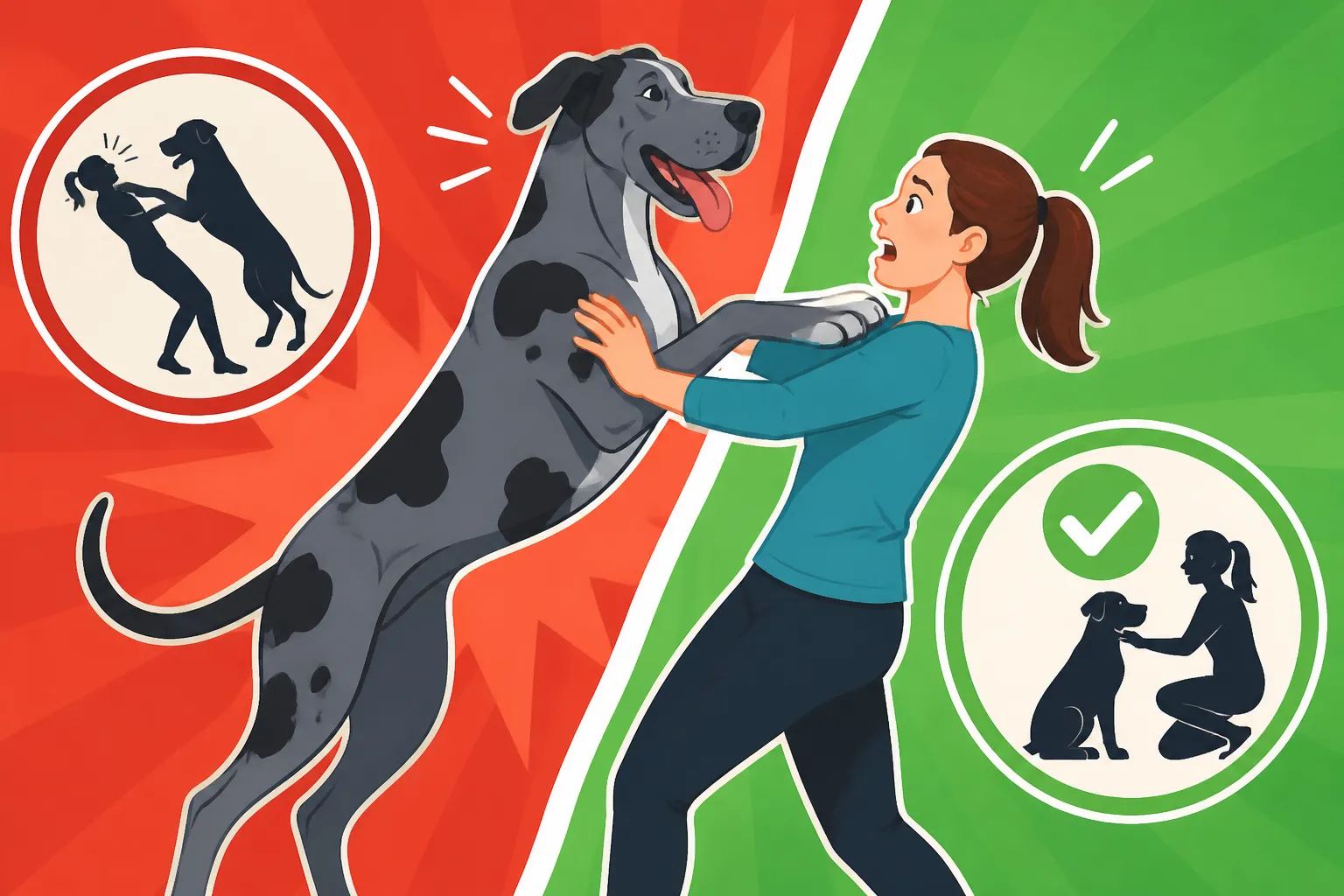
Whether You Can Physically Stop a Great Dane Jumping
It's incredibly frustrating when your sweet, gentle Great Dane, despite their loving nature, greets you or guests with a full-body, enthusiastic jump. While their intentions are usually pure joy, their immense size means this common dog behavior quickly becomes a serious problem, knocking people over, scaring children, and creating an overwhelming sense of chaos. This guide will dive deep into why physically stopping a jumping Great Dane is generally ineffective and even counterproductive, offering instead comprehensive, humane training and management solutions to teach your giant friend proper greeting manners.
The Problem with a Jumping Great Dane: Size and Safety
Let's be real, a jumping dog is annoying. A jumping Great Dane, however, is a whole different ballgame. Their sheer size means a friendly leap can feel like a tackle from a defensive lineman, posing a real risk to anyone in their path. Understanding why they do it is the first step toward finding a solution that actually works for these magnificent, but often clumsy, giants.
Why Great Danes Jump: More Than Just Excitement
Great Danes, like many dogs, jump primarily for a few key reasons, and it's almost always rooted in communication and seeking interaction. They're not doing it to be malicious; they're doing it because, to them, it's effective.
First and foremost, excitement is a huge factor. When you walk through the door after being gone, or when a new person arrives, your Great Dane is often overflowing with joy and wants to get as close to your face as possible to say hello. Since their natural height already puts their head at many people's waist or chest level, jumping just a little bit more brings them face-to-face. This is often reinforced inadvertently by owners who, in an attempt to calm or greet their dog, might pet or talk to them while they're still airborne, accidentally rewarding the very behavior they want to stop. They might think they're comforting, but the dog often interprets it as "jumping gets attention."
Another common reason is attention-seeking. Dogs are smart; they learn what gets a reaction from us. If jumping results in a squeal, a push, or even a stern "no," that's still a form of attention. For a Great Dane who thrives on connection with their people, any attention can be seen as positive. They might jump when they want to play, when they're feeling ignored, or when they simply want to know what you're up to. Furthermore, some Great Danes simply haven't learned an alternative, more polite way to greet or ask for attention. They haven't been taught that "four paws on the floor" earns a reward, while jumping earns nothing, or worse, the temporary loss of your presence. Their size, in this case, actually works against them because the consequences of their jumping are so much more pronounced than with a smaller dog, making it a habit that needs swift and consistent addressing.
The Risks Involved: For Them and For You
The risks associated with a jumping Great Dane are significant, and they impact both the dog and the humans around them. For owners and guests, the most obvious risk is physical injury. A Great Dane, even a slender one, can easily weigh over 100 pounds, and a full-force jump can knock an adult off their feet, cause bruising, or lead to serious falls, especially for children, the elderly, or those with mobility issues. I've heard countless stories of sprained wrists, scraped knees, and even concussions from an overzealous Dane greeting. It’s not just about pain; it can be truly dangerous.
Beyond immediate injury, there's the broader social risk. A jumping Great Dane can be intimidating, even to people who love dogs. It can make visitors hesitant to come over, limit your dog's ability to be a good canine citizen in public spaces, and even lead to your dog being perceived as aggressive or unruly, regardless of their true gentle temperament. This can create isolation for both you and your dog, as you might start avoiding situations where jumping could occur.
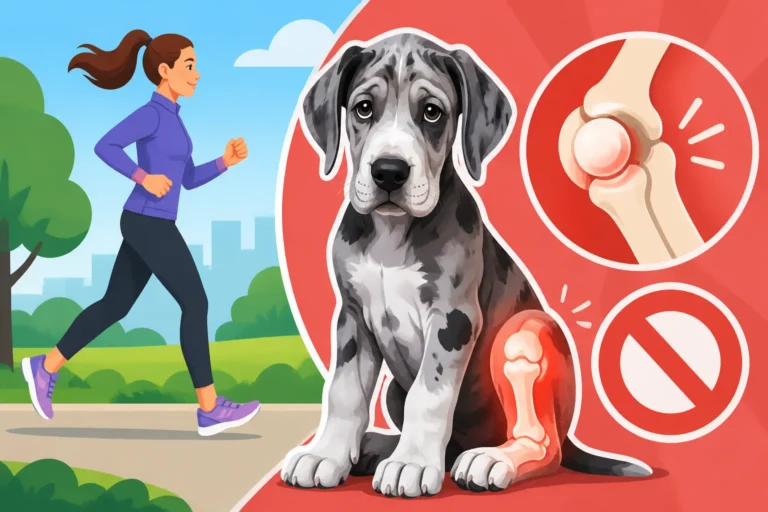
While less common, there's also a subtle risk to the dog itself. Repeated, hard landings from jumping, especially during their crucial growth phases as a Great Dane Hips, Elbows and Growing Joints mature, can put unnecessary strain on their joints. While a single jump isn't likely to cause orthopedic damage, a habit of forceful jumping and landing on hard surfaces over time could contribute to wear and tear. More importantly, if owners consistently resort to harsh physical corrections, it can damage the trusting bond you have with your Great Dane. A dog that fears hands or approaches with trepidation because they anticipate being pushed or corrected is not a happy, well-adjusted dog. This leads us to why physical intervention rarely solves the problem and often makes it worse.
Why Physical Force Fails with Giant Breeds
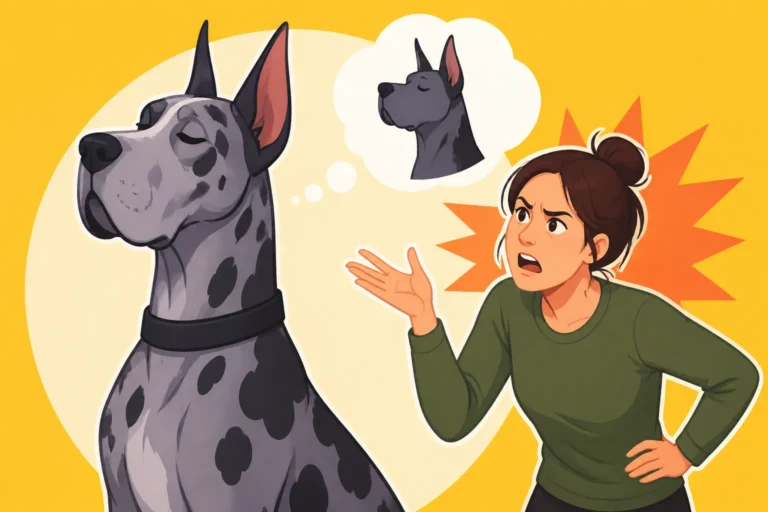
It's natural to instinctively try to push a jumping dog down, block them with a knee, or even scold them physically. After all, they're big, and they're being rude, right? But with a Great Dane, these methods aren't just ineffective; they can be downright counterproductive, fostering misunderstanding and eroding the very relationship you cherish.
The Sheer Logistics: Overpowering a Gentle Giant
Let's face facts: a grown Great Dane can easily outweigh many adult humans. Even if you manage to physically push them down, it's often a momentary victory at best. They're stronger, they're taller, and they have more leverage. Trying to physically overpower a Great Dane is like trying to stop a small car with your hands – it's an exercise in futility and potential injury for you. You might manage it once, but they'll learn that you're an obstacle to be overcome, not a guide to be listened to. They'll just try harder, or from a different angle, or simply wait for a moment of weakness.
Furthermore, these physical attempts often create a struggle, which can actually be perceived as a form of play by some dogs. To them, pushing and shoving might just be part of the greeting game. They get excited, you push, they push back, the energy escalates, and the jumping continues with renewed vigor. This isn't training; it's a wrestling match you're unlikely to win in the long run, especially when they're in a high state of arousal and not thinking clearly. The mental energy required to constantly be physically "on guard" against your own dog is exhausting and utterly unnecessary when there are more effective, positive methods available. Trying to physically stop a powerful dog can also lead to accidental nips or scratches if they mouth at you in excitement or frustration, further complicating the issue.
The Behavioral Backlash: Damaging Trust and Reinforcing Bad Habits
Beyond the physical impracticality, using physical force carries significant behavioral risks. When you push your Great Dane away or knee them, what are you actually teaching them? You're not teaching them what to do instead. You're teaching them that hands, or even your approach, can be a source of discomfort or punishment. This can lead to a dog that becomes hand-shy, fearful, or even defensive. Imagine a scenario where a child, unaccustomed to dogs, tries to push your excited Great Dane away. If your dog has learned that physical contact from humans can be unpleasant, their reaction might be to shy away, or worse, to snap out of fear. This entirely undermines The Gentle Great Dane Temperament and Its Limits that we all cherish.
What often happens is that the physical correction, instead of stopping the behavior, just adds confusion or fear. The dog associates the correction with your arrival or the presence of guests, rather than the act of jumping itself. They might become hesitant or anxious during greetings, which is the last thing you want for a happy, confident dog. Some dogs, particularly sensitive Great Danes, might even shut down completely, offering no greeting at all, or retreating when people arrive. This is not a win; it's a breakdown in communication and a sign of fear. As we explore in Why Physical Corrections Fail on a Great Dane, positive reinforcement and clear communication are far more powerful tools for long-term behavioral change, especially with a breed as intelligent and bond-oriented as the Great Dane. Your goal isn't just to stop the jumping; it's to teach your dog a polite alternative and strengthen your mutual trust.
Teaching Your Great Dane to Keep All Four Paws on the Floor
The good news is that Great Danes are incredibly smart and eager to please their families. With the right approach, you can absolutely teach them polite greetings and make jumping a thing of the past. The key is to shift from reactive punishment to proactive teaching.
Positive Reinforcement: Rewarding Calm Greetings
The most effective way to modify behavior in any dog, especially a giant breed like the Great Dane, is through positive reinforcement. This means rewarding the behavior you want to see, rather than punishing the behavior you don't. When it comes to jumping, the goal is to reward your Great Dane every single time they keep all four paws on the floor during a greeting.
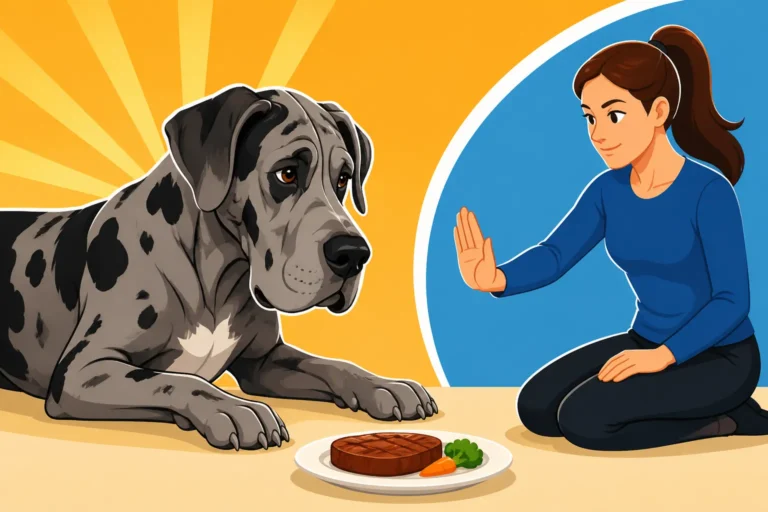
Start by practicing controlled greetings. If you're coming home, keep your entry low-key. Don't immediately shower your dog with attention. Instead, calmly walk in. The moment your Great Dane approaches you with all four paws on the ground, immediately say "yes!" or click a clicker, and offer a high-value treat or calm praise. If they jump, turn your back, cross your arms, and completely ignore them. No eye contact, no speaking, no touching. The second they settle and put all four paws down, immediately turn back and reward. This is called the "four on the floor" rule. It teaches them that jumping makes you disappear, while being calm makes you appear and offer rewards.
Consistency is crucial here. Every single person who interacts with your Great Dane must follow this rule, every single time. This includes family members, friends, and even delivery drivers if possible. If one person allows jumping, it undermines all your hard work. Think about using a special greeting area, maybe by the door, where you consistently practice. With patience and high-value rewards, your Great Dane will quickly understand that calm greetings are far more profitable than boisterous jumps. This method not only stops the jumping but also builds a positive association with greetings, making them a joyful, calm experience for everyone.
Training an Alternative Behavior: The Power of "Sit" or "Go to Place"
While "four on the floor" is excellent, it's even better to teach your Great Dane a specific alternative behavior that they can offer instead of jumping. Two fantastic options are "sit" or "go to place."
Teaching "Sit" as a Greeting:
If your Great Dane knows "sit," you can leverage this. When you or a guest approaches, ask your dog to "sit." As soon as their rear touches the ground, immediately reward them with a treat and praise, then proceed with the greeting. If they stand up or jump, withdraw the reward (your attention) and ask them to sit again. This provides them with a clear, polite action to perform instead of jumping. Practicing this in various environments and with different people will help generalize the behavior. You're teaching them Getting a Great Dane to Greet Without Standing Up.
Teaching "Go to Place" as a Greeting:
For Great Danes who struggle with impulse control or get overly excited, teaching a "go to place" command can be a game-changer. "Place" means going to a designated spot (like their bed or a mat) and staying there until released. This is particularly useful when guests arrive. Before the door even opens, calmly direct your Great Dane to their "place." Reward them for staying there as guests enter. Once guests are settled, you can then allow a calm, controlled greeting, rewarding your dog for keeping all four paws on the floor. A good "place" command offers structure and helps your Great Dane manage their excitement, as discussed in Teaching a Great Dane a Place to Settle. A robust online training program like those offered by BAXTER & Bella can walk you through these steps with video tutorials and consistent support, making it easier to implement at home.
| Training Strategy | How It Works | Benefits | Why It's Better Than Physical Force |
|---|---|---|---|
| "Four on the Floor" | Reward calm paws-on-ground; ignore/turn away from jumping. | Clear communication, builds positive associations. | Teaches what to do, no physical conflict, maintains trust. |
| "Sit" as Greeting | Ask for a sit before greeting; reward for compliance. | Gives dog a polite, actionable alternative. | Proactive, empowering the dog to make a good choice. |
| "Go to Place" | Send dog to a designated spot during high-excitement events (e.g., guests). | Manages excitement, provides structure, prevents unwanted behavior. | Proactive management, reduces stress for dog and owner. |
| Leash Management | Use a leash during greetings to prevent jumping. | Provides immediate control, prevents reinforcement of jumping. | Gentle guidance, prevents dog from practicing unwanted behavior. |
| Desensitization | Gradually expose to triggers (e.g., doorbells) in a controlled way. | Reduces over-excitement response, teaches calm. | Addresses root cause of excitement, fosters calm behavior. |
Consistency is Key: Every Person, Every Time
This point truly cannot be overstressed, especially with a Great Dane. Consistency is the bedrock of successful dog training. If your Great Dane learns that jumping is sometimes tolerated – perhaps by certain family members, or during certain times of day, or with certain visitors – they will continue to jump. They are constantly testing boundaries and looking for patterns. One inconsistent interaction can undo days or even weeks of solid training.
This means everyone in the household, from the youngest child to the oldest adult, must be on the same page. Before guests arrive, briefly explain your training protocol: "Please, if Bruno jumps, just turn your back and ignore him. Don't say anything, don't push him away. As soon as his paws are on the floor, you can greet him calmly." It might feel awkward at first, but it's essential for your dog's understanding and your sanity. If you have a child who struggles to implement this, consider managing interactions with a baby gate or leash until the jumping behavior is more under control. Teaching Children to Move Around a Great Dane is crucial for safety and consistency.
Consistency also applies to your response. Whether you're tired, rushed, or just having a bad day, defaulting to a quick push or scold sends mixed signals. Commit to the positive reinforcement methods outlined above. Every single time your Great Dane jumps, turn away. Every single time they offer a polite behavior (like sitting or keeping paws on the floor), reward them. This unwavering consistency tells your Great Dane, in no uncertain terms, exactly what behavior you expect and what will earn them the attention and love they crave. Without it, you're essentially playing a confusing game, and a confused Great Dane will simply revert to what has worked, or what feels natural, which is often jumping up.
Management Strategies for Jumpy Moments
Even with consistent training, there will be times when your Great Dane is simply too excited or a situation makes controlled training difficult. This is where smart management comes in. Management isn't a substitute for training, but it's a vital tool to prevent your dog from practicing unwanted behaviors and to keep everyone safe.
Controlling the Environment: Setting Your Dane Up for Success
One of the most effective ways to prevent jumping is to control the environment, especially during known trigger moments like arrivals or new visitors. Instead of allowing your Great Dane free rein when the doorbell rings, consider proactive steps:
- Leash Up: Keep a light leash on your Great Dane during times when greetings are likely. As the guest approaches the door, gently hold the leash, but don't pull them back. Just use it to keep their body grounded. If they start to lift their paws, you can calmly apply gentle downward pressure on the leash, coupled with your "four on the floor" or "sit" command. This gives you immediate, non-physical control. You can find sturdy, extra-long leashes for Great Danes easily on Amazon that are perfect for this kind of supervised training.
- Designated Greeting Zone: If you have a larger home, consider having a specific greeting spot in an entryway or living room where you can easily manage your dog. This might involve setting up a baby gate or using a tether (supervised, of course) to keep your Great Dane from rushing the door. This creates a predictable routine that your dog can learn.
- Pre-emptive Exercise: A tired Great Dane is a good Great Dane. Before anticipating visitors, make sure your dog has had adequate physical and mental exercise. A good walk, some playtime in the yard, or a puzzle feeder can help burn off excess energy and reduce the likelihood of an over-the-top greeting. This doesn't mean exhausting them to the point of collapse, but just ensuring they're not bursting with pent-up energy.
- Muzzle Training (for extreme cases): For Great Danes with severe jumping issues that pose a serious safety risk (e.g., with very frail individuals), muzzle training can be a temporary management tool to ensure safety while training progresses. It's a precaution, not a punishment, and should always be introduced positively.
By setting up their environment for success, you're not waiting for them to make a mistake; you're actively preventing it, which makes your positive training efforts much more impactful.
Utilizing Tools and Aids Responsibly
While physical force is out, certain tools can be incredibly helpful for managing a Great Dane's jumping behavior safely and effectively. These aren't meant to be corrections, but rather extensions of your ability to guide and communicate.
- Harnesses: A well-fitting front-clip harness can be invaluable for a large, strong dog like a Great Dane. When attached to the front ring, it redirects their pulling power sideways, making it much harder for them to lunge or jump up effectively. Instead of allowing them to throw their weight into a jump, the harness gently turns them. This is particularly useful during leash walks or when managing greetings. Make sure you choose a harness designed for a giant breed, with broad straps and durable buckles, as a flimsy harness won't stand a chance against a determined Great Dane. You can find a wide selection of robust harnesses suitable for Great Danes on Amazon.
- Long Lines/Leashes: For practicing controlled greetings outdoors or in a large, safe indoor space, a long line (10-20 feet) can give your Great Dane a sense of freedom while still allowing you to intervene if they attempt to jump on someone passing by. Again, the goal is gentle redirection, not yanking.
- "Place" Beds/Mats: As mentioned earlier, a durable, comfortable "place" bed or mat can become a powerful tool. Teaching your Great Dane to go to and stay on their place provides a physical boundary and a mental job, diverting their attention from the excitement of a greeting. Look for orthopedic beds designed for large breeds; something a Great Dane can actually settle on and feel good about.
- Baby Gates/Ex-Pens: For managing initial greetings or when you need a moment of calm, heavy-duty baby gates or sturdy ex-pens can create a physical barrier between your Great Dane and guests. This allows your dog to see and hear what's happening but prevents them from practicing jumping. It's a great way to let them acclimate to new people in a controlled manner before a direct interaction. Just ensure they are tall enough that your Dane cannot simply step or lean over them.
Remember, these tools are aids to facilitate training and management. They work best when combined with positive reinforcement and consistent behavioral instruction, never as a replacement for teaching your Great Dane the polite manners we all want them to have. Harnesses and Collars That Control a Great Dane can be a lifesaver when used correctly.
Educating Guests and Visitors
It's one thing to train your Great Dane; it's another entirely to manage the well-meaning but often counterproductive actions of your guests. Many people, especially those not used to giant breeds, might inadvertently encourage jumping without realizing it.
Before any visitor enters your home, take a moment to brief them. A simple, polite explanation can make all the difference. You might say something like: "We're working on polite greetings with [Dog's Name]. If he jumps, please just turn your back and ignore him. Don't push him or talk to him. When he has all four paws on the floor, you can calmly greet him. We want to reinforce being a good boy!"
Explain the "four on the floor" rule clearly. Ask them not to make eye contact or give verbal praise until your Great Dane is settled. If they lean down to greet your dog, ask them to wait until your dog is in a sit or lying down. Emphasize that this isn't because your dog is aggressive, but because you're helping him learn good manners for his size. Most people are happy to help once they understand your goals and how their actions impact your training.
For very excitable Great Danes, it might even be helpful to have your guests practice the "turn and ignore" technique outside the house or just inside the doorway before a full greeting takes place. This controlled environment allows for quicker success and less chance of accidental reinforcement. Remember, every person who interacts with your Great Dane is a part of their training environment. The more consistent everyone is, the faster your Great Dane will learn that being calm and gentle is the fastest way to get the attention and affection they adore. A Great Dane That Jumps on Visitors can be a huge liability, so getting everyone on board is critical.
Disclaimer
This article is for general informational purposes only and does not constitute professional advice. Laws, prices and regulations vary by location and change over time. Consult a qualified professional for guidance on your specific situation.