A Great Dane That Pulls You Off Your Feet
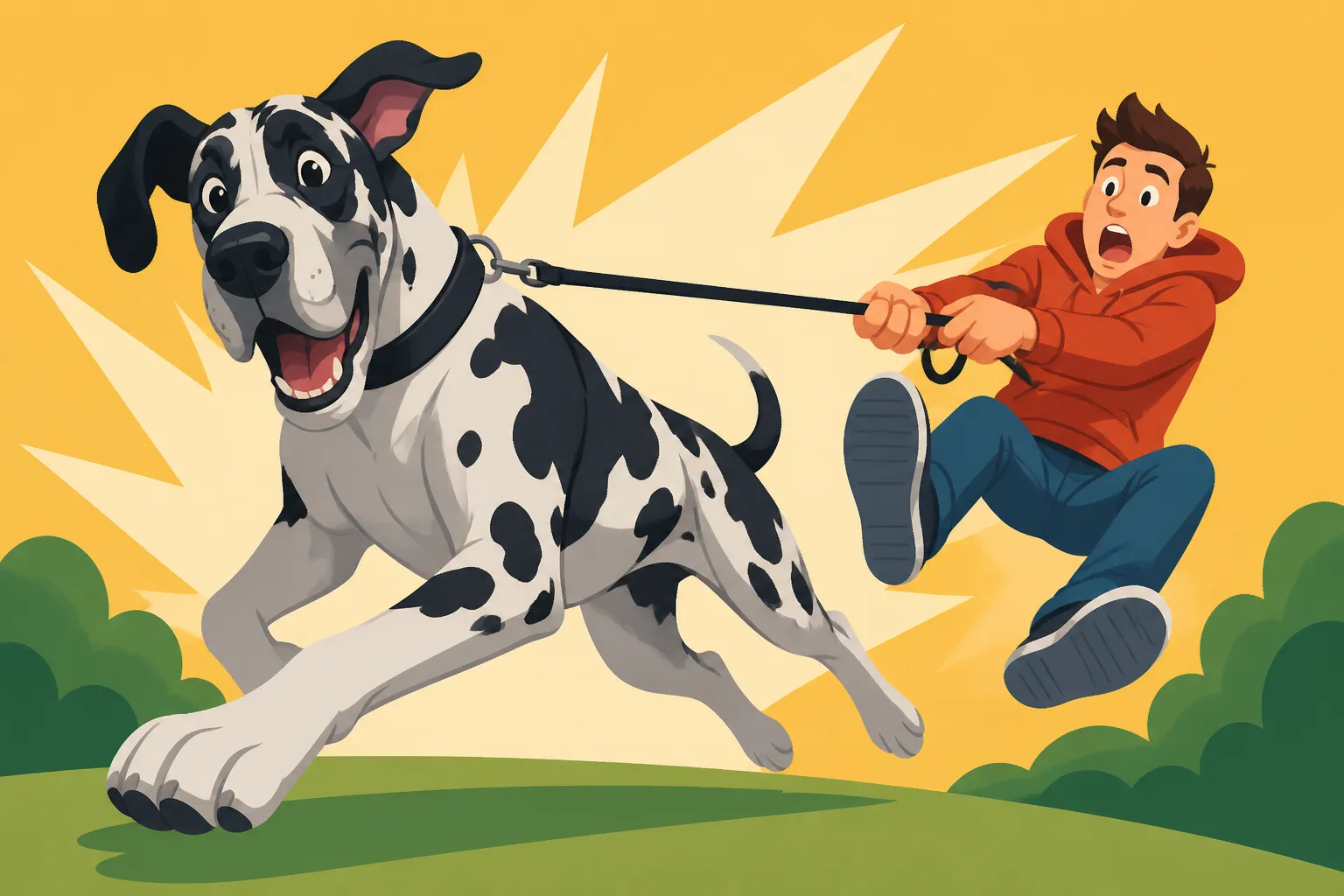
There's nothing quite like the feeling of pride that comes with walking your magnificent Great Dane, but that pride can quickly turn into a full-body workout – or even a dangerous situation – when your gentle giant decides to put its impressive weight into pulling on the leash. It's not just annoying; it can be incredibly frustrating, painful for your shoulders, and frankly, a bit scary when you're trying to navigate a busy street or prevent them from chasing a squirrel. This comprehensive guide is here to help you understand why your Great Dane pulls and, more importantly, equip you with the knowledge and techniques to teach them to walk politely by your side, transforming those walks from a tug-of-war into an enjoyable experience for both of you.
Understanding Why a Great Dane Pulls You Off Your Feet
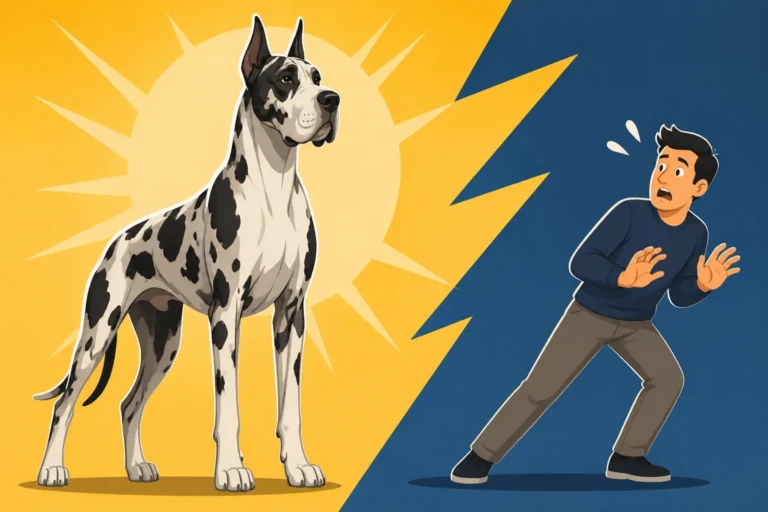
Let's be honest, trying to control a Great Dane that's decided to pull is like attempting to halt a small, excited horse with a piece of string. Their sheer size and strength mean that even a gentle tug from them can feel like a full-force yank to us. But it's rarely malicious; more often than not, it's a combination of instinct, excitement, and a little bit of unmet training needs.
The Instinct to Lead and Explore
Great Danes, like all dogs, are curious creatures. Every walk is an adventure, a rich tapestry of smells, sights, and sounds that they desperately want to investigate. Their instinct tells them to go forward, to explore, and often, to lead. When they feel the slight resistance of a leash, their natural response isn't always to slow down or yield; it's often to lean into it, to pull harder, especially if they've learned that pulling eventually gets them where they want to go.
Think about it from their perspective. They catch a whiff of an interesting scent down the block, or see another dog they want to greet, and their immediate goal is to get there. If pulling has worked in the past – even just occasionally – it becomes a reinforced behavior. We might inadvertently reward this by giving in and being dragged along, even if we’re grumbling the whole way. It's a classic example of a dog-owner communication breakdown where the dog thinks, "If I pull hard enough, we get to sniff that bush!" It's crucial to address this early on, as the sheer power of A Great Dane at Half Its Adult Weight by Six Months can already be substantial.
Over-Excitement and Lack of Early Training
Great Danes, particularly as puppies and adolescents, are bundles of energy and enthusiasm. The world is a fascinating place, and the sheer joy of going for a walk can make them practically vibrate with excitement. This over-arousal often translates into pulling. They're so eager to get to the park, greet a new friend, or chase a blowing leaf that their good intentions fly out the window, and they just go.
Furthermore, many Great Dane owners, understandably, focus on basic house training and socialization when their puppy is small and manageable. Leash manners might take a back seat, or perhaps the advice given was for a smaller breed. What works for a Labrador puppy, which might pull a bit but is easily corrected, is often completely inadequate for a Great Dane puppy that will soon outweigh you. Teaching The Cues a Great Dane Needs Before Six Months should absolutely include polite leash walking, before that adorable puppy becomes an uncontrollable force. Without consistent, positive training from a young age, the habit of pulling becomes deeply ingrained and much harder to break once they hit their full magnificent size.
Physical Strength vs. Handler Size
Let's face facts: a full-grown male Great Dane can easily weigh over 150 pounds and stand over 30 inches tall at the shoulder. Their musculature is incredible, built for power and speed. Most human handlers, even strong ones, simply cannot physically overpower a determined Great Dane. This isn't a knock on anyone's strength; it's just physics. When a dog of that magnitude leans into a pull, you're going to feel it.
This disparity in strength can lead to a cycle of frustration. The human tries to hold back, the dog pulls harder, and eventually, the human gives up or gets pulled along. This reinforces the dog's belief that pulling works. It also makes walks stressful and unpleasant for the human, who might start dreading them, which in turn means fewer walks, and potentially more pent-up energy in the dog, leading to even more pulling when they do go out. This is why having Great Dane Leash Manners at a Hundred and Fifty Pounds is so critical, not just for convenience, but for safety and overall quality of life for both dog and owner.
Essential Tools and Equipment for Managing a Puller
While training is always the ultimate solution, the right equipment can be an absolute game-changer, especially when you're starting out and need to manage your Great Dane's immense power. Think of these as assistive devices that make training safer and more effective, not as a replacement for actual teaching.
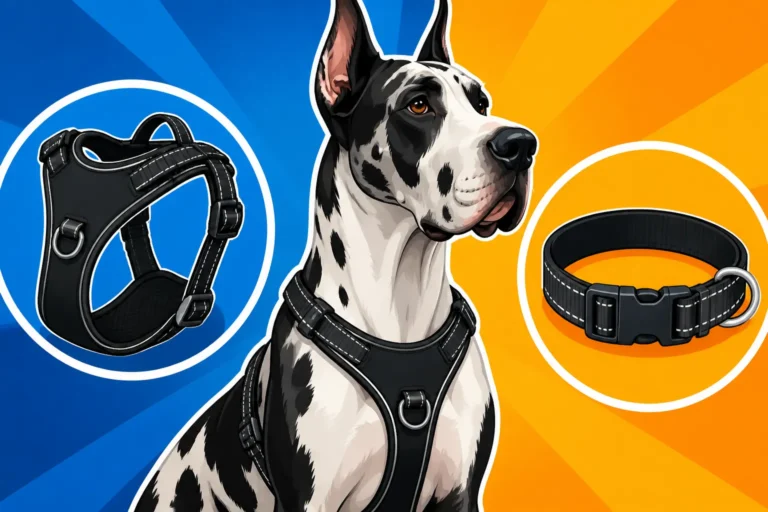
Harnesses Designed for Control
Forget the standard back-clip harnesses; they often encourage pulling by leveraging a dog's natural opposition reflex (pushing against pressure). For a pulling Great Dane, you need a harness that offers more control, specifically a front-clip harness or a no-pull harness.
A front-clip harness has the leash attachment point on the dog's chest. When your Great Dane pulls, the leash redirects their forward momentum, gently turning them to the side. This makes it incredibly difficult for them to get leverage to pull you forward. It's a game-changer for many owners, instantly reducing the pulling sensation and giving you more control without causing discomfort. Brands like the Easy Walk or Freedom harness are popular choices. When looking on Amazon, always check the sizing charts carefully, as a Great Dane needs substantial girth and chest straps.
Another option is a head halter, sometimes called a head collar (like a Gentle Leader or Halti). This device fits around your dog's muzzle and behind their ears, similar to a halter on a horse. The leash attaches under the chin. When your Great Dane pulls, it gently guides their head to the side, and where the head goes, the body follows. For a truly strong and determined puller, these can offer immediate and significant control. They require careful introduction to ensure your dog is comfortable, as some dogs initially resist having something around their muzzle. They also require diligent training to prevent your dog from pawing at it or trying to remove it. Harnesses and Collars That Control a Great Dane are not one-size-fits-all, so choosing the right type and fit is essential.
Specialized Leashes and Collars
While the harness does most of the heavy lifting for a pulling Great Dane, the leash and collar still play a vital role. For a Great Dane, durability and length are key considerations. A standard 6-foot nylon or leather leash is usually a good starting point. Look for heavy-duty hardware that can withstand the strain. Avoid retractable leashes entirely, as they teach dogs that pulling extends their walking range and offer no real control over a powerful dog.
For collars, a flat buckle collar is perfect for holding ID tags, but generally insufficient for controlling a dedicated puller. If you're using a head halter, your regular collar can be used as a backup for safety. Some trainers also advocate for martingale collars for Danes, particularly those with narrower heads compared to their necks, as they prevent the dog from backing out of the collar without choking them. However, for active pulling control, a front-clip harness or head halter will be more effective than any type of neck collar alone. Always prioritize a leash and collar combo that's comfortable for your dog and secure, but also allows you to maintain control effectively.
| Equipment Type | Primary Benefit for Pullers | Best Use Case | Considerations |
|---|---|---|---|
| Front-Clip Harness | Redirects forward momentum | General walks, moderate pullers | Ensure proper fit to prevent chafing; less effective if dog is extremely strong/stubborn. |
| Head Halter | Guides the head, body follows | Strong pullers, immediate control | Requires careful introduction; some dogs dislike muzzle restraint; potential for misuse. |
| Martingale Collar | Prevents backing out of collar | Dogs with narrow heads, escape artists | Not a true "no-pull" device, but good for security; pair with harness for best control. |
| Flat Buckle Collar | ID tags, basic restraint | Well-trained dogs, backup | Offers minimal control for actual pulling. |
| Heavy-Duty Leash | Durability, secure grip | All Great Danes | Essential for safety; avoid retractable leashes. |
The Role of Training Aids
Beyond the physical equipment, training aids like high-value treats are absolutely indispensable. Your Great Dane is a smart cookie, but they need motivation. Forget the cheap, crumbly biscuits; you need something that will make their eyes light up and their nose twitch. Small pieces of cooked chicken, cheese, or even specific soft training treats they adore will be your best friend.
A clicker can also be a fantastic training aid. It's a consistent, clear marker that tells your dog, "YES! That's exactly what I want!" the instant they perform the desired behavior (like walking with a loose leash). Pairing the click with a high-value treat helps them understand what they're being rewarded for. When teaching The Manners a Great Dane Needs Before It Grows, a clicker can speed up the learning process significantly. The BAXTER & Bella online puppy school emphasizes positive reinforcement tools like clickers and treats, which are highly effective for giant breeds. The consistency and clear communication these aids provide can make a huge difference in your success.
Effective Training Techniques to Stop Pulling
Now that you've got the right gear, it's time to dive into the training techniques that will teach your Great Dane how to walk nicely. Remember, patience is a virtue, especially when working with a large, strong dog that has a lifetime of pulling habits to unlearn.
The "Stop-Start" Method and Red Light/Green Light
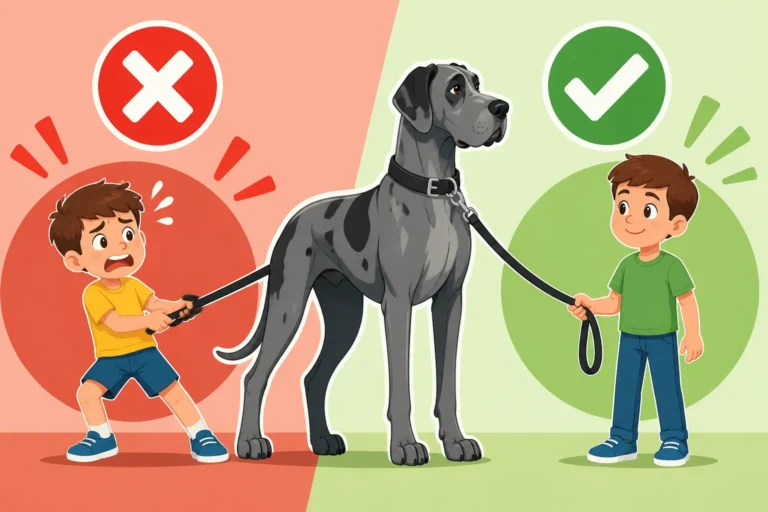
One of the most effective ways to teach a Great Dane not to pull is to make pulling unproductive for them. This is where the "Stop-Start" or "Red Light/Green Light" method comes in. The premise is simple: any tension on the leash means the walk stops.
Here's how it works:
- Start walking with your Great Dane.
- The instant you feel any tension on the leash – even a slight tightening – stop dead in your tracks. Become a tree. Do not move forward. Do not yank the leash back. Just stop.
- Wait. Your Great Dane might pull harder, look back at you confused, or try to go around you.
- The moment the leash goes slack, even for a second, say "Yes!" or click, and immediately start walking again.
- Repeat this every single time the leash tightens.
Initially, you might find yourself stopping every few steps, especially if your Great Dane is an enthusiastic puller. This is normal. It will feel tedious, but stick with it. Your dog will quickly start to associate pulling with the walk stopping, and a loose leash with the walk continuing. This teaches them that the reward (moving forward) only happens when there's no tension. It takes consistent effort and a bit of determination on your part, but it truly works to instill Teaching a Great Dane to Heel Beside You.
Lure and Reward: Positive Reinforcement
Positive reinforcement is your most powerful tool, especially with a sensitive breed like the Great Dane. They respond incredibly well to praise, attention, and high-value treats. The "lure and reward" technique involves actively showing your dog what you do want them to do, and then rewarding it lavishly.
- Start in a low-distraction environment: Begin in your yard or a quiet street before tackling busy parks.
- Hold a treat at your side: With your Great Dane on a loose leash, hold a high-value treat (like a small piece of chicken or a favorite BAXTER & Bella training snack) at your seam, just beside your leg, at your dog's nose level.
- Encourage them to walk beside you: As you take a step, say "Heel" or "Let's go" and lure them forward with the treat.
- Reward for loose leash: Take a few steps. If they walk nicely beside you with a loose leash, praise them enthusiastically, click (if using a clicker), and give them the treat.
- Gradually fade the lure: As they get the idea, start holding the treat for longer periods or using an empty hand as a lure, only giving the treat after several steps of good walking. You want them to eventually walk politely without needing to see the treat in your hand.
This method actively teaches them where you want them to be and what a loose leash feels like. Combine this with the stop-start method: if they pull, stop, wait for slack, then resume luring and rewarding. The key is to make walking nicely far more rewarding than pulling. Treats a Great Dane Will Work For are crucial here – make sure they're highly motivating!
Consistency and Patience Are Key
Training a Great Dane, especially for something like leash manners, is not a one-and-done event. It requires unwavering consistency from every family member who walks the dog. If one person lets them pull, it undoes the progress made by another. Everyone needs to be on the same page with the chosen equipment and training methods. This is why resources like BAXTER & Bella, which offer comprehensive online training programs, can be incredibly helpful for maintaining consistency across multiple handlers.
Patience is equally vital. Your Great Dane didn't learn to pull overnight, and they won't unlearn it overnight either. There will be days when you feel like you're taking two steps forward and one step back. Don't get discouraged! Celebrate the small victories – that one block where they walked perfectly, or the moment they voluntarily gave slack. Keep your training sessions short, fun, and positive. Avoid getting angry or frustrated, as Great Danes are sensitive and can shut down. Remember, you're building a bond and teaching a life skill, not just stopping a behavior. Why Great Dane Training Cannot Wait and requires consistent, gentle effort from puppyhood through adulthood.
Building a Solid Foundation: Beyond the Leash
While direct leash training is paramount, other aspects of your Great Dane's life and training contribute significantly to their leash manners. Addressing these foundational elements can make your leash training efforts much more effective and sustainable.
Early Socialization and Exposure
A well-socialized Great Dane is generally a more confident and calmer Great Dane. Exposing your puppy to a wide variety of sights, sounds, people, and other friendly dogs during their critical socialization period (roughly 3-16 weeks) helps them develop into a well-adjusted adult. A dog that is fearful or overly reactive to new stimuli is more likely to pull on the leash out of anxiety, excitement, or a desire to get away from something intimidating.
Think about taking your Great Dane puppy (after they've had their initial vaccinations, of course) to quiet parks, dog-friendly stores, and friends' houses. Let them experience different surfaces, noises, and types of people. Enroll them in a good puppy class where they can have positive interactions with other puppies and learn basic obedience in a controlled environment. The BAXTER & Bella program emphasizes early socialization and exposure for this very reason. A Great Dane that is comfortable and confident in various environments is less likely to be overwhelmed and resort to pulling, and it lays the groundwork for them to be polite and well-behaved when A Great Dane That Lunges at Other Dogs is a possibility. Even Getting a Great Dane Puppy Used to Handling can reduce fear and build confidence that translates to better leash manners.
Reinforcing Basic Obedience Cues
A dog that understands and responds reliably to basic obedience cues off-leash will almost certainly translate that into better leash manners. Commands like "Sit," "Stay," "Come," and especially "Watch Me" or "Look" are invaluable. If your Great Dane can focus on you, even amidst distractions, you have a powerful tool to redirect their attention away from whatever might tempt them to pull.
Practice these cues in various environments, gradually increasing distractions. For example, start with "Watch Me" in your quiet living room, then move to the backyard, then a low-traffic park. Make it a game, and always reward their focus and responsiveness. The stronger their foundation in basic obedience, the easier it will be to implement leash training techniques. If you're struggling, don't hesitate to seek out a trainer who is Finding a Trainer Comfortable With a Great Dane – their expertise with giant breeds is crucial. Even simply teaching them The Cues a Great Dane Needs Before Six Months will give you a head start.
Managing Energy Levels Appropriately
A tired dog is often a well-behaved dog. Great Danes, despite their calm indoor demeanor, are still large dogs with energy needs. If your Great Dane isn't getting enough mental and physical exercise, that pent-up energy will likely explode onto the leash, resulting in enthusiastic pulling. However, it's a delicate balance, especially with a growing Great Dane puppy. Too much strenuous exercise can be detrimental to their developing joints.
Focus on appropriate forms of exercise:
- Structured walks: These are your training opportunities!
- Playtime in a securely fenced yard: Running, fetching, and wrestling with appropriate toys.
- Mental stimulation: Puzzle toys, training sessions, and scent games can be just as tiring as physical exercise.
- Dog park visits (if appropriate): Only if your Great Dane is well-socialized and comfortable with other dogs. Ensure the park is large enough for them to stretch their legs without crowding.
Consult with your vet about How Far a Six-Month-Old Great Dane Should Walk or The Age a Great Dane Can Start Running to ensure you're providing enough, but not too much, exercise for their age and development stage. A Great Dane that has had its physical and mental needs met is much more likely to walk calmly by your side, transforming those walks into a pleasure rather than a chore.
| Leash Behavior Problem | Common Underlying Cause(s) | Training Strategies | Equipment Suggestions |
|---|---|---|---|
| Pulls Constantly | Over-excitement, learned behavior (it works!), instinct to lead. | Stop-Start method, Lure and Reward, consistent positive reinforcement. | Front-clip harness, head halter, sturdy 6-foot leash. |
| Pulls at Distractions | Lack of focus, over-arousal, insufficient socialization. | "Watch Me" command, gradual exposure to distractions, positive interrupters. | Front-clip harness, head halter, high-value treats. |
| Sudden Lunges | Reactivity (fear/frustration), prey drive (squirrels!), lack of impulse control. | Engage-Disengage game, "Leave It" command, U-turn turns, avoidance. | Front-clip harness, head halter, secure grip on leash. |
| Pulls at Start of Walk | Anticipation, pent-up energy. | Wait at the door, "Sit/Stay" before going out, brief mental exercise indoors first. | Front-clip harness, head halter. |
Disclaimer
This article is for general informational purposes only and does not constitute professional advice. Laws, prices and regulations vary by location and change over time. Consult a qualified professional for guidance on your specific situation.