A Great Dane Living With Livestock
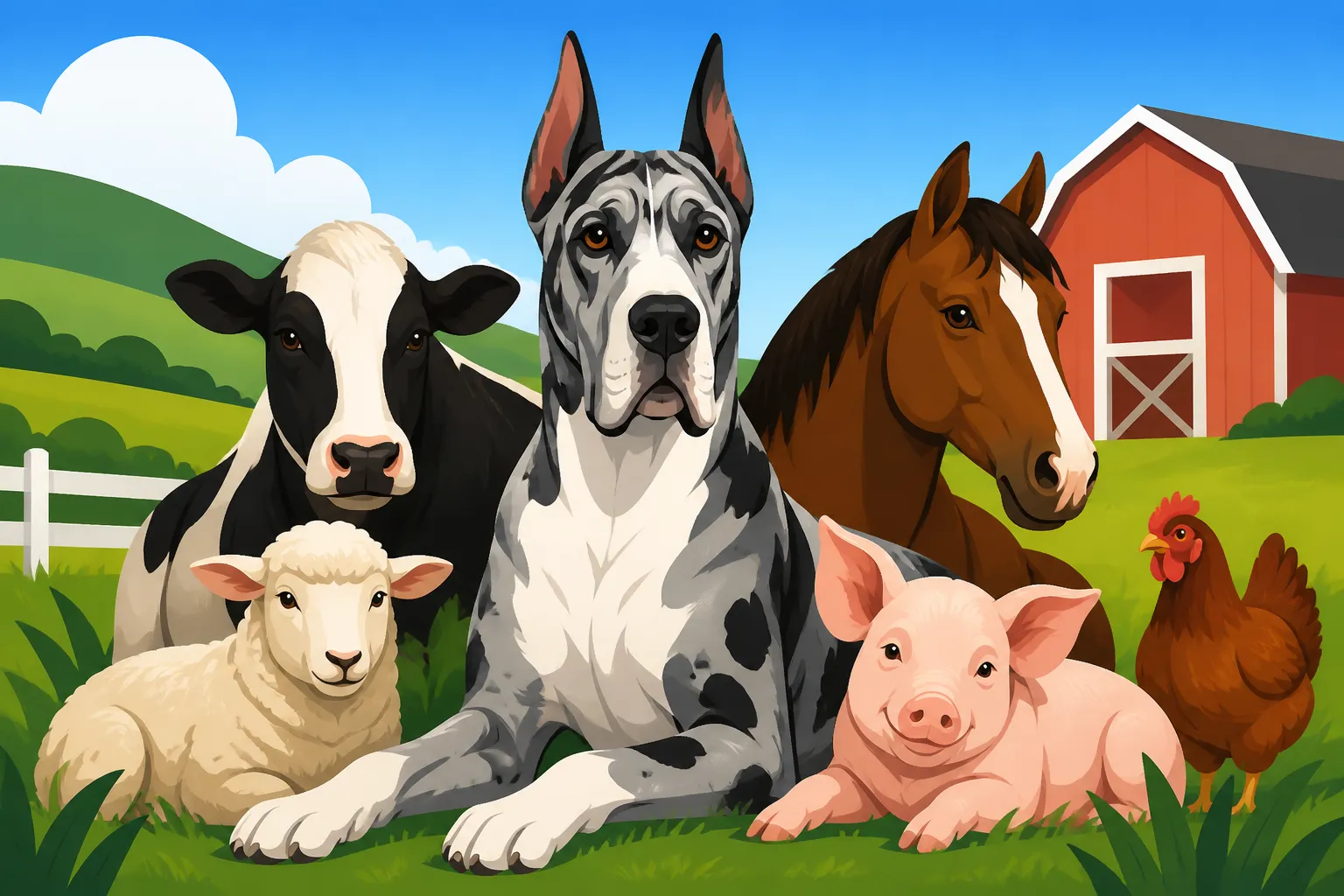
Bringing a magnificent Great Dane into a home that already includes farm animals can feel like a huge undertaking, fraught with worry. You might be envisioning a scene of utter chaos, picturing your gentle giant accidentally trampling a chicken or sending goats scattering in a panic, and that anxiety is completely valid. Managing such a powerful, large dog around creatures that are both prey animals and sometimes larger than the dog itself requires careful planning, consistent training, and a deep understanding of canine behavior. This comprehensive guide will walk you through the essential steps, from understanding your Dane's natural tendencies to implementing daily routines, ensuring a peaceful coexistence between your beloved Great Dane and your livestock.
Understanding the Great Dane's Instincts Around Livestock
It's easy to look at a Great Dane, often called the "Apollo of Dogs" or a "gentle giant," and assume they'll naturally be calm and accepting of all creatures. While their temperament is generally sweet and loving with their human families, they are still dogs, and dogs have instincts. These instincts, if not understood and managed, can lead to serious problems when livestock is in the picture.
Historical Context: Boar Hounds to Companions
Let's not forget the Great Dane's origins. These dogs were, historically, fierce hunters. They were bred to hunt wild boar The Boar Hound the Great Dane Descends From—animals that are large, dangerous, and certainly not what you'd consider docile. This means that deep within their genetic makeup, there is a drive for chasing, catching, and engaging with large, moving targets. Over centuries, selective breeding has softened this drive for many modern Danes, transforming them into the beloved companions we know today. However, this doesn't erase those instincts entirely.
Imagine a Great Dane encountering a herd of cows for the first time. The cows move, they make noise, and to a dog, this can trigger a primal response. While a well-socialized Dane might just observe, a less prepared dog could see this as an exciting game of chase, or even worse, something to herd or confront. The scale of a Great Dane means even a playful chase can turn deadly for smaller or more delicate livestock. This isn't aggression, necessarily; it's often a misinterpretation of play or an unfulfilled instinct. A Great Dane doesn't often mean to cause harm, but their sheer size and power mean the consequences of their actions are magnified exponentially compared to a smaller breed.
The "Gentle Giant" Around Other Animals
The reputation of the Great Dane as a "gentle giant" is well-earned when it comes to people and often other dogs. They tend to be tolerant, affectionate, and surprisingly aware of their size when interacting with children or smaller companions. However, this gentleness can be conditional, especially when presented with novel stimuli or situations that tap into those latent prey drives. For instance, a Great Dane might be perfectly gentle with the family cat, having grown up with it, but view a new batch of chirping chicks as intriguing, noisy toys.
The challenge lies in managing the gap between their innate gentleness and their potential for instinct-driven behavior. For example, a curious Great Dane might try to "play" with a lamb, not understanding its fragility. A quick paw swipe that would barely register to another large dog could easily injure a small animal. The Gentle Great Dane Temperament and Its Limits explores these nuances of their disposition. It’s crucial to understand that even the most well-meaning Great Dane can be an unwitting danger if not properly introduced and continuously supervised around livestock. Your role as their owner is to be the bridge between their instincts and the safety of your farm animals, ensuring they learn appropriate boundaries and behaviors.
Preparing Your Great Dane for Life on the Farm
Bringing a Great Dane into a farm environment isn't a "cross your fingers and hope for the best" situation. It requires deliberate preparation, starting from a young age, to instill the manners and understanding necessary for a harmonious multi-species household.
Early Socialization is Key
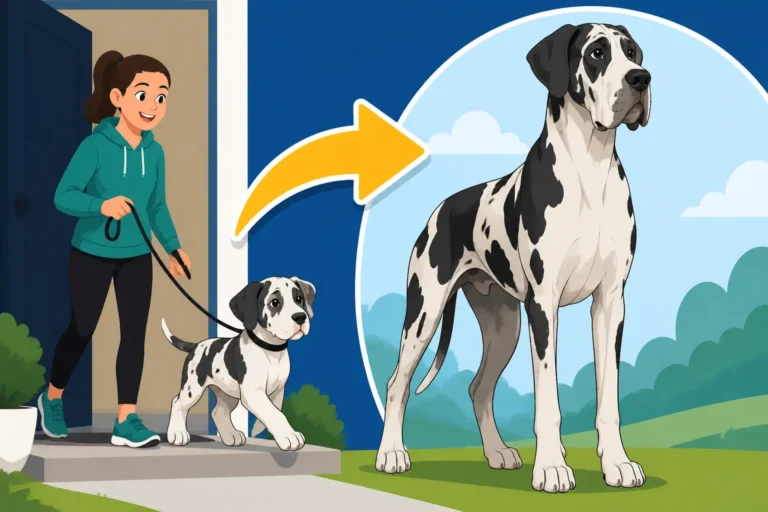
This cannot be stressed enough: early and positive socialization is the absolute bedrock for a Great Dane living among livestock. From the moment you bring your puppy home, exposing them to a wide variety of sights, sounds, smells, and experiences is vital. This includes controlled, safe introductions to different types of animals, even if they aren't farm animals initially. A puppy accustomed to meeting new creatures and learning calm interaction is far more likely to adapt to livestock.
Think about it: a puppy's brain is like a sponge, soaking up every experience as "normal." If a young Great Dane puppy is safely exposed to the sight, sound, and smell of chickens (from a distance, perhaps behind a fence) early on, they learn that these are just part of the environment, not something to be chased or feared. Socializing a Great Dane Puppy Early is a fundamental step. Puppy classes, even if not directly involving farm animals, help them learn self-control and focus around distractions. If you're struggling to find local classes that cater to farm animal exposure, consider online programs like BAXTER & Bella. They offer comprehensive puppy training modules that can lay excellent foundational obedience, which is paramount before even thinking about introducing your Dane to actual livestock. Consistent, positive exposure, rather than overwhelming immersion, is the goal.
Foundational Training for Farm Life
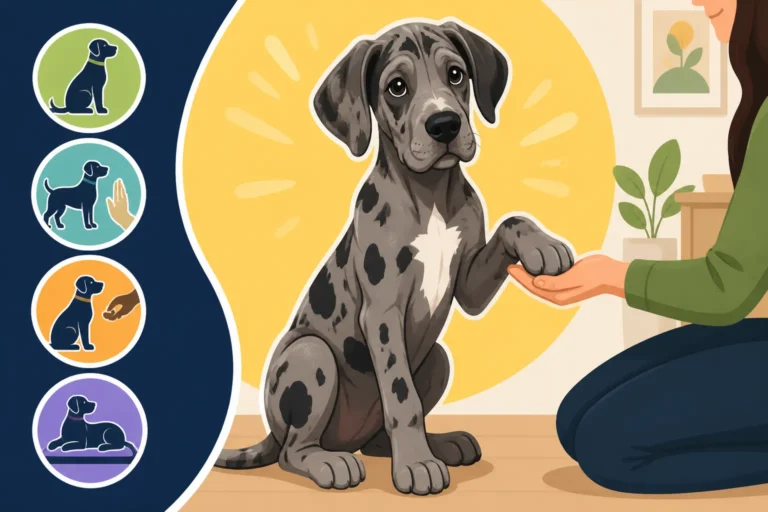
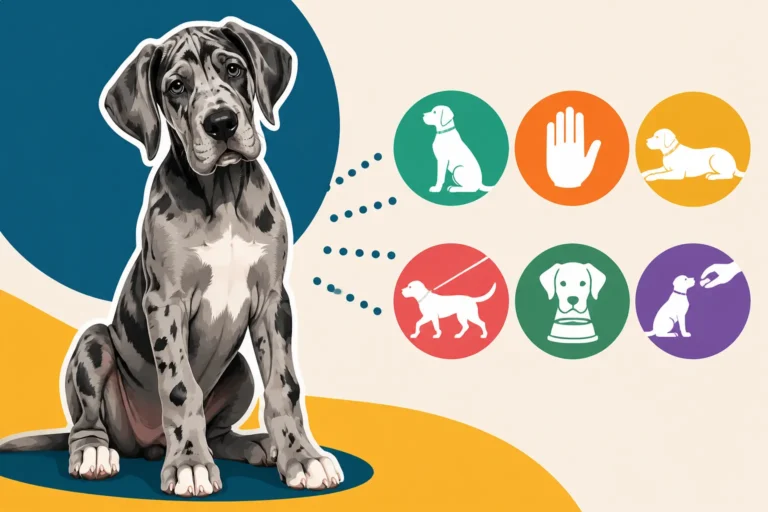
Before your Great Dane even sets a paw near a live animal, they need a solid foundation of obedience. Imagine trying to stop a 150-pound dog from chasing a goat if they don't know "stay" or "leave it." It's simply not going to happen safely. Commands like "sit," "stay," "come," and especially "leave it" and "off" are non-negotiable.
Here’s a breakdown of essential commands and why they matter:
- "Come" (Recall): This is perhaps the most critical command. If your Dane decides to investigate a flock of sheep, a reliable recall means you can call them back immediately, preventing a potential disaster. Practice this in increasingly distracting environments.
- "Leave It": This command teaches your dog to disengage from something tempting. It's invaluable for livestock, preventing them from sniffing, nudging, or chasing.
- "Stay" and "Place": These commands teach impulse control. You can direct your Dane to a specific spot and have them remain there while you tend to animals, minimizing unsupervised interactions.
- "Off" or "Down": Useful for preventing jumping, which can be disastrous for small animals or even intimidating for larger ones. Stopping a Great Dane Jumping Up on People has lessons that apply directly to interacting with farm animals, ensuring your Dane keeps all four paws on the ground.
- Leash Manners: Even with the best training, a farm setting demands that your Great Dane can walk calmly on a leash, especially during initial introductions or when you need to navigate congested areas. Great Dane Leash Manners at a Hundred and Fifty Pounds is not just about walks in the park; it's about control in high-stakes environments.
Consistent, positive reinforcement is key to all this training. Make it fun and rewarding. If you're finding it hard to get started or need a structured approach, online puppy programs, such as BAXTER & Bella, can provide a fantastic framework for building these essential skills from the comfort of your home, before you even think about stepping out into the barnyard.
Introducing Your Dane to Farm Animals Safely
Once your Great Dane has solid foundational obedience, you can begin introductions to livestock, but always, always with safety as the top priority. This is not a rushed process; it's a series of controlled, positive experiences.
- Start with Scent: Before visual introductions, let your Dane get accustomed to the smells. Bring a blanket from the barn into the house, or let them sniff an empty feed bucket. This desensitizes them to the odors without the visual stimulation.
- Controlled Visual Exposure (Fenced Separations): Begin with your Dane on a leash, at a distance, behind a secure fence or barrier. The goal is calm observation. If your Dane is pulling or overly excited, increase the distance. Reward calm behavior with high-value treats. Keep these sessions short and positive.
- Gradual Reduction of Distance: As your Dane shows consistent calm, slowly decrease the distance to the animals, always keeping a barrier between them. Continue to reward calm behavior. If they become overstimulated, retreat and try again later.
- Leashed, Supervised Interaction (No Barrier): Once your Dane is reliably calm behind a fence, you can attempt leashed, supervised interaction without a barrier. Crucially, start with the most stable, calm livestock you have – perhaps an older horse or a very docile cow. Avoid young, flighty, or pregnant animals for initial meetings. Keep your Dane on a long lead (you can find robust options on Amazon) so you have control but they have some freedom to explore respectfully.
- Reinforce "Leave It" and "Easy": During these interactions, constantly reinforce "leave it" if your Dane shows too much interest or tries to mouth an animal. Use a gentle command like "easy" to encourage calm behavior. Teaching a Great Dane to Leave Food Alone applies equally to teaching them to leave animals alone.
- Never Unsupervised: Until your Great Dane is a proven, reliable, and trustworthy member of the farm crew, never leave them unsupervised with livestock. Even then, continuous monitoring is advised. Accidents happen in a split second.
The table below outlines a typical progression for introducing your Great Dane to new farm animals:
| Phase | Goal | Method | Key Commands & Tools |
|---|---|---|---|
| Phase 1: Scent & Sound | Familiarization without visual | Bring barn smells/sounds into dog's space | Positive association |
| Phase 2: Visual (Distance) | Calm observation, no interaction | Dog on leash, behind strong fence, far away | "Watch me," "Sit," Treats |
| Phase 3: Visual (Closer) | Sustained calm, reduced distance | Dog on leash, behind strong fence, closer | "Stay," "Leave it," Praise |
| Phase 4: Leashed (No Barrier) | Respectful, controlled proximity | Dog on leash, with docile animal, close | "Easy," "Off," "Come" |
| Phase 5: Off-Leash (Supervised) | Reliable calm, independent behavior | Dog off leash, with stable animals, observed | "Leave it," Recall |
Remember, every dog and every farm animal is an individual. Adjust the pace according to your Dane's temperament and the reactions of your livestock. Some Danes will take to it quickly, others may need more time and repetition.
Managing Day-to-Day Interactions and Challenges
Achieving initial introductions is a great first step, but the real work of living harmoniously with a Great Dane and livestock is an ongoing commitment to management and consistent training.
Supervision and Containment
Even after successful introductions, constant vigilance is your best friend. A Great Dane is a large, powerful animal, and even a well-behaved one can have an off day, or an instinct can be triggered unexpectedly. This means:
- Direct Supervision: Whenever your Great Dane is in the same area as livestock, a human needs to be actively supervising. This isn't just "being in the general vicinity"; it means watching your Dane's body language, anticipating potential issues, and being ready to intervene.
- Secure Fencing: Robust fencing is non-negotiable. This serves two purposes: keeping your Great Dane out of areas where they shouldn't be unsupervised, and keeping livestock contained. A fence that a smaller dog might respect, or even jump, could be easily pushed over by a determined Great Dane. Consider the strength and height of your fencing, ensuring it's appropriate for keeping a large, inquisitive dog where you want them.
- Crate Training: A large, durable crate (many good options are available on Amazon) can be an invaluable tool for safely containing your Great Dane when you can't offer direct supervision, or during times of high activity on the farm when distractions might be too much. It provides a safe haven for your dog and peace of mind for you.
- Designated Areas: Consider creating designated "dog-free" zones for your livestock, particularly for vulnerable animals like young lambs, chicks, or recovering animals. This gives your livestock a sanctuary and reduces the opportunity for accidental interactions.
The key is to minimize opportunities for error while maximizing positive, controlled interactions. It's about setting your Great Dane and your livestock up for success every single day.
Addressing Common Issues: Chasing, Nipping, Fear
Even with the best preparation, issues can arise. It's how you address them that determines long-term success.
- Chasing: This is perhaps the most common and dangerous issue. If your Great Dane chases livestock, even playfully, immediate intervention is necessary. Use a sharp, firm "No!" or "Leave it!" command. Immediately redirect their attention with a high-value toy or treat, then remove them from the situation. Repeat controlled introductions later, but ensure a stronger barrier or longer leash control. Understanding A Great Dane That Lunges at Other Dogs can offer insights into managing strong reactions.
- Nipping/Mouthing: While not an aggressive bite, a Great Dane's mouth can do serious damage. If they try to nip or mouth an animal, it's a firm "No!" and immediate removal. This is often a sign they're overstimulated or trying to "play." Reinforce polite interactions and teach them that livestock are not playthings.
- Fear/Anxiety: Sometimes, a Great Dane might be fearful of certain livestock, especially larger animals like horses or cattle. This fear can manifest as barking, backing away, or even reactive lunging if they feel threatened. In this case, go back to basics: increase distance, shorten exposure times, and focus on building positive associations with the presence of the animal. Reward calm observation. For a nervous Dane, focusing on Building Confidence in a Nervous Great Dane can be hugely beneficial, gradually helping them acclimate without fear. Avoid forcing interactions, as this can worsen fear.
- Counter Surfing / Food Stealing: While not directly livestock-related, a Great Dane's ability to reach counters or feed bins can be a problem on a farm where livestock feed is often accessible. Why a Great Dane Steals Food Off Counters and Teaching a Great Dane to Leave Food Alone offer strategies to ensure your Dane doesn't consume feed meant for other animals, which could be harmful.
Consistency in your response is paramount. If you allow certain behaviors sometimes but not others, your Dane will become confused. Every time an undesirable behavior occurs, address it calmly but firmly and consistently.
Long-Term Harmony: Routine and Reinforcement
Building lasting harmony between your Great Dane and your livestock is about establishing routines and continuous reinforcement.
- Structured Routines: Dogs thrive on routine. Establishing a predictable schedule for feeding, walks, training sessions, and supervised time with livestock can help your Great Dane understand expectations and feel secure in their environment. Knowing when they might see the sheep, or when they're expected to be calm while you're in the barn, reduces anxiety and uncertainty.
- Consistent Training: Training isn't a one-and-done event. It's an ongoing process. Continue to practice those essential commands ("leave it," "come," "stay") in the presence of livestock. Every positive interaction reinforces the desired behavior. Regular check-ins with your Dane's obedience can prevent old habits from creeping back in. The Manners a Great Dane Needs Before It Grows is a lifelong commitment.
- Mental and Physical Exercise: A tired Great Dane is a well-behaved Great Dane. Ensure your dog gets plenty of appropriate physical exercise (without overdoing it, especially when they are young and growing) and mental stimulation. Puzzle toys, training sessions, and focused walks can burn off excess energy that might otherwise be directed towards mischief with the livestock. While they might be large, Great Danes are not typically high-energy dogs that need to run for miles, but they do need engaging activity.
- Positive Reinforcement: Continue to heavily reward calm, appropriate behavior around livestock. This might be a special treat, verbal praise, or a favorite toy. Your Dane should associate the presence of livestock with positive experiences, not just prohibitions.
- Boundary Reinforcement: Reinforce physical and verbal boundaries daily. If certain areas are off-limits, ensure your Dane understands and respects that. This might mean walking the perimeter of livestock pens with your leashed Dane, calmly stating "leave it" or "no" if they show too much interest, then rewarding them for moving on.
Living with a Great Dane and livestock can be incredibly rewarding, creating a dynamic, interesting home. But it requires commitment to making sure everyone, two-legged and four-legged, understands their role and boundaries.
Special Considerations for Different Livestock Types
Not all livestock are created equal when it comes to living with a Great Dane. Each type presents unique challenges and considerations that need to be addressed specifically.
The Nimble and the Flighty: Poultry and Small Ruminants
This category includes animals like chickens, ducks, turkeys, goats, and sheep. These are often the most challenging animals for a Great Dane to coexist with peacefully, primarily because their movements can easily trigger a dog's chase instinct.
-
Poultry (Chickens, Ducks, Turkeys): These birds are often small, fluttery, and vocal – essentially, they are like living squeaky toys to many dogs. A Great Dane's size means even a curious nose poke can be deadly, and a playful chase can result in fatal stress or injury.
- Strategy: Strict containment for poultry is often the safest bet. Secure chicken runs and coops that your Great Dane cannot access are essential. If free-ranging, your Dane should only be present under direct, active supervision, and only after extensive training in "leave it" and "off." Many owners find that it's simply not worth the risk, and keeping poultry completely separate is the wisest course. Even a Great Dane trained to ignore chickens might react differently to a sudden flutter or squawk.
- Frustration Point: It can be incredibly frustrating to have a dog you adore but can't trust around your feathered friends. You might feel like you're constantly arbitrating or separating. This feeling is normal. The potential for a quick, accidental death for a chicken far outweighs the benefit of having your Dane mingle freely with them.
-
Small Ruminants (Goats, Sheep, Lambs): Goats and sheep are larger than poultry but can still be quite flighty, especially young ones. Their playful antics or sudden movements can easily provoke a chase from a Great Dane. Lambs and kids are particularly vulnerable to accidental injury or being "played with" too roughly.
- Strategy: Again, strong fencing is critical. Introductions should be slow and deliberate, always with your Dane on a leash. Focus heavily on teaching your Dane that these animals are not for chasing or rough play. Encourage calm observation and reward heavily. If your Great Dane shows any tendency to "herd" or push them, immediate intervention is necessary. Some Great Danes can become excellent guardians for these animals once mature and properly trained, but this is a serious commitment and requires specific training, not just passive exposure.
- Consideration: Young, boisterous goats can sometimes provoke a dog into play that escalates. Teach your Great Dane appropriate boundaries, perhaps using a long training line (available on Amazon) for safety during early supervised sessions in a larger enclosure.
The Large and the Powerful: Horses and Cattle
These animals, due to their sheer size and strength, present a different set of challenges. While a Great Dane is unlikely to "hunt" a horse, accidental injury from a kick or stomp is a real risk, and a dog's presence can stress larger livestock.
-
Horses: Horses are powerful and can easily injure a curious or playful Great Dane with a kick. Some horses are very dog-savvy and tolerant, while others are easily spooked.
- Strategy: Never allow your Great Dane to chase or harass horses. Keep them leashed or safely contained when horses are moving or being worked. If a horse is nervous around dogs, keep your Dane out of sight. When introducing them, do so with both animals under control – your Dane on a leash, and the horse handled by an experienced equestrian. Teach your Dane to respect the horse's space and to stay clear of its hooves. Over time, many Danes can learn to calmly coexist in the pasture, sometimes even developing a bond, but always err on the side of caution.
- Safety First: A Great Dane running under a horse can result in serious injury for both animals. Constant supervision and a reliable "come" are vital in these environments.
-
Cattle: Similar to horses, cattle are large and powerful. A cow can easily step on or kick a dog, and a mother cow protecting her calf can be extremely dangerous.
- Strategy: The same principles apply here: respectful distance, leashed control, and consistent "leave it" commands. Calves are particularly vulnerable and can trigger a protective response from their mothers if a dog gets too close. Never allow your Great Dane to bother or "work" cattle unless you are specifically training them for herding and have professional guidance, which is rare for a Dane. Most often, the goal is calm coexistence with no direct interaction.
- Farm Dog vs. Pet Dog: Understand whether your Great Dane's role is simply to be a companion on the farm, or if you're attempting to train them for specific tasks like guarding or herding. The latter requires immense dedication, specialized training, and a clear understanding of breed aptitude. For most Great Dane owners, the goal is simply a calm and safe coexistence.
Regardless of the type of livestock, your Great Dane's presence on a farm is a privilege, not a right. It's your responsibility to ensure their safety, the safety of your animals, and the peace of your farm. This ongoing commitment to training, supervision, and common sense will lead to the most harmonious outcome for everyone involved.
Disclaimer
This article is for general informational purposes only and does not constitute professional advice. Laws, prices and regulations vary by location and change over time. Consult a qualified professional for guidance on your specific situation.