The English Mastiff Behind the Great Dane
It's quite common for people to admire the majestic Great Dane without fully understanding the deep historical threads that weave into its very being. Many assume such a unique breed sprang solely from one distinct origin, but the reality is a fascinating blend of power and purpose. This guide delves into one of the most significant ancestral contributors to the Great Dane: the formidable English Mastiff, exploring how its profound genetic blueprint helped shape the Dane we know and love today.
Unraveling the Great Dane's Ancient Tapestry
When we look at a Great Dane today, with its elegant lines, powerful stride, and often surprisingly gentle demeanor, it’s easy to forget its origins as a fierce hunting dog. The breed’s history isn't a straight line but a fascinating convergence of powerful dogs, each contributing specific traits that would eventually coalesce into the Great Dane. Understanding this lineage helps us appreciate the complexity and unique characteristics of our beloved giants.
From Boar Hounds to Noble Companions
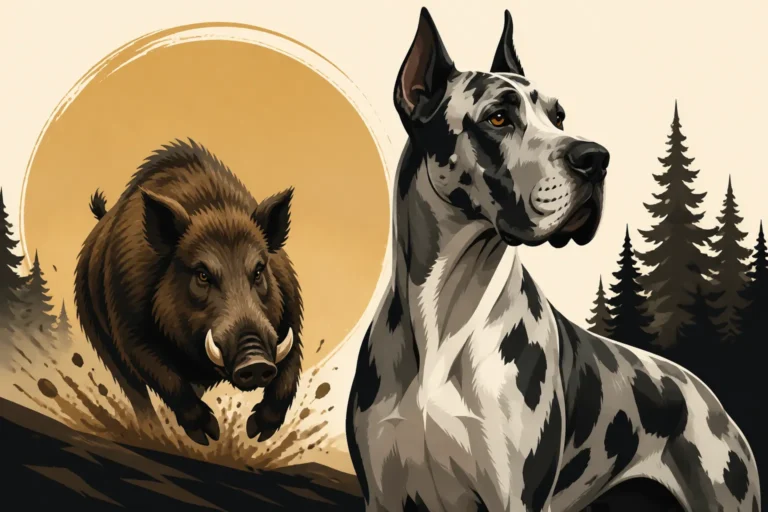
Long before the Great Dane was recognized as a distinct breed, its ancestors were known across Europe for their incredible strength and courage, primarily used for hunting large, dangerous game like wild boar and deer. These early dogs needed to be robust, fearless, and capable of holding down powerful prey until the hunters could arrive. This wasn't a job for a delicate dog; it required immense physical presence and an unwavering spirit. These "boar hounds," as they were often called, were not uniform in appearance, but rather a functional type of dog bred for specific tasks.
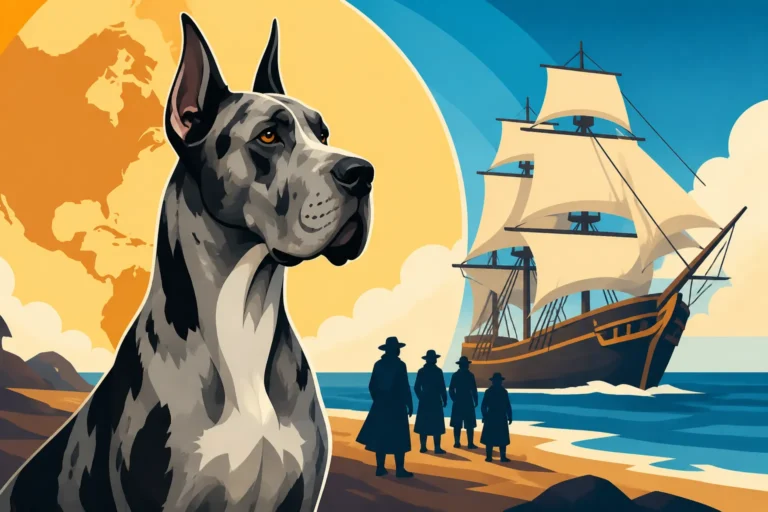
The story often begins in Germany, where the breed truly started to take shape, eventually being recognized as the Deutsche Dogge, or German Mastiff, a name that still reflects its powerful, Mastiff-type ancestry. These dogs were developed to be faster and more agile than the heavier Mastiff types, capable of both tracking and engaging with fast-moving prey. The requirement for a dog that could outpace a boar, yet still possess the strength to confront it, necessitated a careful blend of existing powerful breeds. The Boar Hound the Great Dane Descends From explores this fascinating history in more detail, highlighting the demands placed on these early working dogs.
Over centuries, various Mastiff-type dogs from across Europe contributed to this developing lineage. These weren't just random pairings; breeders were intentionally selecting for specific traits that would enhance the dog's hunting prowess. The English Mastiff, already well-established and renowned for its immense size and strength, played a pivotal role in this formative period, offering a genetic pool rich in exactly the kind of robust physicality and protective instinct that the emerging boar hounds needed.
The Influence of the English and German Lines
The term "Great Dane" itself is a bit of a misnomer, as the breed has its strongest roots in Germany, not Denmark. However, the influence of various European canine lines, particularly English and German stock, is undeniable in its development. The English contribution largely came through these powerful Mastiff-type dogs, brought to Germany by traders and possibly even soldiers. These dogs were admired for their sheer mass and formidable presence, qualities highly sought after in dogs intended for protection and grand hunting expeditions.
As these English Mastiff types were introduced, they were likely crossbred with local German hounds and sight hounds, such as the Irish Wolfhound and possibly even Greyhounds, to infuse the desired combination of power, speed, and elegance. The goal was to create a dog that was not merely a heavy-boned guard dog, but one that could move with surprising grace and agility for its size. This period of cross-breeding was crucial, as it began to refine the Great Dane from a purely utilitarian hound into something more distinct—a giant dog that possessed both strength and nobility. English and German Blood in the Early Great Dane provides further insights into this complex intermingling of European genetics.
The result of this careful, often experimental, breeding was a dog that, while retaining the imposing size and protective instincts of its Mastiff ancestors, began to develop a more refined head, a deeper chest, and longer legs. This was essential for the speed needed to catch boar, rather than just hold it. The German breeders were meticulous in documenting and standardizing their ideal dog, leading to the establishment of the Deutsche Dogge as a national breed, emphasizing the harmonious blend of strength and athleticism that set it apart.
The Indelible Mark of the English Mastiff
It’s impossible to discuss the Great Dane's origins without acknowledging the profound impact of the English Mastiff. The Mastiff was a cornerstone, providing much of the foundational genetics for size, power, and a certain gravitas that defines the Great Dane to this day. When breeders in Germany began shaping what would become the Great Dane, they weren't starting from scratch; they were refining and adapting existing giants, and the English Mastiff was arguably the most prominent among these genetic donors.
Size, Structure, and Jaw Power
The most obvious contribution of the English Mastiff to the Great Dane is undoubtedly its sheer size and robust bone structure. Early Mastiffs were enormous, powerful dogs, bred for guarding estates, battle, and baiting. Their massive heads, powerful jaws, and heavily muscled bodies were legendary. When these dogs were introduced into the developing Great Dane lines, they passed on this impressive scale. While a Great Dane is typically taller and leaner than a modern Mastiff, that fundamental blueprint for a giant, substantial dog came largely from this ancestry.
Think about the impressive head of a Great Dane—the strong muzzle, the deep-set eyes, and the powerful bite. These are traits that echo the Mastiff's formidable presence. While Great Danes were eventually bred for a slightly more refined skull and a longer, more elegant neck, the underlying structure for a commanding head was provided by the Mastiff. This skeletal and muscular foundation allowed the emerging Great Dane to develop into the powerful, imposing creature it became. Without the Mastiff's contribution, the Great Dane might have ended up as a much lighter, less substantial dog, perhaps more akin to a sighthound in build rather than the "Apollo of Dogs" it is known as today.
Moreover, the sheer density of bone and the depth of chest that allows for massive lung capacity in a Great Dane can be traced back to these ancient, heavy-set Mastiff types. While the Great Dane was selected for more athleticism, it never lost that fundamental power. This strength is evident when you see a Great Dane in full stride, capable of covering ground with immense power, or simply standing guard, an imposing figure. Even the largest chew toys on the market, like those available on Chewy, are often designed with these powerful jaws in mind, a testament to the enduring legacy of strength in both breeds.
Guarding Instincts and Protective Nature
Beyond physical attributes, the English Mastiff also contributed significantly to the Great Dane's temperament, particularly its protective instincts and loyalty. Mastiffs were, for centuries, protectors of home and hearth. They were bred to be vigilant, formidable deterrents against intruders, and fiercely devoted to their families. This deep-seated protective nature is a hallmark of the Great Dane as well. While often lauded as "gentle giants," Great Danes are inherently aware of their surroundings and their family's safety.
Imagine a Mastiff standing sentinel over an estate—unflappable, observant, and ready to act if a threat arose. This inherent watchfulness and protective drive are clearly visible in many Great Danes today. They form strong bonds with their human families and, despite their generally friendly disposition, can be aloof or wary of strangers until properly introduced. This isn't aggression, but rather a cautious, protective instinct—a direct inheritance from their Mastiff ancestors. Whether a Great Dane Is a Guard Dog explores how this instinct manifests in the modern Dane.
This protective streak, combined with their imposing size, makes them excellent natural guardians, though responsible socialization and training are crucial to channel this instinct appropriately. It’s important for owners to understand this aspect of their Great Dane's personality and to respect it, providing consistent guidance rather than trying to suppress a deeply ingrained trait. The loyalty and devotion that Great Danes show are also echoes of the Mastiff's unwavering commitment to its people.
Evolution and Divergence: Shaping the Modern Great Dane
While the English Mastiff laid a powerful foundation, the path to the modern Great Dane involved significant evolutionary steps and selective breeding that moved away from the Mastiff's stockier build. German breeders had a specific vision: a dog with impressive size, yes, but also with remarkable agility, speed, and a more refined, elegant appearance. This divergence was driven by changing needs and aesthetic preferences, transforming the heavy boar hound into the "Apollo of Dogs."
Selective Breeding for Speed and Agility
The early Great Dane ancestors, while powerful, often needed more speed and sustained endurance to excel at hunting fast-moving wild boar. This led breeders to introduce genetics from swifter hound types. Imagine the challenge: you want a dog strong enough to confront a boar, but also fast enough to keep pace with it over varied terrain. This required a careful balancing act, selectively breeding for a longer, leaner build while retaining the bone and muscle mass necessary for strength.
This focus on agility meant a departure from the Mastiff's extremely heavy, broad-chested structure. While the Great Dane retained significant depth of chest, it gained longer legs and a more athletic, deep-bodied frame, allowing for that characteristic long, easy stride. This is why a Great Dane, despite its immense size, often moves with an almost gazelle-like grace, capable of bursts of speed that belie its heft. The development of the Great Dane was truly about optimizing for a specific, demanding hunting role that combined power with pace.
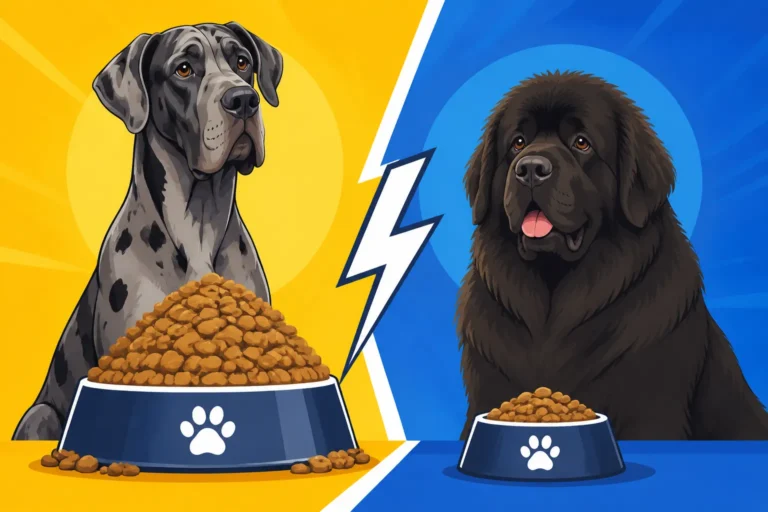
This careful selection for athleticism also influenced how the breed's growth was managed. Responsible breeders and owners know that a Great Dane puppy should grow slowly to prevent stress on rapidly developing joints, a concern amplified by the breed's size, itself a legacy of its giant ancestors like the Mastiff. Proper nutrition, often requiring specially formulated large-breed puppy foods (many of which are easily found on Chewy), is vital to support this controlled growth and ensure healthy development.
Refining Temperament for the "Apollo of Dogs"
The journey from a formidable boar hound to the "Apollo of Dogs"—a title reflecting its noble and graceful appearance—also involved significant refinement of its temperament. While the Mastiff's protective instincts were valuable, the evolving Great Dane was increasingly sought after not just for hunting, but also as a majestic companion and status symbol in aristocratic homes. This required a temperament that was bold and courageous when needed, but also calm, dignified, and affectionate indoors.
Breeders consciously selected for dogs that were less prone to aggression and more amenable to living closely with humans in a domestic setting. The goal was a dog that was impressive in stature but gentle in nature, capable of distinguishing between a genuine threat and a friendly visitor. This balance of power and gentleness is what makes the Great Dane so beloved today. They are confident but not overtly aggressive, watchful but rarely boisterous without reason. The Great Dane's Reputation as the Apollo of Dogs delves further into this admired temperament.
This careful cultivation resulted in a dog that is famously tolerant and patient, especially with children and other animals, provided they are properly socialized from a young age. While their size demands respect and consistent training, their inherent desire to please and their affectionate nature make them wonderful family companions. The foundation of loyalty from the Mastiff was retained, but overlaid with a refined sociability that made them suitable for a broader range of roles beyond just guarding or hunting.
A Legacy of Giants: Comparing Today's Descendants
Even today, centuries after their initial intermingling, you can still see echoes of the English Mastiff in the Great Dane, and vice-versa. While they are distinct breeds with their own standards and characteristics, their shared ancestry means they retain some undeniable similarities in their giant stature and general disposition. However, the selective breeding over generations has also led to clear differences, showcasing how breeders carved out two unique paths from common ground.
Key Physical Differences and Similarities
When comparing a modern English Mastiff and a Great Dane, their shared "giant breed" status is immediately apparent. Both are imposing, large dogs that command attention wherever they go. They both possess powerful builds, substantial bone, and deep chests, all indicative of their common heritage. Their heads are strong, their muzzles pronounced, and their expressions are often dignified and watchful.
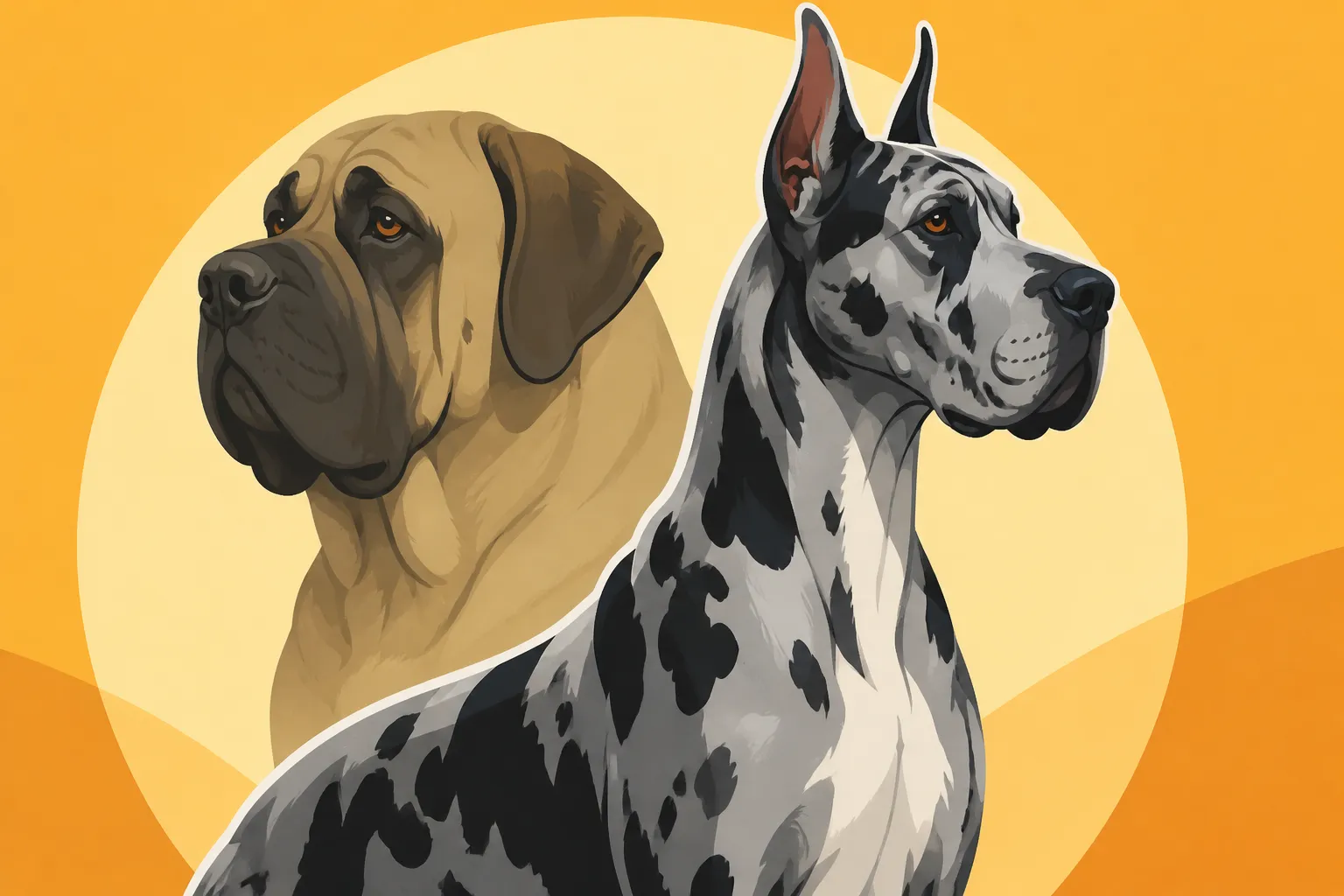
However, the differences are striking and reflect the diverging breeding goals. The English Mastiff is typically heavier, more massive, and lower to the ground. It has a broader head, a thicker neck, and a more ponderous, rolling gait. Its body is more rectangular and blocky, emphasizing sheer power and bulk. You can almost feel the weight of history in its deliberate movements.
The Great Dane, on the other hand, is built for elegance and athleticism. It is taller, often reaching impressive heights (a male Great Dane can easily exceed thirty inches at the shoulder, with some reaching The Thirty-Two Inch Male Great Dane or more), with a more refined head, a longer, more arched neck, and a much leaner, more muscular body. Its gait is flowing and powerful, designed for covering ground with speed. While it shares the "giant" category, the Great Dane leans towards the "athletic giant" while the Mastiff embodies the "massive giant."
| Feature | English Mastiff | Great Dane |
|---|---|---|
| Overall Build | More massive, stocky, rectangular, heavy-boned | Taller, leaner, elegant, square-proportioned, athletic |
| Height | Generally shorter than Dane, but very bulky | Taller, often considered the tallest breed |
| Weight | Heavier, more pounds per inch of height | Lighter for its height, more agile |
| Head | Broader, more wrinkled, heavier jowls | More refined, less wrinkle, often longer muzzle |
| Gait | Ponderous, rolling, powerful but less agile | Flowing, powerful, ground-covering, more agile |
| Purpose | Guarding, protection, companion | Hunting large game, companion, protection |
This table highlights the visual distinctions that have emerged over generations of selective breeding. The Great Dane Against the Mastiff offers a deeper look at these fascinating differences.
Temperamental Nuances in the Modern Breeds
While both breeds inherited a strong sense of loyalty and a protective nature from their common ancestors, their temperaments have also developed along slightly different paths, reflecting their distinct roles and breeding histories. Both are generally good-natured, devoted to their families, and respond well to consistent, positive training.
The English Mastiff tends to be a more reserved and placid dog. While intensely loyal and protective of its family, it often has a more stoic and calm demeanor, preferring to observe rather than actively participate in high-energy activities. Their guarding instinct is present but often manifests as a quiet, formidable presence rather than overt action, preferring to deter with size alone. They are often described as deeply gentle and patient, particularly once mature.
The Great Dane, while also gentle and patient, often displays a higher level of playfulness and exuberance, especially in its younger years. They can be more outwardly affectionate, often leaning on their owners or seeking physical contact. Their protective instincts are there, but they are also generally more social and outgoing with people they know. They retain a certain "hound" curiosity and zest for life. A mature Great Dane is typically calm indoors, but can switch to playful and energetic outdoors. Both breeds, being giant dogs, benefit immensely from early socialization and consistent training to ensure they grow into well-adjusted, confident companions. Taking on Whether an adult Great Dane is the better choice for some owners often comes down to managing the puppy exuberance.
Ultimately, the Great Dane stands as a magnificent testament to the art of selective breeding, taking the raw power and loyalty of a lineage deeply rooted in the English Mastiff and refining it into a dog of unparalleled elegance, athleticism, and gentle spirit. Their shared history reminds us that even the most distinct breeds often have intertwining roots, each contributing to the rich tapestry of the canine world.
Disclaimer
This article is for general informational purposes only and does not constitute professional advice. Laws, prices and regulations vary by location and change over time. Consult a qualified professional for guidance on your specific situation.