Greeting Manners for a Great Dane
It's a familiar scene for many Great Dane owners: you open the door, and your gentle giant, in a burst of pure joy, launches itself at your unsuspecting guest, potentially sending them stumbling. Managing a Great Dane's enthusiastic greetings can be a real challenge, not just because of their sheer size and power, but because their hearts are often as big as their bodies. This guide is designed to help you understand your Dane's greeting behaviors, equip you with practical training strategies, and provide management tips to ensure everyone – two-legged and four-legged alike – can enjoy peaceful, polite introductions.
Understanding the Great Dane's Greeting Instincts
Great Danes are renowned for their loving, affectionate, and often playful nature. When someone new comes into their space, or they encounter an interesting person on a walk, their immediate instinct is often to express that excitement with gusto. For a smaller dog, this might be a cute little jump or a playful bark, but for a Great Dane, it becomes an entirely different proposition.
The Natural Enthusiasm of a Giant Breed
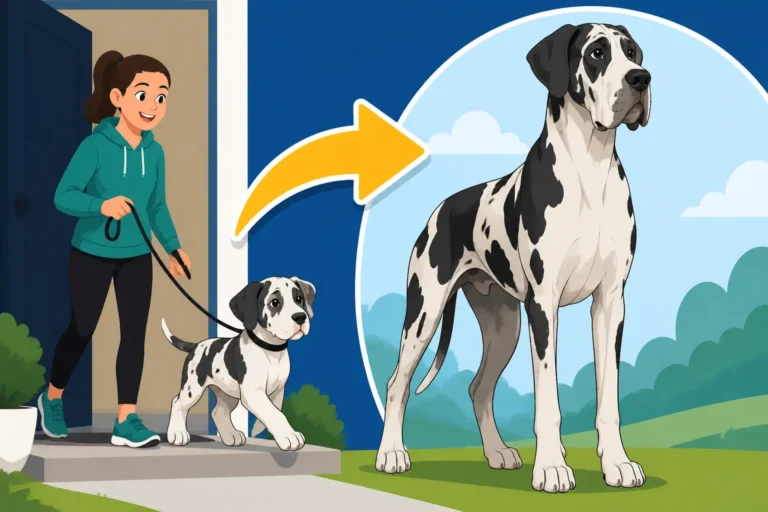
Imagine a puppy's boundless energy, but scaled up to a dog that can easily outweigh an adult human. That's essentially what you're dealing with in a Great Dane's greeting. They don't mean to be rude or aggressive; they're simply expressing joy and curiosity, often accompanied by a desire to get closer, sniff, or even "hug" the new person. This enthusiasm can be overwhelming and, frankly, quite dangerous if not properly channeled. They often view new people as potential playmates or sources of attention, and they'll try whatever works to get that interaction.
Their large size means they have a significant reach, and what might be a simple paw lift in a smaller dog becomes a full-body lunge that can easily send someone off balance. Their sheer momentum alone can be surprising. Why a Great Dane Manages Without Outdoor Space It's vital to recognize that this isn't malice; it's simply a lack of understanding regarding appropriate social etiquette for a dog of their stature.
Why Size Amplifies Greeting Problems
The simple truth is, a 150-pound dog jumping on you feels a lot different than a 15-pound dog doing the same. What could be an endearing quirk in a small breed becomes a serious safety concern with a Great Dane. Even a gentle nudge from their enormous head can send someone reeling, and a full-body lean can pin a person against a wall. This isn't just about knocking over a guest; it's about the potential for injury, especially for children, seniors, or anyone unsteady on their feet.
Beyond physical impact, the sheer size can be intimidating. Many people, especially those not familiar with giant breeds, might be genuinely frightened by an approaching Great Dane, even if it's perfectly friendly. A well-intentioned jump can look like an aggressive act, leading to misunderstandings and potentially negative perceptions of your otherwise wonderful dog. It's a huge responsibility to ensure your Great Dane is a polite ambassador for the breed. The Scale New Great Dane Owners Miss
The Impact of Early Socialization (or Lack Thereof)
A Great Dane's early experiences profoundly shape their greeting behaviors. Puppies that are exposed to a wide variety of people, sounds, and environments in a positive way tend to grow into more confident and well-adjusted adults. If a puppy isn't properly socialized, they might become overly excited or, conversely, fearful when encountering new people, both of which can lead to challenging greeting behaviors.
Imagine a Great Dane puppy that was allowed to jump on everyone as a cute little thing. As they grow, that behavior is reinforced, and they simply don't learn an alternative. Conversely, a puppy that rarely met new people might react with fear or over-excitement, not knowing how to process the novel interaction. Socializing a Great Dane Puppy Early The window for crucial socialization closes surprisingly quickly, and while you can always teach an old dog new tricks, it's exponentially easier to instill good habits from the start.
Foundation Training for Polite Greetings
The good news is that Great Danes are generally eager to please and intelligent, making them highly trainable. The key is to start early, be consistent, and teach them what you want them to do rather than just punishing what you don't.
The "Four on the Floor" Rule
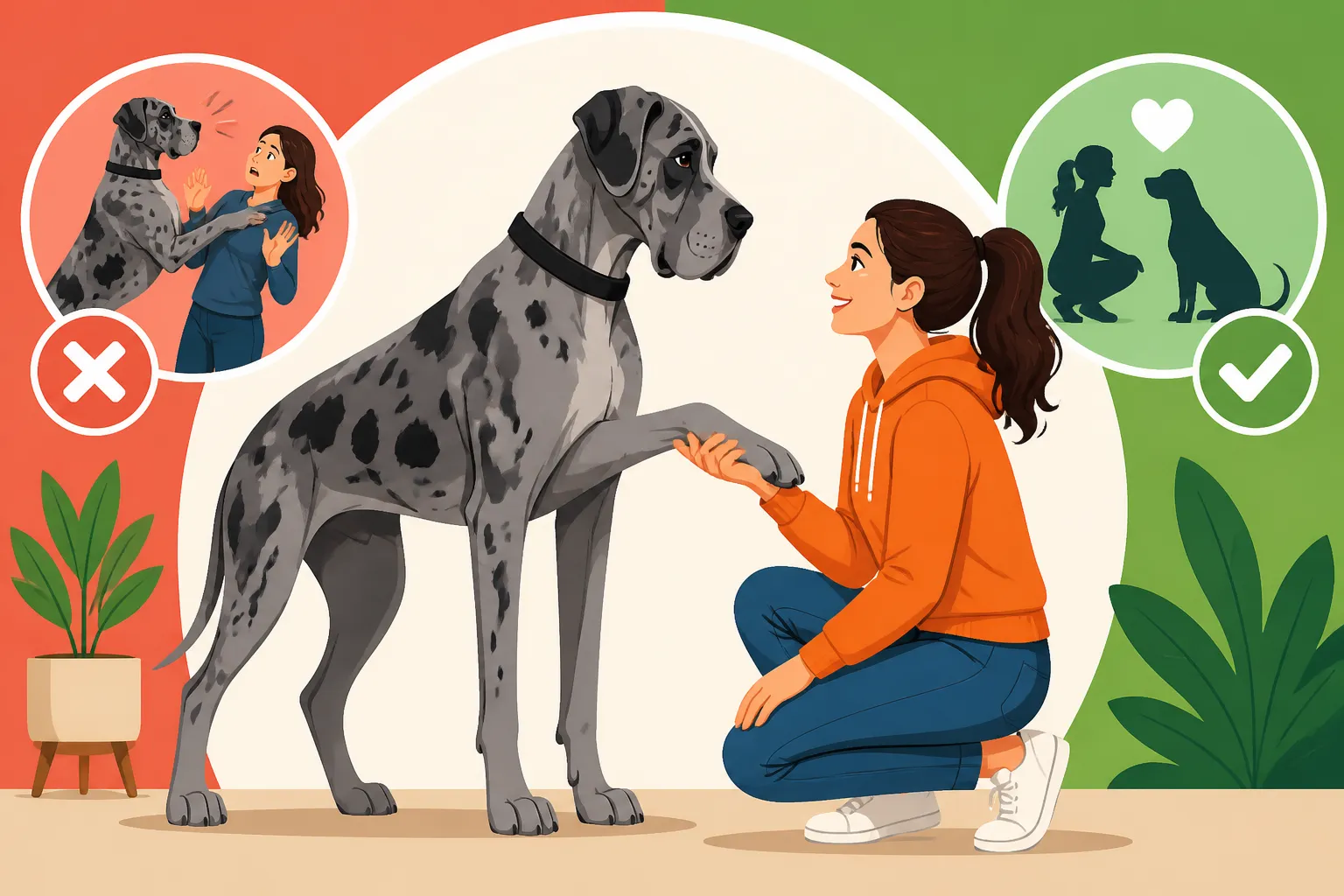
This is a golden rule for any dog owner, but especially for those with giant breeds. The "four on the floor" rule means that all four of your Great Dane's paws must remain on the ground during greetings. This simple concept prevents jumping and establishes a clear boundary for acceptable behavior. To teach this, consistency is paramount. Every time your Great Dane attempts to jump, calmly disengage.
Here’s how it works:
- Ignore the jump: If your Dane jumps, turn your back, cross your arms, and completely ignore them. No eye contact, no speaking, no touching. This removes the reward (your attention).
- Reward calm: The instant all four paws are on the floor, turn back, praise them softly (e.g., "Good four on the floor!"), and give them a small, high-value treat.
- Repeat endlessly: Practice this with every family member, and then gradually introduce it with calm, dog-savvy friends. It takes repetition for them to understand that calm equals reward. Stopping a Great Dane Jumping Up on People This isn't a quick fix; it's a fundamental retraining of their greeting response.
Teaching an Alternate, Calmer Greeting Behavior
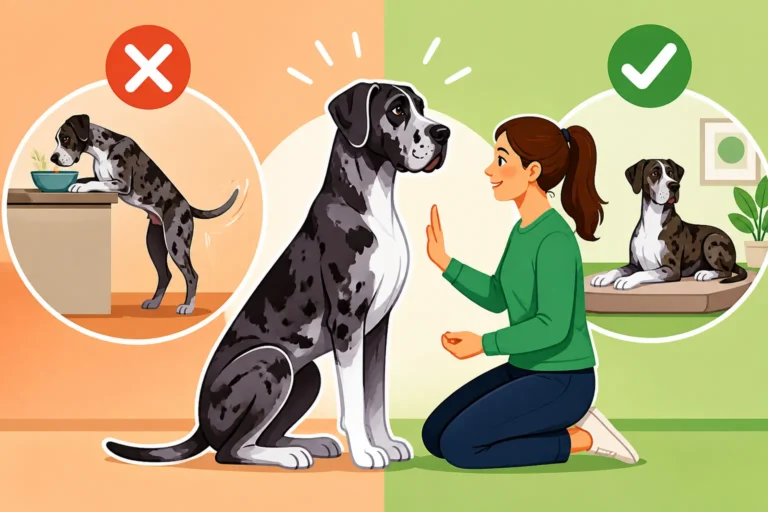
Simply telling your Great Dane "no jump" isn't enough; you need to give them a clear, acceptable alternative. Teaching a "sit" or "place" command for greetings provides them with a job to do that is incompatible with jumping. This gives them a way to interact respectfully.
- "Sit" for Greetings: Before a guest enters, or as you approach someone on a walk, ask your Great Dane to "sit." Reward them heavily for sitting calmly as the person approaches. If they break the sit to jump, immediately disengage as described in the "four on the floor" rule, then reset and try again. The goal is for them to associate a polite sit with positive attention and treats. The Cues a Great Dane Needs Before Six Months
- "Place" Command: This is fantastic for home greetings. Teach your Great Dane to go to a designated "place" (like their dog bed or a mat) and stay there until released. When guests arrive, send your Dane to their place. Reward them for staying there calmly while guests settle in. Once the initial excitement dies down, you can then invite them to greet politely, only if all four paws remain on the floor. Teaching a Great Dane a Place to Settle Online training programs, like those offered by BAXTER & Bella, can provide structured lessons and support for teaching these foundational commands effectively.
Consistency and Positive Reinforcement
Great Danes, like all dogs, thrive on consistency. Everyone in the household, and anyone who regularly interacts with your dog, needs to be on the same page regarding greeting manners. One person allowing jumping can undermine weeks of training. Make sure everyone understands the rules and uses the same cues and rewards.
Positive reinforcement is crucial. Great Danes respond incredibly well to praise, treats, and affection. Punishing them for jumping after the fact is ineffective and can damage your bond. Instead, focus on rewarding the behaviors you want to see. Keep a stash of high-value treats handy – small, soft, and easy for them to gulp down quickly. These immediate rewards help your Dane connect their calm behavior with a positive outcome. Treats a Great Dane Will Work For Remember, your Great Dane wants to please you, but they need clear communication about what that looks like in a greeting situation.
Managing Greetings in Real-World Scenarios
Training in a controlled environment is one thing; applying those skills in the chaotic reality of life is another. Here’s how to manage greetings effectively in various situations.
Handling Visitors at Home
The doorbell ringing or a knock at the door is often a huge trigger for Great Danes. Their protective instincts might kick in, or they might just get incredibly excited. Proactive management is key to preventing chaotic greetings.
- Prep Your Dane: Before guests arrive, take your Great Dane for a potty break and a short, calm walk to burn off some initial energy. Give them a mental exercise like a puzzle toy to keep them occupied.
- Control the Entry: If you know guests are coming, put your Dane on a leash before they arrive. Have them practice their "sit" or "place" command. Alternatively, use a baby gate or a crate (a sturdy one from Amazon will do the trick) to create a barrier between your Dane and the front door initially. This prevents them from rushing the door and jumping immediately.
- Guided Greetings: Once guests are inside and settled, and your Dane is calm, slowly introduce them. Keep your Dane on a leash at first. Ask them to "sit" and allow your guests to approach them, rather than letting your Dane rush them. Instruct your guests to offer a calm hand for sniffing and to praise softly for all four paws on the floor. If your Dane gets too excited, calmly guide them away, reset, and try again. Remember, short, positive interactions are more effective than long, overwhelming ones.
Navigating On-Leash Greetings in Public
Walking a Great Dane requires a certain level of control, especially when encountering other people or dogs. Their size means they can easily pull you off your feet if they decide to lunge for a greeting. Great Dane Leash Manners at a Hundred and Fifty Pounds
- Anticipate and Prepare: Be aware of your surroundings. If you see someone approaching, prepare your Dane. Ask for a "sit" or a "heel" command before they even notice the person. Reward them for maintaining focus on you.
- Controlled Introductions: If a person wants to greet your dog, ask them to approach calmly. Keep your Great Dane in a "sit" or "stand" position with a loose leash. Guide the interaction, ensuring your Dane keeps all four paws on the ground. Politely ask people not to encourage jumping. If your Dane does jump, calmly walk a few steps away, reset, and try again when they're calmer.
- Bypassing When Necessary: Not every person needs to greet your dog, and not every dog needs to greet another dog. If your Dane is overexcited, or the other person seems hesitant, it's perfectly fine to simply walk past, continuing your "heel" command and rewarding your dog for ignoring the distraction. Sometimes, the best greeting is no greeting at all.
Introducing Your Dane to New People Safely
When introducing your Great Dane to someone entirely new, especially someone who might be nervous around large dogs, it's crucial to prioritize safety and comfort for everyone.
- Set the Scene: Choose a calm, neutral environment for the first meeting, perhaps outdoors in a quiet park. Keep your Dane on a leash.
- Manage Expectations: Explain your Great Dane's personality and training to the new person. Let them know you're working on polite greetings and guide them on how to interact. For example, suggest they avoid direct eye contact initially and allow your Dane to approach them.
- Gradual Approach: Start with your Dane at a comfortable distance from the new person. Ask for a "sit" or "down." Allow the person to slowly walk towards your dog, stopping if your Dane shows any signs of over-excitement or discomfort. Offer treats from the new person only when your Dane is calm. This helps create a positive association.
- Short and Sweet: Keep initial introductions brief. Over-exposure can lead to over-excitement. A few minutes of calm interaction is far more valuable than a prolonged period of escalating energy. Getting a Great Dane Puppy Used to Handling
Tools and Techniques to Aid Polite Greetings
While training is foundational, there are a number of tools and techniques that can make managing your Great Dane's greeting manners much easier, acting as valuable aids in your training journey.
Choosing the Right Leash and Collar/Harness
The right equipment can make a significant difference in your ability to control your Great Dane during greetings, especially when they’re full of enthusiasm.
- Sturdy Leash: A strong, comfortable leash is non-negotiable. Look for one made of durable nylon or leather, typically 6 feet long. Avoid retractable leashes, as they offer poor control and can be dangerous with a dog of a Great Dane's size and strength. A standard 6-foot lead from a reputable brand found on Amazon is often the best choice for training and control.
- Front-Clip Harness: For many Great Danes, a front-clip harness is a game-changer. When your dog pulls, the leash attachment on the chest gently redirects their forward motion back towards you, discouraging pulling without causing discomfort to their throat. This can be incredibly effective for managing excited lunges during greetings. It's much safer than a regular collar for preventing strain on their neck. Harnesses and Collars That Control a Great Dane
- Head Halter: For Great Danes that are particularly strong pullers or have very ingrained jumping habits, a head halter can offer excellent control. It works by guiding the dog's head, and where the head goes, the body follows. It requires careful introduction and positive association, as some dogs initially resist it, but it can be a powerful tool for teaching loose-leash walking and calm greetings.
Using Management Tools to Prevent Jumping
Sometimes, simply managing the environment can prevent unwanted behaviors before they even start. These tools create physical barriers or provide alternative distractions.
- Baby Gates: Install sturdy, tall baby gates in doorways leading to your entryways. This allows you to manage your Great Dane's access to guests, ensuring they remain calm in a separate area until you're ready for a controlled introduction. Look for extra-tall models suitable for large breeds.
- Crates: A spacious crate can be a safe haven for your Great Dane and a valuable management tool. If your Dane tends to get overly excited with new visitors, having them comfortably crated with a long-lasting chew toy can give them a positive place to settle while guests arrive. Once things are calm, you can then manage a polite greeting. Choosing a Crate a Great Dane Can Stand In
- Chew Toys/Puzzle Feeders: A stuffed Kong or a durable chew toy can be a fantastic distraction. Offer one to your Great Dane when you know a stimulating event is about to happen, like guests arriving. This redirects their energy and focus onto a rewarding activity, rather than jumping on people.
Professional Help and Online Resources
Even with the best intentions and consistent effort, some Great Danes may require additional support to master polite greeting manners. Don't hesitate to seek help when needed.
- Professional Dog Trainers: A certified professional dog trainer, especially one experienced with giant breeds, can provide personalized guidance and help troubleshoot specific challenges. They can observe your Dane's behavior and offer tailored strategies. Finding a Trainer Comfortable With a Great Dane Look for trainers who use positive, reward-based methods.
- Online Training Platforms: Many reputable online platforms offer comprehensive dog training courses that you can follow from home. Programs like those found on BAXTER & Bella can be incredibly helpful, providing step-by-step videos, live support, and a community of fellow dog owners. These resources can be especially valuable if in-person classes are hard to find or attend.
- Veterinary Behaviorists: For severe cases of fear, anxiety, or aggression contributing to greeting issues, a veterinary behaviorist may be necessary. These are veterinarians with specialized training in animal behavior who can diagnose underlying issues and develop comprehensive treatment plans, which may include medication in conjunction with behavior modification.
| Greeting Challenge | Recommended Training Approach | Recommended Management Tools |
|---|---|---|
| Jumping Up | "Four on the Floor" rule, "Sit for Greetings" | Front-clip harness, head halter, baby gates, leash control |
| Leash Pulling | Loose-leash walking drills, "Heel" command, redirect focus | Front-clip harness, head halter, sturdy 6ft leash |
| Over-Excitement | "Place" command, calming exercises before greetings, desensitization | Crate, puzzle toys, high-value treats to redirect focus |
| Fear/Shyness | Positive exposure, counter-conditioning, gentle introductions | Creating space, avoiding forced interactions, building confidence |
Addressing Common Greeting Challenges
Even with solid foundation training, specific greeting challenges can arise with Great Danes. Understanding the root cause of these behaviors is the first step towards effectively addressing them.
The Overly Excited Jumper
This is perhaps the most common greeting issue with Great Danes. The "overly excited jumper" isn't trying to be aggressive; they're just bursting with joy and want to get as close as possible to the person they're greeting. This often stems from a lack of understanding of personal space, combined with past reinforcement where jumping (even accidentally) resulted in attention.
To address this, consistently apply the "four on the floor" rule. Every single jump must be met with your immediate disengagement. You become a "boring statue" the moment their paws leave the ground. The instant they're back down, they get your calm praise and a treat. A Great Dane That Jumps on Visitors It's a continuous dance. Practice controlled greetings with a few calm individuals, escalating the level of distraction slowly. Remember, your Great Dane learns by doing, so every successful calm greeting builds the right habit.
The Leash-Pulling Greeter
A Great Dane that drags you towards every person they see can be incredibly frustrating and dangerous. This behavior is often fueled by anticipation and the belief that pulling gets them closer to the desired interaction. They're essentially "self-rewarding" by reaching their goal, making the pulling habit stronger.
Focus heavily on Great Dane Leash Manners at a Hundred and Fifty Pounds. Use a front-clip harness or a head halter to give you better control. Practice walking calmly past distractions without greeting every person. Teach a strong "leave it" command for people you're not going to greet. When you do allow a greeting, ensure your Dane is in a polite "sit" or "heel" position before they get close, and only move forward when the leash is loose. If they pull, immediately stop moving. Only resume walking when the leash loosens. This teaches them that pulling gets them nowhere, while a loose leash leads to good things.
Fear-Based or Shy Greetings
Not all Great Danes are boisterous greeters. Some may be shy, nervous, or even fearful around new people. This can manifest as barking, backing away, hiding behind you, or even snapping if they feel cornered. This is a very different challenge from over-excitement and requires a gentle, confidence-building approach.
Never force a shy Great Dane to interact. This can escalate their fear. Instead, focus on creating positive associations from a distance. Have new people toss high-value treats away from your dog, allowing your Dane to approach on their own terms. Praise calm interest, even if it's just a glance. Building Confidence in a Nervous Great Dane Gradually decrease the distance as your Dane becomes more comfortable. It's about empowering them to make choices and associating strangers with good things, rather than fear. A professional trainer specializing in fear-based behaviors can be invaluable here.
Long-Term Maintenance and Reinforcement
Training is never truly "done" with a Great Dane. Their large size and powerful instincts mean that consistent reinforcement of good manners is a lifelong commitment.
Continuing Education and Practice
Just like humans need to refresh their skills, Great Danes benefit from ongoing practice. Don't assume that once they've mastered polite greetings, you can stop practicing. Life throws new situations at us all the time – new environments, new people with different energy levels, new experiences.
Regularly practice your "four on the floor," "sit," and "place" commands in various settings. Introduce new, controlled scenarios. For instance, have a friend ring the doorbell while you practice the "place" command, even when it's not a real visit. Take your Dane to different parks or pet-friendly stores (if appropriate and allowed) to practice polite interactions with strangers. The more they practice, the more ingrained these positive behaviors become, making them second nature even when distractions are high.
Adapting to Your Dane's Life Stages
A Great Dane puppy's boundless energy and short attention span will demand one type of training, while an adolescent Dane might test boundaries and need firm, consistent reminders. As they age into their senior years, their greeting style might change again. The Age a Great Dane Is Considered Old
- Puppyhood: Focus on positive exposure and short, frequent training sessions. Prevent bad habits from forming. The Manners a Great Dane Needs Before It Grows
- Adolescence: This is often a challenging phase where Danes might "forget" their training. Be patient, reinforce consistency, and understand that their hormones and developing brains can make them a bit rebellious. This is where you might need to lean heavily on your management tools, like crates or gates, to prevent setbacks. The Age a Great Dane Stops Listening
- Adulthood/Seniority: While an adult Dane might be calmer, continued reinforcement is still vital. Older Danes might become less tolerant of boisterous greetings from others, or they might develop joint pain that makes jumping uncomfortable. Adjust your expectations and methods as their physical needs change, ensuring their comfort and safety.
Enjoying a Well-Mannered Giant
The ultimate reward for all your hard work is a Great Dane that can confidently and politely greet people in any situation. Imagine the peace of mind knowing you can welcome guests without fear of your dog knocking them over, or that you can take your Dane on walks without them dragging you towards every passerby.
A well-mannered Great Dane isn't just a joy for you; they're a wonderful ambassador for the breed, helping to dispel misconceptions about their intimidating size. They can confidently accompany you to more places, enriching both your lives. These magnificent creatures are truly gentle giants when given the right guidance and understanding, and the effort you put into their greeting manners will pay dividends in a lifetime of happy, safe interactions.
Disclaimer
This article is for general informational purposes only and does not constitute professional advice. Laws, prices and regulations vary by location and change over time. Consult a qualified professional for guidance on your specific situation.