Whether a Great Dane Should Eat Alone
It's a common dilemma in homes blessed with a giant breed like a Great Dane: when mealtime rolls around, should your magnificent companion dine solo, or can they share the experience with other pets or even the hustle and bustle of family life? The answer isn't always a simple yes or no, and many owners feel a real tug-of-war between fostering a calm eating environment and ensuring the safety and digestion of all their household members. This guide will explore the various aspects of Great Dane mealtime, from preventing resource guarding to managing multi-pet dynamics, to help you create a peaceful and safe dining routine for your gentle giant.
Understanding Great Dane Mealtime Dynamics
Great Danes, despite their "gentle giant" reputation, are still dogs with inherent instincts, especially around food. Their sheer size amplifies any behavioral quirks, making mealtime dynamics a critical area to manage. What might be a minor scuffle between two smaller dogs could become a significant safety concern with a Dane involved.
The Instinct to Guard Resources
Resource guarding, which includes food, is a natural canine behavior. In a Great Dane, this can manifest powerfully due to their size and strength. Even a seemingly docile Dane might exhibit guarding tendencies if they feel their food is threatened, whether by another pet, a child, or even an approaching adult. This isn't necessarily a sign of aggression, but rather a strong instinct to protect what they perceive as vital for survival. You might see a low growl, a stiffening of the body, or even a snap if their boundaries are pushed. Ignoring these early signs can lead to escalation, making it incredibly important to establish clear expectations around food from day one. It's about respecting their space and teaching them that their food bowl is safe and predictable.
The Impact of Size on Mealtime Safety
Let's be realistic: a Great Dane weighs as much as, or more than, many adult humans. If they decide to get possessive or simply move carelessly around a smaller pet or child during mealtime, serious accidents can happen. A playful nudge from a 150-pound Dane can send a small dog flying, or accidentally knock over a toddler. Beyond physical injury, the stress of a chaotic mealtime can also impact digestion. Great Danes are already notoriously prone to Bloat in a Great Dane and the One in Three Odds, a life-threatening condition where the stomach fills with gas and can twist. Stress, rapid eating, and post-meal activity are all factors linked to increased risk. Therefore, anything that reduces anxiety and promotes calm, deliberate eating is beneficial. Thinking about The Feeding Routine That Lowers Great Dane Bloat Risk should always be a top priority.
The Risks of Competitive Eating and Food Aggression
Allowing multiple dogs, or even very eager children, to crowd around a Great Dane's bowl can inadvertently create a highly competitive and stressful environment. This competition can have serious consequences for both physical safety and the long-term emotional well-being of your pets.
Escalation of Resource Guarding
When food is scarce or perceived to be scarce, dogs instinctively become more protective. In a multi-dog household where bowls are placed too close together, a Great Dane might feel compelled to defend its portion, even if there's plenty of food to go around. This can start subtly—a hard stare, a growl, or moving its body to block access—but can quickly escalate to snapping, lunging, or even a full-blown fight. For a breed as powerful as a Great Dane, these confrontations are not only dangerous for the other animals involved but can also be incredibly frightening and damaging to the bond you share with your dog. Preventing these situations from developing is far easier than trying to resolve established patterns of aggression. It's about setting up the environment for success, rather than hoping your Dane will just "be nice."
Accidental Injury to Smaller Pets or Children
Imagine a Great Dane, focused on its food, accidentally stepping on or knocking into a smaller dog or child who gets too close. Their sheer mass means that what would be a minor bump from a smaller breed can cause significant injury. A child could easily be knocked off their feet, or a small dog could suffer internal injuries or fractures if caught in the commotion. Great Danes With Children and Small Dogs need careful management in all aspects of daily life, and mealtime is certainly no exception. This isn't about malicious intent from your Dane, but simply the physics of their large body. Even the most gentle Dane can inadvertently cause harm if they're not given ample space and a calm environment to eat. This is why many experienced Great Dane owners advocate for controlled mealtime setups, particularly in homes with a diverse mix of family members.
Creating a Peaceful and Safe Mealtime Environment
Ensuring your Great Dane has a peaceful and safe mealtime is crucial for their physical health and emotional well-being. This often involves more than just putting food in a bowl; it requires thoughtful planning and consistent execution.
Separate Eating Stations for Multiple Pets
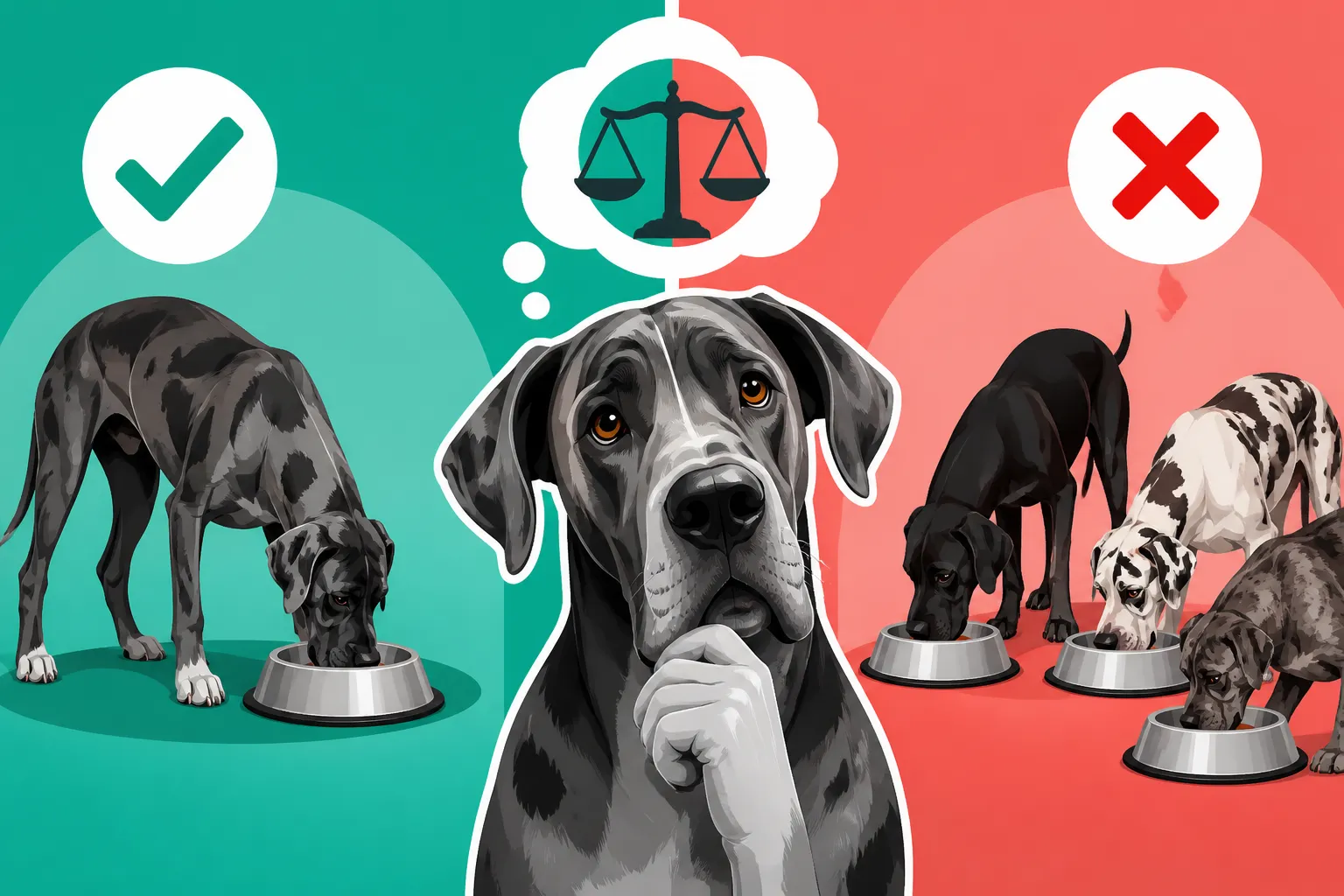
The most straightforward way to prevent competitive eating and resource guarding in a multi-pet household is to feed each animal separately. This means placing food bowls in different rooms, behind closed doors, or using crates. For your Great Dane, this provides a calm, uninterrupted space where they feel secure with their meal. For other pets, it eliminates the stress of having to compete with a much larger dog or risk getting too close to a guarding behavior. Crates can be particularly effective, offering a defined, safe space for each dog to eat without interference. You can find durable, large-breed crates on platforms like Chewy or Amazon that are perfect for this purpose, ensuring your Dane has plenty of room to stand and turn comfortably while they eat. Remember that Great Danes need a crate where they can actually stand comfortably, so checking out guides like Choosing a Crate a Great Dane Can Stand In can be really helpful.
Using Slow Feeders and Elevated Bowls
Great Danes are prone to eating very quickly, which can contribute to digestive issues like bloat. Investing in a slow-feeder bowl can significantly extend mealtime, encouraging them to chew their food more thoroughly and ingest less air. There are many options available, from simple maze-like bowls to more complex designs, and you can usually find a good selection on Chewy or Amazon. For their comfort and to potentially aid digestion (though scientific evidence is mixed on bloat prevention), an elevated feeding station can also be beneficial. This allows your Dane to eat without bending their neck down as far, which some owners find more comfortable for such a tall dog. If you're wondering about the benefits, exploring topics like How High a Great Dane's Bowl Should Sit or Whether a Great Dane Should Be Fed Standing can provide more insight. The goal is to make mealtime a relaxed affair, not a race.
| Feature | Eating Alone (Separate) | Eating Together (Shared Space) |
|---|---|---|
| Pros | Reduces resource guarding risk, promotes calm digestion, prevents accidental injury, lowers stress. | Fosters a sense of "pack" eating (if managed well), convenient for owner. |
| Cons | Requires more logistical planning (space, gates, doors), may seem less "social." | High risk of resource guarding, potential for fights or accidental injury, increased stress, faster eating, potential bloat risk. |
| Ideal For | Multi-pet households, homes with young children, Danes with guarding tendencies, fast eaters, Danes prone to bloat. | Single-dog households, very calm and well-trained dogs with no history of guarding, adult-only homes. |
| Recommended Setup | Separate rooms, crates, pet gates, slow feeders, elevated bowls. | Strict supervision, ample space between bowls, trained "wait" commands, no children present. |
Establishing a Consistent Routine and Boundaries
Consistency is key to managing any dog behavior, and mealtime is no exception. A predictable schedule helps reduce anxiety and sets expectations. Feed your Great Dane at the same times each day, in the same designated safe space. Before placing the bowl down, have them perform a simple command like "sit" or "wait," and only release them to eat once calm. This teaches them patience and manners around food. It’s also important to teach children to respect the dog’s space during mealtime, explaining that when the dog is eating, they need to leave them undisturbed. These boundaries are crucial for both the dog's comfort and the child's safety. For broader training context, remember that The Manners a Great Dane Needs Before It Grows are vital for a harmonious household.
Special Considerations for Multi-Dog Households or Children
Living with a Great Dane means navigating their enormous presence in every aspect of life, especially when other vulnerable family members are involved. Mealtime demands extra vigilance and proactive strategies to ensure safety and harmony.
Managing Interactions with Other Dogs
If you have multiple dogs, especially smaller breeds, in addition to your Great Dane, managing mealtime is non-negotiable for safety. Even if your dogs typically get along beautifully, the presence of food can trigger latent competitive instincts. Always feed your Great Dane and any other dogs in entirely separate areas. This might mean one dog eats in the kitchen while the Dane eats in a utility room, or both are crated in different parts of the house. The goal is to eliminate any visual or physical competition. If one dog finishes faster, ensure they remain contained until all bowls are empty and put away. This prevents a faster eater from trying to "clean up" another dog's leftovers, which is a prime scenario for conflict. Ignoring these simple steps can lead to unnecessary stress and potential injury, turning a peaceful home into a battleground over kibble.
Safety Protocols Around Children
Children, especially toddlers, don't always understand dog boundaries, and a Great Dane's sheer size makes any misunderstanding potentially serious. When your Great Dane is eating, children should always be kept at a safe distance or even in a separate room. Teach children from a very young age that mealtime is "doggy's quiet time" and they are not to approach the food bowl. This isn't just about preventing resource guarding; it's also about preventing accidental bumps or steps as your Dane moves around their bowl. If your Great Dane sometimes exhibits anxiety or becomes agitated during meal times, it's a strong indicator that Whether Stress at Mealtime Matters for a Great Dane is something you need to address immediately. Supervise all interactions, and never leave a child unattended with a dog, especially when food is involved. This consistent training and management protect both your child and your Great Dane from stressful or dangerous situations.
Addressing Food-Related Behaviors
Some Great Danes might develop behaviors like "counter surfing" or stealing food if not properly managed, which can be linked to their general approach to food. A Great Dane That Takes Dinner Off the Table can be a huge nuisance, and a safety hazard if they consume something toxic. If your Dane exhibits any food-related anxieties, such as gulping food too fast or showing signs of discomfort during or after eating, it's worth consulting with your veterinarian. They might recommend specific slow-feeding techniques, dietary adjustments, or even refer you to a veterinary behaviorist if resource guarding is severe. It’s important to remember that such behaviors aren’t necessarily about defiance, but often stem from underlying instincts or learned responses that can be modified with patient, consistent training and environmental management. Products available on platforms like Amazon can also include extra tall gates to keep your Dane out of the kitchen during mealtimes if needed, or specialized durable toys for distraction.
Disclaimer
This article is for general informational purposes only and does not constitute professional advice. Laws, prices and regulations vary by location and change over time. Consult a qualified professional for guidance on your specific situation.