Mats and Runners a Great Dane Will Not Slip On
Oh, the infamous Great Dane slide! If you're a Great Dane owner, you've probably witnessed that heart-stopping moment when your majestic companion, all grace and power one second, suddenly loses their footing on your beautiful hardwood, tile, or laminate floors. It's not just a little clumsy stumble; for a dog of this size, a slip can lead to serious injury, and honestly, it’s terrifying to watch. This guide is all about tackling that slippery situation head-on, helping you understand why your Dane struggles on smooth surfaces and, more importantly, how to choose and place mats and runners that offer the stability and safety they desperately need.
Understanding Why Great Danes Slip on Floors
It’s not just clumsiness; there’s a real physical reason your Great Dane might look like a baby deer on ice when navigating your polished floors. Their immense size, coupled with certain anatomical features, makes them uniquely susceptible to losing traction. This isn't a minor inconvenience; it's a significant health and safety concern that can impact their quality of life.
The Anatomy of a Giant Breed and Hard Surfaces
Think about it: a Great Dane can easily weigh over 100 pounds, sometimes significantly more, and stand well over two feet tall at the shoulder. That's a lot of mass moving across a surface, often with a good deal of momentum. Their center of gravity is higher than many other breeds, and their long legs mean they often have to extend their limbs further to regain balance if they start to slide. Unlike smaller dogs who can quickly adjust with a hop or a quick shuffle, a Great Dane's sheer bulk makes these rapid corrections much harder.
Beyond their size, look at their paws. Great Danes have fairly large paws, but their paw pads, while providing some grip, aren't designed to cling to super-slick surfaces. More importantly, their nails play a crucial role. If their nails are too long, they can act like ice skates, lifting the paw pads slightly off the ground and reducing the effective surface area for traction. You want those nails trimmed regularly so they barely touch the ground when your Dane is standing. Also, consider the hair between their paw pads – if it gets too long, it can also contribute to slipperiness, acting like tiny slippery cushions.
The Risks of Slipping: Injuries and Anxiety
A Great Dane slipping isn isn't just an awkward moment; it carries substantial risks. One of the most immediate concerns is injury. A sudden, uncontrolled splay can lead to muscle strains, ligament tears, or even fractures, especially in their legs and hips. Imagine a powerful car skidding out of control – the force involved in a large dog doing the same can be immense. For puppies, repeated slipping can even impact their developing joints, potentially contributing to issues down the line. We talk a lot about Great Dane Hips, Elbows and Growing Joints, and frequent slipping certainly doesn't help those delicate growth plates and developing structures.
Beyond physical harm, there's the emotional toll. Dogs, especially intelligent and sensitive breeds like Great Danes, quickly learn from their environment. If a particular area of the house consistently causes them to slip or feel unstable, they can develop anxiety around that space. You might notice your Dane becoming hesitant to enter a room, walking gingerly, or even refusing to cross a certain patch of floor. This anxiety can manifest in other behaviors, making them less confident and potentially affecting their overall well-being. No one wants their "Apollo of Dogs" to feel nervous in their own home, right? It's a sad thing to see, and it's completely preventable.
What Makes a Mat or Runner "Great Dane Safe"?
When you're trying to find flooring solutions for your Great Dane, you can't just grab any old rug. There are specific features that are absolutely non-negotiable to ensure safety and provide true stability for your giant companion. It's about combining materials, construction, and strategic placement to create a secure path through your home.
Essential Features: Non-Slip Backing and Material
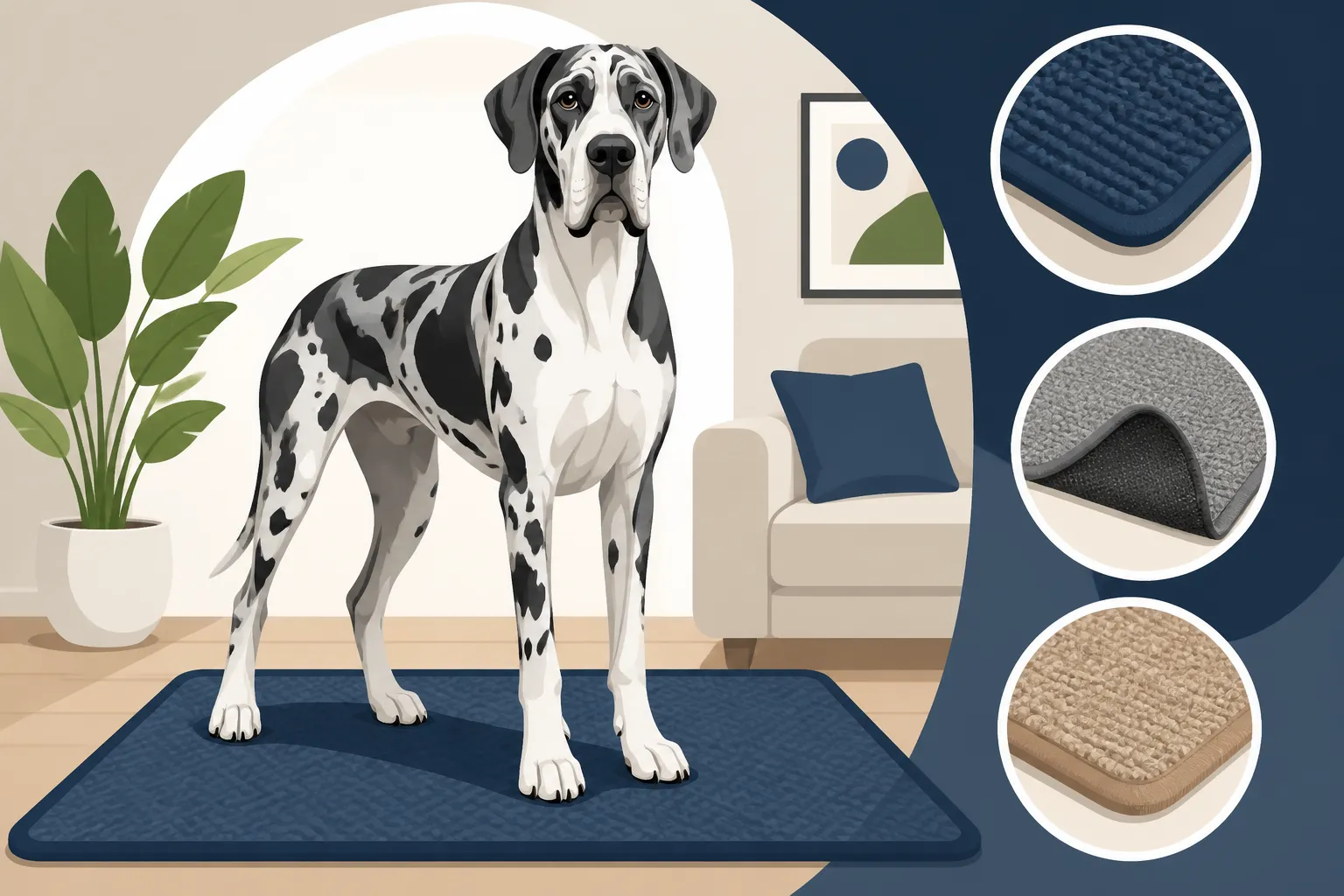
First and foremost, a mat or runner must have a genuinely effective non-slip backing. This isn't just a suggestion; it's critical. Without it, the mat itself becomes a sliding hazard, possibly worse than the bare floor. Look for backings made from rubber or high-quality latex that truly grip the floor beneath. Avoid anything with a simple felt or fabric backing, as these will shift and bunch up in a heartbeat under a Great Dane's weight and movement. Many economy rugs simply won't cut it.
The surface material of the mat is equally important for traction. You need something that provides good grip for their paws. Tightly woven, low-pile carpets or dense synthetic fibers often work well. Avoid materials that are too plush or shaggy, as these can actually make a Great Dane's paws sink in, creating an uneven surface and making them feel less stable. While soft, super-shaggy rugs might feel nice, they don't offer the firm, even purchase a large dog needs. Natural fibers like jute or sisal can offer good grip, but ensure they aren't so rough that they irritate paw pads, especially if your Dane has sensitive feet or if you're dealing with Elbow Hygromas on a Great Dane from lying on hard surfaces.
The Importance of Thickness and Density
When it comes to Great Danes, thickness and density are key. A thin, flimsy mat will bunch, ripple, and move, no matter how good the backing is. You need a mat with enough heft to stay put and provide a consistent, stable surface. A dense pile, even if it's low-pile, offers more support underfoot. Imagine walking on a thick, firm carpet versus a thin, throw rug – the difference in stability is profound for us, and it's even more so for a dog with a higher center of gravity and longer legs.
Think about the cushioning aspect too, not just for preventing slips, but for long-term joint health. Great Danes are prone to orthopedic issues, and providing soft, supportive surfaces can help mitigate the impact of daily life. Rugs and Runners for a Great Dane's Joints are not just about preventing falls, but about offering a softer landing and resting spot. Look for mats with a bit of padding built in, or consider using a high-quality rug pad underneath. This extra layer of cushion not only adds to the non-slip qualities but also provides invaluable shock absorption for those powerful joints, especially as your Dane gets older and might be dealing with Arthritis in a Six-Year-Old Great Dane.
Coverage and Placement for Maximum Safety
It's not enough to just buy a few mats; you need a strategy for placement. Think about the "flight paths" your Great Dane takes through your home. Where do they walk most often? Where do they make turns? Where do they jump on and off furniture? These are your priority zones. You need continuous, unbroken strips of traction in these high-traffic areas.
This often means using long runners in hallways, connecting different rooms. For open-plan living spaces, larger area rugs can define safe zones. Don't leave isolated "islands" of rugs surrounded by slippery floors, as this can create more hazards. Your Dane might step off the rug and onto the slick floor unexpectedly. The goal is to create a seamless, non-slip pathway, much like an airport runway, from one safe point to another. Consider the areas where your Dane eats, drinks, and sleeps too. Even just standing to eat can be unstable on a slick floor, so placing a mat under their food and water bowls is a wise move.
Choosing the Right Mats and Runners: Materials and Styles
Now that we know what to look for, let's dive into the practical options. The market is flooded with rugs and mats, but only a select few truly stand up to the challenge of a Great Dane and provide the safety and durability you need.
Best Materials for Traction and Durability
When selecting materials, prioritize grip, longevity, and ease of cleaning.
- Low-Pile Synthetic Fibers (Nylon, Polypropylene): These are often a fantastic choice. They are incredibly durable, resisting wear and tear from heavy paws, and many are designed to be stain-resistant, which is a huge plus with a large dog. The low pile means your Dane's paws get solid traction without sinking in, and they're usually easy to vacuum. Brands found on platforms like Chewy often specify if their rugs are pet-friendly, meaning they consider durability and cleaning.
- Rubber-Backed Mats: For entryways, kitchens, or areas where spills are common, dedicated rubber-backed utility mats are excellent. These often have a coarse, non-slip surface and a heavy-duty rubber base that grips the floor like a champ. They might not be the prettiest, but for practical safety in high-risk zones, they're hard to beat.
- Woven Cotton or Wool (with proper backing): While natural fibers can be lovely, ensure they are tightly woven and have a separate, high-quality non-slip rug pad underneath. A simple cotton bath mat with a flimsy sprayed-on backing will move. If you love the aesthetic of natural fibers, invest in a substantial rug pad that specifically states "non-slip" and has a rubberized waffle or grid pattern.
Materials to Approach with Caution:
- High-Pile/Shaggy Rugs: As mentioned, these can be unstable.
- Smooth, Silky Materials (Viscose, Silk blends): Beautiful, but offer zero traction for paws and can be slippery even for humans.
- Thin, Lightweight Mats: Unless they have an exceptionally sticky backing and are only used for very small, low-traffic areas (which is rare for a Dane home), they're usually a no-go.
Area Rugs vs. Runners: What Works Best
The decision between area rugs and runners often comes down to the layout of your home and the specific traffic patterns of your Great Dane.
Runners: These are your best friend for hallways, connecting rooms, and creating continuous pathways. They are typically long and narrow, perfectly suited for corridors where a Great Dane might build up speed. I've found that having runners stretching the entire length of a hallway dramatically reduces the chance of a splay, especially when a Dane is excited or coming in from outside. They essentially create a continuous "safe lane" for your dog to navigate. You can often find durable, pet-friendly runners on sites like Amazon, sometimes even in extra-long lengths.
Area Rugs: These are ideal for larger spaces like living rooms, family rooms, or open-plan areas where your Dane spends a lot of time lying down, playing, or moving around. An appropriately sized area rug provides a large, stable island. The key here is size. A small area rug in a large room can be just as dangerous as bare floor, as your Dane might step off it unexpectedly. Aim for an area rug that covers a significant portion of the room, allowing your Dane ample space to move, turn, and settle without ever having to step onto slick flooring. This is especially important for areas where they might get up quickly from a nap, as even older Danes who are Caring for a Great Dane Past Six can struggle with balance.
Considerations for Cleaning and Maintenance
Let's be realistic: living with a Great Dane means living with… well, Great Dane things. That includes shedding, occasional drool (okay, more than occasional), muddy paws, and the odd accident. So, whatever mats or runners you choose, they must be easy to clean.
- Stain Resistance: Look for materials that resist stains and are easy to spot-clean. Many synthetic rugs come with excellent stain-repellent properties.
- Vacuum-Friendly: Low-pile rugs are generally easier to vacuum thoroughly, especially important for dealing with Great Dane hair. While they're short-coated, they certainly shed!
- Washability: For smaller mats, being machine washable is a huge bonus. For larger runners and area rugs, check if they can be professionally cleaned or if they are made from materials that can withstand thorough scrubbing with appropriate carpet cleaners.
- Durability: A mat that falls apart after a few washes or quickly shows wear isn't a good investment. You need products that can stand up to the weight and activity of a giant breed. Investing a little more upfront in quality will save you money and headaches in the long run.
Here's a quick comparison of popular materials:
| Material Type | Great Dane Friendly? | Pros | Cons | Best Use |
|---|---|---|---|---|
| Low-Pile Synthetic | Yes | Durable, stain-resistant, easy to clean, good traction. | Can sometimes feel less luxurious than natural fibers. | Hallways, living areas, high-traffic zones. |
| Rubber-Backed Utility | Yes | Excellent non-slip, very durable, waterproof, easy to wipe. | Limited aesthetic appeal, can be stiff. | Entryways, kitchens, mudrooms, under food/water bowls. |
| Tightly Woven Cotton/Wool | Yes (with good pad) | Natural feel, can be attractive, good grip with texture. | Requires high-quality separate non-slip pad, can be harder to deep clean. | Living rooms, bedrooms, areas where aesthetics are a priority, with caution. |
| Jute/Sisal | Yes (with good pad) | Excellent traction, natural look, very durable. | Can be rough on paws, harder to clean liquids, requires rug pad. | Dining areas, sunrooms, with proper cushioning and paw checks. |
Implementing a Safer Home Environment
Getting the right mats and runners is only half the battle. The other half is strategically integrating them into your home in a way that truly benefits your Great Dane and minimizes all those slipping risks. It's about thinking like your dog and anticipating their movements.
Strategic Placement for High-Traffic Areas
As we touched on, identifying your Dane's main "routes" is paramount. Walk through your home from their perspective. Where do they enter? Where do they go to eat, to sleep, to go outside?
- Hallways and Corridors: These are prime candidates for long runners. Ensure the runners extend from wall to wall or at least provide a wide, stable path. If you have multiple segments, make sure they butt up against each other or overlap slightly to prevent gaps where paws can slip.
- Transitions Between Rooms: Where wood meets tile, or tile meets laminate, these transition points are often problematic. Place a mat or runner that bridges these surfaces, providing a continuous, stable path. Don't leave a gap of bare floor between an area rug in the living room and a runner in the hallway.
- Around Furniture: If your Great Dane is allowed on furniture, put a mat or area rug down where they jump on and off. The sudden impact of landing, especially for a large dog, can easily lead to a slip if the floor isn't grippy.
- Feeding and Water Stations: Even standing still to eat or drink can be a wobbly affair on slick floors. A dedicated, heavy-duty rubber mat under their food and water bowls will give them solid footing. This also catches spills, making cleanup easier.
- Entryways and Mudrooms: These areas often combine slick surfaces with wet paws. A robust, non-slip mat here is essential for preventing slips as they come in from outside, and for catching dirt and moisture.
Remember, the goal is to create confidence. Your Great Dane should feel secure and unhesitant moving around their home. If you notice them still walking tentatively in certain spots, it’s a sign that your mat coverage might need to be expanded.
Beyond Mats: Other Ways to Support Your Dane
While mats and runners are fantastic, they're part of a larger strategy for creating a truly Dane-friendly home. Think holistically about their comfort and mobility.
- Nail Trims: This is so crucial it bears repeating. Overly long nails are a massive contributor to slipping. Regular nail trims, ideally every 2-4 weeks, ensure the nail doesn't push the paw pads off the floor. If you're struggling, ask your vet or a professional groomer for assistance. A Great Dane's nails are thicker than a pencil, so don't be afraid to ask for help grinding or clipping.
- Paw Pad Care: Keep the hair between your Dane's paw pads trimmed short. This maximizes the paw pad's contact with the ground, improving grip. There are small, quiet trimmers you can use at home, or ask your groomer.
- Paw Waxes or Grips: For some Danes, especially older ones or those with neurological issues like The First Wobbler Signs in a Great Dane, a paw wax (like Musher's Secret or similar products) can provide temporary, enhanced grip. There are also adhesive paw pads available, often found on Chewy or Amazon, designed to improve traction. These can be a great short-term solution or for specific problem areas.
- Proper Bedding: Even with the best mats, your Great Dane will spend a lot of time resting. Make sure their primary beds are orthopedic and provide excellent support, cushioning their joints from hard floors. This isn't directly related to slipping, but it is related to joint health and comfort, which impacts their ability to move confidently. Bedding That Prevents Great Dane Hygromas will be thick and supportive.
- Ramps: For areas where your Great Dane might struggle with steps, like getting into a car or onto a raised bed, consider a ramp. This eliminates a potential fall hazard altogether, especially for an older Dane who might need Mobility Aids for a Failing Great Dane.
When to Replace Worn-Out Flooring Solutions
Mats and runners aren't eternal, especially under the daily onslaught of a Great Dane. Over time, even the best non-slip backings can degrade, and the rug surface can become flattened or worn, reducing its effectiveness.
- Loss of Grip: If you notice a mat or runner starting to shift, slide, or bunch up when your Dane walks on it, the non-slip backing is likely compromised. This is an immediate sign it needs to be replaced. Don't wait for an accident to happen.
- Wear and Tear: Frayed edges, bald spots, or areas where the pile has completely flattened mean the mat is no longer providing adequate traction or cushioning. These worn spots can become trip hazards themselves.
- Persistent Odor or Stains: Sometimes, despite your best cleaning efforts, a mat might retain odors or stains, especially if it's been the victim of multiple accidents. For the sake of hygiene and freshness in your home, it's often better to replace it.
- Damage to Backing: Inspect the underside of your mats periodically. If the rubber or latex backing is cracked, peeling, or has worn spots, it's time for a new one.
Regularly assessing the condition of your mats and runners is part of responsible Great Dane ownership. Just like you'd keep an eye on their health and diet, keeping their environment safe from slips and falls is key to ensuring they live out their magnificent, albeit The Seven to Ten Year Great Dane Lifespan, in comfort and safety. Taking these proactive steps can truly make a world of difference for your cherished companion.
Disclaimer
This article is for general informational purposes only and does not constitute professional advice. Laws, prices and regulations vary by location and change over time. Consult a qualified professional for guidance on your specific situation.