The Long Reaching Stride a Great Dane Shows
One of the most captivating aspects of living with a Great Dane is watching them move. Their sheer size combined with an almost poetic elegance creates a mesmerizing spectacle, yet for many new owners, understanding what a correct or ideal stride looks like can be a mystery. This guide aims to demystify the Great Dane's unique movement, helping you appreciate the engineering behind their long-reaching stride and recognize what healthy, efficient locomotion truly entails.
What Makes the Great Dane Stride So Unique?
The Great Dane's movement isn't just about covering ground; it's a testament to centuries of selective breeding for a very specific purpose. When you see a Great Dane in full stride, you're witnessing the culmination of design intended for both power and grace, a living piece of history that continues to impress.
The Legacy of the Boar Hound
To truly appreciate the Great Dane's gait, we have to look back at its origins as a powerful hunting dog, specifically bred to tackle formidable game like wild boar. These were not dogs meant for stealth or quick turns in dense underbrush; they were built for sustained pursuit over varied terrain, needing to cover significant distances quickly and efficiently. This demanded a specific physical structure: long legs, a deep chest for lung capacity, and powerful musculature for explosive bursts and endurance. The long-reaching stride developed out of necessity – it allowed them to keep pace with horses and effectively corner large, dangerous prey. When you watch a Dane flow across a field, you’re seeing echoes of that ancient hunt. The Boar Hound the Great Dane Descends From is an excellent resource for understanding this historical context.
Purpose-Built for Power and Grace
The Great Dane's structure is a masterclass in biomechanical efficiency. Every angle, every bone, and every muscle group works in concert to produce that distinctive, ground-covering trot. Their long, sloping shoulders allow for maximum forward extension, while strong, well-muscled hindquarters provide the powerful drive needed to propel their massive bodies forward. This isn't brute force; it's an intelligent use of leverage and flexibility, allowing them to move with surprising lightness despite their impressive size. Imagine a finely tuned engine where every part contributes to smooth, powerful motion – that's a well-structured Great Dane.
The "Apollo of Dogs" in Motion
The moniker "Apollo of Dogs" isn't just about their regal appearance; it extends to their movement. There's an undeniable nobility and balance in a correct Great Dane stride. They don't just walk or run; they flow. Their steps are deliberate, powerful, and yet appear effortless. This harmonious blend of strength and elegance is what captivates enthusiasts and judges alike. It’s a stride that speaks of confidence, athleticism, and a profound connection to their historical role as majestic companions and hunters. The movement reflects the ideal standard, where form truly follows function, making them appear almost sculptural as they traverse space. The Great Dane's Reputation as the Apollo of Dogs delves deeper into this aspect of their breed character.
Anatomy of an Efficient Great Dane Gait
Understanding the Great Dane's stride requires a closer look at the specific anatomical components that contribute to its power and grace. It's a complex interplay of angles, bone structure, and muscle development.
Forequarters: Shoulder Angulation and Reach
The front assembly of a Great Dane is critical for its characteristic long reach. Ideally, the shoulder blade (scapula) should be long and sloping, laying back at approximately a 30-degree angle from the vertical. This angle, combined with a similarly angled upper arm (humerus), allows for significant forward extension of the leg. When these angles are correct, the front leg can extend far forward, allowing the paw to land well ahead of the dog's body, maximizing ground coverage with each step. Poor angulation, such as shoulders that are too upright or short upper arms, will severely limit this reach, resulting in a short, choppy front gait that lacks efficiency and tires the dog more quickly. You can often feel this angulation by gently running your hand over your Dane's shoulder – a well-laid-back shoulder will feel long and integrated into the body.
Hindquarters: Drive and Propulsion
While the forequarters provide the reach, it's the hindquarters that deliver the powerful drive, pushing the Great Dane forward. The pelvis should be well-angled, and the thigh bones (femur, tibia, fibula) should have good angulation at the stifle (knee) and hock joints. This allows for powerful flexion and extension, creating a strong "kick" that propels the dog. When the hindquarters are correctly angulated and well-muscled, they generate immense power with each stride, driving the front assembly forward in a balanced and coordinated manner. Weak or overly straight hindquarters will result in a lack of drive, making the gait appear weak, less efficient, and unable to sustain speed. Think of it like a powerful spring unwinding – the more effective the coil, the more powerful the release. Great Dane Hips, Elbows and Growing Joints offers more insight into the importance of healthy joint development here.
Topline and Core Stability
Beyond the limbs, the Great Dane's topline (the line from the withers to the tail) and core strength play a pivotal role in a balanced and efficient gait. A strong, firm back provides stability and acts as a bridge, transmitting the power from the hindquarters through to the forequarters. A weak or roached (arched) back can disrupt this energy transfer, leading to an inefficient, uncoordinated gait. The muscles of the core, encompassing the abdomen and lower back, are essential for maintaining balance, protecting the spine, and enabling smooth transitions in movement. Without a strong core, even a dog with excellent angulation can have a compromised stride. Regular, appropriate exercise helps build and maintain this crucial core strength.
The Ideal Movement: Reaching and Driving
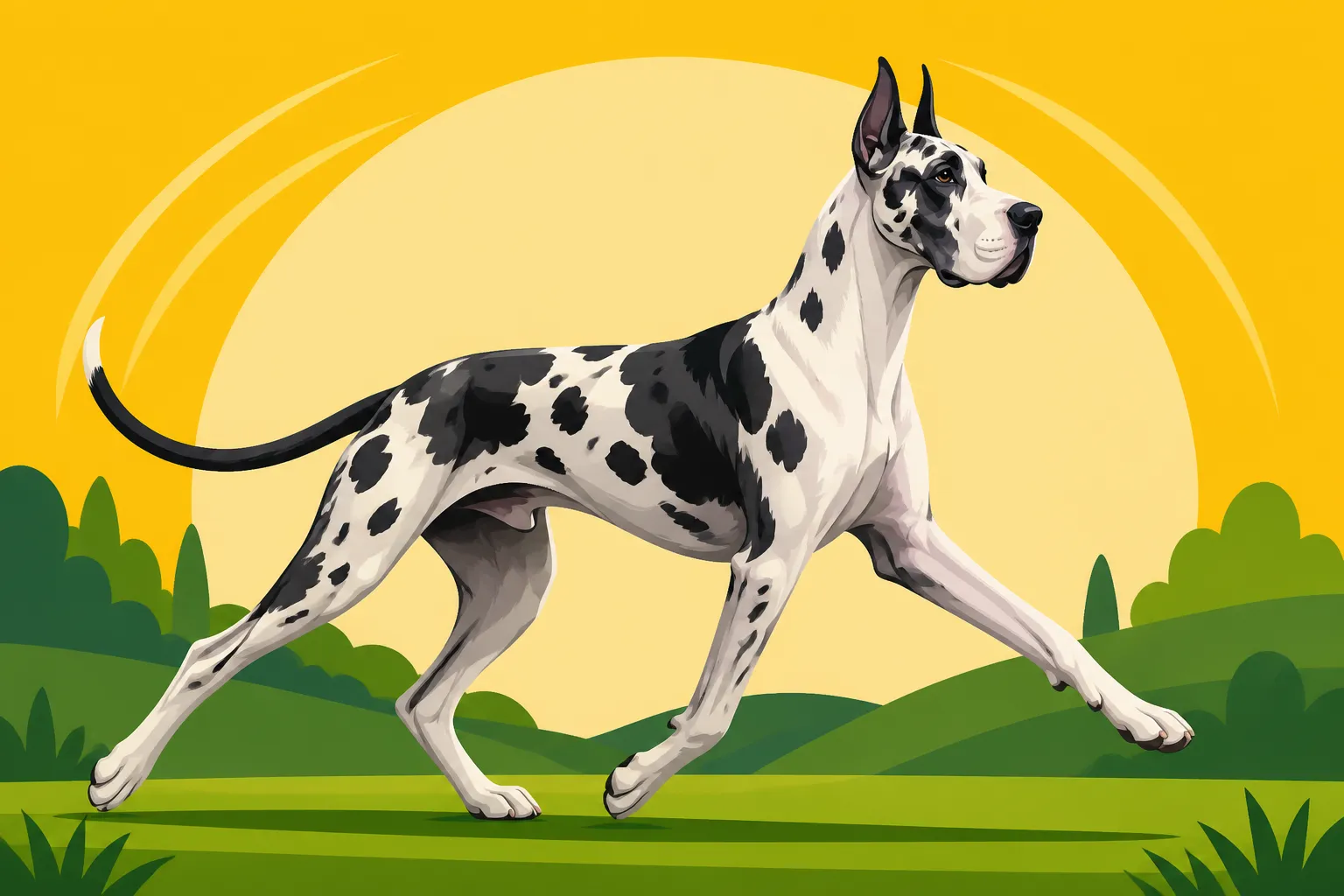
When a Great Dane moves correctly, it's a thing of beauty. The ideal movement is characterized by a harmonious blend of reach from the front and drive from the rear, resulting in a smooth, effortless, and powerful stride that covers maximum ground with minimal effort.
Effortless, Ground-Covering Steps
The hallmark of a superb Great Dane gait is its seemingly effortless nature. Each step should cover a significant amount of ground, indicating good extension from the front and strong drive from the rear. The paws should not be picked up too high, nor should they drag. Instead, they should skim the ground, showcasing efficient use of energy. From a side view, you should see the front paw landing well ahead of the dog's nose, and the hind paw stepping into or slightly beyond the print left by the front paw on the same side. This creates a powerful, flowing motion that appears graceful and tireless, even at a brisk trot. It’s not just about speed, but about how gracefully that speed is achieved.
The Balance of Front and Rear Action
The key to the ideal Great Dane stride is perfect balance. The reach of the forequarters must be commensurate with the drive of the hindquarters. If the front reaches too far without enough drive, the dog might appear to be "pulling" itself along, potentially leading to compensatory strain. Conversely, if the hindquarters drive too much without adequate front reach, the dog might "crab" or move sideways, or overreach its front, potentially interfering with its own legs. In a balanced gait, the dog's body remains level, the head carriage is proud, and there's no wasted motion. The whole picture is one of power under control, with the dog moving like a well-oiled machine. This is why careful breeding for correct structure is so vital.
Side-Gait: What Judges Look For
In the conformation ring, judges specifically observe the "side-gait" to assess a Great Dane's movement. They are looking for that perfectly balanced, ground-covering trot. The dog should move in a straight line, with the head held high and a powerful, yet elegant, appearance. The front legs should reach out smoothly, and the hind legs should drive strongly, with the hocks flexing and extending clearly. The topline should remain firm and level, showing no sway or roaching. Interference between the legs, such as a hind foot striking a front foot (known as "forging"), or legs crossing over, indicates a structural fault. The overall impression should be one of a dog that could cover vast distances with ease and efficiency, reflecting its heritage.
| Gait Characteristic | Ideal Great Dane Gait | Common Faults to Watch For |
|---|---|---|
| Front Reach | Long, flowing, paw lands well ahead of nose | Short, choppy, high-stepping ("hackney") |
| Rear Drive | Powerful, hind foot lands in or past front print | Weak, shuffling, narrow, or "cow-hocked" |
| Topline | Firm, level, stable | Swaying, roached, rolling |
| Overall Balance | Coordinated, efficient, effortless | Uncoordinated, crabbing, wide behind |
| Energy Usage | Economical, sustainable | Wasted motion, quickly fatiguing |
| Foot Placement | Straight, true, skimming ground | Paws lifted too high, dragging, interfering |
Common Gait Faults and What They Mean
While the ideal Great Dane stride is a marvel, not every Dane moves perfectly. Understanding common gait faults can help you identify potential structural issues, discomfort, or even early signs of health problems.
Crabbing, Pacing, and Hackney Gaits
You might observe various deviations from the ideal gait in your Great Dane.
- Crabbing (or sidewinding): This is when a dog moves with its body at an angle to its direction of travel, often because the hind legs are trying to avoid interfering with the front legs. It can be a compensatory movement for a lack of balance between front and rear angulation. While some dogs might crab slightly at certain speeds, persistent crabbing suggests an imbalance in structure.
- Pacing: This occurs when the dog moves both legs on the same side of its body forward at the same time (e.g., left front and left rear move together, then right front and right rear). It often looks like a camel's walk. While some dogs pace when tired or during very slow movement, a consistent pace in a Great Dane at a moderate trot is considered a fault, as it indicates a lack of efficient diagonal movement and can be less stable.
- Hackney Gait: This is characterized by a high-stepping, exaggerated front action, where the dog lifts its front paws high off the ground, often with a slight kick out. It resembles a Hackney pony's movement. In Great Danes, this is undesirable as it's inefficient and indicates a lack of proper front reach and often an upright shoulder. It looks flashy but is actually energy-wasting and reduces ground coverage.
These faults are more than just cosmetic; they suggest an underlying structural imbalance that can lead to increased wear and tear on joints over time.
Short Strides and Lack of Reach
One of the most common issues seen in Great Danes, especially those with less-than-ideal structure, is a short stride and a noticeable lack of reach. This happens when the shoulder angulation is too straight, or the upper arm is too short, preventing the front leg from extending fully. Similarly, insufficient angulation in the hindquarters can lead to a weak push-off, resulting in a short, shuffling gait from the rear. Instead of a long, flowing movement, the dog takes many smaller, choppier steps to cover the same distance. This type of movement is far less efficient, requiring more energy for the dog to move, and can put undue stress on their joints and muscles, particularly important for a giant breed.
Lameness and Pain Indicators
Beyond structural faults, changes in gait can be critical indicators of pain or injury. A sudden limp, favoring a leg, or an obvious unwillingness to put weight on a limb demands immediate attention. But sometimes, the signs are more subtle. A Great Dane might start taking shorter steps, carrying its head lower than usual, or showing a reluctance to move or climb stairs. They might shift their weight subtly or exhibit a stiffness, especially after rest. These changes, even minor ones, should never be ignored. Great Danes are prone to various joint issues, Arthritis in a Six-Year-Old Great Dane being one example, and conditions like The Neck Condition That Trips a Great Dane Up (Wobbler Syndrome) or Bone Cancer in a Great Dane can manifest as gait abnormalities. If you notice any persistent change in your Dane's movement, a veterinary check-up is absolutely essential to rule out pain or underlying health concerns.
How Diet and Exercise Impact Stride Development
A healthy, efficient stride isn't just about genetics; it's heavily influenced by proper nutrition and appropriate exercise, especially during the critical growth phases of a Great Dane's life. Neglecting these aspects can lead to developmental problems that impact their movement for a lifetime.
Controlled Growth in Puppies
The growth rate of a Great Dane puppy is astounding, and it's a period fraught with potential pitfalls if not managed carefully. Fast growth, often fueled by inappropriate diets (like regular puppy food not formulated for large breeds, or excessive calcium supplementation), can put immense strain on rapidly developing bones and joints. This can lead to conditions like Hypertrophic Osteodystrophy (HOD) or Osteochondritis Dissecans (OCD), which directly affect limb development and, consequently, gait. Why a Great Dane Puppy Should Grow Slowly highlights this critical concept. Owners should choose a high-quality, large-breed puppy food designed for slow growth, ensuring proper calcium-to-phosphorus ratios and moderate protein levels. Many specialized large breed puppy foods are available from reputable retailers like Chewy, making it easier to find appropriate nutrition. The goal isn't to make them grow as big as possible, as fast as possible, but to ensure steady, healthy development.
Maintaining Muscle and Joint Health
Once a Great Dane reaches adulthood, maintaining optimal muscle and joint health becomes paramount for preserving their stride. A balanced diet rich in quality protein, essential fatty acids (like Omega-3s), and appropriate vitamins and minerals supports strong muscles and healthy cartilage. Many owners also consider joint supplements containing ingredients like glucosamine and chondroitin, especially as their Danes age or if they show early signs of stiffness. While these aren't magic bullets, they can be a valuable part of a comprehensive approach to joint care. Products like these can easily be found and ordered online from retailers such as Chewy, often with detailed ingredient lists to help you choose wisely. Regular weight management is also crucial; excess weight places enormous stress on joints, exacerbating any existing issues and shortening a dog's comfortable walking life. Whether Joint Supplements Reach a Great Dane's Dose is a good read if you're considering these.
Appropriate Exercise for a Giant Breed
Exercise for a Great Dane, particularly a growing puppy, needs to be carefully managed. Over-exercising a young Dane can damage delicate growth plates and developing joints, leading to lifelong issues with their gait and overall mobility. During puppyhood, short, frequent play sessions and leash walks are preferable to long runs or intense activities like agility. Exercise Limits While a Great Dane Is Still Growing offers specific guidance. As adults, Great Danes need regular, moderate exercise to maintain muscle tone and flexibility. Long walks, controlled jogs, and swimming are excellent options. The key is consistency and avoiding sudden, high-impact activities that can jar their large frames. Always pay attention to your Dane's cues – if they're slowing down or showing signs of fatigue, it's time to rest. A strong, fit body with well-maintained muscles is far better equipped to support their impressive stride.
Observing and Assessing Your Great Dane's Gait
As a Great Dane owner, becoming adept at observing your dog's gait is a valuable skill. It can help you appreciate their natural movement, identify potential issues early, and communicate effectively with your veterinarian.
Tips for at-Home Gait Evaluation
To properly observe your Great Dane's gait, find a flat, level surface, ideally on a leash so you can control their speed. Ask a friend or family member to walk your Dane at a comfortable, brisk trot while you stand a short distance away and observe from different angles.
- From the side: Look for that long, reaching stride, the level topline, and the powerful drive. Does the front paw land ahead of the nose? Does the hind paw step into or slightly past the front paw print? Look for fluidity and balance.
- From the front: As your Dane walks towards you, observe if the legs move straight and true, without crossing or winging out. The pads of the feet should ideally be visible as they approach.
- From the rear: As they walk away, again, look for straight movement. Are the hocks tracking straight? Do the hind legs appear powerful or weak? Avoid the "cow-hocked" appearance (hocks turning inwards).
- Listen: A healthy gait is generally quiet. Any clicking, shuffling, or heavy thudding sounds can indicate a problem.
- Routine: Observe them regularly, perhaps after a walk or play. This helps you establish a baseline for what's normal for your dog. Pay attention to changes in energy, willingness to move, or any stiffness after waking up.
Take videos if you can, as this allows you to review the movement in slow motion or share it with your vet.
When to Consult Your Veterinarian
It's natural for a Great Dane's gait to change slightly with age, becoming a bit stiffer or slower as they enter their senior years, as discussed in Caring for a Great Dane Past Six. However, any sudden or significant change warrants veterinary attention. Don't hesitate to contact your vet if you notice:
- Persistent limping or lameness in any leg.
- Reluctance to put weight on a limb.
- Difficulty getting up or lying down.
- A noticeable decrease in activity or willingness to play.
- Pain response when you touch certain areas, especially joints or the back.
- Shifting lameness, where the limp appears to move from one leg to another.
- An increase in crabbing, pacing, or a generally uncoordinated movement that wasn't there before.
- Any signs of weakness, stumbling, or A Great Dane That Stumbles on Its Back Legs.
Early detection of issues, whether it's an injury, arthritis, or a more serious condition, can lead to more effective treatment and better outcomes for your Great Dane.
Working with a Professional Handler or Trainer
If you're interested in showing your Great Dane or simply want to fine-tune their movement and presentation, working with a professional handler or experienced trainer can be incredibly beneficial. These professionals have a keen eye for gait mechanics and can help you understand how to best present your Dane's natural movement. They can teach you handling techniques to encourage a clean, efficient trot and identify subtle areas for improvement, whether it's muscle development or confidence. Even if you don't plan to show, a few sessions with a trainer specializing in large breeds can enhance your understanding of your Great Dane's body and movement, fostering better overall health and communication. They can also offer advice on specific exercises or stretches to improve flexibility and strength, thereby enhancing the magnificent long-reaching stride your Great Dane is capable of.
Disclaimer
This article is for general informational purposes only and does not constitute professional advice. Laws, prices and regulations vary by location and change over time. Consult a qualified professional for guidance on your specific situation.