Adding a Great Dane to a House With a Dog
Bringing a new Great Dane into a home that already has a canine resident can feel like navigating a minefield, even if your existing dog is usually laid-back. It's a common worry – how will two distinct personalities, especially with a Great Dane's imposing size, learn to share their space and your affection? This guide aims to help you prepare for and manage a smooth introduction, setting the stage for a harmonious multi-dog household.
Understanding the Dynamics: Why a New Great Dane Can Be a Challenge for Your Current Dog
It's easy to assume that all dogs will instantly become best friends, especially when you're bringing in a breed known for its "gentle giant" nature. However, the reality is often more complex. Your resident dog has established routines, territories, and an understanding of their place in the household. Introducing a new dog, particularly one as large and potentially boisterous as a Great Dane, can disrupt this delicate balance.
The Resident Dog's Perspective
Imagine someone suddenly moving into your home, taking up space, and sharing your favorite things. That's a bit how your resident dog might feel. They've had your undivided attention, their favorite spot on the couch, and their specific mealtime routine. A new dog, regardless of how friendly they are, represents a significant change to their world. This can manifest as territoriality over specific areas like their bed, feeding spot, or even you. They might start guarding their toys more closely, or growl if the new Great Dane approaches their food bowl. These aren't necessarily signs of aggression, but rather expressions of anxiety and a need to re-establish boundaries. It's vital to recognize these subtle cues and respect your existing dog's feelings, giving them the reassurance that their world isn't being completely turned upside down.
Furthermore, a new dog, especially a puppy, might not understand the subtle social cues your resident dog offers. An older, established dog might give a clear "leave me alone" signal with a stiff body or a averted gaze, but a young, enthusiastic Great Dane puppy, still learning the ropes, might blunder right past it. This can lead to frustration for your resident dog, potentially escalating into a snap or growl to communicate their boundaries more forcefully. It’s not about malice; it’s about a communication breakdown, which is why your careful supervision during these initial interactions is so incredibly important. Over time, and with consistent guidance from you, both dogs will learn each other's language.
The Great Dane's Size and Temperament
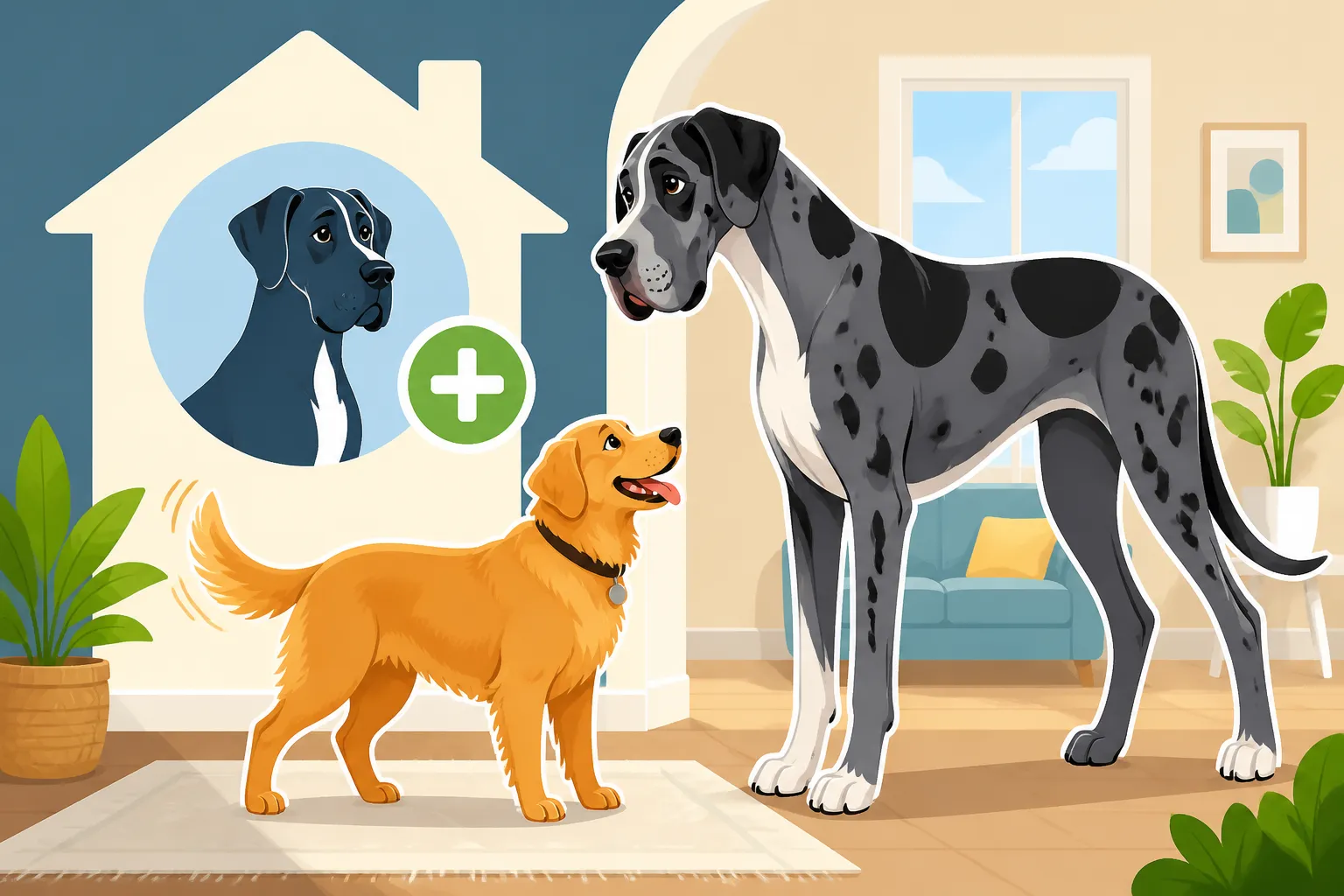
Great Danes, even as puppies, are inherently large and can be quite clumsy. A playful Great Dane puppy bounding around, all gangly legs and oversized paws, might accidentally knock over a smaller, older dog. While they rarely mean any harm, their sheer size can be intimidating or even physically risky for a delicate senior dog or a very small breed. Their "gentle giant" reputation is well-earned, but it doesn't mean they always understand their own power. A young Great Dane might try to initiate play by body-checking, leaning, or pawing – behaviors that are perfectly normal for their breed, but could be overwhelming or frightening to a dog unfamiliar with such a robust play style. Understanding The Gentle Great Dane Temperament and Its Limits is key here; while they are sweet, they are still powerful animals.
Adult Great Danes also have their unique traits that can impact introductions. Many Great Danes love to lean on their people, a charming habit that can easily transfer to another dog or even a child. While this is a sign of affection, a 150-pound Dane leaning into a 30-pound terrier could be problematic. Their natural desire for closeness and their impressive physical presence need to be managed carefully so that the resident dog doesn't feel constantly encroached upon. You want to foster an environment where both dogs feel safe and secure, not one where one is always on guard because of the other's size.
Pre-Arrival Preparations: Setting the Stage for Success
Preparation is absolutely crucial when bringing a new Great Dane into a house with another dog. You can't just open the door and hope for the best. Thinking through the logistics beforehand can prevent a lot of stress for everyone involved, two-legged and four-legged alike. This isn't just about managing potential conflict; it's about building a solid foundation for a peaceful shared existence.
Creating Separate Spaces and Resources
Before your Great Dane even sets a paw inside, it's vital to establish clear boundaries and dedicated areas for each dog. This means separate feeding stations. Dogs, by nature, can be resource guarders, and food is often a primary trigger. Ensure both dogs can eat in peace without feeling threatened or rushed. This might mean feeding them in different rooms, or at least far enough apart that neither feels the need to protect their bowl. Speaking of bowls, don't forget to size them appropriately! Your new Great Dane will need a large, heavy-duty bowl that won't get knocked over, and a stand if you prefer a raised feeding setup. You can find a wide variety of these supplies, from durable food dishes to spacious crates, at online retailers like Chewy.
Crates can be invaluable tools for creating safe, private spaces. Even if your resident dog isn't routinely crated, having one available as a quiet retreat can be beneficial. For your Great Dane, a crate is essential, particularly if it’s a puppy. It provides them with a den of their own where they can feel secure, and it allows you to manage their time out in the house, especially during those early days of supervision. Remember, Great Danes need very large crates; don't skimp on size or quality. Each dog should also have their own designated bed or resting area. This reduces competition for prime sleeping spots and gives each dog a place to decompress. Having multiple, distinct beds around the house, perhaps one in the living room and one in a quiet bedroom, can also help. Just like with food, separate toys are a good idea, at least initially, to avoid any potential squabbles over prized possessions. You’ll want durable toys that can stand up to a Great Dane’s chewing power, which Chewy also offers in abundance.
Establishing a Neutral Introduction Strategy
The first official meeting between your existing dog and the new Great Dane should always happen on neutral territory – somewhere neither dog feels ownership over. A local park, a quiet street, or a friend’s large backyard that neither dog has visited frequently can work well. This removes the element of territoriality and allows them to focus on each other rather than their perceived claim to the space. Both dogs should be on leashes, handled by separate people who are calm and confident. Avoid tense leashes, as this can transmit stress to the dogs. Think of it less like a face-to-face confrontation and more like a casual stroll.
Parallel walking can be a fantastic way to facilitate a neutral introduction. Start by having two handlers walk the dogs parallel to each other, a good distance apart. The goal isn't immediate interaction, but simply coexistence in the same space. As they become more comfortable, you can gradually decrease the distance between them. The dogs get to sniff the same smells, experience the same environment, and become aware of each other's presence without the pressure of direct interaction. This shared experience, without forced proximity, builds a foundation of casual acceptance. Scent swapping before the actual meeting can also work wonders. Gently rub a cloth on one dog, then let the other dog sniff it, and vice-versa. This allows them to "meet" through scent, which is incredibly important in the canine world, before they ever see each other. This pre-exposure can significantly reduce initial apprehension.
The Introduction Process: A Gentle, Controlled Approach
Once you've done all the groundwork, the actual introduction needs to be managed with patience and a keen eye for canine body language. This isn't a one-and-done event; it's a gradual process that may take days, weeks, or even months, depending on the personalities involved. Remember, slow and steady wins the race when it comes to dog introductions.
Initial Meet and Greet Outside the Home
As mentioned, the very first actual meeting should happen on neutral ground. Start with brief, supervised interactions. Keep both dogs on leash, with handlers maintaining a loose grip to avoid transmitting tension. Allow them to sniff each other naturally, but keep it brief – a few seconds is enough. Then, calmly walk them away from each other for a short break. Repeat this several times, gradually increasing the duration of the sniff and interaction if both dogs remain relaxed. Look for positive body language: loose tails, relaxed ears, soft eyes, and a neutral posture. Avoid any direct nose-to-nose greetings initially, as this can sometimes be too intense. Instead, allow them to approach each other in an arc, sniffing flanks. If you see stiff bodies, direct stares, growling, or any signs of fear or aggression, calmly separate them and try again later, or increase the distance.
It's crucial to understand that even if the initial meeting goes well, it's just the first step. You're building positive associations slowly. Don't rush into letting them play off-leash immediately. Continue with several short, supervised meetings over a day or two, always in a neutral outdoor setting. End each session on a positive note, before either dog becomes overwhelmed or stressed. Think of it as dating – you don't move in after the first coffee! You're observing their comfort levels, building their tolerance, and ensuring they associate each other with calm, pleasant experiences rather than high-stress encounters. This careful approach helps build Building Confidence in a Nervous Great Dane or an anxious resident dog, ensuring they don't develop negative associations.
Supervised Indoor Integration
Once outdoor meetings are consistently calm and positive, you can move to supervised indoor integration, but still with a lot of structure. Keep both dogs on leash inside the home for the first few sessions. This allows you to quickly intervene if needed. Rotate their time together, rather than letting them have unrestricted access to each other. For example, the Great Dane might be in its crate while your resident dog roams freely, and then you swap. This allows each dog to have uninterrupted time in the shared space, reinforcing that they still "own" part of the home, without constant pressure from the new arrival. For large dogs like Great Danes, Crate Training a Great Dane That Fills the Room is essential for managing indoor time and ensuring safety.
Continue to maintain separate feeding areas and beds, even once they seem to tolerate each other. Resource guarding can develop even in seemingly friendly dogs. When they are together, actively reward calm, positive interactions. If they lie down quietly near each other, toss them a treat. If they ignore each other politely, praise them. You want them to understand that good things happen when the other dog is around and they behave appropriately. Never leave them unsupervised until you are absolutely certain of their compatibility, which can take weeks or months. This means if you need to leave the house, one or both dogs go into their crates, or they are separated by baby gates. Remember that those baby gates need to be tall enough that your Great Dane cannot easily step over them! This phased approach is key to helping An Older Dog Copes With a Great Dane Puppy or another established dog adjust.
Long-Term Harmony: Fostering a Lasting Friendship
The initial introduction is just the beginning. Nurturing a positive relationship between your Great Dane and your existing dog requires ongoing effort, consistent management, and a deep understanding of both their individual needs and their dynamics as a pair. This isn't about forcing friendship but facilitating mutual respect and comfort.
Consistent Training and Reinforcement
Both dogs, but especially your new Great Dane, will benefit immensely from consistent training. Basic obedience cues like "sit," "stay," "come," and "leave it" are not just for manners, they're critical for safety and management in a multi-dog household. When a Great Dane can easily outweigh you, strong leash manners and impulse control are paramount. Great Dane Leash Manners at a Hundred and Fifty Pounds becomes a non-negotiable skill when introducing them to another dog, especially during walks together. You'll want to ensure both dogs understand that calm behavior around each other is rewarded. For instance, if your Great Dane is known for its leaning habit, teach it a "four on the floor" command to keep all paws on the ground, especially around your smaller resident dog.
Continually reinforce appropriate interactions. If both dogs are lying calmly near each other, acknowledge it with quiet praise or a gentle treat. If they're playing, ensure it's balanced and neither dog is being overwhelmed. Training isn't just about teaching commands; it's about building a consistent language of communication and expectations that both you and your dogs understand. This structured environment provides security for both dogs, reducing anxiety and increasing the likelihood of peaceful coexistence. Don't forget that consistent positive reinforcement from you is often the most powerful tool in shaping their relationship.
Managing Play and Energy Levels
One of the biggest challenges in a multi-dog household with a Great Dane is managing play. A Great Dane's play style can be quite boisterous, often involving body slams, leaning, and vigorous tail wags that could easily send a smaller dog flying. It's crucial to supervise all play sessions, especially in the early stages. Look for signs that the play is balanced and mutually enjoyed: both dogs taking turns chasing, bowing, and voluntarily disengaging. If one dog consistently tries to disengage and the other continues to pursue, or if the play becomes too rough, it’s time to intervene with a calm "break" command and separate them for a cool-down period. This can sometimes feel like constantly mediating, but it's essential for preventing accidental injuries or intimidation.
Furthermore, ensure both dogs get adequate individual exercise and mental stimulation. Just because they have each other doesn't mean they don't need dedicated time with you. This can help prevent them from becoming overly reliant on each other for all their needs, and reduces any potential jealousy over attention. A vigorous walk or a game of fetch with one dog while the other rests can do wonders. For a growing Great Dane puppy, remember to be mindful of Exercise Limits While a Great Dane Is Still Growing to protect its developing joints. Providing separate, engaging puzzle toys or chew items, perhaps from a selection found on Chewy, can also help manage energy independently.
Addressing Potential Issues
Even with the best intentions and preparations, issues can sometimes arise. It’s important to know the signs of stress or potential conflict and address them immediately. These might include:
- Resource Guarding: One dog becoming possessive over food, toys, sleeping spots, or even your attention.
- Bullying/Intimidation: One dog consistently overpowering or harassing the other, even subtly.
- Fear/Anxiety: One dog constantly trying to avoid the other, showing signs like lip licking, yawning, tail tucking, or hiding.
- Escalated Aggression: Growling, snapping, or fighting.
If you observe any of these, don't ignore them, hoping they'll resolve on their own. Mild resource guarding might be managed by strict separation during feeding and providing multiple, identical toys. However, more severe or persistent issues warrant professional help. A certified professional dog trainer or a veterinary behaviorist can observe the dynamics in your home and provide tailored strategies and interventions. Sometimes, simple management changes, like always providing Two Water Bowls in a Great Dane House in separate locations, can alleviate minor stressors.
Remember, a harmonious multi-dog household is built on respect, clear communication, and careful management. It’s a journey, not a destination, and sometimes bringing Two Great Danes in One House can even be easier than introducing a Dane to a smaller, existing dog simply because their sizes and play styles are more congruent. Patience, vigilance, and a willingness to seek expert advice when needed will pave the way for a loving and peaceful home for all your canine companions.
| Aspect of Integration | Key Strategy | Why It Helps |
|---|---|---|
| Pre-Arrival | Separate Resources (food, beds, toys) | Reduces competition and resource guarding, establishing individual ownership. |
| Initial Meetings | Neutral Territory, Leashed Parallel Walks | Removes territorial pressure, allows gradual scent exchange and visual familiarity without forced interaction. |
| Indoor Transition | Controlled Supervised Time, Crates/Gates | Prevents overwhelming the resident dog, provides safe zones for both, allows structured periods of interaction and rest. |
| Ongoing Training | Consistent Obedience for Both Dogs | Establishes clear expectations, enhances communication, provides tools for managing interactions (e.g., "leave it" command). |
| Play Management | Supervised, Balanced Play Sessions | Prevents accidental injury, ensures mutual enjoyment, allows intervention if play becomes too rough or one-sided. |
| Addressing Issues | Early Intervention, Professional Help | Prevents minor issues from escalating, provides expert guidance for complex behavioral challenges, ensures safety and well-being of all dogs. |
Disclaimer
This article is for general informational purposes only and does not constitute professional advice. Laws, prices and regulations vary by location and change over time. Consult a qualified professional for guidance on your specific situation.