Waiting Lists for a Harlequin Great Dane
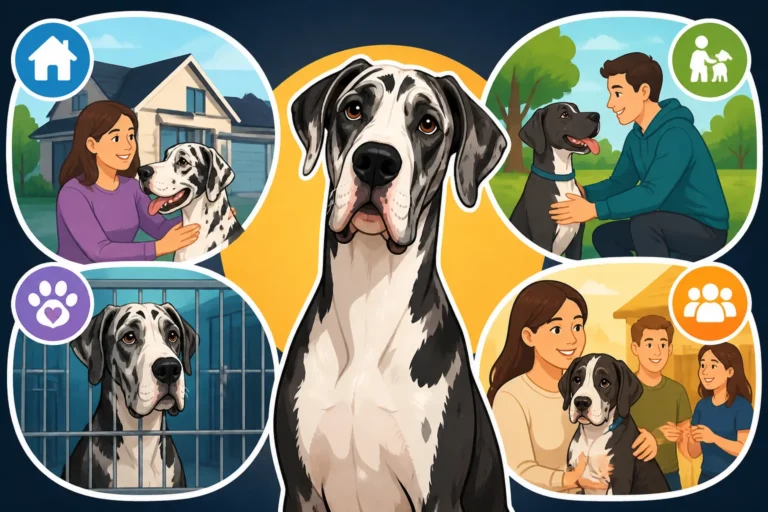
A Harlequin Great Dane can be hard to find because responsible breeders plan litters carefully, and a particular coat pattern is never guaranteed. Waiting lists can feel uncertain: you may be asked to wait without knowing whether a puppy will be born, what color it will be, or whether you’ll be a match. This guide explains how the process works and what to check before you commit.
Why Harlequin Great Dane puppies can involve a wait
Color is not something a breeder can promise
Harlequin is a distinctive pattern, but choosing two dogs with the right-looking coats does not guarantee a litter full of Harlequin puppies. Coat color and pattern are shaped by genetics, and a litter may include puppies with different appearances. A breeder who says they can guarantee a specific puppy color before the litter arrives deserves careful questions, not an automatic deposit.
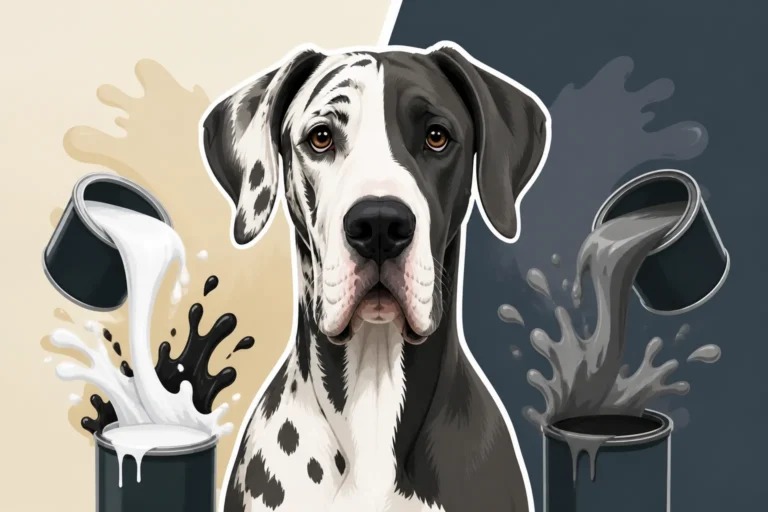
It also helps to distinguish a Harlequin coat from a Merle coat. These patterns are related to coat-color genetics, but they are not interchangeable names for the same appearance. If you want to understand the differences, start with Harlequin and Merle Great Dane Genetics and What Makes a Harlequin Great Dane Correct.
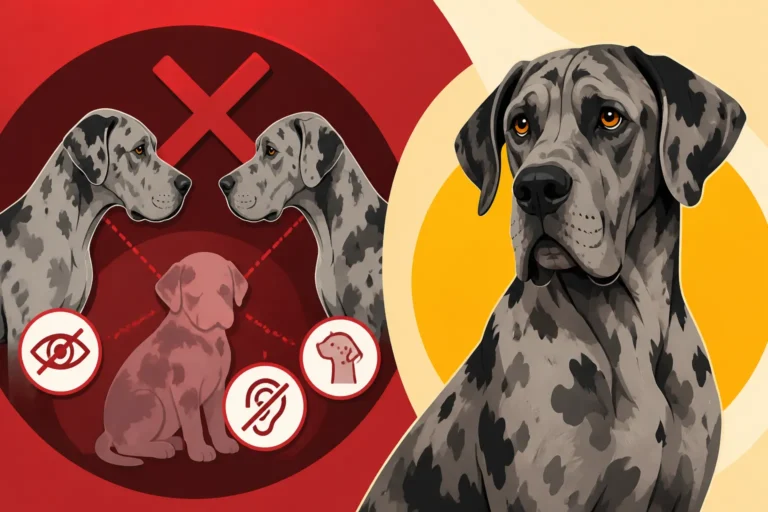
Responsible breeding decisions should put the health and welfare of the dogs ahead of producing a popular pattern. In particular, ask how the breeder avoids risky pairings and what they know about the health of the dogs they plan to breed. The concern is serious enough that Why Two Merle Great Danes Should Not Be Bred is worth reading before you evaluate a breeder’s color claims.
Planned litters are not guaranteed litters
Breeders often build a waitlist around a planned pairing, but nature doesn’t follow a calendar. A mating may not result in a pregnancy, a pregnancy may not produce a puppy of the coat pattern you hoped for, or the breeder may decide that a particular puppy is not a suitable match for your household. Those are normal possibilities, even when a breeder has carefully planned the litter.
This is why a waitlist is better understood as an expression of interest than a reservation for a guaranteed color, sex, or puppy. Some breeders take names before a pairing; others wait until a pregnancy is confirmed or puppies have arrived. Ask exactly what stage the litter is at and what the breeder can reasonably promise.
Wait times can vary widely. A breeder may have no available puppies for a long stretch, while another may have a suitable puppy sooner because a family’s preferences or circumstances changed. If you have a firm deadline—such as a move, a planned vacation, or a child starting school—say so early. It may be kinder to wait until your household has more flexibility than to rush into a poor match.
A small breeding program may have limited availability
A breeder who produces only occasional litters may have fewer puppies to place than someone breeding frequently. That can mean a longer wait, but a long wait alone does not prove that a breeder is responsible. Look at the full picture: health testing, transparency, the dogs’ living conditions, the breeder’s knowledge of the breed, and whether they take time to learn about you.
It is reasonable to contact breeders in more than one region, but don’t assume distance makes a breeder more or less trustworthy. Whether you are looking in the Midwest, the Pacific Northwest, or closer to home, ask the same questions and verify the same records. A polished website or a busy social media page is not a substitute for clear answers and documentation.
For a broader checklist of the health records you should expect to discuss, see The Health Testing a Great Dane Breeder Owes You. A good breeder should be able to explain what testing has been done, what the results mean, and how the results inform breeding decisions.
How to join a Harlequin Great Dane waiting list carefully
Start with a conversation, not a payment
A thoughtful breeder will usually want to know about your routine, experience with dogs, household members, housing, and plans for training and veterinary care. That conversation is not a test you have to “pass” by giving perfect answers. It is a chance for both sides to decide whether a Great Dane—and a puppy from that breeder—could be a sensible fit.
Be ready to describe ordinary details: who will exercise the dog, how long the dog may be alone, whether there are children or other pets, and how you will handle a giant adolescent who is still learning manners. If you’re new to the breed, say so. It gives the breeder a chance to explain the realities of daily care rather than simply assume you understand them.
The breeder should also invite your questions. Ask what they value in a home, how they socialize puppies, how they choose which puppy goes to which family, and what support they provide after placement. A conversation that feels like a sales pitch—with pressure to pay immediately or choose based only on color—is a reason to slow down.
Get the waitlist terms in writing
Before sending money, ask for the breeder’s written policy. It should explain what a payment means, whether it is refundable or transferable, what happens if the planned litter does not arrive, and how choices are made among families on the list. Policies differ, so do not assume that a deposit guarantees a puppy or that it will be returned if your plans change.
Ask whether the list is for a particular litter or for a future opportunity more generally. Find out when the breeder will update you and how they handle families who decide to wait for a later litter. A clear process reduces the awkwardness of having to ask repeatedly whether you are still being considered.
A useful set of questions might include:
- Is this list for a planned pairing, a confirmed pregnancy, or a future litter?
- What does a deposit hold, and what does it not guarantee?
- How are puppy placements decided?
- What happens if no Harlequin puppies are born?
- Can I defer to a later litter, and under what terms?
- What health testing and records will be available?
- What support do you offer after the puppy goes home?
If answers change from one conversation to the next, or the breeder refuses to put basic terms in writing, take time before proceeding. It’s much easier to resolve expectations before a litter arrives than when you are emotionally attached to a puppy.
Check health practices, not just coat photos
Photos can help you understand the breeder’s dogs and the kinds of coats they produce, but they cannot tell you whether a puppy is healthy or whether the breeding was responsibly planned. Ask for the parents’ health testing information and how the breeder addresses breed-related concerns. You can also ask to see the puppy’s veterinary records and the documentation that will accompany the puppy.
If you are unsure how to interpret paperwork, Reading a Great Dane Puppy's Health Papers can help you prepare. You can also compare the breeder’s answers with What a Great Dane Breeder Should Be Screening For. The goal is not to demand that every dog be free of all possible health issues; no breeder can promise that. The goal is to see openness, relevant testing, and thoughtful decision-making.
Be cautious if the breeder dismisses reasonable health questions, makes sweeping guarantees, or treats registration papers as proof that health screening has been done. Registration and health testing are different things. Likewise, a rare or striking coat does not make a puppy a better fit for your home.
What to ask and compare before choosing a breeder
Use a consistent checklist for every conversation
When you contact more than one breeder, it’s easy to remember the warm conversation and forget the details. Keep notes so you can compare answers fairly. Record the litter stage, expected timing if the breeder provides an estimate, health documentation, placement process, contract terms, and how the breeder responds when you ask a follow-up question.
| What to compare | Helpful signs | Reasons to pause |
|---|---|---|
| Waitlist terms | Clear written explanation of deposits, timing, and placement | Pressure to pay before you understand the terms |
| Color expectations | Honest explanation that coat patterns cannot be guaranteed | Promises of a specific color before puppies are born |
| Health information | Records and clear explanations of testing | Avoidance, vague claims, or guarantees of perfect health |
| Puppy placement | Discussion of temperament and household fit | Letting buyers choose only by coat color or appearance |
| Communication | Respectful answers and realistic updates | Urgency, guilt, or inconsistent information |
| Ongoing support | Willingness to answer questions after placement | No clear plan for support or puppy return situations |
Don’t treat one imperfect answer as proof of wrongdoing. A breeder may need to check a record or clarify a policy. What matters is whether they respond constructively and transparently. You should feel comfortable asking for clarification without being made to feel difficult.
For more questions to bring into a breeder conversation, read Questions to Ask Before Taking a Great Dane. If the breeder’s answers leave you uncertain, take a break and discuss them with someone knowledgeable about the breed before paying or making travel arrangements.
Decide whether you are flexible about the puppy
A specific pattern may be what first drew you to a Harlequin, but it is worth thinking through what matters most to you. Would you consider a puppy with a different coat pattern if the temperament and breeder fit were right? Are you set on a particular sex? Are you prepared to wait for a later litter rather than accept a puppy who is not a good match?
There is no wrong answer to having preferences. The important thing is to recognize which are preferences and which are practical requirements. For instance, you may be open on coat pattern but need a puppy who is likely to fit a home with another dog. Or you may be committed to waiting for a Harlequin, but not willing to compromise on health transparency or breeder support.
A breeder should be able to talk about the puppy as an individual, not just as a coat. Temperament, early experiences, and the match with your household matter for years after the excitement of choosing a puppy has passed. The Seven Great Dane Colors can help you learn about the breed’s recognized colors, but color alone should not drive the decision.
Have a backup plan without rushing into it
If the wait becomes longer than expected, you can stay on the list, broaden your search, consider a different coat pattern, or explore an adult Great Dane. Each option has trade-offs. Staying on the list preserves your original goal but may require patience; broadening your search can create more opportunities but still calls for careful screening; an adult dog may have a more developed temperament, while needing a different adjustment period.
Don’t let a long wait make you feel that you have to accept the first available puppy. A responsible breeder may recommend that you wait for a later litter if the current puppies do not suit your household. That can be disappointing, especially after months of planning, but a thoughtful match is more valuable than meeting an arbitrary deadline.
If you consider adoption, ask about the dog’s history, health, behavior, and support needs. Adult dogs can be wonderful companions, but their needs vary just as much as puppies’. Whether an Adult Great Dane Is the Better Choice offers another perspective on that decision.
Preparing while you wait
Build the practical setup before the puppy comes home
Waiting time can be useful. Measure the spaces where the dog will sleep and travel, plan where food and water will go, and think about how you will manage slippery floors, stairs, and doorways. Great Danes grow quickly, so equipment that fits a small puppy may not fit for long. Avoid buying everything at once until you know the breeder’s recommendations and the puppy’s expected needs.
Make a household plan for training and care. Decide who handles meals, toilet breaks, vet visits, and early socialization. Talk through what will happen when the puppy chews something valuable or jumps on a visitor. A consistent response from everyone in the home is much easier to establish before a very large puppy is testing boundaries.
Once you know the breeder’s expected transition date and what supplies are appropriate, a retailer such as Chewy may be one place to compare food and basic care items. Check the breeder’s feeding guidance before changing the puppy’s diet, and ask your veterinarian about any health or nutrition concerns. Buying a supply of the wrong food simply because it was convenient can make the first weeks more stressful.
Prepare for the size and the long-term commitment
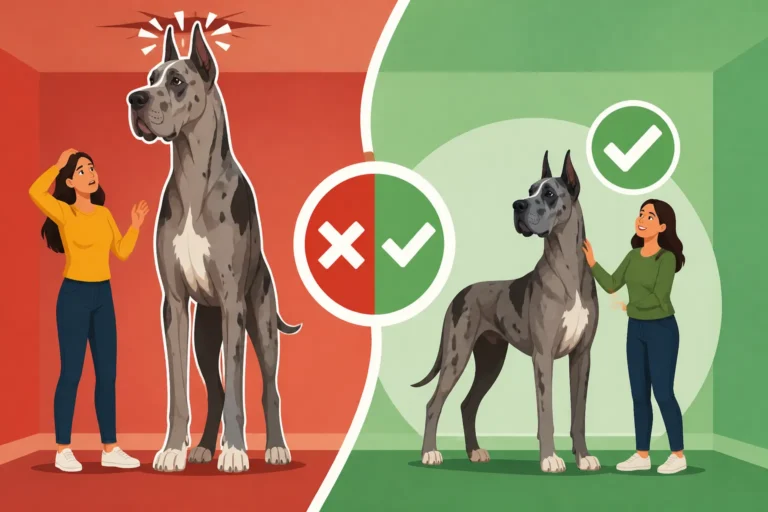
A Great Dane puppy may look manageable at first, but the dog will grow into a large, strong companion. Set up training early, including calm greetings, leash manners, settling on a bed, and comfortable handling for veterinary care. It is far easier to teach polite habits while the dog is small than to wait until the same behavior involves a much heavier adolescent.
Budget for routine care and the unexpected, and make sure your home and transport arrangements are workable for a giant breed. If you are considering a crate, bed, harness, or travel setup, check dimensions and practical handling rather than relying on a product label alone. Chewy can be useful for comparing available sizes and reading product details, but measure your actual space and confirm that an item is suitable for your dog.
You can also prepare by choosing a veterinarian and asking how the practice handles giant-breed dogs. Find out how appointments, examination spaces, and emergency visits work for a dog of this size. This is especially helpful if your nearest clinic is small or if getting a large dog into your vehicle could be difficult.
Keep expectations realistic until the puppy is home
It is natural to imagine the puppy before you meet them. Still, leave room for the litter, the breeder’s placement decision, and your own circumstances to change. A breeder may suggest a puppy with a different coat or temperament than you pictured, or the best choice may be to wait for another litter. Give yourself permission to think it over instead of answering on the spot.
Keep communication polite and purposeful. If the breeder has given you an update schedule, follow it rather than sending frequent messages asking whether there is news. If your plans change, tell them promptly. Clear communication helps the breeder make fair decisions for all the families on the list and prevents misunderstandings about your interest.
A waitlist should give you time to make a considered choice, not make you feel trapped. If you are being rushed, pressured to ignore health questions, or asked to accept unclear terms because “someone else is ready to pay,” step back. The right puppy is worth waiting for, and the right breeder should respect your need to make an informed decision.
Disclaimer
This article is for general informational purposes only and does not constitute professional advice. Laws, prices and regulations vary by location and change over time. Consult a qualified professional for guidance on your specific situation.