A Soft Swelling on a Great Dane’s Elbow
It's incredibly unnerving to find a new lump or bump on your giant Great Dane, especially when it pops up on a prominent joint like their elbow. You might initially panic, fearing the worst, and then wonder how something so soft could suddenly appear. This comprehensive guide is here to demystify that soft swelling you've spotted on your Great Dane's elbow, commonly known as an elbow hygroma, explaining what it is, why it happens, and what steps you can take to manage and prevent it.
Understanding the Great Dane Elbow Hygroma
Finding a soft, fluid-filled swelling on your Great Dane's elbow can send your mind racing with concern. It’s a common issue with our big, majestic dogs, and while it looks alarming, it’s usually not as dire as you might initially imagine. This particular type of swelling has a specific name and cause that's important to understand.
What Exactly Is an Elbow Hygroma?
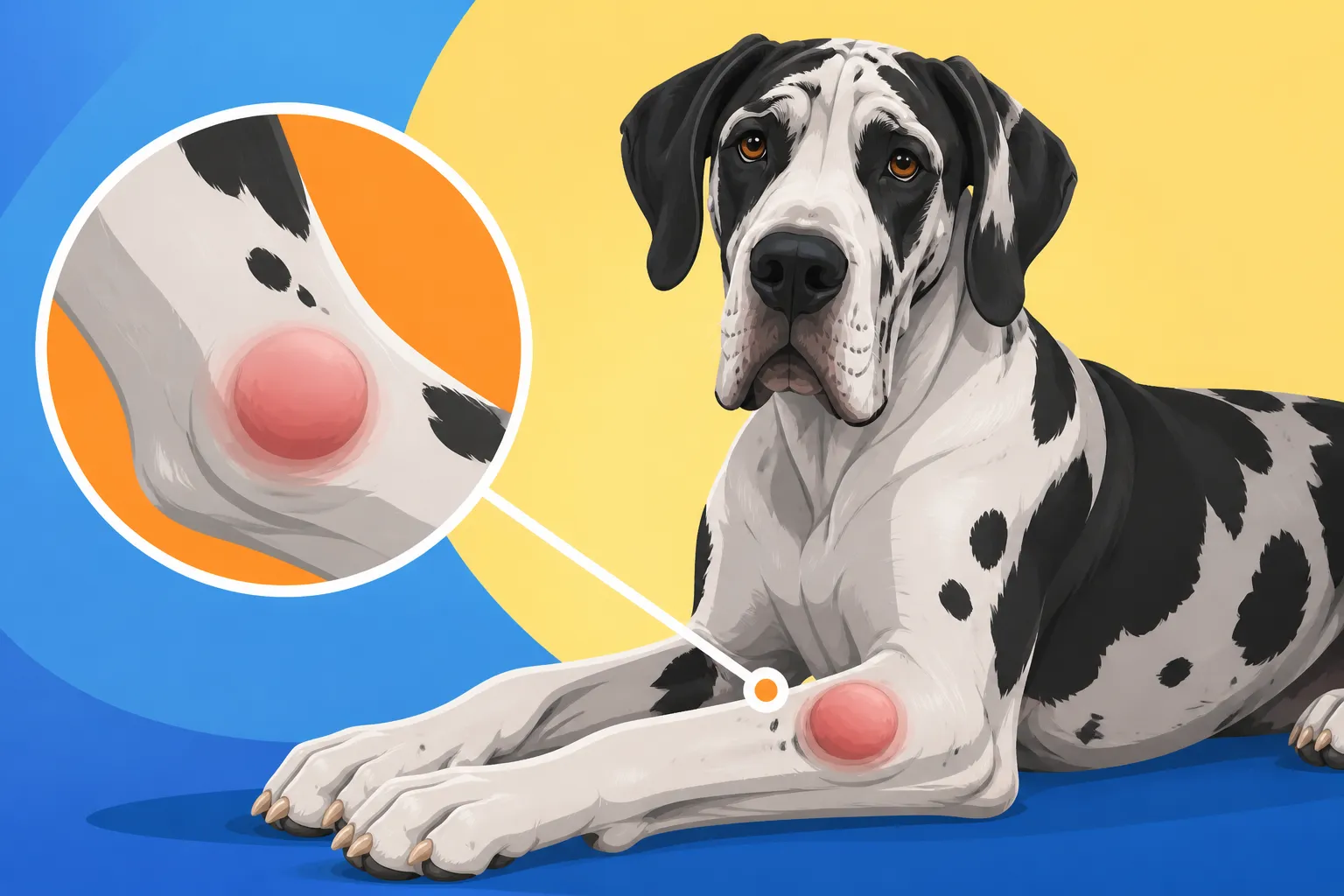
An elbow hygroma, sometimes simply called an elbow swelling or "bursa," is essentially a fluid-filled sac that develops over pressure points, most commonly the bony part of a dog's elbow (the olecranon). Think of it like a natural cushion or bursa that has become inflamed and overfilled with fluid. It's not a tumor, and it's almost never cancerous, which is usually the first relief many Great Dane owners feel. Instead, it's a sterile inflammatory response to repeated trauma. Your dog isn't necessarily hitting their elbow hard once; it's the constant, repetitive impact of them flopping down onto hard surfaces.
Imagine your Great Dane, all 150 pounds of muscle and bone, dropping like a sack of potatoes onto the kitchen tile or concrete patio multiple times a day. Each time they hit that elbow bone against the hard floor, the body tries to protect it. It builds up a fluid sac to cushion the area, and over time, if the trauma continues, that sac can grow quite large. You might notice it's soft and easily compressible, almost like a water balloon under the skin. It might feel warm to the touch, but typically, it's not painful for your dog unless it becomes infected or very, very large and stretched. For a deeper dive into why this specific joint is prone to issues, you might find our article on Why a Great Dane's Elbows Swell particularly enlightening.
Why Great Danes Are Prone to These Swellings
It almost feels unfair, doesn't it? Our big, wonderful Danes, with their massive bodies and often clumsy grace, seem to be magnets for these kinds of issues. The sheer size and weight of a Great Dane are the primary culprits. When a smaller dog lies down, the impact is minimal. But with a Great Dane, the force exerted on their elbow joints when they plop down is substantial. This is further exacerbated by their growth patterns; they grow so rapidly, and sometimes their coordination takes a while to catch up, leading to more "flops" than elegant descents.
Another factor is their natural inclination to stretch out on cool, hard surfaces, especially in warmer weather. Tile floors, concrete patios, and even hardwood can feel lovely and refreshing to a giant breed trying to escape the heat, but these surfaces offer absolutely no cushioning. This constant pressure and friction against the prominent elbow bone are exactly what triggers the body's protective response. The skin over the elbow is relatively thin, and there's not much natural padding, making it an easy target for repeated microtrauma. It's a common concern that often leads owners to consider preventive measures, something we'll discuss in detail later.
Causes and Contributing Factors for Elbow Hygromas
It's one thing to know what an elbow hygroma is, but understanding why it's happening to your Great Dane can help you take proactive steps. It's rarely just one isolated incident, but rather a combination of factors that contribute to the development of this soft swelling.
The Impact of Hard Surfaces
This is probably the biggest and most undeniable culprit. Think about where your Great Dane spends most of their time lying down. Is it on soft, plush bedding, or do they gravitate towards the cool, hard tile in the kitchen, the concrete in the garage, or the patio outside? For such a large dog, the repeated impact of their elbows hitting unforgiving surfaces creates constant irritation. Each time they settle down, that bony point on their elbow absorbs the full force of their substantial weight. Over time, this cumulative trauma leads to inflammation and the body's attempt to create a protective fluid-filled sac – the hygroma.
I've seen so many Danes whose owners swore they had soft beds, only to find the dog preferred the hard floor beside it. It's a natural inclination for many large breeds seeking to cool down, but it's a habit that can be detrimental to their joints. Our article on Hard Floors and a Great Dane's Elbows offers more insights into this specific issue and how to mitigate it. It's not about blaming your dog for seeking comfort, but understanding the environmental factors that contribute to these swellings.
Environmental and Behavioral Triggers
Beyond just the type of surface, how your Great Dane interacts with their environment plays a huge role. Do they tend to flop down dramatically, rather than gently lowering themselves? Many young, energetic Danes, full of youthful exuberance, aren't always graceful. They might throw themselves down for a nap after a burst of zoomies, or collapse with a sigh after a long walk, without much thought for cushioning their joints. This enthusiastic "flop" can deliver a much harder impact than a slow, deliberate lowering.
Additionally, consider the layout of your home. Are there areas where your Great Dane spends a lot of time waiting or resting, like near a doorway, in a sunbeam, or next to your desk? If these high-traffic resting spots are on hard surfaces, your dog is repeatedly subjecting their elbows to trauma. Even seemingly minor, everyday actions, repeated over weeks and months, can lead to significant issues. Sometimes, if a hygroma becomes painful or infected, it can even cause A Great Dane That Limps Without an Injury, which is another reason to address these swellings promptly.
Managing a Great Dane Elbow Hygroma
Discovering a hygroma on your Great Dane is usually a sign that changes need to be made to their living environment. The good news is that most simple, uninfected hygromas can be managed with conservative, non-surgical approaches, focusing heavily on prevention and cushioning.
Prevention Through Proper Bedding
This is truly the cornerstone of managing and preventing elbow hygromas. The goal is to eliminate or significantly reduce the constant impact on their elbows. Every single spot where your Great Dane chooses to lie down must be adequately cushioned. We're not talking about thin, flimsy dog beds here. For a Great Dane, you need substantial, orthopedic-grade bedding that can support their immense weight and provide a deep cushion for their joints.
Look for beds with dense, high-quality foam (like memory foam or orthopedic foam) that won't flatten out quickly. Brands like Big Barker, BuddyRest, and Casper often offer beds specifically designed for giant breeds. You might need multiple beds – one in the living room, one in the bedroom, maybe even one in a crate or outdoor covered area. Pay attention to where your dog prefers to sleep and ensure those spots are covered. If they insist on lying on the cool tile, try placing a thick mat or a cooling orthopedic bed there. For specific recommendations, our article on Bedding That Prevents Great Dane Hygromas provides excellent guidance. This proactive step is crucial, and it’s much easier and less expensive than dealing with an infected hygroma down the line.
Conservative Management Strategies
Once a hygroma has formed, the primary goal of conservative management is to prevent it from getting worse and to encourage the body to reabsorb the fluid naturally. This relies almost entirely on dedicated cushioning and preventing further trauma.
- Strict Rest and Restricted Activity: While Great Danes need exercise, minimizing vigorous activity that might lead to more dramatic flops can help. Encourage calm, gentle movements and provide ample soft resting spots.
- Protective Wraps or Sleeves: Some owners use padded elbow sleeves or wraps (like those from Walkin' Pets or other veterinary supply companies) to provide an extra layer of protection. These need to be fitted properly to prevent rubbing or cutting off circulation. They can be particularly helpful if your Dane is prone to hitting their elbow on furniture or if they sleep in various spots.
- Warm Compresses: In some cases, warm compresses can help stimulate circulation and encourage fluid reabsorption. Always consult your vet before trying this, and ensure the compress isn't too hot.
- Anti-inflammatory Medication: If there's any discomfort or significant inflammation, your vet might prescribe a non-steroidal anti-inflammatory drug (NSAID) to help reduce swelling and pain. This is always under veterinary guidance, as self-medicating can be dangerous.
- Weight Management: Keeping your Great Dane at a healthy, lean weight reduces the overall impact on all their joints, including the elbows.
The key with conservative management is patience and consistency. It can take weeks or even months for a hygroma to resolve, and some may never completely disappear, simply shrinking to a smaller, more manageable size. The most important thing is that it doesn't get bigger or become infected.
When an Elbow Hygroma Becomes a Real Problem
While many hygromas can be managed with simple care, there are times when they can become complicated, requiring more intensive veterinary intervention. Recognizing these signs is crucial for your Great Dane's health and comfort.
Signs of Infection and When to Seek Veterinary Care
The biggest concern with any hygroma is infection. If the skin over the hygroma breaks, or if bacteria find their way into the fluid sac, it can quickly become a serious and painful issue. You'll know if an infection has set in because the once-soft, pliable swelling will change dramatically.
Look out for these alarming signs:
- Redness and Heat: The skin around and over the hygroma will become noticeably red, inflamed, and hot to the touch.
- Pain and Sensitivity: Your Great Dane, who might have previously tolerated the hygroma without issue, will start showing signs of pain. They might limp, lick the area excessively, cry out when touched, or become reluctant to lie down on that side.
- Pus or Discharge: This is a clear indicator of infection. If the skin breaks, you might see pus, blood, or a foul-smelling discharge.
- Fever and Lethargy: Systemic signs of infection, such as a fever, loss of appetite, or general lethargy, mean the infection is significant and needs immediate attention.
- Hardening or Firmness: The hygroma might become firm and hard, indicating chronic inflammation or abscess formation.
If you observe any of these symptoms, do not hesitate to contact your veterinarian immediately. An infected hygroma is a medical emergency that requires prompt treatment, often including antibiotics, wound care, and potentially surgical drainage. Delays can lead to deeper tissue infections or systemic illness. Our article on Treating a Great Dane Hygroma Before It Opens offers more details on early intervention.
Surgical Intervention and Prognosis
Surgery for elbow hygromas is generally considered a last resort, reserved for cases of severe infection, chronic non-healing hygromas, or those that have grown so large they interfere with mobility. The reason it's not the first choice is that the skin over the elbow is thin, and the area is constantly subjected to movement and pressure, making surgical repair challenging and prone to complications.
There are a few surgical approaches:
- Drainage and Lavage: For infected hygromas, the vet might drain the fluid, flush the sac with antiseptic solutions, and sometimes place a temporary drain to allow continued drainage. Antibiotics will be prescribed, often for an extended period.
- Excision: In some cases, the entire hygroma sac might be surgically removed. However, this leaves a large open wound in a high-motion area, which can be difficult to close and heal. The risk of dehiscence (the wound splitting open) and recurrence (a new hygroma forming due to continued trauma) is high.
- Flap Surgery or Skin Grafts: For very large or recurrent hygromas, especially those with significant skin damage, a vet might perform a more complex procedure involving moving a flap of healthy skin from another part of the body to cover the defect. This is specialized surgery with a longer, more involved recovery.
Regardless of the surgical approach, post-operative care is crucial. This includes strict rest, pain management, antibiotics, and rigorous wound care. Even with surgery, if the underlying cause (repeated trauma from hard surfaces) isn't addressed, the hygroma can recur. This is why consistent soft bedding and environmental management are so critical, even after a successful surgery. The costs associated with such procedures can be substantial, and this is where having pet insurance like Healthy Paws can truly be a lifesaver, helping to cover a significant portion of those unexpected veterinary bills. Beyond the immediate issue, Great Danes are susceptible to a range of health issues that can result in significant financial outlay, as explored in Why Every Great Dane Bill Is Bigger.
Long-Term Outlook and Prevention of Recurrence
The long-term prognosis for an elbow hygroma is generally good, provided the underlying cause is addressed consistently. If you commit to providing ample, appropriate soft bedding in all your Great Dane's preferred resting spots, and monitor them for any changes, the chances of recurrence or severe complications drop dramatically.
Even after a hygroma resolves or is surgically treated, it's vital to maintain vigilant preventive measures. Continue to provide top-notch orthopedic bedding, encourage gentle lying down, and regularly inspect your Dane's elbows for any signs of new swelling or skin irritation. Consider how much you might spend on What a Great Dane Costs Before It Turns One and factor in the ongoing investment in quality bedding as part of that overall cost.
Also, be mindful of related conditions, such as Elbow Calluses on a Great Dane, which often develop in similar circumstances due to chronic pressure and friction. While calluses are skin thickening rather than fluid accumulation, they too point to a need for better cushioning.
Taking these steps ensures your gentle giant can enjoy their life comfortably, without the constant irritation or pain that an unmanaged elbow hygroma can bring. And knowing you're doing everything you can to protect them provides immense peace of mind. Investing in robust pet insurance, such as Healthy Paws, can offer a crucial safety net for these and other potential health challenges, allowing you to focus on your Great Dane's well-being rather than the financial strain. For more on how to prepare for significant health costs, check out Insuring a Great Dane Against Bloat and Heart Bills.
Comparison of Hygroma Management Approaches
| Feature | Conservative Management (Mild/Uncomplicated Hygroma) | Surgical Intervention (Severe/Infected/Recurrent Hygroma) |
|---|---|---|
| Primary Goal | Reduce trauma, allow natural fluid reabsorption, prevent infection | Remove/drain infected tissue, reconstruct damaged area, alleviate pain |
| Best For | Small, non-painful, uninfected hygromas | Large, painful, infected, ruptured, or recurrent hygromas |
| Key Components | Orthopedic bedding, elbow wraps, controlled activity, NSAIDs (vet prescribed) | Drainage, excision, flap surgery, antibiotics, pain medication |
| Recovery Time | Weeks to months for full resolution; ongoing management | Weeks for surgical site healing; months for full recovery; ongoing management |
| Risk of Complications | Low (if trauma is eliminated) | Moderate to high (infection, wound breakdown, recurrence, scarring) |
| Cost | Relatively low (cost of bedding, wraps, vet consultations) | High (surgical fees, anesthesia, medications, aftercare) |
| Recurrence Rate | Low (if underlying cause addressed) | Moderate (if environmental factors not strictly controlled post-op) |
Disclaimer
The information provided in this article is for general informational purposes only and is not a substitute for professional veterinary advice, diagnosis, or treatment. Always seek the advice of your veterinarian or other qualified animal health provider with any questions you may have regarding a medical condition or the health and welfare of your Great Dane. Never disregard professional veterinary advice or delay in seeking it because of something you have read here.