Whether a Great Dane Puppy Should Use Stairs
If you're bringing a majestic Great Dane puppy into a home with stairs, you’re probably wrestling with a common dilemma: is it really okay for those long, gangly limbs to be navigating steps? It’s a valid concern, and one that countless Great Dane owners have pondered, fearing every thud and stumble. This guide is here to shed light on the unique challenges your growing giant faces with stairs and offer practical advice to protect their precious, developing joints and skeletal structure.
The Unique Physical Demands of Great Dane Puppyhood
Bringing home a Great Dane puppy is an experience like no other. You watch them grow at an astonishing rate, sometimes feeling like they gain an inch and five pounds overnight. But this incredible growth spurt, which is part of their charm, also presents a unique set of physical vulnerabilities, especially when it comes to activities like tackling stairs.
Rapid Growth: A Double-Edged Sword for Developing Joints
Great Dane puppies are not like smaller breeds that reach adult size relatively quickly. Their bodies are undergoing monumental changes for the first 12 to 18 months, sometimes even longer. During this period, their bones are lengthening at an incredible pace, and their growth plates – the areas of soft, developing cartilage at the ends of long bones – are open and incredibly vulnerable. These growth plates are essentially the factories producing bone, and they are not fully fused and hardened until your Dane is much older.
Imagine building a skyscraper. You wouldn't put immense stress on the foundation and lower floors while the concrete is still curing, right? Similarly, the rapid weight gain and sheer scale of a Great Dane puppy mean that any repetitive, high-impact stress on these soft, developing joints can cause micro-traumas or even more significant injuries. These early stresses can have lasting consequences, potentially contributing to or exacerbating conditions like hip or elbow dysplasia, which large breeds are already predisposed to. It's truly a double-edged sword: you marvel at their growth, but you also have to be acutely aware of its delicate nature. That's why managing their environment and activity levels is so crucial, especially in these formative months. Why a Great Dane Puppy Should Grow Slowly
The Biomechanics of Stairs: Why They're Different for a Giant Breed Puppy
For a small dog, trotting up a set of stairs might be a gentle hop. For a Great Dane puppy, it’s an entirely different athletic endeavor that involves complex biomechanics. Think about your own body navigating stairs: you lift your legs, stabilize your core, and push off. Now imagine doing that with a rapidly growing, often clumsy, and disproportionately limbed body.
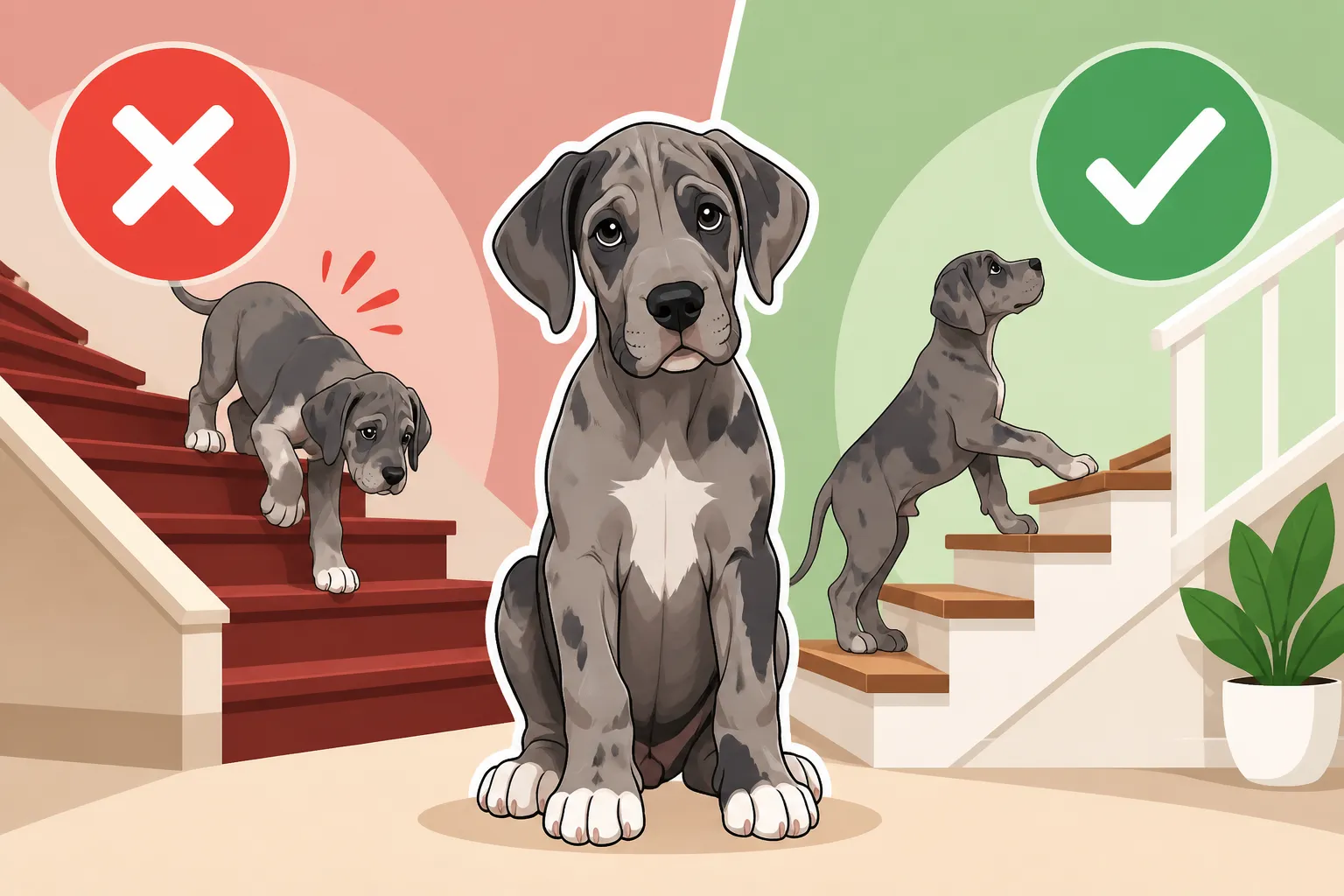
When a Great Dane puppy ascends stairs, each step requires a significant lift and push, placing considerable strain on their developing shoulders, elbows, hips, and knees. Their long legs can make steps feel awkwardly spaced, leading to exaggerated stretches or bunched-up movements. Descending stairs is often even worse, involving a jarring impact on the forelegs and shoulders as they absorb their rapidly increasing body weight with each landing. This repetitive impact and the unnatural angles involved can put tremendous torque on their soft joint structures and ligaments. It's not just about the occasional trip; it's about the cumulative stress that each and every stair climb places on a body that simply isn't ready for it. This isn't about being overly cautious; it's about understanding the unique physical demands and protecting them during their most vulnerable developmental stage.
Understanding the Risks: What Stairs Can Do to a Young Dane
The allure of allowing your Great Dane puppy to navigate stairs independently might be convenience, but understanding the potential long-term damage far outweighs any short-term ease. The risks associated with early and unsupervised stair use for a giant breed puppy are not to be taken lightly.
The Strain on Developing Hips, Elbows, and Shoulders
As we discussed, Great Danes are genetically prone to certain orthopedic conditions, like hip and elbow dysplasia. While genetics play a huge role, environmental factors, especially during their rapid growth phase, can significantly influence whether these conditions manifest or how severe they become. Repetitive strain from climbing and descending stairs can put undue stress on the still-forming ball-and-socket joints of the hips and the complex hinge joints of the elbows. The constant impact can cause inflammation, microfractures, or improper development of the joint surfaces.
Think of it this way: if a joint isn't developing perfectly smoothly, every single bump and grind from stair use acts like sandpaper, potentially worsening the fit and function over time. This can lead to painful arthritis much earlier in life, diminishing their quality of life. The shoulders, too, take a heavy load, especially when descending, as they absorb the bulk of the puppy's weight. Protecting these critical joints during puppyhood is an investment in their long-term comfort and mobility. Great Dane Hips, Elbows and Growing Joints and Growth Disorders in a Great Dane Puppy are crucial topics for understanding these vulnerabilities.
Spinal Concerns: Could Stairs Contribute to Neck Issues?
Beyond the limb joints, the spine, particularly the neck, is another area of concern for Great Danes. They are predisposed to a neurological condition called cervical spondylomyelopathy, more commonly known as Wobblers syndrome. This condition involves compression of the spinal cord and nerve roots in the neck region. While genetics are a primary factor, trauma or repetitive stress to the neck can potentially exacerbate or contribute to the onset of Wobblers signs in predisposed individuals.
Picture a Great Dane puppy trying to navigate stairs: they often have to look up or down at extreme angles, stretching or flexing their necks in ways that can put strain on their cervical vertebrae. The sudden jolts or missteps can also cause whiplash-like movements. While directly linking stair use to Wobblers onset is complex and not fully established, minimizing any potential neck strain during their developmental period is generally a wise preventative measure. Any activity that causes awkward positioning or sudden impact on the neck should be approached with extreme caution for this breed. The First Wobbler Signs in a Great Dane delves deeper into these potential issues.
The Hidden Danger of Falls and Traumatic Injury
It’s easy to focus on the long-term, cumulative damage, but there’s also the immediate, acute risk of a fall. Great Dane puppies, with their gangly legs and sometimes clumsy coordination, are not known for their grace. A misstep on the stairs can lead to a serious traumatic injury. We’re not just talking about a scraped paw; a fall down a flight of stairs could result in fractures, sprains, head trauma, or even internal injuries.
The sheer size and weight of a Great Dane, even as a puppy, mean that any fall will have significantly more impact than for a smaller dog. A broken leg on a giant breed puppy often requires extensive and costly veterinary care, potentially involving specialized orthopedic surgery and a long, challenging recovery period. The emotional toll on both you and your puppy would be immense. Preventing falls by restricting stair access is one of the simplest yet most effective ways to protect your young Dane from a potentially devastating accident.
Navigating a Multi-Level Home: Practical Solutions and Prevention
Living with a Great Dane puppy in a home with stairs doesn't have to be a nightmare, but it does require proactive planning and consistent management. The goal is to minimize risk while still allowing your puppy to integrate into family life.
Carrying Your Great Dane Puppy: When and How Long Is It Feasible?
When your Great Dane is a tiny fluffball, carrying them up and down stairs is relatively easy. This is, without a doubt, the safest option for their developing joints. You’ll want to support their chest and rear, keeping their spine straight, to avoid any undue pressure. However, as they rapidly pack on pounds, this quickly becomes a Herculean task.
For many owners, carrying becomes impractical once the puppy reaches 30-40 pounds, or even earlier depending on your own strength and physical limitations. A male Great Dane puppy can easily reach 80-100 pounds by 6-8 months, making carrying impossible for most individuals. So, while it's the ideal solution initially, it's a temporary one. You'll need to recognize when your puppy's size starts to exceed your ability to safely carry them, and then transition to other management strategies. Remember, if you strain your back trying to carry them, you won't be much help to anyone!
Strategic Use of Gates and Ramps: Creating Safe Zones
Since carrying isn't a long-term solution, the next best thing is to prevent access altogether. This is where baby gates, or rather, dog gates designed for larger breeds, become your best friend. Look for extra-tall, pressure-mounted or hardware-mounted gates that can withstand the weight and investigative nature of a growing Great Dane. Simple, flimsy gates won't cut it; your Dane will either knock them over or easily step right over them. Placing gates at the top and bottom of all staircases is essential to create secure, stair-free zones. Many brands, which you can often find on platforms like Amazon, offer sturdy options specifically for large breeds, ensuring they are tall enough and robust enough to genuinely block access.
For exterior steps or getting into a car, a sturdy dog ramp can be an excellent investment. While less common for interior staircases, if you have just a few steps, a ramp might be a feasible, albeit less aesthetically pleasing, solution. This allows your puppy to transition between levels without the high-impact stress. Investing in these tools early can save you a world of worry and potential vet bills down the line. Choosing a Crate a Great Dane Can Stand In might also offer insight into finding appropriate confinement tools.
Delayed Introduction: Teaching Stairs Safely When They're Ready
So, when are they ready? Generally, most veterinarians and Great Dane breeders recommend waiting until your puppy is at least 12-18 months old, and ideally until their growth plates have closed, before allowing them unsupervised access to stairs. Even then, the introduction should be gradual and controlled.
When you do start, make it a positive experience. Lure them with high-value treats (BAXTER & Bella often recommends positive reinforcement techniques for general training) and go one step at a time. Start with ascending, as it's typically less impactful than descending.
- Step 1: One step up. Lure them onto the first step, reward, then bring them back down. Repeat until comfortable.
- Step 2: Two steps up. Gradually increase the number of steps.
- Step 3: Descending. This is the trickier part. Start by placing them on the second or third step down and lure them one step at a time, ensuring they take it slowly and deliberately.
- Encourage controlled movement: Never allow your Dane to run, jump, or bound up or down the stairs. Teach a "slow" or "easy" command specifically for stairs. This controlled approach minimizes impact and reduces the risk of injury. Ramp Training a Great Dane for the Car provides similar principles for teaching careful movement.
Preparing Your Great Dane for a Lifetime of Healthy Movement
Your Great Dane's early months are foundational for their long-term health and mobility. Making informed decisions about their physical activity, particularly concerning stairs, is paramount to ensuring they lead a comfortable and active life for as long as possible.
The Importance of a Vet-Approved Growth Plan
Every Great Dane is an individual, and while general guidelines exist, your veterinarian is your best resource for tailored advice. They can monitor your puppy's growth rate, assess their joint development, and advise you on when it might be appropriate to introduce activities like stair climbing. They might check for signs of growth disorders or early orthopedic issues during routine check-ups.
A vet-approved growth plan often includes guidance on appropriate nutrition (to prevent excessively rapid growth), controlled exercise, and environmental management. They can also discuss whether your puppy might benefit from joint supplements if they show any early signs of discomfort, although this should always be under veterinary guidance. Don't hesitate to ask specific questions about stair use during your puppy's regular appointments. The Great Dane Growth Curve Month by Month is something your vet will closely track.
Conditioning for Life: Appropriate Exercise vs. High-Impact Activities
The key to a healthy Great Dane puppy isn't restricting all exercise, but rather ensuring it's appropriate for their developmental stage. Controlled, low-impact exercise is vital for building muscle, strengthening bones, and maintaining a healthy weight without stressing delicate joints.
Think about activities like:
- Short, leashed walks: Multiple short walks on soft, even surfaces are much better than one long, strenuous hike. How Far a Six-Month-Old Great Dane Should Walk will give you an idea of duration.
- Structured playtime: Gentle play in a securely fenced yard, focusing on fetching or tugging, can be great, but avoid intense, abrupt turns or jumps.
- Swimming: If accessible and supervised, swimming is an excellent, non-weight-bearing exercise that builds muscle without joint impact.
Conversely, high-impact activities like prolonged running, jumping off furniture, rough play with other dogs (especially if they're much smaller or bigger and more boisterous), and of course, unsupervised stair climbing, should be strictly avoided during puppyhood. The goal is to let them grow naturally and strongly, without forcing their still-developing bodies to withstand unnecessary strain. Why a Great Dane Puppy Should Not Jog offers more perspective on appropriate exercise. Prioritizing controlled and safe movement in these crucial early years will set the stage for a mobile and happy adult Great Dane. Whether a Great Dane Puppy Should Be Kept Lean also plays a role in joint health.
Here’s a summary of stair recommendations for your Great Dane puppy:
| Age/Weight of Puppy | Recommended Stair Access | Reasoning |
|---|---|---|
| 8-16 Weeks | Strictly no independent stair climbing. Carry up and down. Gate off all stair access. | Growth plates are extremely soft and vulnerable. Coordination is poor. High risk of immediate injury or long-term joint damage (hips, elbows, shoulders, spine). |
| 4-8 Months | Avoid independent stair climbing. Continue to carry when possible. Use gates religiously. | Rapid growth continues. Bones are still lengthening, and growth plates remain open. Puppy is gaining significant weight, increasing impact forces. Carrying may become difficult, but prevention is still key. |
| 8-12 Months | Minimal, supervised use only, if necessary. Continue to restrict access with gates. | Growth is still ongoing, though perhaps slowing. Joints are still maturing. If stairs are unavoidable, perform very slow, controlled, one-step-at-a-time training with positive reinforcement, especially going down. |
| 12-18 Months | Gradual, supervised introduction. Continue controlled movements. | Most Great Danes' growth plates are closing or closed around this age, making joints more robust. Continue to teach slow, deliberate stair use, avoiding running or jumping. |
| 18+ Months | Generally safe for independent use, with continued emphasis on slow, controlled movement. | Skeletal maturity is largely complete. Joints are stronger. Continue to discourage rushing up and down to minimize long-term wear and tear and prevent falls. |
Remember, these are general guidelines, and individual development can vary. Always consult your veterinarian for advice specific to your Great Dane puppy.
Disclaimer
This article is for general informational purposes only and does not constitute professional advice. Laws, prices and regulations vary by location and change over time. Consult a qualified professional for guidance on your specific situation.