The Great Dane Growth Curve Month by Month
Oh, the sheer joy – and sometimes, sheer panic – of watching a Great Dane puppy grow! It feels like you blinked, and your adorable, clumsy little fluffball is suddenly a long-legged, gangly teenager who can practically look you in the eye. The problem is, this incredible growth spurt, while fascinating, also brings a lot of worry. Are they growing too fast? Are their joints okay? What's normal for a dog that's going to be the size of a small pony? This guide is here to walk you through the Great Dane growth curve month by month, helping you understand what to expect and how to support your giant companion through this critical developmental period.
The Astonishing Pace of Great Dane Puppy Growth
When you bring home a Great Dane puppy, you're not just getting a dog; you're getting a project in rapid development. Unlike smaller breeds that might take a year or so to reach their adult size, Great Danes are on an accelerated schedule. They gain weight and height at an astonishing rate, sometimes seemingly overnight, and this rapid growth requires a very specific approach to their care.
From Tiny Bundle to Leggy Adolescent
Imagine this: you pick up your eight-week-old Great Dane puppy, and they're already a chunky 15-20 pounds, probably bigger than many fully grown small dogs. You can easily scoop them up for cuddles. Fast forward a few months, and that same puppy is a creature of pure, unadulterated length – all legs, floppy ears, and an incredibly long tail that wags with the force of a small whip. They seem to trip over their own feet constantly, navigating the world with an endearing, if sometimes destructive, clumsiness. This phase, often called the "awkward adolescent" stage, is characterized by an almost daily change in their physique. One week they might look proportionate, the next they're all front end, then all back end, as their bones stretch and grow. It's a marvel to witness, but it also means their bodies are under immense stress.
Why Their Growth is Different from Other Breeds
The fundamental difference in Great Dane growth compared to smaller breeds lies in the sheer scale and speed. Their bones, muscles, and organs have to expand exponentially in a short period. This rapid development places a unique burden on their skeletal system, particularly their growth plates. These areas of cartilage at the ends of long bones are crucial for bone lengthening, and they remain open and vulnerable to injury for a much longer time in giant breeds. Any excessive strain, impact, or improper nutrition during this period can lead to serious, lifelong orthopedic issues. It's why things like avoiding too much strenuous exercise and feeding a specially formulated large breed puppy food are not just recommendations, but necessities for these magnificent giants. For more on this, check out Why a Great Dane Puppy Should Grow Slowly.
Great Dane Growth: The First Six Months
The first half-year of a Great Dane's life is arguably the most dramatic in terms of physical change. They go from being entirely dependent newborns to significant, independent (and sometimes mischievous) individuals, growing an incredible amount in both size and personality.
Newborn to Three Months: The Explosive Phase
From birth to about three months, a Great Dane puppy is like a tiny sponge, absorbing nutrients and packing on pounds at an incredible rate. A newborn Dane can weigh around one to two pounds, but by three months, they're often hitting 30-50 pounds! This is the period of most explosive growth, where their bones are lengthening quickly. During these early weeks, proper nutrition is absolutely paramount. They need a diet specifically designed for large breed puppies, which typically has a carefully controlled calcium-to-phosphorus ratio and moderate calorie content to prevent too rapid growth, which can harm their developing joints. You might find yourself replenishing their food supply from places like Chewy more often than you anticipated. Monitoring their weight, but more importantly, their body condition, is key. You should be able to feel their ribs easily, but not see them protruding sharply.
Three to Six Months: The Awkward Teenage Strides
As they move from three to six months, your Great Dane puppy will continue to shoot upwards. They'll start to look gangly, all legs and neck, often appearing somewhat uncoordinated. By six months, many male Great Danes can weigh between 60-90 pounds and females 50-80 pounds, already substantial dogs! This is the "teenage" phase where they are discovering their immense size but haven't quite mastered control over their limbs. It's a time when many owners notice their Dane's clumsy antics, inadvertently knocking things over with their tail or long legs. Their growth plates are still very much open, making them susceptible to conditions like Hypertrophic Osteodystrophy (HOD) or Panosteitis, often referred to as "growing pains." These conditions can cause shifting lameness and discomfort, highlighting the importance of balanced nutrition and avoiding excessive impact on their joints. Growing Pains in a Great Dane at Eight Months delves deeper into these adolescent discomforts.
Navigating Growth Plates and Joint Health
During these critical first six months, the integrity of your Great Dane's growth plates is incredibly fragile. These soft areas at the ends of their bones are where all the lengthening happens, and they don't fully close and harden until around 18-24 months of age, sometimes even later. Any injury, fall, or excessive stress can damage these plates, leading to abnormal bone development, limping, and potentially lifelong lameness. This is why controlled exercise is so vital. Long, strenuous walks, jumping off high places (like furniture or car trunks), and repetitive high-impact activities should be strictly avoided. Instead, focus on short, frequent walks on soft surfaces and supervised playtime. Ensuring your puppy maintains a lean body condition is also a huge part of protecting these delicate joints. Whether a Great Dane Puppy Should Be Kept Lean offers more insights on this.
The Adolescent Spurt: Six Months to Twelve Months
The second half of your Great Dane's first year sees them continue to grow in height and start the process of filling out. They'll transition from a lanky adolescent into a more formidable, albeit still immature, giant.
Six to Nine Months: The Lanky Teenager
From six to nine months, your Great Dane will likely experience another significant growth spurt in height. This is where they start looking truly enormous, often reaching close to their adult height, though they'll still be very thin and leggy. Males might be 90-120 pounds, and females 70-100 pounds. Their heads might still look a bit small for their bodies, and their chests haven't fully broadened. It's an awkward, almost comical stage where they are learning to manage their increasing size. Training becomes even more crucial during this time because a lanky, clumsy Dane who hasn't learned basic manners can quickly become an unmanageable force. Even a gentle lean can send an unsuspecting person sprawling!
Nine to Twelve Months: Filling Out, Not Just Up
As your Great Dane approaches their first birthday, the vertical growth often starts to slow down, but the filling out process begins in earnest. They'll start to gain muscle mass and their chest will deepen and broaden. While they might not get much taller, they'll become more substantial. This is where they truly start to look like the majestic "Apollo of Dogs." By 12 months, a male Dane can be 120-150 pounds and a female 90-120 pounds. It's important not to confuse this filling out with needing more food. While their appetite will remain robust, maintaining a lean body condition is still incredibly important for their developing joints. This is a time when some owners might start considering services from brands like Ollie if they're looking for fresh, portion-controlled meal options tailored to their dog's specific needs and weight goals.
Understanding Energy Needs and Exercise Limitations
While your Great Dane is growing rapidly, their exercise needs must remain carefully managed. It's a common misconception that large dogs need vast amounts of exercise. For a growing Dane, excessive or high-impact exercise can do more harm than good. Until their growth plates close, around 18-24 months, running on hard surfaces, jumping, long hikes, and intense dog park sessions should be limited or avoided entirely. Instead, focus on moderate, consistent exercise like short walks (20-30 minutes, 2-3 times a day) on soft ground, and supervised play in a securely fenced yard. Mental stimulation is also vital to tire them out without stressing their bodies. Think puzzle toys, training sessions, and scent games. How Far a Six-Month-Old Great Dane Should Walk offers more detailed guidance on appropriate exercise for puppies at this age.
Beyond a Year: Reaching Full Maturity
Even after their first birthday, a Great Dane's growth journey isn't over. They continue to mature and fill out, typically reaching their full adult size and weight much later than most other breeds.
Twelve to Eighteen Months: The Continued Filling-Out Process
After a year, most Great Danes have reached their approximate adult height, but they are still very much in the process of maturing. This period, from 12 to 18 months, is primarily about gaining muscle, deepening the chest, and widening their frame. They'll transition from looking like an overgrown teenager to a more substantial, adult-like dog. Their coordination improves, and they become less clumsy. Males can easily reach 150-180 pounds, and females 110-140 pounds. While their growth plates are still likely open, they are nearing closure, making their joints a bit more robust, but caution is still advised with high-impact activities. You might start noticing more shedding during this phase as their adult coat fully comes in, requiring brushes and vacuum cleaner upgrades, perhaps sourced conveniently from Amazon.
Eighteen Months to Two Years: When the Great Dane is Truly "Done"
For many Great Danes, especially males, they aren't truly considered "done" growing until around 18 months to two years of age. Some larger males might even continue to broaden and fill out slightly past two years. This is when their skeletal structure has fully matured, and their growth plates have completely closed. They'll achieve their full adult weight and muscle mass, settling into their majestic form. This is the stage when you can consider gradually introducing more strenuous activities, always monitoring their comfort and condition. By two years old, you'll have a fully grown, magnificent Great Dane, a testament to months of careful feeding, exercise, and patience. Whether a Great Dane Keeps Filling Out to Two explains this continued development in more detail.
Monitoring Weight and Condition in Adulthood
Once your Great Dane reaches full maturity, maintaining an ideal body condition becomes a lifelong commitment. Obesity can put immense strain on their joints, predisposing them to arthritis and other orthopedic issues, and can even exacerbate conditions like The Heart Muscle Disease Great Danes Are Prone To. You should still be able to easily feel their ribs when you run your hands along their sides, but they shouldn't be visibly prominent. Their waist should be evident when viewed from above, and there should be a tuck-up at their abdomen. Regular weigh-ins and consistent monitoring of their physical condition are crucial. Adjusting their food intake based on activity level and age, sometimes requiring precise measurement of Feeding an Adult Great Dane Six to Ten Cups, will help ensure they live a long, healthy life.
Factors Influencing Your Great Dane's Growth
While the general growth curve provides a good roadmap, individual Great Danes can vary. Several factors play a significant role in how your specific puppy will grow.
The Role of Genetics and Breed Lines
Just like with humans, genetics play a huge role in how large and how quickly your Great Dane will grow. Puppies from very large parents, or those from specific show lines known for their immense size, are likely to follow a growth curve towards the upper end of the spectrum. Conversely, Danes from slightly smaller lines or those with a more moderate build might reach their mature size a bit sooner or be slightly smaller overall. It's why researching a reputable breeder and understanding the size and health history of the parents and their lineage is so important. A good breeder will be able to give you an idea of the projected adult size of their puppies based on these factors. This also links to health, as some genetic predispositions can affect growth, such as Growth Disorders in a Great Dane Puppy.
Nutrition: Fueling Healthy Growth, Not Fastest Growth
Nutrition is arguably the most critical factor influencing healthy Great Dane growth. The goal is slow and steady growth, not rapid weight gain. High-calorie, high-protein, or imbalanced calcium-to-phosphorus ratio foods can accelerate growth, leading to fragile bones and joint problems. This is why a premium large breed puppy food is non-negotiable for the first 18-24 months. These foods are specifically formulated with controlled calorie levels and precise mineral balances to support proper skeletal development. Avoid supplementing with extra calcium unless specifically advised by your vet, as it can be incredibly detrimental. Calcium and Phosphorus in a Great Dane Puppy Bowl highlights the delicate balance needed. Always weigh your puppy's food rather than just scooping, to ensure you're giving the correct amount.
Exercise and Activity: Finding the Right Balance
Finding the Goldilocks zone for exercise is vital for a growing Great Dane. Too little exercise can lead to weak muscles and excess weight, but too much, especially high-impact activities, can severely damage vulnerable growth plates. For young puppies, gentle, supervised play and short walks are sufficient. As they mature, controlled leash walks are excellent, building muscle and stamina without excessive stress. Avoid forced running, jumping, or long periods of intense play until they are at least 18-24 months old and their growth plates are fully closed. Even then, introduce new activities gradually. Remember, mental stimulation and training are just as important as physical exercise for a giant breed.
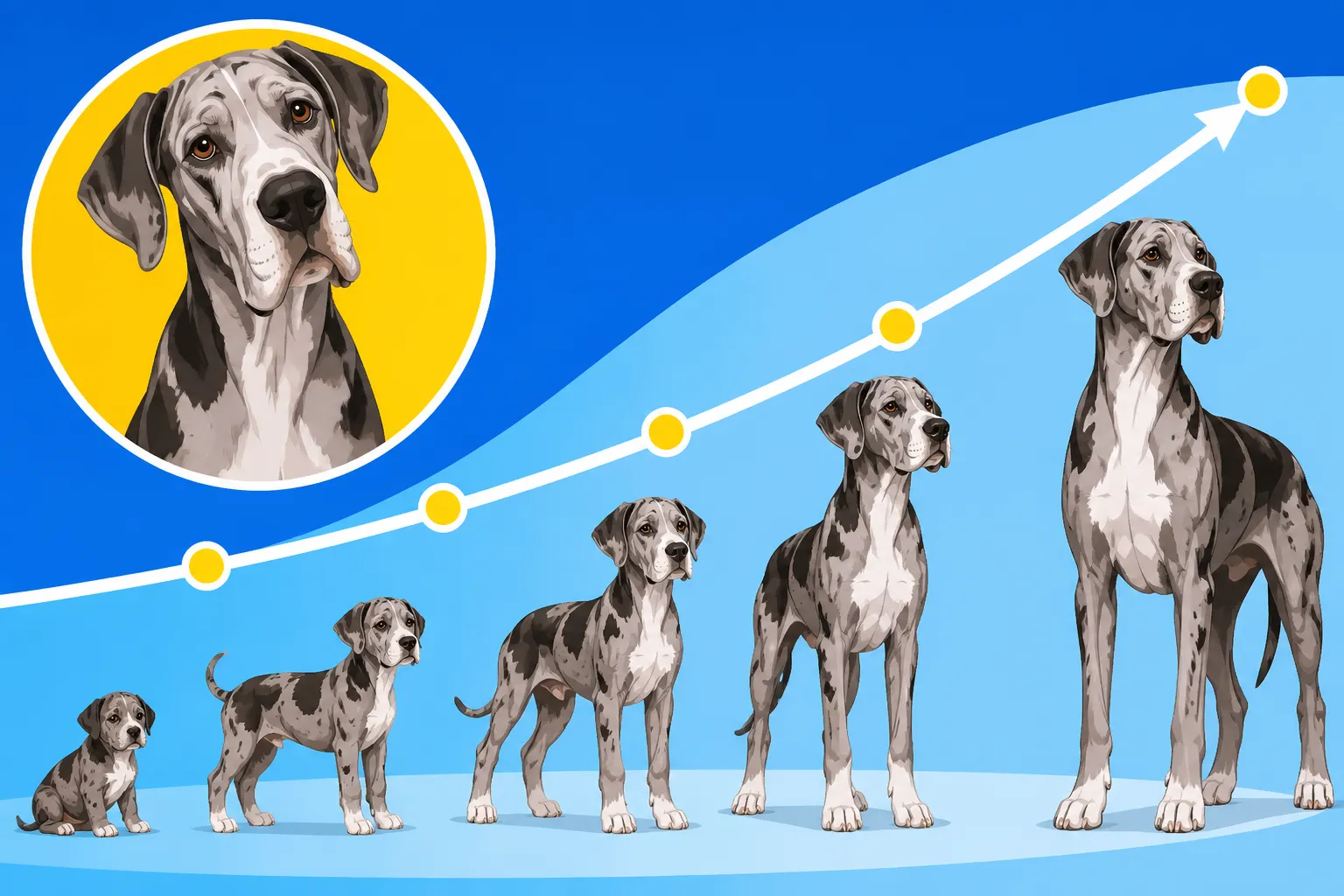
Here's a general guide to Great Dane growth, but please remember these are averages, and individual variations are completely normal:
| Age (Months) | Approximate Male Weight (lbs) | Approximate Female Weight (lbs) | Approximate Male Height (inches at shoulder) | Approximate Female Height (inches at shoulder) | Key Developmental Milestones |
|---|---|---|---|---|---|
| 2 | 15 – 25 | 10 – 20 | 12 – 16 | 11 – 15 | Rapid initial growth; critical socialization window |
| 3 | 30 – 50 | 25 – 40 | 16 – 20 | 15 – 19 | Puppy teeth falling out; growing quickly |
| 4 | 50 – 70 | 40 – 60 | 20 – 24 | 19 – 23 | Continued rapid growth; lanky phase begins |
| 5 | 65 – 85 | 55 – 75 | 22 – 26 | 21 – 25 | Testing boundaries; energy levels high |
| 6 | 80 – 100 | 65 – 90 | 24 – 28 | 23 – 27 | Adolescent awkwardness; approaching adult height |
| 7 | 90 – 110 | 75 – 100 | 25 – 29 | 24 – 28 | Filling out slightly; still growing tall |
| 8 | 100 – 120 | 80 – 110 | 26 – 30 | 25 – 29 | Coordination improving; appetite huge |
| 9 | 110 – 130 | 90 – 115 | 27 – 31 | 26 – 30 | Growth plates nearing closure; more substantial |
| 10 | 120 – 140 | 95 – 120 | 28 – 32 | 27 – 31 | Approaching adult dimensions |
| 11 | 130 – 150 | 100 – 125 | 29 – 33 | 28 – 32 | Mostly adult height; filling out chest |
| 12 | 140 – 160 | 105 – 130 | 30 – 34 | 29 – 33 | Adult height achieved for many; continued filling out |
| 18 | 150 – 180+ | 110 – 140+ | 30 – 34+ | 29 – 33+ | Growth plates closed; full maturity nearing |
| 24 | 160 – 190+ | 120 – 150+ | 30 – 34+ | 29 – 33+ | Fully mature; optimal muscle development |
Note: Height is measured at the highest point of the shoulder blades (withers). These figures are approximate and can vary widely based on genetics, nutrition, and individual development.
Raising a Great Dane is an incredible journey, and watching them grow from a tiny, floppy-eared pup into a magnificent giant is truly one of life's great pleasures. By understanding their unique growth curve and providing consistent, appropriate care, you'll be setting them up for a lifetime of health and happiness. It's a lot of responsibility, but every gentle lean, every slobbery kiss, and every giant cuddle makes it all worthwhile.
Disclaimer
This article is for general informational purposes only and does not constitute professional advice. Laws, prices and regulations vary by location and change over time. Consult a qualified professional for guidance on your specific situation.