The Calorie Load a Great Dane Actually Needs
It’s a common frustration among Great Dane owners: you bring home this tiny puppy that grows at an astonishing rate, and suddenly you’re staring at a giant dog, wondering if you’re feeding them enough, too much, or even the right kind of food. The sheer volume of food, coupled with conflicting advice, can make mealtime a source of anxiety. This guide will help demystify the calorie load a Great Dane actually needs, breaking down how to properly assess and meet their nutritional requirements through every life stage.
Understanding Your Great Dane's Unique Calorie Demands
Great Danes aren't just big dogs; they're giant breeds with a distinct physiological makeup that significantly impacts their nutritional needs. Their growth trajectory, metabolism, and susceptibility to certain health issues mean their diet isn't a one-size-fits-all equation, especially when compared to smaller or even other large breeds. Ignoring these unique demands can lead to serious health consequences, making it crucial to get it right from the start.
The Great Dane Growth Curve: Why Slow and Steady Wins the Race
When you first bring home a Great Dane puppy, it's natural to want to see them grow big and strong. However, with giant breeds like Great Danes, rapid growth is actually detrimental. Their bones, joints, and soft tissues are developing at an incredible pace, and if they grow too quickly, their skeletal system can’t keep up. This puts immense stress on their developing joints, leading to conditions like hip and elbow dysplasia, osteochondritis dissecans (OCD), and other painful orthopedic problems. It's why we always talk about Why a Great Dane Puppy Should Grow Slowly. Owners often feel tempted to feed more, believing a chubbier puppy is a healthier one, but for a Dane, it’s quite the opposite. We’re aiming for lean, steady growth, not a speedy bulk-up.
This means the type of food and the amount you feed during puppyhood are critically important. You shouldn't just grab any "puppy food" off the shelf. Great Dane puppies require a specialized large or giant breed puppy formula that is specifically designed with a lower calorie density and, crucially, a controlled calcium-to-phosphorus ratio. These formulas help regulate their growth rate, ensuring their skeletal system has the time it needs to develop properly without being overburdened by excessive weight or rapid bone elongation. Over-supplementing with calcium, for instance, can be just as damaging as an imbalanced diet, leading to improper bone mineralization.
Activity Levels and Metabolic Rates: More Than Just Size
Beyond their initial growth phase, a Great Dane's calorie requirements continue to be influenced by a complex interplay of factors, not solely their impressive size. While a fully grown male Great Dane might weigh anywhere from 140 to over 175 pounds, their individual metabolism and daily activity level will dictate precisely how many calories they need to maintain an ideal body condition. Think about it – a Great Dane who spends most of their day napping on the sofa isn't going to need the same fuel as one who enjoys vigorous daily walks, plays fetch for an hour, or accompanies you on hikes.
Even within the same household, two Great Danes of similar size might have vastly different energy expenditures. One might be a true "couch potato," content with short strolls and extensive lounging, exhibiting a naturally slower metabolic rate. The other could be a restless, constantly moving dog, always seeking out playtime or exploration, effectively burning through calories at a much faster pace. These differences mean that simply feeding a standardized amount based on weight alone is often insufficient. Owners need to be observant, adjusting their Dane's food intake based on their visible energy levels and, most importantly, their body condition. A dog that is too thin needs more calories, while one starting to carry extra padding needs a reduction, regardless of what the food bag suggests for their weight.
Calculating Your Great Dane's Daily Calories: It's Not a Simple Formula
Estimating your Great Dane's daily caloric needs isn't as straightforward as looking at a chart and picking a number. It involves understanding basic metabolic principles and then applying various adjustments based on their unique life stage, activity level, and overall health. Your veterinarian is always your best resource for precise guidance, but grasping the fundamentals empowers you to make informed decisions daily.
Basal Metabolic Rate (BMR) and Resting Energy Requirement (RER)
At the heart of any calorie calculation for a dog is understanding their Resting Energy Requirement (RER). This is the number of calories your Great Dane needs just to keep their body functioning at rest – think breathing, maintaining body temperature, circulating blood, and all those essential internal processes. It's their basic metabolic rate (BMR) expressed in calories. While complex formulas exist that use body weight raised to the power of 0.75, which is a bit much for most of us to calculate at home, the general principle is that larger dogs need fewer calories per pound of body weight than smaller dogs, due to their lower surface area to volume ratio.
For a massive dog like a Great Dane, estimating RER can be tricky because their sheer size skews typical calculations. A rough guide might put an adult Great Dane's RER somewhere in the range of 1500-2500 calories per day, but this is a very broad stroke. It's the bare minimum for survival if they were doing absolutely nothing. The key takeaway here is that the RER is merely the starting point. It provides a baseline, a foundation upon which all other activity and life-stage factors are built, moving us towards their true daily caloric intake. Without considering the subsequent multipliers, you would be severely underfeeding your gentle giant.
Multiplying Factors: Adjusting for Life Stage and Lifestyle
Once you have a general idea of the RER, the real work of tailoring your Great Dane's diet begins by applying various multiplying factors (MFs). These multipliers account for the different stages of life, reproductive status, and activity levels, dramatically altering the final daily calorie requirement. For instance, a growing puppy needs significantly more calories than a sedentary adult, not just for maintenance but for robust development. Similarly, an intact adult dog typically has a higher metabolic rate than a spayed or neutered one, and a highly active working dog will burn far more calories than a companion who enjoys a leisurely retirement.
Here's a general idea of how these multipliers work:
| Life Stage/Condition | Approximate Multiplier (MF) |
|---|---|
| Puppy (0-4 months) | 2.0 – 3.0 x RER |
| Puppy (4-12 months) | 1.6 – 2.0 x RER |
| Adult (Intact) | 1.6 x RER |
| Adult (Neutered/Spayed) | 1.4 x RER |
| Adult (Active/Working) | 1.8 – 5.0 x RER |
| Adult (Sedentary/Senior) | 1.0 – 1.2 x RER |
| Gestation (last trimester) | 1.6 – 2.0 x RER |
| Lactation | 2.0 – 5.0 x RER (or more) |
Note: These are general guidelines; individual needs vary greatly.
Let's illustrate with a hypothetical Great Dane. If your adult, neutered Great Dane has an estimated RER of 2000 calories, and they are moderately active, their daily intake might be closer to 2000 calories * 1.6 (for intact/active adult) or 1.4 (for neutered) = 2800-3200 calories. If that same Dane is a senior with very low activity, their needs could drop to 2000 * 1.0 = 2000 calories. You can see how quickly these numbers diverge. It's a constant adjustment, requiring you to monitor your dog's weight and energy output, rather than just sticking to a static number.
The Importance of a Body Condition Score (BCS)
While calorie calculations provide a useful starting point, the single most important tool in determining if your Great Dane is getting the right amount of food is their Body Condition Score (BCS). Unlike a number on a scale, which can be misleading due to variations in bone structure and muscle mass, BCS is a hands-on assessment of fat reserves. It allows you to feel your dog's ribs, spine, and waist to gauge their physical condition. A healthy Great Dane should have a BCS of around 4-5 on a 9-point scale, meaning you can easily feel their ribs without seeing them protrude excessively, and they should have a discernible waist when viewed from above.
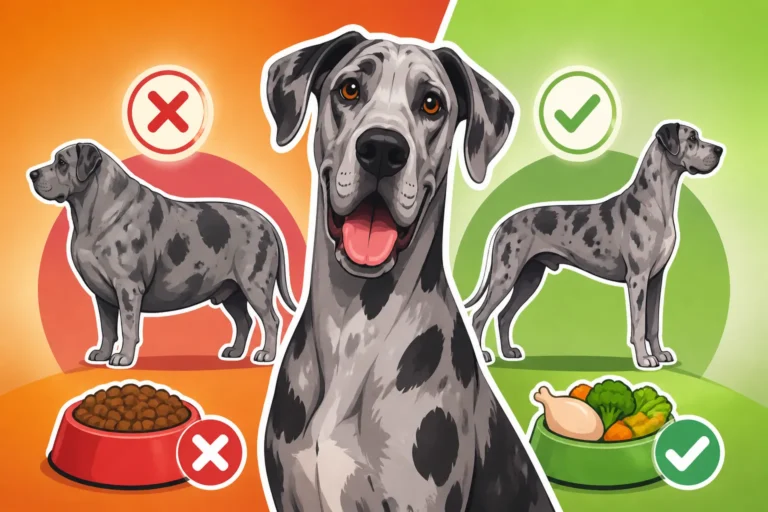
Many Great Dane owners struggle with this, often because they've been conditioned to think a big dog should look "heavy." However, for a giant breed, being even slightly overweight puts undue strain on their already susceptible joints and vital organs, potentially shortening their lifespan. Being able to Reading Ribs on a Great Dane properly is a skill every owner should cultivate. When you run your hands along their sides, you should be able to feel each rib distinctly, almost like feeling the knuckles on your hand, but without them being sharply visible. If you have to press hard to feel the ribs, your Dane is likely overweight and needs fewer calories. Conversely, if their ribs, spine, and hip bones are prominently visible, they might be underweight and require more. Your vet can show you how to accurately assess your dog's BCS and help you develop a feeding plan accordingly.
What to Look For in Great Dane Food: Beyond the Calorie Count
It's not just how much your Great Dane eats, but what they eat that makes a profound difference in their health and longevity. The quality and composition of their diet are paramount, especially given their specific growth patterns and predisposition to certain health conditions. Choosing the right food requires looking beyond flashy marketing and focusing on the nutritional science behind it.
Macronutrient Balance for Giant Breeds
When selecting food for your Great Dane, the balance of macronutrients – protein, fat, and carbohydrates – is crucial. For puppies, a common misconception is that high protein causes orthopedic problems. In reality, it's often the overfeeding of calories, combined with improper calcium/phosphorus ratios, that leads to issues. However, an appropriate level of high-quality protein is essential for muscle development, especially in such a large, athletic breed. Aim for foods with moderate protein (around 23-26% for large breed puppies, and 24-30% for adults) and a moderate fat content (around 12-18%). These levels support healthy growth and energy without promoting excessive weight gain.
Carbohydrates provide sustained energy, but the source matters. Complex carbohydrates from whole grains, vegetables, and fruits are preferable to fillers. It's also important to be aware of ongoing discussions regarding certain ingredients and their potential link to canine dilated cardiomyopathy (DCM). While research is still evolving, some studies suggest a possible connection between "boutique," grain-free, or exotic ingredient diets (often rich in legumes like peas, lentils, and potatoes) and DCM in certain breeds, including Great Danes. This is why many veterinarians advise caution and recommend consulting the latest guidance from veterinary cardiologists regarding Whether Legume-Heavy Food Reaches a Dane's Heart. Sticking to well-established brands that conduct extensive feeding trials and have veterinary nutritionists on staff is often a safer bet.
Calcium and Phosphorus Ratios for Growing Danes
This is arguably the most critical nutritional consideration for Great Dane puppies. Their rapid growth makes them incredibly sensitive to imbalances in calcium and phosphorus, which are vital minerals for bone development. Too much calcium, or an incorrect ratio to phosphorus, can lead to serious and irreversible skeletal deformities, including uneven bone growth and osteochondrosis. This is precisely why Why Calcium Supplements Damage a Great Dane is a vital piece of knowledge for any giant breed owner. You might think you're helping by adding extra calcium, but you're actually doing more harm than good.
A high-quality large breed puppy food will be formulated with a carefully controlled calcium content (typically between 1.0-1.5% on a dry matter basis) and an ideal calcium-to-phosphorus ratio (usually between 1.1:1 and 1.5:1). This precise balance ensures that bones develop at an appropriate rate and density, supporting their massive frame. When choosing a puppy food, meticulously check the guaranteed analysis on the bag for these percentages. Do not feed regular puppy food, which is often too high in calories and calcium for a giant breed, and absolutely avoid supplementing with additional calcium unless specifically instructed by your veterinarian for a diagnosed medical condition.
Commercial Kibble, Fresh Food, and Raw Diets: Pros and Cons for Danes
The world of dog food offers a dizzying array of options, and each comes with its own set of considerations for a Great Dane.
Commercial Kibble: For many Great Dane owners, high-quality commercial kibble designed for large or giant breeds remains the most practical and nutritionally complete option. Reputable brands formulate their foods based on extensive research and often employ veterinary nutritionists. They are designed to meet all necessary nutrient profiles, including the crucial calcium-to-phosphorus ratios for puppies. The main advantage is convenience and cost-effectiveness, especially given the sheer volume of food a Great Dane consumes. When shopping, look for brands that perform AAFCO feeding trials for "growth of large size dogs" or "all life stages." Many excellent options are readily available through retailers like Chewy or Amazon, offering a wide selection to compare and choose from.
Fresh Food Diets: Pre-prepared fresh food diets, like those offered by brands such as Ollie, have gained popularity for their perceived palatability and freshness. For a Great Dane, the appeal lies in ingredients that are recognizable and often less processed. However, feeding fresh food at Great Dane volumes can be significantly more expensive and requires considerable freezer/refrigerator space. While many services deliver pre-portioned meals, ensuring they meet the specific needs of a giant breed, particularly during growth, is paramount. Always check that the company formulates its diets to AAFCO standards for large breeds and preferably consults with board-certified veterinary nutritionists. The key benefit is often enhanced digestion and hydration, but the logistics and cost are real considerations for a dog this size.
Raw Diets: Raw feeding involves feeding uncooked meat, bones, and organs. Proponents cite benefits like shinier coats and improved digestion. However, for a Great Dane, raw feeding presents unique challenges and risks. Ensuring a nutritionally complete and balanced raw diet for a giant breed, especially one growing, requires a deep understanding of canine nutrition to avoid dangerous imbalances. The risk of bacterial contamination (e.g., Salmonella, E. coli) is also higher for both the dog and human household members. Preparing raw food in the immense quantities a Great Dane requires can be time-consuming, expensive, and difficult to store safely. If considering a raw diet, it's imperative to work with a board-certified veterinary nutritionist to formulate a safe and balanced plan. Simply throwing together raw ingredients without expert guidance can lead to severe nutritional deficiencies or excesses that can be catastrophic for a Great Dane's health.
Common Feeding Mistakes and How to Avoid Them
Even with the best intentions, Great Dane owners can inadvertently make feeding mistakes that impact their dog's health. These errors often stem from misconceptions about giant breed growth or simply underestimating the unique demands of their massive size. Being aware of these common pitfalls can help you navigate mealtime more successfully and keep your Dane thriving.
Overfeeding vs. Underfeeding: The Delicate Balance
It’s an owner’s natural instinct to want to shower their new puppy with everything they need, and with a Great Dane, that often translates to wanting them to grow into the biggest, most impressive dog possible. This desire frequently leads to overfeeding, particularly during puppyhood. Overfeeding a Great Dane puppy doesn't make them bigger in a healthy way; instead, it forces their bones and joints to grow too quickly, leading to developmental orthopedic diseases. The extra weight also puts unnecessary strain on their still-forming skeletal structure, exacerbating issues like hip and elbow dysplasia. Many owners look at a lean puppy and worry they’re not getting enough, when in reality, that lean physique is exactly what we want for healthy joint development.
On the flip side, underfeeding is also a concern, though less common with Great Danes due to their size. While we advocate for slow, controlled growth, severely restricting calories can lead to malnutrition and hinder proper development. Some owners, in their zeal to prevent rapid growth, might unintentionally cross the line into undernourishment. It’s a delicate balance. A Great Dane puppy that is truly underfed may not "catch up" later in life; they might suffer from stunted growth or nutritional deficiencies that affect their overall health. Whether an Underfed Great Dane Puppy Catches Up is a question that highlights this concern, and the answer is generally no, not without consequences. Instead of trying to guess, regular vet check-ups, monitoring their Body Condition Score, and sticking to a high-quality large breed puppy food in appropriate, measured portions are the best ways to ensure that delicate balance.
Meal Frequency and Bloat Risk
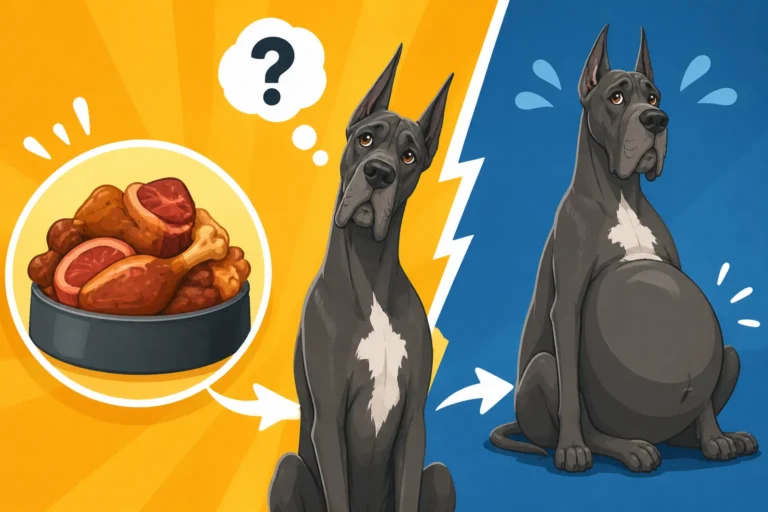
One of the most critical feeding considerations for Great Danes, regardless of age, is the risk of bloat, medically known as Gastric Dilatation-Volvulus (GDV). This life-threatening condition, where the stomach fills with gas and can twist, is tragically common in deep-chested breeds like the Great Dane. While the exact causes are still being researched, large single meals are thought to be a contributing factor. Overfilling the stomach can increase the likelihood of gas accumulation and, potentially, the stomach flipping. This is why Splitting a Great Dane's Meals in Two (or even three) is standard advice. Smaller, more frequent meals help prevent the stomach from becoming overly distended, reducing the risk of a twist.
Beyond just splitting meals, it's also crucial to control activity levels around feeding times. A frantic dash for the food bowl, gulping down food quickly, and then engaging in vigorous exercise shortly after eating can all elevate bloat risk. We often talk about creating a "quiet hour" before and after meals – a period of calm where your Great Dane isn't running, jumping, or stressing. This allows their digestion to proceed peacefully. The Hour Either Side of a Great Dane's Meal is a non-negotiable rule in many Great Dane households. To further slow down speedy eaters, consider using slow feeder bowls, which are widely available from retailers like Chewy and Amazon. These bowls have raised obstacles that force your dog to eat around them, making them take more time and swallow less air.
The Treat Trap: Hidden Calories Add Up Fast
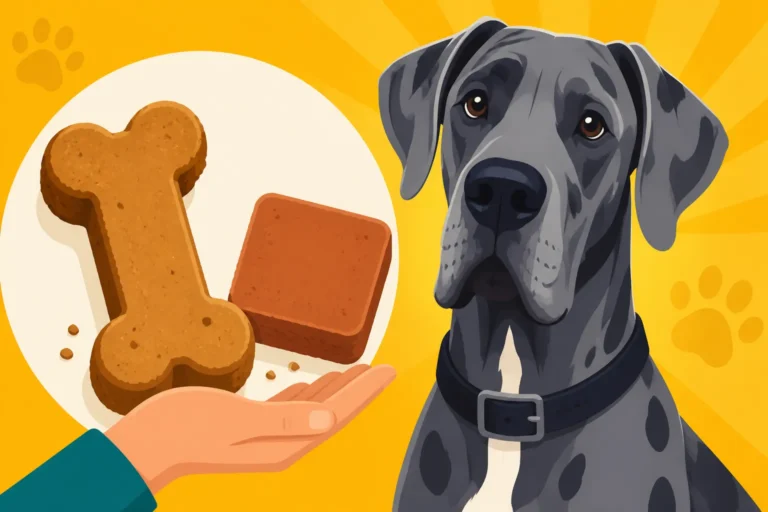
Let's be honest, resisting those giant, pleading Great Dane eyes when they're asking for a treat is incredibly hard! But for a breed so prone to joint issues and the general health problems associated with excess weight, the "treat trap" is a real concern. What might seem like a small, insignificant treat for a human or even a smaller dog can add significant, often unnoticed, calories to a Great Dane's daily intake. If you're diligently measuring out their kibble, but then liberally handing out high-calorie treats throughout the day, you're effectively sabotaging your efforts to maintain their ideal body condition. Those extra calories from treats can quickly lead to weight gain, putting more stress on their joints and organs, and potentially negating the benefits of their carefully portioned meals.
It's not that treats are entirely off-limits, but they need to be factored into the overall calorie count and chosen wisely. Opt for low-calorie, healthy alternatives. Carrots, green beans, or slices of apple (without seeds) can be excellent, satisfying, and low-calorie options. Some commercial training treats are also very small and low in calories, designed for frequent use. If you use higher-calorie training treats, remember to reduce the main meal portion accordingly. Think of treats as a small bonus, not a significant portion of their daily diet. Every calorie counts when you're managing the weight of a dog who weighs as much as an adult human.
Adapting Calorie Intake Throughout Your Great Dane's Life
A Great Dane's nutritional needs are not static; they evolve significantly from puppyhood through their senior years. What works for a rapidly growing adolescent will be entirely inappropriate for a mature, sedentary adult or an aging dog with changing metabolic rates. Regularly assessing and adapting their calorie intake is a critical component of lifelong health management.
Puppy to Adolescent: Navigating Rapid Changes
The journey from a tiny Great Dane puppy to a towering adolescent is nothing short of incredible, but it's also a period of immense change in their caloric needs. Initially, a very young puppy (say, 8-16 weeks) requires a high density of calories and nutrients to fuel their astronomical growth. However, as they hit their major growth spurts, usually between 4 and 12 months, their rate of growth needs to be carefully managed. They may be A Great Dane at Half Its Adult Weight by Six Months, which is staggering, but that doesn't mean we should push more food. Their calorie intake during this phase should support steady, lean development rather than rapid weight gain. As they transition from puppy to a gangly teenager, their calorie per pound requirement will gradually decrease, even as their overall volume of food increases due to their growing body mass.
During adolescence (roughly 12-24 months), they continue to fill out and mature, even if their height growth slows. This is a time when their energy needs might still be relatively high due to their active nature, but the risk of growth plate issues has lessened. You'll need to continuously adjust their food portions based on their Body Condition Score and activity level, often weekly or bi-weekly. It’s a constant dance of observation and adjustment. Consulting with your veterinarian frequently during these critical developmental stages is paramount to ensure they are on the right growth curve and receiving adequate, but not excessive, nutrition.
Adult Maintenance: The Steady State
Once your Great Dane reaches maturity, typically between 18-24 months of age, their growth plates have closed, and their body has generally finished developing. This ushers in the "adult maintenance" phase, where the primary goal is to maintain an ideal, lean body condition without promoting weight gain or loss. During this period, their calorie requirements will stabilize compared to the rapid fluctuations of puppyhood, but they are still subject to change based on lifestyle. An adult Dane who is a weekend warrior at the dog park will naturally need more calories than one who prefers leisurely strolls and extensive couch time.
This is also the point where factors like spaying or neutering come into play. Adjusting Food After a Great Dane Is Neutered is crucial, as the removal of sex hormones often leads to a decrease in metabolic rate, meaning they need fewer calories to maintain the same weight. If you continue to feed the same amount after neutering, weight gain is almost inevitable. Regular monitoring of their Body Condition Score remains the most important tool. Feel those ribs, check that waistline, and be prepared to slightly decrease or increase their food by small increments (often just a quarter or half cup of kibble per day) to keep them in peak condition. This proactive approach helps prevent the onset of obesity-related health issues later in life.
Senior Years: Metabolism Slows, Needs Change
As your Great Dane enters their senior years, generally around 5-6 years old (given their The Seven to Ten Year Great Dane Lifespan), their metabolism will naturally begin to slow down. They might become less active, spending more time sleeping and less time running and playing. This reduced activity and slower metabolism mean their calorie requirements will likely decrease further. Continuing to feed a senior Great Dane the same amount of food they ate in their prime can quickly lead to weight gain, which can exacerbate existing joint pain (like arthritis, which is common in older Danes) and put extra strain on their cardiovascular system.
However, it's not simply about cutting calories. Senior Great Danes may also face new nutritional challenges. Some might struggle to chew harder kibble due to dental issues, while others might start losing muscle mass even if their weight stays stable. Feeding and Grooming an Old Great Dane often involves considering foods designed for senior dogs, which typically have slightly lower calorie counts, increased joint support ingredients (like glucosamine and chondroitin), and sometimes higher quality, more digestible protein to help maintain muscle mass. If they have specific health conditions, such as heart disease or kidney issues, their diet might need to be further tailored in consultation with your veterinarian. Regularly assess their weight, monitor their activity levels, and ensure their diet supports their comfort and health in their golden years, even if it means a significant reduction from their adult portions.
Disclaimer
This article is for general informational purposes only and does not constitute professional advice. Laws, prices and regulations vary by location and change over time. Consult a qualified professional for guidance on your specific situation.