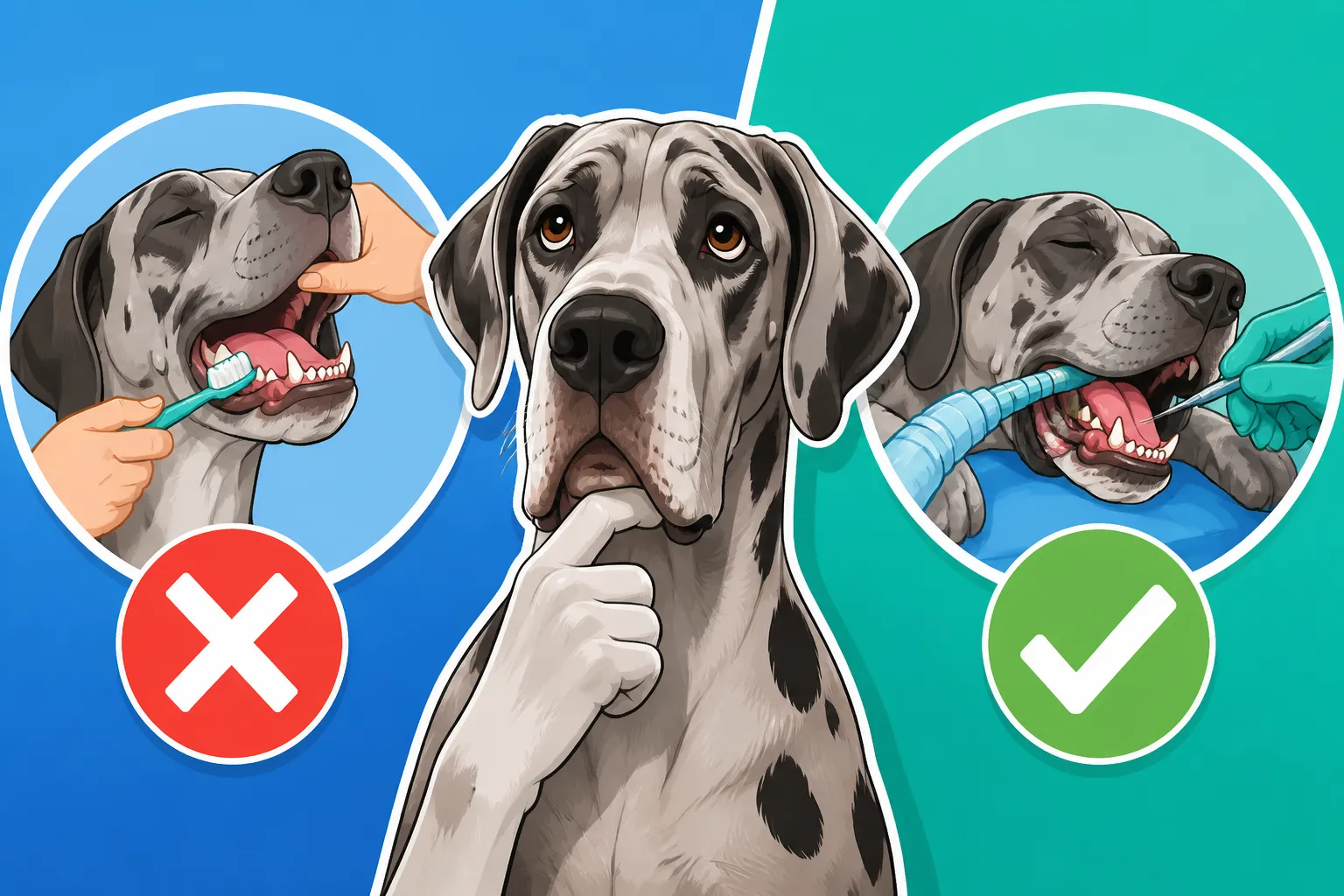
Whether a Great Dane’s Teeth Need Annual Sedation
It’s a natural worry for any Great Dane owner: the thought of your magnificent, beloved giant undergoing general anesthesia for something as routine as a dental cleaning. These aren't small dogs, and the risks associated with sedation for such a massive creature can feel overwhelming. This guide is here to walk you through the realities of Great Dane dental health, why professional cleaning might involve sedation, the risks involved, and how you can make the best, most informed decision for your gentle giant's pearly whites.
Why Dental Health is So Much More Than Fresh Breath for Your Great Dane
We all love a good slobbery Great Dane kiss, but let's be honest, sometimes that breath can knock you over! While bad breath is often the first sign we notice, it's actually just the tip of the iceberg when it comes to canine dental health. For a breed as large and stoic as the Great Dane, dental disease can progress silently, causing significant pain and health complications long before you ever see a visible problem.
The Hidden Dangers of Plaque and Tartar Buildup
It starts innocently enough with plaque – a sticky film of bacteria, food particles, and saliva that constantly forms on your dog's teeth. If not removed regularly, this plaque quickly hardens into tartar, a calcified, rough substance that becomes almost impossible to brush away at home. This tartar then acts like a magnet for more plaque, creating a vicious cycle. You might notice yellow or brown stains near the gum line, particularly on those big back molars. This is the visible sign of a brewing problem.
What many don't realize is that this buildup isn't just cosmetic. The bacteria thrive in the tartar, irritating the gums and leading to gingivitis, which is inflammation of the gums. This is often reversible with professional cleaning. However, if left unchecked, gingivitis progresses to periodontal disease. This is where the real trouble starts. The inflammation spreads below the gum line, attacking the supporting structures of the teeth – the ligaments, bone, and roots. This is incredibly painful and can lead to:
- Loose teeth: Imagine trying to eat with a loose tooth; it's excruciating.
- Abscesses: Pockets of infection can form in the gums or jawbone, sometimes causing swelling on the face or under the eye.
- Bone loss: The jawbone can actually erode, weakening it and making it prone to fractures, especially in a powerful chewer like a Great Dane.
- Systemic infections: The bacteria from the mouth don't just stay there. They can enter the bloodstream and travel to vital organs like the heart, kidneys, and liver, causing serious secondary infections and worsening existing conditions. You might have heard about the link between poor dental health and The Heart Muscle Disease Great Danes Are Prone To or kidney issues in older dogs.
Given their typically shorter lifespans, every year counts, and a Great Dane living with chronic dental pain or infection isn't living its best life. They are masters at hiding discomfort, so by the time you notice they're reluctant to eat hard food or are pawing at their mouth, the problem is often quite advanced. This is why proactive dental care is paramount.
Why a Great Dane's Mouth is a Special Case
A Great Dane's mouth is, simply put, big. This means more surface area for plaque and tartar to accumulate. Their large teeth can also make some home care methods a bit more challenging than with a smaller breed. Think about trying to properly clean around those massive back molars! Plus, the sheer force of their bite means any dental issue, like a fractured tooth, can be quite severe. Plaque on a Great Dane's Back Molars can become extensive before it’s even visible.
Furthermore, Great Danes, like many large breeds, can be prone to certain health conditions that make anesthesia a bigger consideration. Conditions such as Dilated Cardiomyopathy (DCM) mean that careful anesthetic protocols are even more critical. The Heart Muscle Disease Great Danes Are Prone To and Anesthesia Risk in a Great Dane are real concerns that a responsible vet will always consider. Therefore, annual dental check-ups, even if a full cleaning isn't needed, are vital to catch issues early.
The Realities of Sedation for Great Dane Dental Procedures
When your vet recommends a professional dental cleaning, it almost always involves sedation, or general anesthesia. For many Great Dane owners, this immediately raises a red flag. The size of these dogs, combined with anecdotal fears about "going under," can make this recommendation a source of significant anxiety. Let's break down what this truly means.
Why Sedation is Necessary for a Proper Cleaning
Imagine trying to convince your hundred-plus-pound Great Dane to hold still, open their mouth wide, and let someone scrape sharp tools under their gum line for an hour or more. It's simply not possible, or safe, to perform a thorough dental cleaning on a conscious dog, especially one the size of a Great Dane. Anesthesia allows the veterinary team to:
- Perform a comprehensive oral exam: This includes checking every tooth, the gums, tongue, and palate for abnormalities, lesions, or hidden pockets of infection.
- Scale and polish all tooth surfaces: This involves using specialized ultrasonic scalers to remove plaque and tartar from above and, critically, below the gum line. This sub-gingival cleaning is impossible on a conscious animal and is the key to preventing and treating periodontal disease. After scaling, polishing smooths the tooth surface, making it harder for plaque to adhere quickly.
- Take dental X-rays: Just like in humans, most dental disease occurs below the gum line, hidden from view. X-rays are essential for assessing the health of the tooth roots, jawbone, and detecting abscesses, un-erupted teeth, or bone loss. This is a non-negotiable part of modern veterinary dentistry for a truly comprehensive assessment.
- Perform extractions or other necessary procedures: If a tooth is severely diseased, fractured, or causing pain, it needs to be extracted. This is a surgical procedure that requires proper anesthesia and pain management.
- Ensure safety and comfort: By being completely still and pain-free, your Great Dane won't experience stress or fear during the procedure, and the veterinary team can work efficiently and safely, minimizing the risk of accidental injury to the dog or themselves.
Without anesthesia, any "cleaning" is merely a cosmetic surface scrape, missing the critical area below the gum line where most disease lurks. This can give a false sense of security while actual disease progresses unnoticed.
Addressing the Anesthesia Concerns for Giant Breeds
It's completely valid to be concerned about anesthesia for your Great Dane. Their large size does present some unique considerations, but modern veterinary anesthesia is far safer than it once was, especially when performed by an experienced team.
Here's how a responsible veterinary practice approaches anesthesia for a Great Dane:
- Pre-anesthetic Screening: This is absolutely non-negotiable. Before any sedation, your Great Dane will undergo a thorough physical examination and pre-anesthetic bloodwork. This bloodwork screens for underlying issues with the liver, kidneys, and blood cells that could affect how your dog metabolizes anesthetic drugs or recovers. In Great Danes, given their predisposition to certain heart conditions, an electrocardiogram (ECG) or even a pre-anesthetic echocardiogram might be recommended, especially as they get older. Pre-Surgery Bloodwork on a Great Dane is crucial for mitigating risks.
- Tailored Anesthetic Protocols: Anesthesia isn't a one-size-fits-all approach. Your vet will develop a specific anesthetic plan based on your Great Dane's age, weight, health status, and any pre-existing conditions. Drugs are chosen and dosed carefully, often using a combination of medications to achieve effective sedation with lower doses of each, minimizing side effects.
- Intravenous (IV) Catheter and Fluids: An IV catheter is placed to administer fluids throughout the procedure. This helps maintain blood pressure, supports organ function, and provides immediate access for emergency medications if needed.
- Advanced Monitoring: During the entire procedure, your Great Dane will be continuously monitored by a dedicated veterinary technician. This involves tracking vital signs like heart rate, breathing rate, blood pressure, oxygen saturation, carbon dioxide levels, and body temperature. Specialized equipment helps ensure that these parameters stay within safe ranges.
- Warmth and Recovery: Great Danes can lose body heat quickly under anesthesia, so measures like heated tables and warming blankets are used. Post-procedure, they are closely monitored in a warm, quiet recovery area until they are fully awake and stable. Pain medication is also administered to ensure a comfortable recovery, especially if extractions were performed.
While risks can never be entirely eliminated, these stringent protocols significantly minimize them. The biggest risk is often not addressing serious dental disease, which can lead to more severe health issues down the line. When considering Sedation Costs on a Great Dane, remember that these prices reflect not just the drugs, but the skilled personnel, advanced monitoring, and safety measures involved.
| Feature | Sedated Dental Cleaning | Anesthesia-Free Dental Cleaning (NAD) |
|---|---|---|
| Thoroughness | Complete, including under gum line scaling, polishing, X-rays | Primarily cosmetic surface plaque removal above gum line |
| Pain/Stress | None during procedure (pain management administered), minimal stress | Can be very stressful and painful if existing issues, dog struggles |
| Safety | Requires pre-anesthetic work, continuous monitoring; risks carefully managed | Lower immediate risk from anesthesia, but underlying issues often missed; potential for injury if dog moves |
| Dental X-rays | Possible and recommended for assessing root health | Not possible, leading to missed sub-gingival disease |
| Extractions | Possible and safely performed if needed | Not possible, requiring a separate sedated procedure later |
| Duration | Generally 1-3 hours, depending on severity | 30 minutes – 1 hour, limited by dog's tolerance |
| Cost | Higher (includes anesthesia, monitoring, X-rays, medication) | Lower (surface cleaning only, fewer personnel/equipment) |
| Who Performs | Veterinarian and veterinary technicians, fully trained | Often laypersons or technicians, not typically a licensed vet |
| Long-Term Efficacy | Prevents and treats periodontal disease, maintains overall oral health | Temporarily improves appearance, does not address root cause |
Alternatives and Preventative Care for Great Dane Teeth
While professional dental cleanings under sedation are sometimes necessary, especially for advanced disease, there's a lot you can do at home to minimize the frequency of these procedures and keep your Great Dane's mouth as healthy as possible. Think of it like your own dental care: brushing and flossing at home are essential, but you still need professional cleanings!
The Power of Daily Brushing
This is, hands down, the most effective home care method for preventing plaque and tartar buildup. Brushing removes plaque before it has a chance to harden into tartar. Yes, we're talking about brushing a Great Dane's teeth, and yes, it sounds like a challenge! But with patience and positive reinforcement, it's absolutely doable.
- Start early: If you have a Great Dane puppy, start getting them used to having their mouth handled from day one. Gently rub their gums and teeth with your finger, then a finger brush, then a soft dog toothbrush.
- Make it positive: Use plenty of praise and high-value treats (like a little smear of peanut butter on the brush, or a yummy dental treat from Chewy or Amazon after brushing). Keep sessions short and fun.
- Use dog-specific toothpaste: Never use human toothpaste, as it contains ingredients that are toxic to dogs. Pet toothpastes come in flavors dogs often love, like poultry or beef.
- Focus on the outside: Most plaque builds up on the outer surfaces of the teeth, especially the upper molars, which are easier to reach.
- Consistency is key: Aim for daily brushing. Even every other day is better than nothing! Whether a Great Dane's Teeth Get Brushed at All explores methods and tips in more detail.
You might be surprised how quickly your Great Dane can get used to this routine. It becomes just another part of their day, especially if there's a treat involved!
Dental Chews, Water Additives, and Special Diets
Beyond brushing, there are other tools in your arsenal for maintaining oral hygiene:
- Dental Chews: Not all dental chews are created equal. Look for products that are clinically proven to reduce plaque and tartar, and ensure they are appropriately sized for a Great Dane. A chew meant for a small dog won't last long or be effective for your giant! Brands often formulate chews specifically for large and giant breeds. Always supervise your dog when they're enjoying a chew to prevent choking, and factor these into their daily calorie intake. Dental Chews Big Enough for a Great Dane are a must-have.
- Water Additives: These are liquid supplements that you add to your dog's drinking water, designed to reduce bacteria and plaque formation. They are relatively easy to use, but their efficacy can vary, and they work best in conjunction with other dental care methods.
- Dental Diets: Some kibble brands formulate specific dental diets with unique textures or ingredients designed to "scrub" the teeth as your dog chews or to reduce plaque-forming bacteria. These can be a good option, especially for Danes who resist brushing.
- Mouth Rinses and Gels: Similar to human mouthwash, these can help reduce bacteria. Some gels can be applied directly to the teeth and gums.
While these products can be helpful, it's crucial to understand their limitations. They are aids to dental health, not replacements for brushing or professional cleanings. They cannot remove existing tartar below the gum line or address advanced periodontal disease. Always discuss with your vet which products are best suited for your Great Dane's specific needs.
The Problem with "Anesthesia-Free Dentals"
You might encounter services advertising "anesthesia-free dentals" or "non-anesthetic dentals" (NADs). These are often appealing to owners worried about sedation. However, for a Great Dane, or any dog, they are generally not recommended for a proper dental cleaning.
Here's why:
- Surface-level cleaning only: Without anesthesia, it's impossible to thoroughly clean under the gum line, where periodontal disease primarily develops. Only visible plaque and tartar on the crown of the tooth are removed, giving a false sense of security.
- Pain and stress: Imagine someone scraping at your teeth and gums, potentially with existing painful disease, while you're awake. It's incredibly stressful and can be painful for the dog, potentially leading to a negative association with oral care.
- No X-rays or extractions: Without sedation, dental X-rays cannot be taken, so any hidden problems below the gum line are completely missed. Diseased or fractured teeth requiring extraction cannot be addressed.
- Risk of injury: A conscious, potentially stressed dog can move suddenly, risking injury to their mouth from sharp dental instruments.
- Legality and training: In many regions, only licensed veterinarians are legally allowed to diagnose and treat dental disease, which includes scaling below the gum line and performing extractions. NADs are often performed by individuals without full veterinary training, further compromising the quality and safety of the procedure.
While a quick surface polish might make teeth look better, it doesn't address the underlying health issues. For a Great Dane, especially with their potential for systemic health issues, a cosmetic fix is not enough.
Making the Decision: Is Annual Sedation Right for Your Dane?
So, back to the big question: does your Great Dane need annual sedation for their teeth? The answer, like with many aspects of their care, isn't a simple yes or no. It depends on several factors, and it’s a decision best made in close consultation with your trusted veterinarian.
Factors Influencing the Frequency of Dental Cleanings
Several elements play a role in how often your Great Dane might need a professional dental cleaning under sedation:
- Genetics: Some Great Danes are simply more prone to plaque and tartar buildup than others, regardless of home care. Just like some people are more cavity-prone, some dogs have a genetic predisposition to dental disease.
- Diet: While wet food might be easier to eat, it can sometimes contribute to more plaque buildup than dry kibble, which offers some mild abrasive action. However, even the best kibble won't replace brushing.
- Chewing habits: Dogs who regularly chew on appropriate dental chews or toys tend to have less buildup than those who don't.
- Home care routine: As discussed, daily brushing makes a huge difference. If you're diligent with home care, you might be able to extend the time between professional cleanings.
- Age: Older Great Danes, especially those Caring for a Great Dane Past Six, often accumulate more tartar and are more likely to have existing periodontal disease or dental pain. Their teeth have simply had more time to accumulate wear and tear.
- Overall health: A Great Dane with underlying health conditions, such as heart disease, might have a heightened risk for anesthesia. However, neglecting dental disease in these dogs can also exacerbate their other conditions, creating a tough balance. Your vet will weigh these risks carefully.
For some Great Danes, an annual cleaning might indeed be the ideal schedule to stay ahead of plaque and tartar and catch any issues early. For others, particularly those with excellent home care and no genetic predisposition, a cleaning every 18 months to two years might suffice, following a yearly check-up.
The Cost and Value of Proactive Dental Care
There's no sugarcoating it: veterinary dental procedures, especially for a Great Dane, are a significant investment. The cost reflects the specialized equipment, the anesthetic drugs, the dedicated staff monitoring your giant, the X-rays, and any extractions or medications needed. It can feel like a lot to budget for each year, alongside other routine Great Dane expenses like Monthly Food Spending on a Great Dane or The Yearly Checkup a Great Dane Needs.
However, consider the alternative: if dental disease progresses untreated, it can lead to far more painful, complicated, and expensive problems down the road. Treating severe infections, managing chronic pain, or performing multiple complex extractions can easily cost far more than a routine annual cleaning. Not to mention the impact on your Great Dane's quality of life. Proactive care is truly preventative care in this instance. It's about investing in their long-term health and comfort, rather than waiting for an emergency.
Many pet insurance providers offer plans that can help offset the cost of routine dental care or cover unexpected dental surgeries. It's worth researching these options, especially when your Great Dane is young and healthy, before any pre-existing conditions develop.
Partnering with Your Veterinarian
Ultimately, the decision regarding the frequency of professional dental cleanings for your Great Dane should be a collaborative one between you and your veterinarian.
- Regular Check-ups: Ensure your Great Dane has a thorough oral exam at their annual wellness check-up. This allows your vet to assess the current state of their teeth and gums.
- Be Open About Home Care: Honestly discuss your home care routine (or lack thereof!). Your vet can offer tips, demonstrate brushing techniques, and recommend appropriate dental products from reliable sources like Chewy or Amazon.
- Discuss Concerns: Don't hesitate to voice your concerns about anesthesia. A good vet will take the time to explain their protocols, discuss the risks and benefits, and work with you to create a plan that addresses both your Great Dane's needs and your comfort level. They might even offer alternative strategies or a slightly different timeline based on their assessment.
- Monitor at Home: Between vet visits, regularly lift your Great Dane's lips and check their teeth. Look for signs like bad breath, red or swollen gums, yellow or brown buildup, broken or loose teeth, or any changes in their eating habits. If you notice anything concerning, schedule a visit.
While the idea of your Great Dane needing annual sedation for dental work can be daunting, remember that it's a critical component of their overall health and well-being. With thorough pre-anesthetic screening, modern monitoring, and a skilled veterinary team, the risks are significantly mitigated, and the benefits of a pain-free, healthy mouth far outweigh the concerns. By combining diligent home care with professional veterinary attention, you can help your gentle giant maintain a healthy smile and live a happier, more comfortable life for as long as possible.
Disclaimer
This article is for general informational purposes only and does not constitute professional advice. Laws, prices and regulations vary by location and change over time. Consult a qualified professional for guidance on your specific situation.