Whether Adult Food Slows a Great Dane’s Growth
One of the biggest worries for any new Great Dane parent is watching their tiny puppy transform into a massive adult in what feels like mere weeks. This rapid growth spurt often leads to concerns about ensuring healthy development, and a common question that pops up is whether feeding adult dog food to a Great Dane puppy can help slow down their growth, preventing potential health issues down the line. This guide will dive deep into the nutritional science behind Great Dane growth and explore the pros and cons of feeding adult formulas to growing giants.
The Unique Growth Needs of a Great Dane Puppy
Great Danes are undeniably impressive, but their sheer size comes with unique challenges, especially during their puppyhood. Unlike smaller breeds that reach maturity quickly, Great Danes take their sweet time, often not finishing their physical development until they're 18 to 24 months old. This prolonged growth period requires a very specific nutritional approach to support their developing skeletal structure without overburdening it.
Why Giant Breed Puppies Are Different
Imagine trying to build a skyscraper versus a small cottage. You wouldn't use the same materials or rush the process, right? The same principle applies to Great Danes. Their bones, joints, and muscles are undergoing a tremendous transformation, and they need a carefully balanced diet to ensure this happens at a controlled, steady pace. Standard puppy foods, while excellent for smaller breeds, are often too rich in calories and calcium for a giant breed. They're designed to fuel rapid growth, which is exactly what we want to avoid with a Great Dane. Instead, we want slow, sustained development. This controlled approach is why you'll often hear discussions about Why a Great Dane Puppy Should Grow Slowly. It's not about making them smaller, but about helping them grow healthier.
The concern isn't just about weight gain, though that's part of it. It's primarily about the intricate balance of minerals that dictate bone development. Too much of certain nutrients can disrupt this delicate process, leading to orthopedic problems. Your Great Dane puppy's diet needs to provide enough energy for their daily antics and growth, but not so much that they experience unnatural spurts. This is a critical distinction that many new owners, understandably, aren't aware of.
The Dangers of Too-Fast Growth
When a Great Dane puppy grows too quickly, their bones and cartilage don't have adequate time to develop properly. This can lead to a host of debilitating orthopedic conditions that can cause pain, limit mobility, and incur significant veterinary costs throughout their lives. Conditions like osteochondritis dissecans (OCD), a joint disease where cartilage detaches from the bone, or hypertrophic osteodystrophy (HOD), an inflammatory bone disease, are unfortunately more common in giant breeds pushed to grow too fast. Why Fast Growth Wrecks Great Dane Joints is a topic that resonates deeply with owners who've seen their beloved Danes suffer.
The issue largely revolves around an imbalance of calcium and phosphorus, and an excess of calories. While calcium is vital for bone health, too much calcium in a growing giant breed puppy can be detrimental, interfering with the skeletal system's natural remodeling process. Imagine a foundation being built too quickly without enough time for the concrete to set properly – it will be structurally unsound. These conditions aren't just minor aches; they can be severely painful, requiring extensive medical management, special diets, or even surgery. The goal of responsible Great Dane nutrition is to provide a diet that supports steady, even growth, allowing all body systems to mature in harmony.
Understanding "Adult Food" for a Growing Great Dane
The term "adult food" can be a bit misleading when we're talking about giant breed puppies. It's not about feeding them any adult formula, but rather understanding the nutritional profile that benefits their specific developmental needs. The key lies in the nutrient balance, not just the label.
What "Adult Food" Means in the Context of Giant Breeds
When people consider feeding adult food to a Great Dane puppy, they're often trying to achieve a specific nutritional balance. The primary concern is typically the calcium-to-phosphorus ratio and the overall calorie density. Many standard puppy foods, designed for a wider range of breeds, have higher calcium levels and are more calorie-dense to support the rapid growth of smaller dogs. For a Great Dane, this can be problematic.
However, "adult food" itself is a broad category. Not all adult foods are created equal, and some may still be too high in calories or have an inappropriate mineral balance for a giant breed puppy. What we're really aiming for, if considering an adult formula, is one that offers:
- Moderate Protein: Sufficient for muscle development without excess.
- Moderate Fat: Enough for energy and healthy skin/coat, but not so much that it leads to rapid weight gain.
- Controlled Calcium and Phosphorus: The ideal calcium-to-phosphorus ratio for large and giant breed puppies is often slightly lower than that found in typical small-to-medium breed puppy foods, generally within a range that an "all life stages" or even some carefully selected adult formulas might offer. It's not just the amount, but the ratio that matters. You can learn more about Calcium and Phosphorus in a Great Dane Puppy Bowl to grasp the critical balance.
- Lower Calorie Density: This helps prevent excessive weight gain and, consequently, too-rapid growth, allowing the skeletal system to mature at a more natural pace.
It’s crucial to scrutinize the nutritional labels, perhaps more so than with any other breed, to ensure the chosen food aligns with these requirements. Reputable brands that specialize in large and giant breed formulas, often found on platforms like Chewy, will specifically address these concerns, whether their bag says "large breed puppy" or "all life stages."
The Goal: Lean, Controlled Development
The ultimate aim in feeding a Great Dane puppy is not just to "slow down growth" but to foster lean, controlled development. This means ensuring they grow into their adult size at a steady, healthy rate, rather than bulking up too quickly. A Great Dane puppy should look lanky, almost gangly, as they grow. You should be able to easily feel their ribs, but not see them protruding sharply. This "lean growth" approach minimizes stress on their developing joints and bones. Whether a Great Dane Puppy Should Be Kept Lean isn't just about aesthetics; it's a foundational principle for their long-term health.
The idea of feeding an "adult" food, when done correctly and under veterinary guidance, is an attempt to replicate the lower calorie and controlled mineral profile found in specialized large breed puppy formulas. It's about preventing obesity and promoting a slower, more deliberate growth curve. Imagine trying to sprint a marathon versus pacing yourself – the latter ensures you reach the finish line in better condition. For a Great Dane, a steady pace throughout puppyhood helps prevent significant Bone Development Problems in a Great Dane Puppy that could impact them later in life. This also involves careful monitoring of their body condition. Regularly feeling their ribs and checking their energy levels helps ensure they're on the right track.
The Pros and Cons of an Early Switch
Deciding when and if to switch a Great Dane puppy to an adult formula is a nuanced decision. There are potential benefits, particularly if you're struggling to find an appropriate giant breed puppy food, but also significant risks if not managed correctly.
Potential Benefits
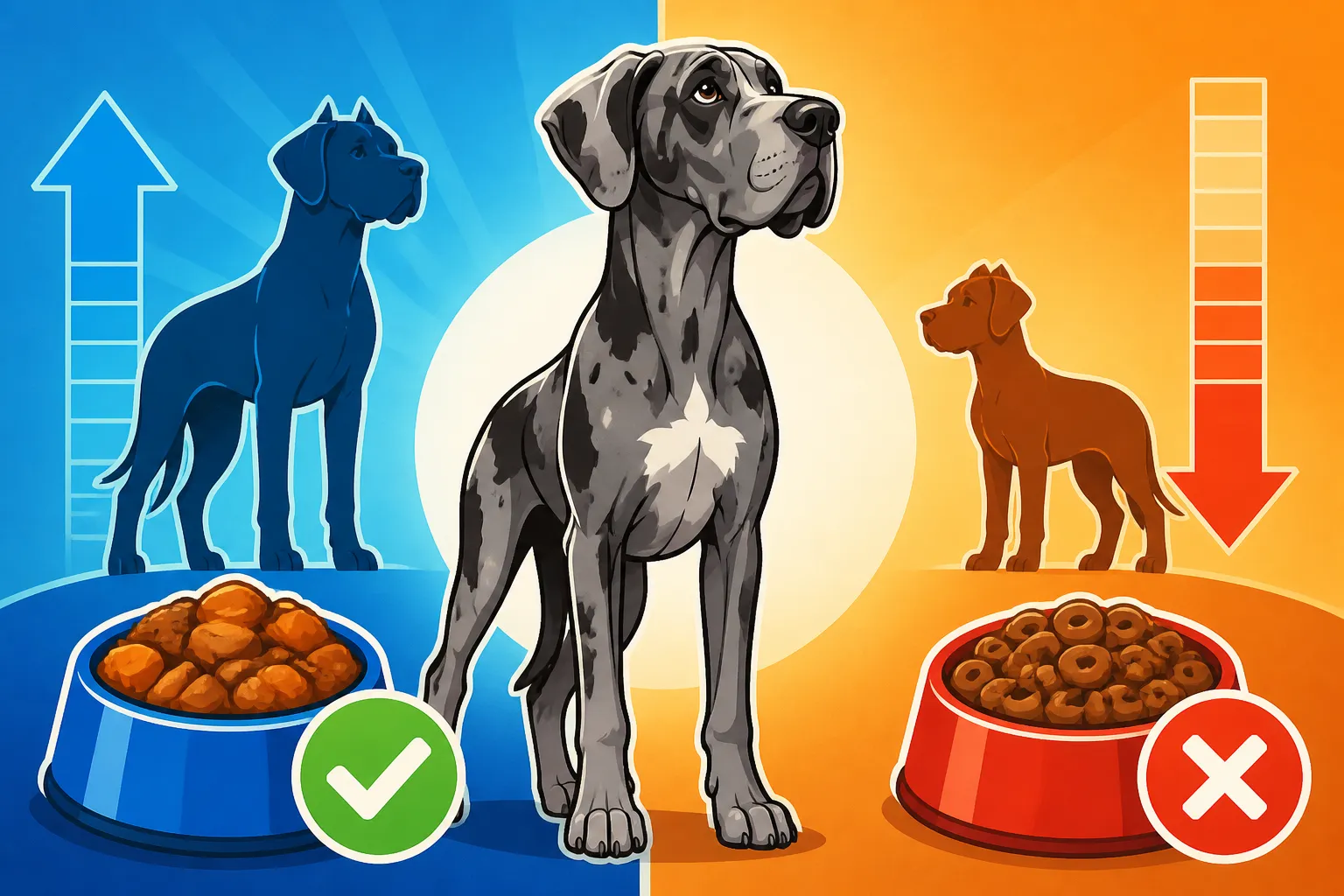
For some Great Dane owners, feeding an adult food, or an "all life stages" formula, to a growing puppy might seem like a practical solution to concerns about rapid growth. One of the main perceived benefits is the ability to better control the rate of growth. Many standard puppy foods are very high in calories, designed to pack on weight and speed up development, which is counterproductive for a giant breed. By switching to a carefully selected adult formula, owners aim to provide fewer calories per serving, thereby encouraging a slower, more measured increase in size. This can be particularly appealing if finding specific "giant breed puppy" formulas proves difficult in your area or through your preferred retailers.
Another potential benefit is the calcium-to-phosphorus ratio. As mentioned earlier, excessive calcium is detrimental to a giant breed puppy's developing skeleton. Some adult formulas naturally have a lower calcium content and a more appropriate calcium-to-phosphorus ratio than generic puppy foods. This can help prevent the rapid bone mineralization that contributes to conditions like OCD and HOD. Owners might also feel that switching to a more readily available adult food simplifies their feeding regimen, especially if they are already feeding multiple dogs of different ages. However, this convenience should never outweigh the specific nutritional needs of their growing Dane.
Potential Risks
Despite the potential benefits, switching a Great Dane puppy to adult food too early or without proper guidance carries significant risks. The most prominent danger is nutritional deficiency. Adult dog foods are formulated for the maintenance needs of mature dogs, not the intense developmental demands of a growing puppy. Puppies, especially giant breeds, require higher levels of certain nutrients, such as protein and specific vitamins and minerals, to build muscle, develop organ systems, and support their immune function. An adult diet might simply not provide enough of these critical components. If you're considering this route, you must understand Why Regular Puppy Food Hurts a Great Dane if it's not a giant breed specific formula, but also acknowledge the nutritional gaps adult food might present.
Furthermore, even if the calorie content seems lower, the balance of other nutrients might be off. For instance, while too much calcium is bad, too little can also be detrimental, leading to improper bone formation or other deficiencies. An adult food not specifically designed for large breeds might not have the correct ratios or bioavailability of essential trace minerals crucial for healthy growth. Another risk is the potential for inadvertent calorie restriction if the adult food is too low in energy, which can lead to an undernourished puppy that struggles to meet its growth potential in a healthy way. While we want slow growth, we don't want stunted or deficient growth. Owners might find themselves needing to supplement, which can be tricky to do correctly without upsetting the delicate balance. This is why discussions around Whether an Underfed Great Dane Puppy Catches Up highlight the importance of proper, consistent nutrition from the start.
Making the Right Nutritional Choices for Your Dane
Navigating the world of dog food for a Great Dane puppy can feel like a minefield, given their special needs. The best approach is always an informed one, rooted in professional advice and careful observation of your individual dog.
Consulting Your Veterinarian
This cannot be stressed enough: your veterinarian is your most valuable resource when it comes to your Great Dane's nutrition. Before making any significant dietary changes, especially something like switching a puppy to an adult food, you absolutely must consult with your vet. They have a comprehensive understanding of your specific puppy's health, growth curve, and any individual predispositions. They can assess your puppy's current body condition, discuss the specific nutrient profile of the food you're considering, and advise on whether it's appropriate.
A vet can also help you understand how to Weighing a Great Dane's Ration correctly, ensuring your dog gets the exact amount of food needed without over or underfeeding. They can recommend specific brands or formulations that meet the strict requirements for giant breed growth and help you interpret complex nutritional labels. Sometimes, what seems like a good idea on paper might not be the best for your particular puppy. Your vet might suggest sticking to a high-quality large or giant breed puppy formula until a certain age, or they might endorse a specific "all life stages" food that meets the criteria. This personalized guidance is invaluable for setting your Great Dane up for a healthy life.
Selecting the Right Food Formula
When it comes to actually picking a food, you have a few main options, each with its own considerations for a Great Dane puppy:
- Giant Breed Puppy Formulas: These are specifically designed with the lower calorie density and controlled calcium/phosphorus levels necessary for slow, steady growth in breeds like Great Danes. They aim to prevent the orthopedic problems associated with rapid growth. Brands like Royal Canin, Eukanuba, and Purina Pro Plan often offer excellent giant breed puppy formulas. These are generally the safest and most recommended choice because they take much of the guesswork out of nutrient balancing. You should carefully review What to Look For on a Great Dane Puppy Food Bag to ensure it meets the appropriate standards.
- "All Life Stages" Formulas: Some dog foods are formulated to meet the nutritional requirements for all life stages, from puppyhood through adulthood. These can be a viable option for Great Danes if their nutritional analysis (calcium, phosphorus, calorie content, protein, fat) falls within the recommended ranges for giant breed puppies. The key here is diligent label reading and, again, veterinary consultation. These foods are designed to be safe for puppies but often aren't as calorie-dense as typical puppy foods. Many online retailers like Amazon and Chewy offer a wide selection of these, making it easier to compare nutritional values side-by-side.
- Adult Maintenance Formulas (with caution): If you choose to go this route, extreme caution and veterinary guidance are paramount. You'd be looking for an adult food that is not excessively high in protein, fat, or calories, and most importantly, has a calcium level and calcium-to-phosphorus ratio appropriate for a giant breed puppy. This is less common to find in standard adult foods, as they generally assume a fully grown dog with different metabolic needs. Many owners find brands like Ollie, which offer fresh, customized meal plans, can sometimes be adjusted to meet these specific needs under close professional guidance, though the volume needed for a Great Dane can be substantial. The primary reason for considering this is usually to specifically manage growth rate and avoid excessive nutrients found in typical puppy foods, but the risks of deficiency are high without expert oversight.
Regardless of the category, always aim for foods from reputable manufacturers that conduct extensive feeding trials and have strong veterinary nutrition teams.
Monitoring Your Great Dane's Condition
Once you've settled on a food, your job isn't over. Continuous monitoring of your Great Dane puppy's condition is essential. This means regularly assessing their weight, body condition, energy levels, and overall health.
- Body Condition Scoring: You should be able to easily feel your puppy's ribs without seeing them sharply. There should be a noticeable waist tuck when viewed from above, and an abdominal tuck from the side. If your puppy is looking too thin or too plump, adjustments to their food intake or type might be necessary. Keeping a Great Dane Lean for Its Joints is crucial, but not at the expense of proper nutrition.
- Energy Levels and Play: A healthy Great Dane puppy should be active and playful, but not hyperactive. Lethargy or excessive restlessness could be signs of a nutritional imbalance or other health issues.
- Lameness or Stiffness: Any limping, stiffness, or reluctance to play or move normally could be an early indicator of orthopedic problems. This requires immediate veterinary attention, as it might be related to their growth rate or diet.
- Regular Vet Check-ups: Consistent veterinary visits allow your vet to track your puppy's growth on a The Great Dane Growth Curve Month by Month and make informed recommendations for their diet as they develop. These check-ups are also crucial for early detection of any emerging health concerns.
By combining professional veterinary advice with careful observation and selection of the right food, you can ensure your Great Dane puppy grows into a strong, healthy adult, minimizing the risks associated with their unique growth patterns.
| Feature | Giant Breed Puppy Food (Recommended) | Typical Adult Dog Food (Caution Advised) |
|---|---|---|
| Calorie Density | Moderate, designed for slow, steady growth | Varies widely, usually for maintenance |
| Protein Level | Adequate for muscle development, not excessive | Adequate for adult maintenance |
| Fat Level | Moderate, for sustained energy | Varies, can be higher or lower |
| Calcium Content | Controlled, generally lower than regular puppy food | Varies, for adult bone maintenance |
| Ca:P Ratio | Carefully balanced (e.g., 1.1:1 to 1.5:1) | Varies, may not be ideal for puppy growth |
| Nutrient Balance | Specifically formulated for giant breed development | Formulated for mature dogs' needs |
| Orthopedic Risk | Lower, if fed appropriately | Higher risk of deficiencies or imbalances if used long-term for puppies |
Disclaimer
This article is for general informational purposes only and does not constitute professional advice. Laws, prices and regulations vary by location and change over time. Consult a qualified professional for guidance on your specific situation.