The Boar Hound the Great Dane Descends From
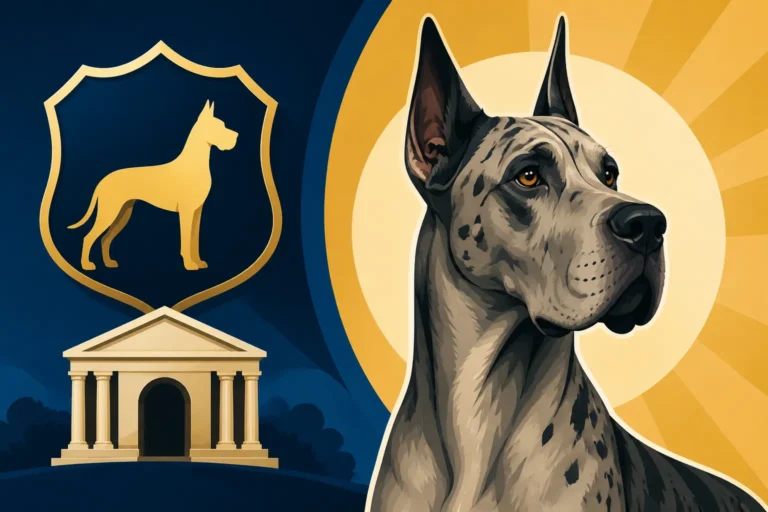
Many Great Dane owners look at their gentle, loving giants sprawled on the sofa and find it hard to imagine them as fearsome hunters. It’s a common disconnect, seeing our sweet "Apollo of Dogs" and then hearing whispers of their past as "boar hounds." This guide will take a deep dive into the powerful, courageous history of the Great Dane, exploring precisely how this magnificent breed came to be known for tackling one of Europe’s most formidable wild animals, and what traces of that legacy remain in our modern companions.
Beyond the Gentle Giant: The Great Dane's Ancient Hunting Roots
It’s easy to get lost in the modern image of the Great Dane: a goofy, affectionate, slightly clumsy companion who would rather lean on you than chase anything more threatening than a squirrel. We often call them "gentle giants" for a reason – their calm demeanor and loving nature are hallmarks of the breed today. But beneath that gentle exterior lies a history of incredible strength, courage, and a very specific purpose that forged them into the dogs we know and love.
Dispelling Modern Perceptions
When you see a Great Dane, perhaps delicately nudging your hand for a treat or curling up into an impossibly small ball on the couch, it feels almost absurd to think of them baying at a wild boar. Many owners initially find it hard to reconcile the powerful, driven hunter with their affectionate house dog. This perception often leads to a misunderstanding of their underlying needs and instincts. While they are indeed wonderful family dogs, dismissing their heritage entirely means missing a crucial part of what makes them who they are.
Their sheer size and impressive stature are often what first captivate people, leading to an assumption of inherent toughness. Yet, it’s their surprisingly soft disposition that keeps people enamored. This contrast is precisely what makes their history as boar hounds so fascinating and, frankly, a little hard to believe without a deeper look. It's vital to remember that a breed's past is always woven into its present, even if the threads are subtle.
Tracing the Ancestry Back
To truly understand the Great Dane, we have to journey back centuries, long before pet insurance was a thing and certainly before specialty food was available through retailers like Chewy. Their ancestors weren't bred for conformation shows or to be Instagram celebrities; they were bred for survival, utility, and protection in a much wilder world. These were dogs designed to confront dangerous game, specifically the wild boar, which was a significant threat and a highly prized quarry in European forests.
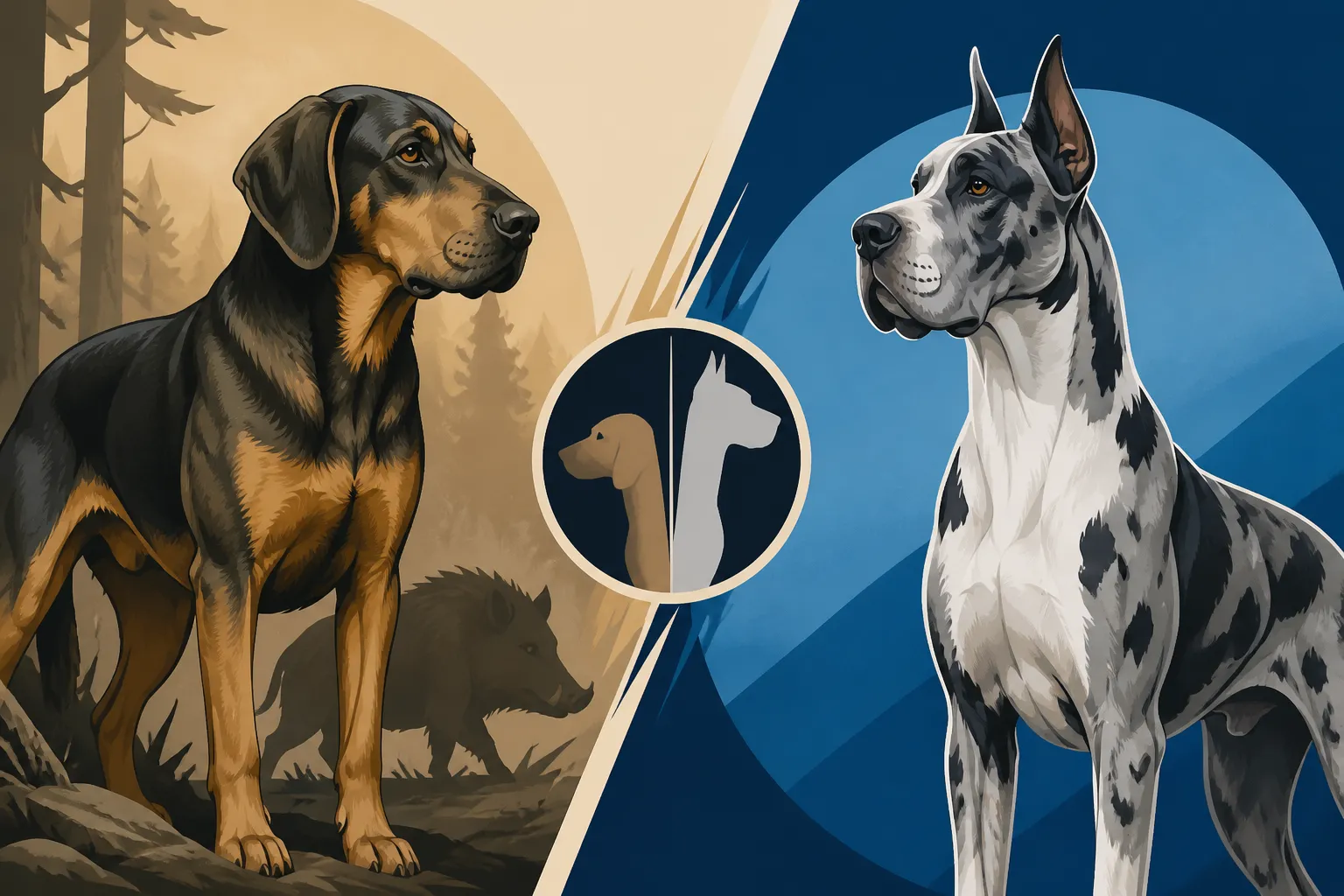
The lineage of the Great Dane can be traced back to powerful mastiff-type dogs brought across Europe by various groups, eventually intermingling with swift sighthounds. This combination was deliberate: the power and bite force of the mastiff, paired with the speed and agility of dogs like the Irish Wolfhound, created an animal uniquely suited for the demanding task of hunting large, aggressive prey. It's a testament to selective breeding that such a specific blend of traits was achieved and refined over generations.
Why This History Matters to Owners
Understanding the Great Dane's heritage isn't just a fun historical fact; it's genuinely important for every owner. Recognizing their origins helps us appreciate their innate characteristics, even those that might seem contradictory to their "gentle giant" persona. For instance, their powerful prey drive, while often dormant for small house pets, can still manifest in a strong urge to chase deer or other wildlife during walks. This isn't naughtiness; it's an echo of millennia of purpose.
Moreover, their courage and protective instincts, tempered in the hunt, mean they can be vigilant guardians of their families, albeit typically without aggression. Knowing they were bred to be physically imposing and mentally resilient can also help owners understand why early and consistent training is so crucial. A dog bred for such intense work, even if now domesticated, needs structure and mental engagement to thrive. Their size alone demands a responsible approach to training, ensuring they are well-mannered companions who understand their boundaries.
The "Boar Hound" Moniker: What It Really Means
The term "boar hound" isn't just a quaint historical label; it succinctly describes the Great Dane's original primary function. While the name "Great Dane" itself is a bit of a misnomer – they don't actually hail from Denmark, as detailed in Why the Great Dane Is Not Danish – their German title, Deutsche Dogge, directly translates to "German Mastiff," further underscoring their robust lineage and working purpose.
The Original German Name: Deutsche Dogge
In their homeland of Germany, the breed is still proudly known as the Deutsche Dogge. This name carries significant weight, avoiding the historical confusion of the "Great Dane" label and instead highlighting their German origins and their mastiff-like build. It emphasizes their power and stature, linking them directly to the powerful hunting dogs of old. What Deutsche Dogge Means for a Great Dane Owner delves deeper into this fascinating naming convention and its cultural significance.
The evolution of the name in English-speaking countries is a tale of linguistic migration and popularization, where the more exotic "Great Dane" stuck. However, for those seeking to truly understand the breed's essence, the Deutsche Dogge title offers a clearer lens into their historical role and the qualities that breeders prized: strength, courage, and nobility. It's a name that resonates with the deep forests and hunting traditions of central Europe, where these dogs first made their mark.
The Wild Boar: A Formidable Quarry
To fully grasp the magnitude of the "boar hound" title, one must appreciate the wild boar itself. This is not a creature to be underestimated. Wild boars are incredibly strong, agile, and armed with razor-sharp tusks that can inflict serious, even fatal, injuries. They are known for their fierce defensive instincts, especially when cornered or protecting their young. Hunting them was not a sport for the faint of heart, nor for any dog less than exceptionally capable. The Wild Boar the Great Dane Was Bred to Hold paints a vivid picture of this dangerous game.
The wild boar's power and aggression meant that a hunting dog needed a specific combination of traits to be effective and survive. Speed was essential to track and corner the boar, but sheer brute strength and unwavering courage were paramount for holding it at bay until the hunter could deliver the killing blow. A weak or timid dog would not only fail in its task but would almost certainly be severely injured or killed. This high-stakes environment naturally selected for the most robust and fearless individuals, shaping the Great Dane's very DNA.
The Role of the Dane in a Boar Hunt
So, what exactly did a Great Dane, or its early ancestors, do in a boar hunt? Their role was critical and highly dangerous. The dogs weren't simply chasing game; they were engaging in direct confrontation. Typically, a pack of these powerful dogs would be unleashed to locate, track, and then corner the wild boar. Once located, their primary function was to hold the boar, preventing its escape and distracting it long enough for the human hunters to approach and dispatch it with spears or knives.
This wasn't about delivering a killing bite. Instead, it was about sheer tenacity, holding power, and courage. The dogs would bay loudly, circling and harrying the boar, attempting to grab and hold its thick hide – often around the ears or neck – to immobilize it. It was a perilous dance, requiring immense bravery and coordination. Any misstep could result in a devastating counter-attack from the boar's tusks. The dogs often wore thick, protective leather collars to shield their vulnerable throats from the boar's wrath. This is the origin of the term "boar hound," vividly describing The Boar Hunts the Great Dane Was Built For.
| Role in a Boar Hunt | Description | Key Traits Required |
|---|---|---|
| Tracking | Locating the boar in dense forests. | Strong scent drive, endurance, focus. |
| Flushing | Driving the boar out of cover. | Speed, persistence, loud barking. |
| Baying/Cornering | Holding the boar at bay, preventing escape. | Courage, loud vocalization, agility. |
| Holding | Physically gripping the boar for hunters. | Immense jaw strength, tenacity, protective instincts. |
| Protection | Shielding hunters from the boar's attacks. | Loyalty, fearlessness, quick reflexes. |
The Physical Prowess: How a Great Dane Was Built for the Hunt
When you look at a Great Dane today, you're seeing a dog whose very physique is a testament to its hunting heritage. Every muscle, every bone structure, and even the texture of its coat speaks to the intense physical demands of its original purpose. They truly are magnificent athletic specimens, even if their modern life is more about napping than tackling wild animals.
Strength and Agility: A Unique Combination
It might seem counterintuitive to describe a dog weighing upwards of 120 pounds as agile, but the early Great Dane needed to be. They weren't just big; they needed speed to keep pace with a fleeing boar and the dexterity to maneuver quickly in dense woodland, avoiding both the boar's attacks and potential environmental hazards. This combination of massive strength and surprising agility is what set them apart from other heavy mastiff-types. Why a Great Dane Needed Speed and Weight underscores this critical balance.
Their powerful hindquarters and long, muscled legs are built for explosive bursts of speed and sustained galloping, allowing them to cover ground rapidly. The depth of their chest provides ample room for large lungs, essential for endurance during a prolonged chase. They needed to be able to turn on a dime, leap over fallen logs, and quickly change direction to evade a charging boar. This athleticism is still evident in a healthy Great Dane today, particularly during a joyful "zoomie" session in the backyard.
Jaw and Neck: Tools for the Task
Perhaps no physical attributes are more indicative of the Great Dane's boar hound past than its powerful jaw and robust neck. The broad muzzle, strong teeth, and formidable bite force were absolutely essential for grabbing and holding a struggling wild boar. They weren't meant to simply nip; they were meant to latch on with an iron grip, providing critical leverage to control a powerful, desperate animal.
Their necks are equally impressive: long, muscular, and arched, providing the strength and flexibility needed for wrestling and controlling prey. This strong neck also offered a degree of protection, making it harder for a boar to land a fatal bite. The thick skin and musculature provided a natural defense. While modern Great Danes use their powerful jaws primarily for enthusiastic eating from their Chewy-supplied bowls, and their strong necks for leaning into you, these features are undeniable echoes of their ancestors' demanding work. The Great Dane Head the Standard Wants often refers to the broad, deep muzzle and strong jaws, reflecting these historical necessities.
Coat and Size: Protection and Presence
The Great Dane's short, dense coat might seem less protective than, say, a longer, shaggier coat. However, for boar hunting, it was ideal. A short coat meant less entanglement in underbrush, fewer thorns sticking, and easier removal of blood and dirt. It also dried quickly, important for dogs working in varied weather conditions. More critically, its density offered a measure of protection against superficial scratches and bites from the boar, while not hindering movement.
And, of course, their sheer size. A truly imposing animal, the Great Dane's height and weight were not just for show; they were a significant part of its effectiveness. A dog of its stature could intimidate a boar and provide the necessary leverage and mass to physically hold it. Their presence alone was a deterrent and a statement of power. This impressive size, while sometimes challenging to accommodate in modern homes, remains a defining characteristic directly linked to their working past. The Long Reaching Stride a Great Dane Shows highlights how their massive build translates into powerful, efficient movement.
From Forest to Fiefdom: The Evolution of the Great Dane's Role
As the practicalities of hunting changed and society evolved, so too did the Great Dane's role. While their origins were deeply rooted in the wild forests, their strength, presence, and loyalty soon made them invaluable in other capacities, particularly among the aristocracy.
Hunting Dogs for Nobility
By the Middle Ages and Renaissance, hunting wild boar was no longer just about sustenance or eliminating a pest; it became a highly ritualized and prestigious sport of the nobility. Owning powerful, specialized hunting dogs was a status symbol, and the Great Dane, or its early types, fit this role perfectly. These dogs were expensive to keep and required skilled handling, making them exclusive companions of dukes, princes, and kings across Europe.
These "Kammerhunde," or "chamber dogs," of the German princes were not just for the hunt; they were often kept close, sometimes even sleeping in the lord's chambers, symbolizing power and protection. Their impressive appearance and calm demeanor made them ideal escorts, adding to the grandeur of any noble household. This shift marked the beginning of their transition from purely utilitarian hunting dogs to symbols of aristocracy and loyal companions.
From Hunt to Estate Guard
While their hunting prowess was still highly valued, the Great Dane's size and imposing nature also made them excellent guardians. The shift from actively tackling wild boars to protecting sprawling estates, castles, and their noble inhabitants was a natural progression. Their loud, resonant bark was enough to deter most intruders, and their sheer physical presence left little doubt about their capability to defend.
This new role required not just physical courage but also a degree of discernment and loyalty. A good estate guard needed to be watchful, alert, and capable of distinguishing between friend and foe. These traits, already present in their hunting nature, were further refined. They became not just dogs of the chase but reliable protectors, demonstrating their versatility and cementing their place in noble households. How Great Danes Went From Hunting to Guarding explains this transition in detail.
The Shift in Domestic Life
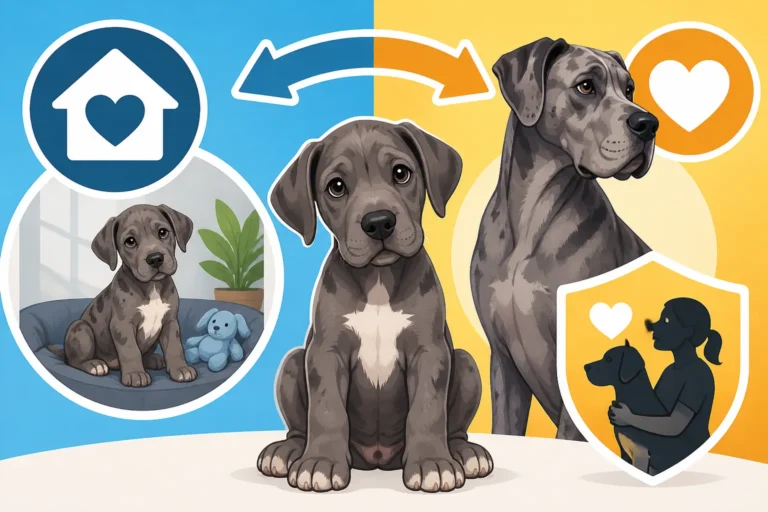
As the centuries progressed and grand boar hunts became less common, the Great Dane found itself more frequently in domestic settings. While still valued for their guarding capabilities, their gentle nature began to shine through more prominently. They became beloved family members, appreciated for their calm temperament indoors, their loyalty, and their affectionate disposition. The hunting instincts, while still present, began to recede into the background, replaced by a desire for companionship.
This domestic integration was crucial for shaping the breed's temperament towards the "gentle giant" we recognize today. While still possessing immense power, generations of living in close quarters with humans, being valued for their companionship rather than just their hunting prowess, gradually reinforced their milder traits. This adaptability is a testament to the breed's inherent intelligence and capacity for bonding, allowing them to transition from a formidable hunter to a beloved member of the family.
Early Breed Development: English Mastiffs, Irish Wolfhounds, and German Influence
The Great Dane, as we know it, didn't simply appear. It was meticulously crafted over centuries through the selective breeding of various powerful and swift dogs, primarily in Germany. Understanding these foundational breeds helps illuminate the unique combination of traits that define the Great Dane. English and German Blood in the Early Great Dane provides valuable context on these early influences.
The English Mastiff Contribution: Power and Stature
One of the most significant ancestors contributing to the Great Dane's development was undoubtedly the English Mastiff. These massive, heavily built dogs provided the sheer power, bone structure, and formidable size that were essential for tackling large prey. Mastiffs were known for their courage and guarding instincts, traits highly desirable for a dog meant to confront dangerous wild boars.
The Mastiff's influence is evident in the Great Dane's impressive head, broad chest, and substantial musculature. They brought the "mastiff-type" qualities of strength and a certain gravitas. However, the Mastiff alone was too slow and perhaps too ponderous for the agility required in a boar hunt. A pure Mastiff might corner a boar, but it lacked the speed to chase it down effectively in dense woods. This is where other influences came into play, creating a more dynamic hunter. The English Mastiff Behind the Great Dane offers a deeper look into this specific lineage.
The Irish Wolfhound's Legacy: Speed and Height
To counteract the Mastiff's bulk and add crucial speed and athleticism, sighthound blood was introduced. The Irish Wolfhound, a colossal dog known for its incredible height, speed, and courage in hunting wolves and deer, was a prime candidate. The infusion of Wolfhound genetics brought the Great Dane its characteristic long legs, deep chest, and the ability to cover ground quickly.
This cross resulted in a dog that retained the Mastiff's power but gained the sighthound's lean athleticism and lightning-fast reflexes. It was the perfect blend: a dog powerful enough to hold a boar, yet swift enough to pursue it. The elegant, athletic build of the modern Great Dane, often described as an "Apollo of Dogs," is a direct result of balancing these two powerful ancestral lines. Whether the Irish Wolfhound Is in the Great Dane explores the evidence for this crucial influence.
The German Refinement: Shaping the Modern Breed
While the English Mastiff and Irish Wolfhound provided essential building blocks, it was primarily German breeders who meticulously refined these characteristics to create the distinct breed we recognize today. They focused on standardizing the appearance, temperament, and working abilities, gradually moving towards a more uniform type. The Germans valued a dog that was not only powerful and courageous but also elegant and noble in appearance.
This period of refinement involved careful selection for specific physical traits, like the desired head shape, neck length, and overall balance, as well as temperament. The goal was to produce a dog that embodied strength without clumsiness, and courage without undue aggression. This meticulous work laid the foundation for the breed standards that would later emerge, eventually culminating in the recognition of the Deutsche Dogge as Germany's national breed. The Great Dane as Germany's National Breed details this significant historical moment.
The Shift from Hunter to Companion: A Change in Purpose
The evolution of the Great Dane from a dedicated boar hound to a cherished family companion wasn't a sudden transformation but a gradual process driven by changes in society, hunting practices, and breeding priorities. Today, few Great Danes ever see a wild boar, but their ancestral purpose still informs their being.
The Decline of Boar Hunting
As centuries turned, the widespread practice of grand boar hunts began to wane. Forests were cleared for agriculture, wild boar populations diminished in many areas, and hunting practices evolved with the introduction of firearms. The need for a dog specifically bred to physically confront and hold a dangerous wild animal became less pressing. This societal shift meant that the Great Dane's primary function as a boar hound lost its practical necessity.
With this decline, the emphasis in breeding began to shift. While strength and courage remained admirable traits, breeders increasingly prioritized temperament suitable for domestic life, a striking appearance for companionship and show, and overall health. The dogs were still large and impressive, but their role was no longer solely defined by the chase and the hold. They became more integrated into family life, transitioning from working animals to beloved pets who simply happened to possess an incredible lineage.
Embracing the Companion Role
The Great Dane's natural temperament lent itself beautifully to this transition. Despite their imposing size, they were always known for a certain nobility and a gentle disposition towards their human families. Their loyalty, patience, and affectionate nature made them ideal candidates for companion animals. It's truly a testament to their character that they adapted so well to a life of leisure and love, proving that strength and gentleness are not mutually exclusive.
Modern Great Dane owners revel in their dogs' "velcro" tendencies, their desire to be constantly near their people, and their ability to be incredibly calm and quiet indoors. These traits, while perhaps surprising for a descendant of formidable hunters, are precisely what cemented their place in countless homes. They've embraced the role of devoted family member with enthusiasm, proving that a dog's purpose can evolve profoundly over time. Finding appropriate food and toys to keep them happy and healthy is simple with widespread access from retailers like Chewy.
Maintaining Instincts in a Domestic Setting
Even as companion dogs, the echoes of their hunting past can still be observed. Many Great Danes exhibit a strong prey drive, especially towards smaller, fast-moving animals like squirrels, rabbits, or even cats if not properly socialized. This isn't aggression; it's an instinct that was once essential for their survival and work. Owners might notice their Dane "stalking" a toy or showing intense focus on a distant movement, channeling their ancient hunting prowess into playful or curious behaviors.
It's important for owners to acknowledge and manage these instincts responsibly. While we no longer ask our Danes to hunt boars, providing appropriate outlets for their physical and mental energy is crucial. Activities like long walks, secure off-leash play, and even dog sports that engage their intelligence and athleticism can help fulfill these innate needs. Understanding that these behaviors stem from their heritage allows us to provide a richer, more fulfilling life for our Great Danes, honoring their history while enjoying their modern companionship.
Echoes of the Past: Boar Hound Traits in Today's Great Dane
Even though your Great Dane is likely snoozing on a giant dog bed from Chewy instead of chasing a wild boar, the shadow of their ancestors remains. These lingering traits, both physical and behavioral, offer a fascinating link to their powerful past and are an integral part of what makes the breed so unique.
Unmistakable Physical Reminders
Take a good, long look at your Great Dane. Their physical characteristics are undeniably shaped by their boar hound heritage. The very structure of their body – the deep chest for powerful lungs, the long, muscular legs for speed and endurance, the strong, arched neck, and the broad, powerful muzzle – all point directly to a dog bred for strength, speed, and the ability to confront large game. The Great Dane Head the Standard Wants emphasizes these powerful features.
Even their short, dense coat, while seemingly simple, was practical for navigating dense underbrush during a hunt. Their impressive stature commands respect, a trait that was invaluable when facing down a charging boar. While their musculature might now be used for leaning on your leg or enthusiastically wagging their tail, the underlying framework is still that of a formidable athlete, capable of immense power and grace. It's a living monument to centuries of selective breeding for a very demanding task.
Temperament Traits from the Hunt
Beyond the physical, subtle aspects of the Great Dane's temperament also hark back to their boar hound days. Their renowned courage and fearlessness, while now typically directed towards protecting their family or simply exploring new environments, were once essential for confronting dangerous prey. They possess an inherent bravery that, when channeled correctly, makes them reliable and confident companions.
Their alertness and keen observation skills, once used to detect game, now translate into being excellent watchdogs who are quick to notice anything amiss in their home environment. The loyalty and devotion they show to their human "pack" also likely evolved from the intense bond required between hunter and dog in such dangerous work. This isn't just about affection; it's a deep-seated instinct to be a part of a unit and to protect it. It’s why they often want to be near you constantly.
Meeting Their Innate Needs as Modern Dogs
Recognizing these historical traits is crucial for providing a fulfilling life for a modern Great Dane. While they no longer need to hunt, they still benefit immensely from activities that engage their powerful bodies and intelligent minds. Regular exercise, beyond just a quick potty break, helps maintain their physical condition and provides an outlet for their natural athleticism. This doesn't necessarily mean intense running, especially while they are still growing (see Growth Disorders in a Great Dane Puppy), but rather consistent, moderate activity.
Mental stimulation is equally important. Puzzle toys, training sessions, and even just exploring new places on a leash can satisfy their innate curiosity and problem-solving abilities. Allowing them to use their senses – sniffing, observing, and reacting to their environment – taps into those ancient hunting instincts in a safe, constructive way. By understanding that our gentle giants once were, and in many ways still are, powerful boar hounds, we can offer them a life that respects their incredible heritage and nurtures their unique spirit.
Disclaimer
This article is for general informational purposes only and does not constitute professional advice. Laws, prices and regulations vary by location and change over time. Consult a qualified professional for guidance on your specific situation.