Whether a Great Dane Understands Its Own Size
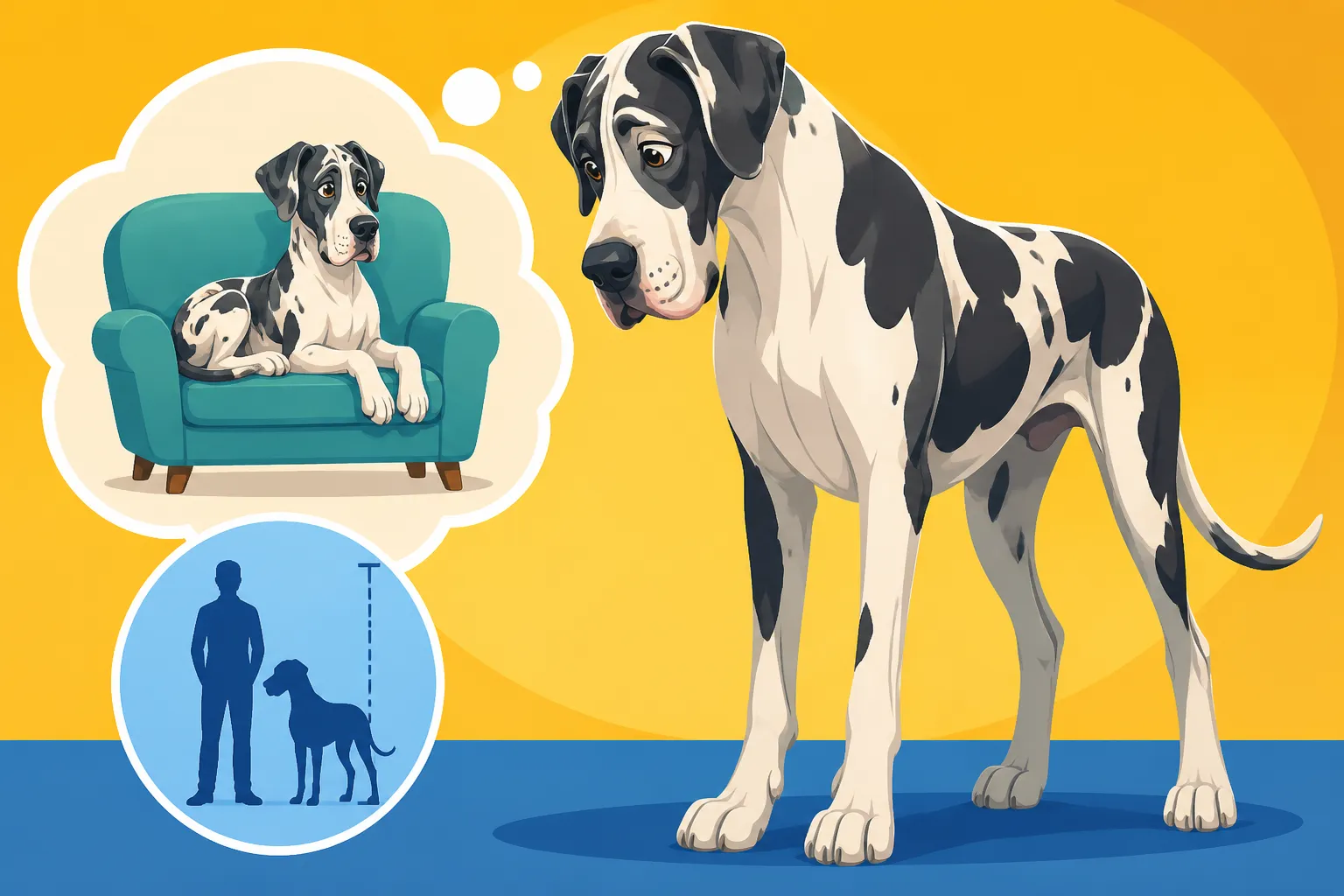
It's a familiar scene to many Great Dane owners: you're relaxing on the sofa, and suddenly, a colossal furry form attempts to curl up in your lap, completely oblivious to the fact it outweighs you by a hundred pounds. Or perhaps your dog walks past the coffee table, and a swift tail wag clears every single item off it in one go. These moments often lead us to wonder, sometimes exasperatedly, "Does my Great Dane even know how big it is?" This comprehensive guide will dive into the fascinating reality of canine body awareness, explain why our giant companions often act like much smaller dogs, and, most importantly, provide actionable strategies for teaching your Great Dane to navigate its vast world with grace, ensuring safety and harmony for everyone involved.
The "Gentle Giant" Paradox: Do They Know How Big They Are?
The endearing moniker "Gentle Giant" perfectly captures the Great Dane's sweet nature and impressive stature. However, this very paradox leads to a common misconception: that somehow, by virtue of their gentleness, they are inherently aware of the sheer scale of their bodies. The truth is a little more nuanced, and understanding it is the first step toward living harmoniously with these magnificent animals.
The Disconnect Between Perception and Reality
Dogs, including Great Danes, don't possess the same self-awareness about their physical dimensions as humans do. They don't look in a mirror and think, "Wow, I'm huge!" Their understanding of their body is primarily proprioceptive—it's about how their body moves and interacts with its immediate surroundings through touch and physical feedback. A Great Dane knows it needs to lift its leg to step over a toy, or that its head will hit the underside of a table if it tries to stand up in a certain spot. But this is a sensory, functional awareness, not a conceptual understanding of "bigness" compared to, say, a Chihuahua or a human child.
Consider a Great Dane puppy. For the first few months, they are a manageable size. They can comfortably fit on a lap, weave through furniture without incident, and stand close to people without knocking them over. During this crucial developmental period, their interactions with the world are based on the body they currently inhabit. When they grow, and they grow with astonishing speed, that fundamental behavioral programming doesn't automatically update to "I am now 150 pounds and can flatten a toddler." Their perception of their own space, especially when excited or seeking attention, remains rooted in those early, smaller experiences. This means we, as their guardians, have a profound responsibility to bridge that gap between their internal world and the external reality of their size.
Early Experiences Shaping Behavior
Think about how you interact with a tiny puppy versus a full-grown dog. With a tiny puppy, we often encourage all sorts of close contact: scooping them up, letting them climb on us, cuddling them constantly. These are wonderful, bonding experiences, and completely appropriate for a small pup. The problem arises when we apply the same allowances to a breed that will quickly grow to the size of a small pony.
If a Great Dane puppy is always allowed to jump up for greetings, crawl into laps, or push past people to get what it wants, these behaviors become ingrained. As the puppy matures into a juvenile and then an adult, it continues these actions because they've been reinforced. It's not maliciousness or a deliberate act of being "too big"; it's simply a continuation of learned behavior. Imagine trying to reverse these habits when your dog is already 120 pounds and still growing! This is why early, consistent training on appropriate manners is paramount, as detailed in The Manners a Great Dane Needs Before It Grows. Owners who proactively teach their puppies how to interact with the world, taking their future size into account, set their dogs up for much greater success and safety.
More Than Just Lapdogs: The Real Reasons for Great Dane Closeness
Great Danes are renowned for their affectionate nature and deep bond with their families. This desire for closeness often manifests in behaviors that seem contradictory to their enormous size. They'll try to sit on your lap, lean against your legs, or nudge you with their massive heads. While endearing, these actions can have real-world consequences if not properly managed.
Affection Seeking and Physical Contact
At the heart of a Great Dane's "lapdog" tendencies is a profound desire for affection and physical contact. These dogs are deeply social creatures who thrive on being near their people. For them, physical touch is a primary way to give and receive love and reassurance. When they lean on you, they're not calculating their weight; they're seeking connection, a comforting presence. This leaning behavior is so common, in fact, that many Dane owners affectionately refer to it. You can learn more about this in A Great Dane That Leans on People.
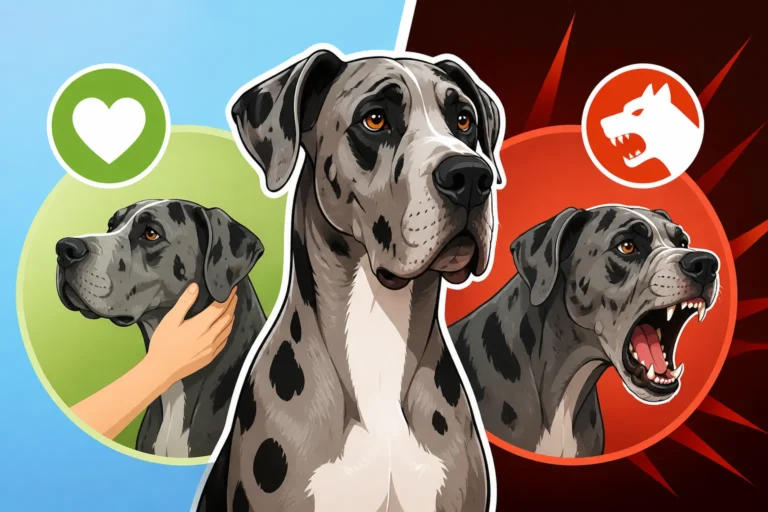
The issue isn't their intention, which is pure, but the impact of their size. A smaller dog jumping into your lap might elicit laughter; a Great Dane doing the same can lead to bruises, spilled drinks, or even a knocked-over person. It's crucial for owners to recognize the underlying desire for connection and redirect it into acceptable forms. Instead of allowing a full body hug that bowls you over, teach them to sit calmly beside you for pets, or offer a paw. This fulfills their need for interaction without compromising safety.
Lack of Spatial Awareness in a Human World
While Great Danes are generally coordinated, their sheer length and height, especially their powerful tail, are simply not designed for navigating tight human living spaces. Our homes are full of obstacles they may not perceive as a threat to themselves, but which become vulnerable to their expansive movements.
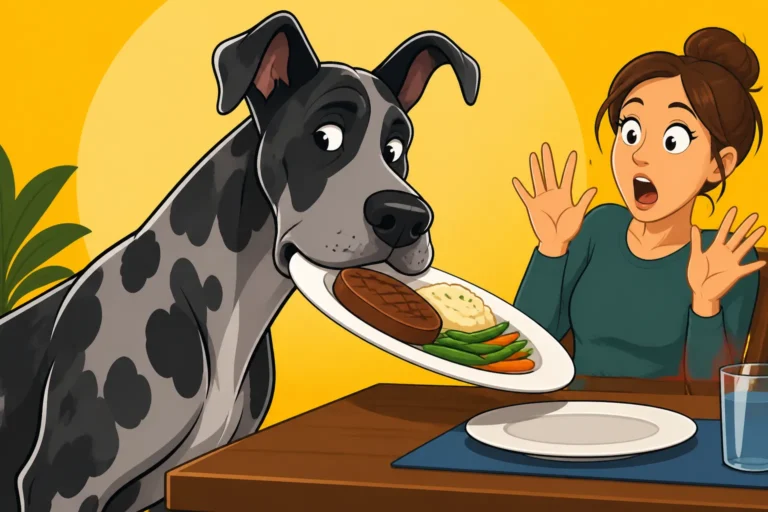
Think about the classic "tail-whip" scenario. A happy Great Dane's tail can clear a coffee table in seconds, sending remote controls, glasses, and decorative items flying. They aren't doing it to be destructive; they're simply expressing joy, and their long, strong tail has a much wider arc than a smaller dog's. Similarly, their height allows them to easily reach kitchen counters, leading to accidental "snack appropriation" when they're merely sniffing around. A Great Dane That Takes Dinner Off the Table explores this common issue.
They might turn around in a hallway and inadvertently bump into a wall or furniture, simply because they misjudged the turning radius of their long body. This isn't a lack of intelligence, but a physiological reality: a dog built to gallop across open fields will find a cozy living room a significant challenge. It’s up to us to anticipate these challenges and modify both their training and their environment.
Consequences for People and Property
The consequences of a Great Dane's lack of perceived size can range from minor annoyances to serious safety concerns. For property, it might mean frequently replacing items, repairing walls, or dealing with damaged furniture. Imagine coming home to a lamp knocked over or a prized vase shattered, all because a happy Dane inadvertently swept it away with their tail.
More critically, there's the risk to people. A Great Dane jumping up to greet a visitor, even playfully, can easily send an adult sprawling, or worse, injure a child or an elderly person. A Great Dane That Knocks People Over highlights this dangerous possibility. Their strength and mass mean even an accidental bump can have significant force. Children, in particular, may not understand how to interact safely with such a large dog, and a dog who thinks it's a small lapdog can unintentionally cause harm. The reality is, while their heart is gentle, their body is a force of nature that requires respect and careful management from their human companions.
Teaching Spatial Awareness: It Starts With Us, Not Them
The responsibility for teaching a Great Dane to navigate the world with awareness of its size falls squarely on our shoulders. They won't magically figure it out; it requires consistent training, clear boundaries, and a whole lot of patience from day one.
Early Intervention is Key
The absolute most crucial time to start teaching spatial awareness and polite manners is when your Great Dane is a tiny puppy. At eight weeks old, they might be small enough to be a lapdog, but you must start training them for the dog they will become. Every jump, every lean, every push for attention, if allowed, reinforces a behavior that will be problematic when they're fully grown. Why Waiting Until a Great Dane Is Grown Is Too Late is not an exaggeration – waiting is truly detrimental.
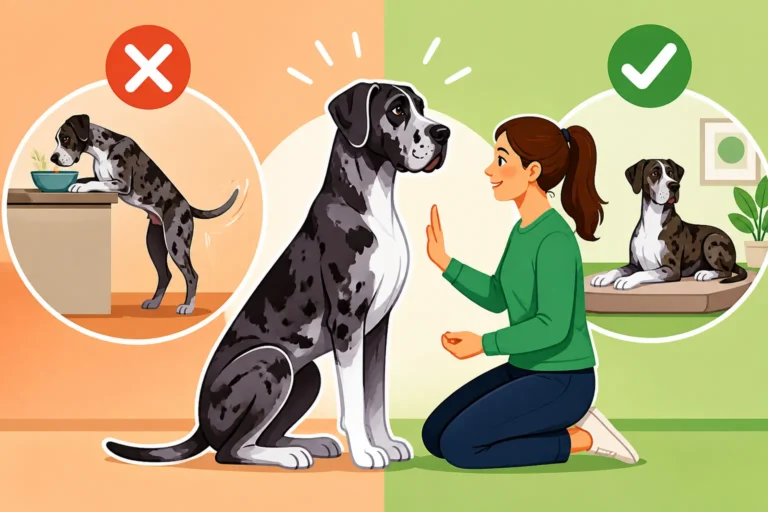
Puppy classes are invaluable, as they provide controlled environments for socialization and early training. Look for trainers who have experience with giant breeds and understand their unique growth patterns and challenges. Online resources, like the programs offered by BAXTER & Bella, can also provide structured guidance that you can implement at home, focusing on critical cues like "off," "leave it," "settle," and "place." Teaching a solid "place" command, where your dog learns to go to a specific bed or mat and stay there calmly, is immensely helpful for managing their presence in the home. It gives them a designated spot to be large in without being underfoot or knocking things over.
Consistent Boundaries and Clear Communication
Dogs are creatures of habit and thrive on consistency. If sometimes jumping is allowed, and other times it's not, your Great Dane will become confused and default to the most rewarding behavior, which is often jumping for attention. Every member of the household must be on the same page regarding rules and expectations.
To tackle jumping, the rule should be "four on the floor" at all times. If your Great Dane jumps, turn your back, cross your arms, and completely ignore them. As soon as all four paws are on the ground, turn back and offer praise and a calm pet. This teaches them that calm greetings get attention, while jumping does not. For more detailed guidance, see Stopping a Great Dane Jumping Up on People. Similarly, for counter surfing or pushing into your space, a firm "leave it" or "off" command followed by redirection to an appropriate activity or toy is vital. Use body language to create a boundary – if they are too close, gently block their path with your leg or body, teaching them to respect your personal space bubble.
Positive Reinforcement for Appropriate Behavior
The most effective way to teach a Great Dane size-appropriate behavior is through positive reinforcement. This means rewarding the behaviors you want to see, rather than punishing the ones you don't. When your Great Dane walks politely on a leash without pulling, reward it. When they settle calmly on their bed when guests arrive, reward it generously. When they greet you with all four paws on the ground, shower them with praise.
The goal is to make good choices incredibly rewarding. If your Dane leans on you gently for a head scratch instead of trying to sit on your lap, make that interaction incredibly positive. This teaches them alternative ways to seek affection and interaction that are safe and appropriate for their size. Remember, these dogs want to please us, and by clearly communicating what we expect and rewarding them for meeting those expectations, we build a strong, trusting relationship.
Adapting Your World for a Great Dane's Grand Scale
Beyond training your Great Dane, it's equally important to adapt your home and routines to accommodate their sheer size. This isn't about giving up your aesthetic preferences entirely, but making practical choices that enhance safety and comfort for both you and your giant companion.
Home Modifications for Safety and Comfort
Your home environment plays a massive role in managing a Great Dane's physical presence. Open floor plans are generally more Great Dane-friendly than cluttered ones. Consider what items are at "tail height" or "counter height" and either secure them or remove them. Heavy, sturdy furniture is a good investment, as lighter pieces can be easily bumped or moved. Think about anchoring bookshelves or tall lamps to walls.
Baby gates can be incredibly useful, not just for puppies, but for managing adult Great Danes too. They allow you to control access to certain areas, like the kitchen during meal prep or a room with delicate items. You can find robust, pressure-mounted gates on Amazon that are tall enough to prevent a determined Dane from easily stepping over them. Baby Gates a Great Dane Cannot Step Over offers more insights into choosing the right barriers. Providing ample, comfortable resting spots like a large orthopedic dog bed in several rooms encourages them to settle in their own space rather than seeking out your lap or the sofa.
Appropriate Tools and Gear
Investing in the right equipment for a Great Dane is non-negotiable. For walks, a strong, well-fitting harness is often preferable to a collar, as it distributes pressure more evenly across their chest and gives you better control over a powerful dog. Brands offer options specifically designed for large breeds. Learn more about effective walking tools in Harnesses and Collars That Control a Great Dane.
When it comes to feeding, large, sturdy bowls that won't tip over are essential. Some owners opt for raised feeders, which can be comfortable for deep-chested breeds, though recent studies have varied on their impact on bloat risk. Regardless, the bowls must be heavy enough not to be pushed around. For crate training, which is highly recommended for Great Danes, you will need an extra-large crate that allows them to stand, turn around, and lie down comfortably. Many standard crates simply won't suffice for a fully grown Dane. Crates That Hold a Full-Grown Great Dane details what to look for in a suitable crate.
| Behavior Trait | Small Dog (e.g., Terrier) | Great Dane (e.g., Apollo) | Owner Response |
|---|---|---|---|
| Lap Sitting | Adorable, comforting | Potentially crushing, unsafe for owner/dog | Redirect to designated bed, offer side pets |
| Jumping Up | Mild nuisance, attention-seeking | Knocking over, injury risk, startling | "Four on the floor" rule, turn away, reward calm |
| Tail Wagging | Minor sweep, can knock small items | Wide arc, "Wrecking Ball" clears surfaces | Secure breakables, teach "settle" in certain areas |
| Leaning | Gentle contact, sweet | Heavy weight, can push people off balance | Acknowledge affection, teach "space" or "off" |
| Counter Surfing | Requires stealth/agility | Effortless reach, high risk of ingestion | Clear counters, rigorous "leave it" training, gates |
Managing Interactions with Others
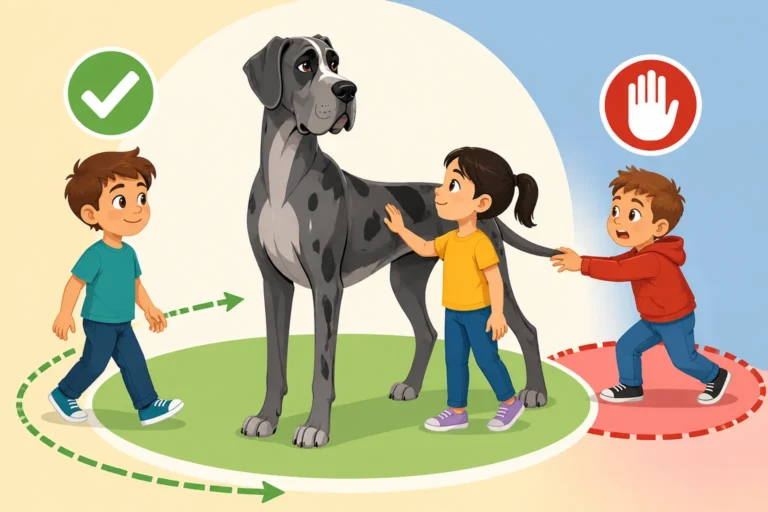
Beyond training your dog and modifying your home, it's crucial to manage how other people interact with your Great Dane. Not everyone understands giant breeds, and some may inadvertently encourage behaviors that are unsafe. Educate visitors, especially children, on appropriate ways to greet your dog. Teach them to offer a hand for sniffing, pet calmly on the chest or side, and avoid direct eye contact or overly enthusiastic greetings that might encourage jumping. Teaching Children to Move Around a Great Dane provides excellent advice on this topic.
Always supervise interactions between your Great Dane and young children or elderly guests. Even the most gentle Dane can accidentally bump someone over, and supervision ensures you can intervene if needed. If you have a particularly boisterous Great Dane, consider having them on a leash or behind a baby gate when guests first arrive, allowing for a calmer, controlled introduction. Remember, prevention is always better than trying to fix a problem after it has occurred, especially when dealing with a dog of this magnificent scale.
Disclaimer
This article is for general informational purposes only and does not constitute professional advice. Laws, prices and regulations vary by location and change over time. Consult a qualified professional for guidance on your specific situation.