Whether a Great Dane Hurts a Small Dog by Accident
It's a common worry for anyone who loves both giant breeds and their tiny canine companions: can a magnificent, towering Great Dane, with all its gentle giant charm, accidentally hurt a much smaller dog during play or even just daily interaction? This isn't an irrational fear; the sheer size disparity can make even the most innocent interactions feel like a high-stakes gamble. This guide aims to explore that very real concern, offering insights into Great Dane behavior, potential risks, and practical strategies to ensure harmony and safety for all the furry members of your household, no matter their stature.
Understanding the Great Dane's Physical Presence
Let's be honest, a Great Dane is a force of nature. Their size, while majestic and awe-inspiring, comes with inherent physical realities that we, as their guardians, must acknowledge, especially when smaller dogs are involved. It's not about malice; it's about physics.
The Sheer Scale and Momentum
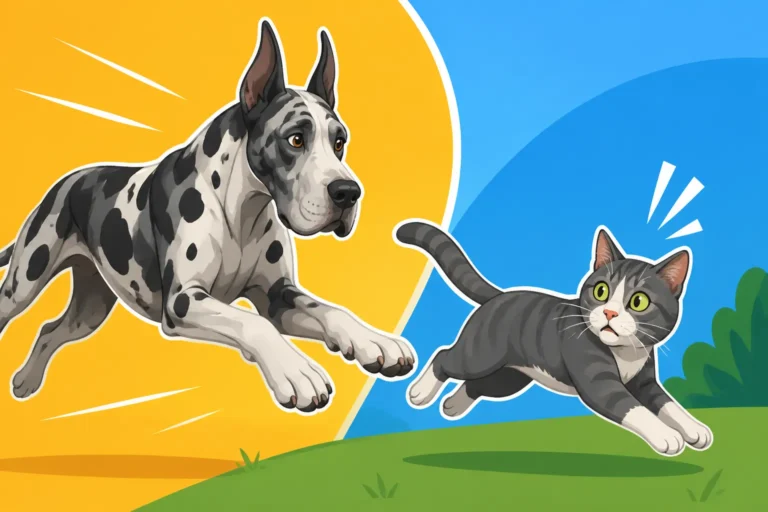
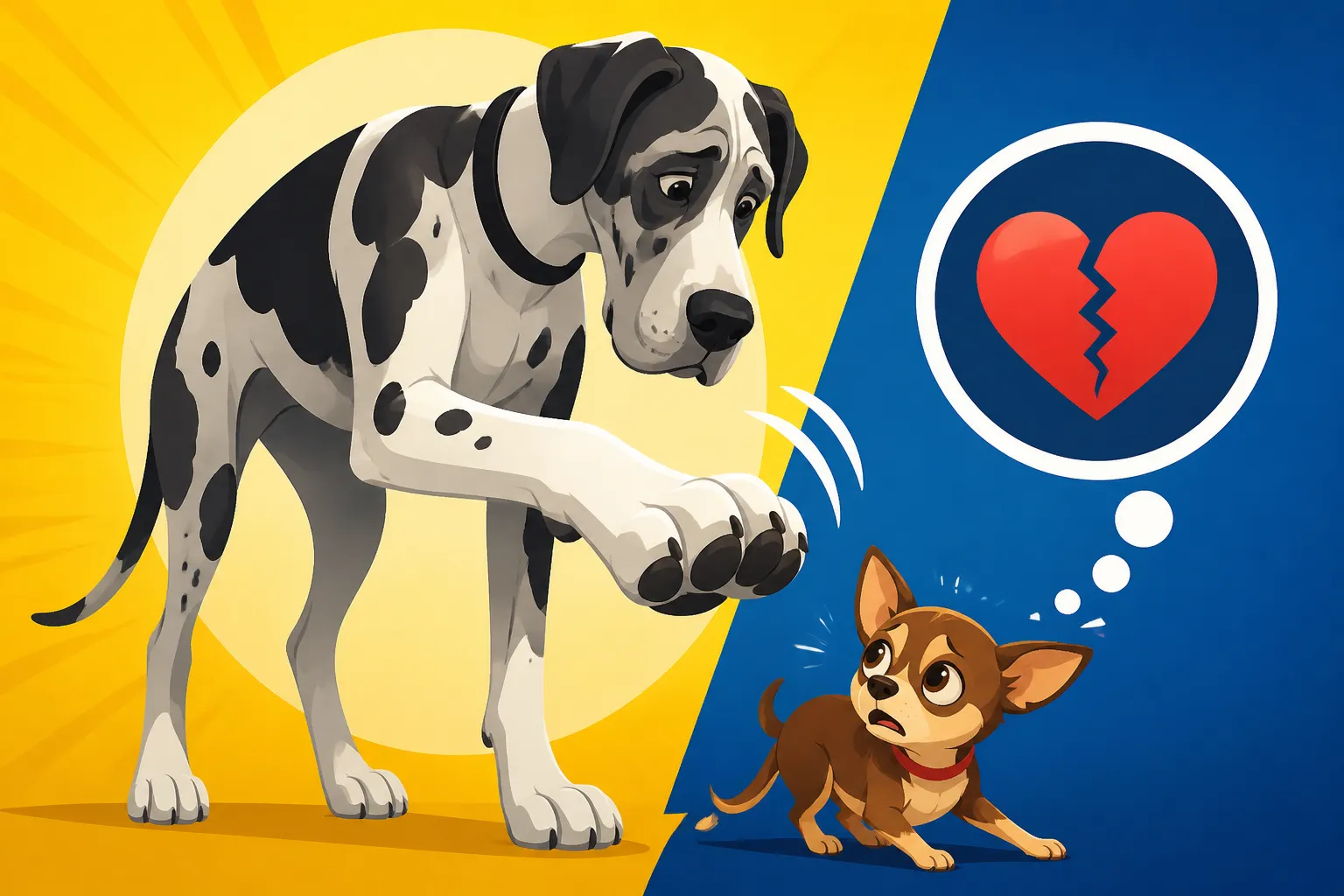
Imagine a playful toddler next to a fully grown adult; now scale that up to dog proportions, and you start to grasp the dynamic. A fully grown Great Dane male can stand well over 30 inches at the shoulder and easily weigh 150 pounds or more. A Chihuahua, by comparison, might be 6 pounds and 8 inches tall. That's an incredible difference. When a Great Dane gets excited, perhaps doing a "zoomie" through the living room or galloping across the yard, they build up significant momentum. This isn't just about weight; it's about the speed and power behind that weight.
Even a slight change in direction or an unexpected turn can send them careening into something or someone. A smaller dog, even one that's agile, might not be able to get out of the way fast enough, or might simply be caught off guard. We often talk about how a Great Dane struggles with A Great Dane That Knocks People Over or Stopping a Great Dane Body Slamming, and that applies just as much, if not more, to their smaller canine housemates. It’s not aggression; it’s simply the physics of a large animal moving quickly. Their long legs, powerful chest, and often clumsy puppy-like exuberance can be a recipe for unintentional bumps, trips, or even being stepped on.
Unintentional Bumps and Knocks
Beyond full-speed collisions, there's the daily reality of a Great Dane's size in close quarters. Their wagging tail, often referred to as a "happy tail," can be a surprisingly powerful instrument. A happy Dane can clear a coffee table with a single wag, and that same tail at full swing could easily catch a small dog in the face or body, causing injury. Similarly, when a Great Dane gets up from a nap, stretches, or just shifts position, they take up a lot of space. If a smaller dog is curled up too close, they might get rolled on, or pinned by a heavy paw.
Think about how many times your Dane has accidentally elbowed you while stretching out on the couch, or nudged you forcefully just because they wanted attention. Now envision that same force directed at a dog a tenth of their size. It’s not that the Dane means to be rough; it’s simply that they are often blissfully unaware of the full impact of their size. Their perception of space and their own body in relation to it can be quite different from ours, or from a smaller dog's. This is why cultivating Teaching a Great Dane to Get Into a Car and other spatial awareness skills is so critical from a young age.
Great Dane Temperament and Play Styles
It's tempting to think that because Great Danes are known as "gentle giants," all interactions will naturally be soft and careful. While their inherent nature is often sweet, it's crucial to understand that "gentle" doesn't always equate to "delicate" when it comes to play, especially with smaller dogs.
The Gentle Giant Misconception
The term "gentle giant" isn't a myth; Great Danes generally do possess a calm, patient, and affectionate temperament. They are often incredibly tolerant and loving with their families, including children and other pets. However, this gentleness is a temperamental trait, not always a physical one, particularly in moments of high excitement or play. A truly gentle dog can still accidentally cause harm if they don't understand the physical fragility of their playmate.
A Great Dane might try to initiate play by nudging with their nose, a playful paw swat, or a low-key wrestle. What feels like a gentle nudge to them could send a small dog flying. They don't have the same internal gauge for force that a small dog uses when playing with another small dog. Their size means their default level of interaction, even when tempered, can still be overwhelming or even dangerous for a tiny companion. This is why A Great Dane That Is Anxious Rather Than Gentle can be a concern, as anxiety can sometimes lead to less controlled movements.
Boisterous Puppy Energy vs. Adult Calm
A Great Dane puppy, despite its rapidly growing size, is still very much a puppy. They are clumsy, boisterous, and full of boundless energy, often without a full grasp of their own rapidly increasing mass and strength. A Great Dane puppy at six months can easily outweigh many adult small dogs. This youthful exuberance can make accidental injuries even more likely. They learn through rough-and-tumble play with their littermates, and they don't naturally distinguish between a peer their own size and a delicate little terrier.
As they mature, many Great Danes do settle into that more serene "gentle giant" persona. Their movements become more deliberate, and their play can become less frenetic. However, even an older, calmer Dane can have moments of sudden energy, especially when greeting family members after a long absence or when an exciting new toy is introduced. It's a continuous spectrum, and owners must always be mindful of where their individual Dane falls on it. Understanding The Age a Great Dane Stops Listening can also be crucial, as adolescence often brings a resurgence of energetic, sometimes challenging, behaviors.
Impact of Training and Socialization
This is where owners play a pivotal role. The "gentle" part of "gentle giant" is often heavily influenced by consistent, positive training and early, appropriate socialization. A well-socialized Great Dane puppy who has positive experiences with a variety of dogs, including smaller ones, is more likely to learn appropriate play behaviors. This doesn't mean letting them run wild; it means controlled introductions and interactions where appropriate behavior is rewarded and rough play is redirected.
Training goes hand-in-hand with socialization. Teaching cues like "leave it," "off," "gentle," and a strong "recall" are invaluable. These commands can help you manage interactions and prevent potential accidents before they happen. For instance, if you see your Dane winding up for a big pounce near a small dog, a quick "settle" or "down" can avert a mishap. Resources like BAXTER & Bella, which offer comprehensive online training programs, can be incredibly helpful for teaching these crucial skills from puppyhood, even if you're dealing with a rapidly growing giant.
Assessing Risk in Mixed-Size Households
Living with dogs of vastly different sizes means you constantly need to be assessing and managing risk. It's not about being paranoid, but about being proactive and realistic.
Supervision: Your First Line of Defense
Unsupervised interactions between a Great Dane and a small dog are where the highest risks lie. Even if your Great Dane is known to be incredibly gentle, accidents can happen in a split second. A sudden movement, an unexpected noise, or even a toy that rolls into the wrong place can trigger an instinctual reaction that could inadvertently harm a smaller dog.
Think of it like supervising children of different ages; you wouldn't leave a toddler alone with a much older, stronger child without keeping an eye on them. The same principle applies here. Active, engaged supervision means you are present, observing body language, and ready to intervene instantly. This might mean redirecting play, calling a dog to you, or physically separating them if energy levels get too high. When you can't actively supervise, it's time for management strategies like crating or separate rooms. Remember, a Great Dane's playful bark or lunge can be terrifying for a tiny dog, even if not meant aggressively. This is similar to the care needed when A Great Dane That Steps on a Toddler.
Creating Safe Zones and Separate Spaces
One of the most effective ways to manage risk is to create designated safe zones and separate spaces. This ensures that both dogs have areas where they can relax, eat, and sleep without feeling threatened or constantly on alert. For small dogs, this might mean elevated beds or crates they can retreat into that a Great Dane cannot access. For Great Danes, it might mean their own large crate or a separate room where they can unwind without accidentally invading the smaller dog's personal space.
Utilize baby gates, exercise pens, or even secure doors to create physical barriers when you can't provide full supervision. This is especially important during meal times, when high-value treats are out, or when dogs are sleeping. A sturdy, tall baby gate, easily found on Amazon, can be a lifesaver in controlling access to different areas of the home. This kind of thoughtful home setup is crucial for managing day-to-day life with dogs of disparate sizes. Consider how you manage A Great Dane That Cannot Be Left in the House for alone time, and apply similar principles for separate spaces when you are home but busy.
Choosing Appropriate Play Partners and Environments
Not every small dog is a suitable playmate for every Great Dane, and vice-versa. Some small dogs are incredibly robust and confident, with a "big dog" personality, capable of holding their own in a rough-and-tumble environment. Others are more timid or physically delicate. Similarly, some Great Danes have a naturally more subdued play style, while others are more boisterous.
When considering play, always err on the side of caution. Structured play sessions in controlled environments are often best. Avoid letting a Great Dane and a small dog wrestle vigorously, as the sheer weight difference can lead to crushed bones or internal injuries. Instead, focus on games that don't involve direct physical contact, such as fetch, or parallel play where they are engaged with their own toys in the same area. Dog parks with mixed-size dogs can be risky; opt for fenced areas where you can closely monitor interactions. Even a quick game of chase, if the small dog trips, could result in the Great Dane accidentally trampling them. Learning to recognize Great Danes and Small Dogs Playing Together safely is an ongoing process.
| Interaction Type | Great Dane Play Style | Small Dog Play Style | Risk Level | Management Strategy |
|---|---|---|---|---|
| Rough-and-Tumble | Paws, body slams, mouthing, wrestling | Nips, rolls, fast darting, mock fighting | High | Avoid entirely. Redirect to separate activities. |
| Chase | Fast bursts of speed, wide turns, heavy strides | Quick changes of direction, low to the ground | Moderate | Only in very large, open, flat spaces with excellent recall on Dane. |
| Nudging/Pawing | Strong head nudges, heavy paw taps | May be knocked over, surprised, or injured | Moderate | Teach "gentle" cue, use barriers for personal space. |
| Toy Sharing | Large, sturdy toys, strong chewers, potential resource guarding | Smaller toys, less powerful chewers, can be easily pushed aside | Moderate | Provide individual, appropriate toys. Supervise closely for resource guarding. |
| Parallel Play | Engaged with own toys, sniffing, exploring | Engaged with own toys, sniffing, exploring | Low | Encourage with separate, appealing toys in the same room. |
| Cuddle/Resting | Heavy leaning, flopping down, spreading out | Seeks warmth, prone to being rolled on or pinned | Moderate | Ensure safe, separate sleeping areas, or supervise closely on furniture. |
Training and Management Strategies for Harmony
It's not enough to simply hope your Great Dane will be careful. Proactive training and consistent management are the bedrock of a safe, multi-size dog household.
Teaching Impulse Control and Spatial Awareness
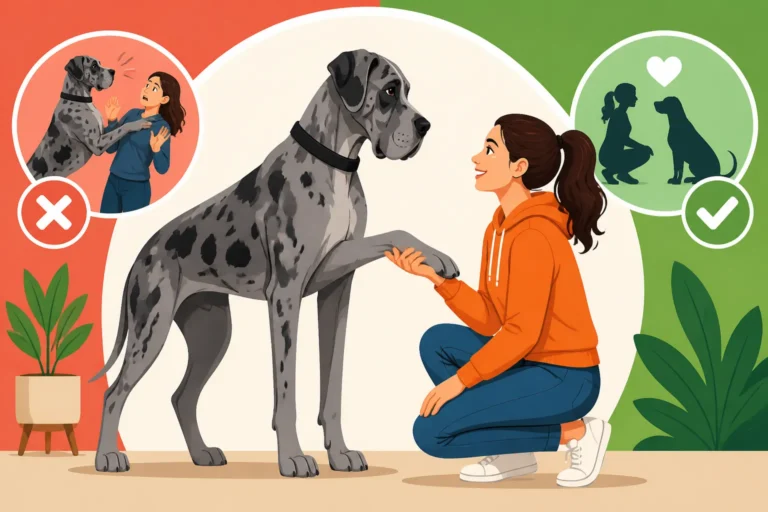
One of the most vital skills a Great Dane can learn, especially when sharing a home with smaller dogs, is impulse control. This means they can pause, wait, and think before reacting on instinct. Commands like "stay," "wait," and "leave it" are critical. For example, teaching your Dane to "wait" at a doorway and allow the small dog to pass first not only establishes good manners but prevents accidental collisions. Similarly, "leave it" can be used if your Dane is getting too focused or excited about a small dog's toy, or even the small dog itself.
Spatial awareness is also key. While it's hard to teach a dog to truly understand their massive footprint, you can teach them to be mindful of where their body is in relation to others. This might involve setting up obstacle courses at home to practice navigating around objects (and eventually, other pets) carefully. Regularly asking your Dane to lie down or settle in a specific spot can help reinforce body control. Consistency is crucial from puppyhood. Remember, The Cues a Great Dane Needs Before Six Months are essential building blocks for this kind of advanced control.
Using Tools for Controlled Interactions
Sometimes, training alone isn't enough, or you need extra layers of safety, especially when dogs are still learning. Various tools can assist in managing interactions:
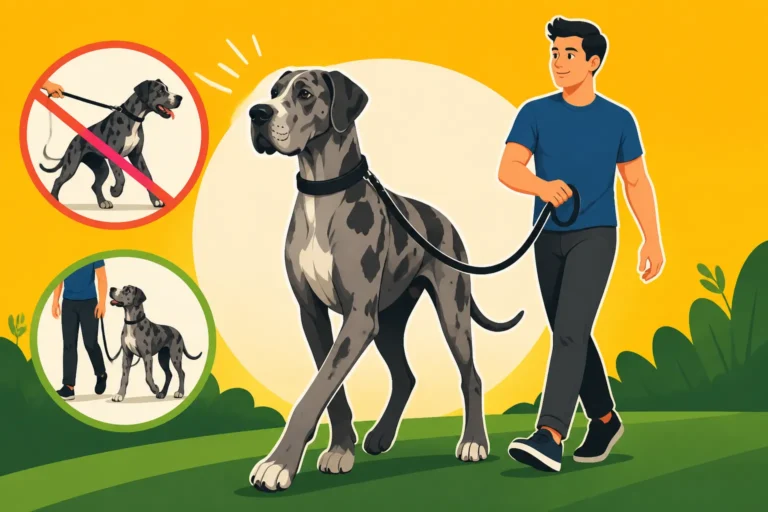
- Leashes and Harnesses: Even indoors, a long line or a house leash can be used to gently guide your Great Dane away from a small dog if play gets too rowdy, or if you need to create immediate distance. A good quality, secure harness, like those you might find on Amazon, can give you better control without putting pressure on your Dane's neck. This is especially helpful if your Dane is prone to lunging or sudden movements.
- Pens and Gates: As mentioned, physical barriers are indispensable. They allow you to safely separate dogs when you're busy, leaving the house, or simply need a break from active supervision. Look for extra-tall and sturdy options, as a determined Great Dane can easily clear or push through flimsy barriers.
- Slow Feeder Bowls and Puzzles: For high-value items like meals or treats, always separate your dogs. Great Danes can sometimes be food aggressive, or simply eat so quickly that a small dog might get too close and get snapped at. Slow feeder bowls, available on Amazon, can also help your Dane regulate their eating pace, which can be beneficial for reducing bloat risk, and makes meal times calmer.
Recognizing and Redirecting Over-Excitement
Both Great Danes and small dogs can get over-excited, and this is often when accidents occur. It's vital for you to learn to read your dogs' body language and recognize the signs that play is escalating beyond appropriate levels. These signs might include:
- Great Dane: Hard stares, rigid body, excessive panting without exertion, pinning the smaller dog, ignoring commands, or increasingly rough physical contact. Their tail might be wagging, but it could be a stiff, high wag rather than a loose, happy one.
- Small Dog: Tucked tail, flattened ears, trying to hide or escape, growling or snapping defensively, yelping, or looking to you for intervention.
When you see these signs, it's time to intervene immediately. Don't wait for an injury to happen. Calmly separate the dogs. You can use a verbal cue like "all done" or "break time," or simply physically guide your Dane away to a different area or activity. Redirect their energy into something safe and solitary, like a chew toy or a short training session. The goal is to teach your Dane that calm, controlled interactions lead to good things, while over-excitement leads to a timeout from their playmate. This kind of consistent redirection is part of Why Waiting Until a Great Dane Is Grown Is Too Late to start training.
Ultimately, living with a Great Dane and a small dog successfully is a testament to thoughtful planning, consistent training, and unwavering supervision. It's about respecting the physical differences and celebrating the joy they can bring to each other's lives, safely.
Disclaimer
This article is for general informational purposes only and does not constitute professional advice. Laws, prices and regulations vary by location and change over time. Consult a qualified professional for guidance on your specific situation.