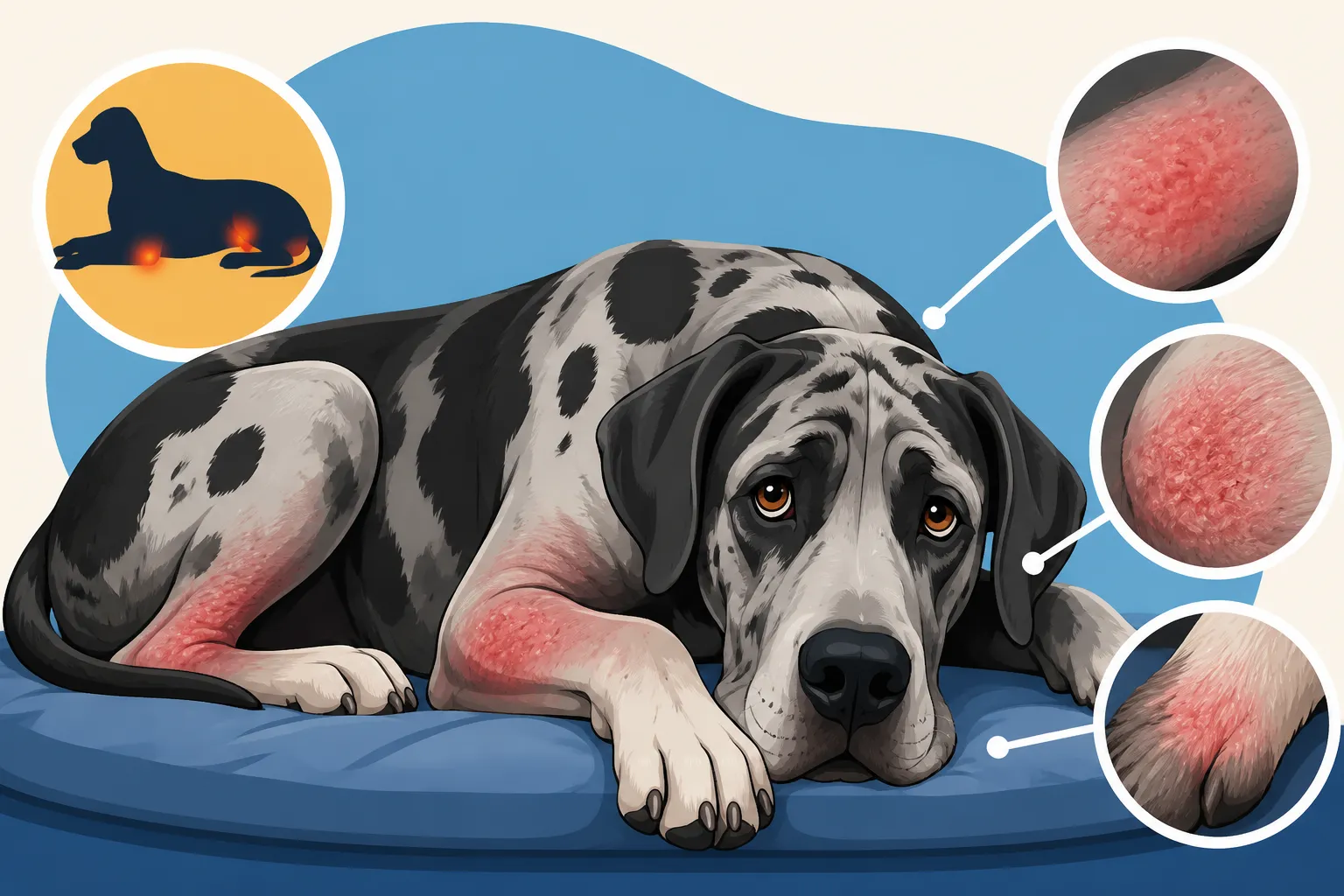
Skin Problems Where a Great Dane Lies Down
It’s heartbreaking to see your gentle giant developing uncomfortable, unsightly skin problems, especially in areas where they spend so much of their time resting. Great Danes, with their impressive size and bony prominences, are particularly susceptible to issues that arise from constant pressure and friction against hard surfaces. This guide will walk you through understanding why these problems occur, how to identify them, and most importantly, how to prevent and manage them to keep your Great Dane comfortable and healthy.
The Root Cause: Pressure Points and Friction
When you have a dog as large and majestic as a Great Dane, you quickly realize that their anatomy plays a significant role in their daily comfort and potential health issues. The sheer weight of a Great Dane, combined with their naturally thinner skin and prominent bone structure, makes them incredibly vulnerable to skin problems wherever their body meets a hard surface. It’s not just about comfort; it’s about preventing actual injury.
Why Great Danes Are Prone to These Issues
Imagine trying to lie on a hard floor for hours with your entire body weight concentrated on a few specific spots. That's essentially what happens with a Great Dane. Their substantial body mass means that when they lie down, a tremendous amount of pressure is exerted on their joints and bony areas. Unlike smaller dogs that might shift positions more frequently or have more natural cushioning, a Great Dane's weight distribution, especially as they get older and less agile, exacerbates this problem. They just don't have the natural padding that some other breeds possess, leaving their elbows, hocks, and hips directly exposed to the unforgiving floor.
Another factor is the breed's relatively thin skin compared to some other large breeds. While it gives them that sleek, elegant look, it also means there's less tissue to protect the underlying bones and joints from friction and repeated impact. Over time, this constant rubbing and compression can lead to a breakdown of the skin and underlying tissues. This isn't just a cosmetic issue; it can lead to pain, discomfort, and even serious infections if not addressed promptly. It's a constant battle for many Great Dane owners to ensure their big dogs have soft places to land, because without them, these issues are almost inevitable.
Common Areas Affected
You'll typically find these pressure-related skin problems popping up in predictable places on your Great Dane. The most common culprits are the elbows, specifically the outer points of the elbow joints, followed closely by the hocks (the joint at the back of the hind leg, equivalent to an ankle). These areas are often the first to show signs of trouble because they bear a significant portion of the dog's weight when lying down, especially on their sides. You might also notice issues on their hips, particularly if your Dane favors lying on one side, and occasionally on the sternum (breastbone) if they spend a lot of time "frog-dogging" or lying flat on their belly.
These areas are essentially warning signs that your Great Dane needs better cushioning and protection. The skin in these spots starts to thicken and harden as a protective response, but this thickening itself can become problematic, leading to discomfort and further complications. It's important to regularly check these areas, feeling for any changes in texture, warmth, or tenderness. Early detection can make a world of difference in managing and preventing these conditions from escalating into something more serious. Pay particular attention to these spots during your regular grooming or petting sessions, as they can sometimes be subtle at first.
Identifying Different Skin Problems
It's one thing to notice something "looks off" on your Dane's elbow, but understanding what you're looking at can help you decide on the best course of action. There are a few distinct types of skin problems that commonly arise from pressure and friction, and each one requires a slightly different approach. Knowing the differences can help you provide the right initial care and know when it’s time to involve your veterinarian.
Calluses and Hyperkeratosis
Calluses are probably the most common and often the first sign of chronic pressure. They appear as thickened, rough patches of skin, typically on the elbows or hocks, and sometimes the hips. Think of them like the calluses you might get on your hands from manual labor – the body's way of trying to protect itself. In Great Danes, these develop because of repeated friction and pressure against hard surfaces. The skin cells in that area multiply and harden, forming a protective barrier. Initially, they might just be a cosmetic concern, looking a bit dry and flaky.
However, if left unaddressed, these calluses can become extremely thick and hard, a condition sometimes called hyperkeratosis. This thickened skin is less flexible and can crack, especially around the edges, creating small fissures that are incredibly painful and open the door for bacterial infections. The fur over these areas may also become sparse or completely rub off. Regular moisturizing and ensuring soft bedding are key to preventing them from getting worse. If you notice a crack or any sign of redness, it's time to step up your care routine and potentially involve your vet. For more in-depth information on these specific issues, you can read about Calluses on a Great Dane's Elbows and Hocks.
Hygromas (Fluid-filled Sacs)
A hygroma is a fluid-filled sac that develops over a pressure point, most commonly the elbow. It looks like a soft, sometimes squishy, swelling that can range from the size of a golf ball to a tennis ball or even larger, and it's almost always found on the outer elbow. These develop when the constant impact and pressure cause the body to produce a protective bursa-like sac of fluid to cushion the joint. It's an inflammatory response, and while initially, it might not be painful, it's a clear sign that the joint isn't adequately protected from impact.
While small, soft hygromas might resolve with strict soft bedding and protection, larger ones or those that become firm can be more problematic. They can become infected, leading to pain, heat, and even an open wound if the skin breaks down. It's a serious condition that often requires veterinary attention. You might see your vet drain the fluid, or in more severe cases, surgical removal might be considered. If you spot A Soft Swelling on a Great Dane's Elbow, it’s crucial to act quickly to prevent it from worsening. Getting ahead of this issue is vital, and you can learn more about this by checking out Elbow Hygromas on a Great Dane.
Pressure Sores and Ulcers
These are the most serious of the pressure-related skin problems. A pressure sore (or decubitus ulcer) is essentially an open wound caused by prolonged pressure that cuts off blood supply to the skin, leading to tissue death. This can start as a reddened area, then progress to a blister, and eventually an open, deep wound. These are extremely painful and highly prone to infection, as the protective skin barrier is completely compromised. They are more likely to occur in Danes who are less mobile, perhaps due to age or injury, and therefore spend extended periods in one position on inadequate bedding.
The presence of an open pressure sore is an emergency and requires immediate veterinary intervention. These wounds can become deeply infected, leading to systemic illness. Treatment often involves meticulous wound care, antibiotics, pain management, and critically, preventing any further pressure on the affected area. This might mean specialized bandaging, or even strict confinement to orthopedic bedding. Preventing these from forming in the first place is paramount, as once they develop, they are notoriously difficult to heal, especially on such a large dog.
Infections (Bacterial, Fungal)
Any break in the skin, whether it's a crack in a callus or an open pressure sore, creates an entry point for bacteria and fungi. Infections are a common complication of all these skin problems and can quickly turn a manageable issue into a painful and dangerous one. Signs of infection include redness, swelling, warmth to the touch, pus discharge, a foul odor, and your Dane showing signs of pain or discomfort when the area is touched. Your dog might also lick or chew at the area excessively.
If you suspect an infection, a trip to the vet is non-negotiable. They will likely take a swab for culture and sensitivity testing to determine the best antibiotic or antifungal medication. Treating the infection is only half the battle; the underlying pressure issue must also be addressed, or the infection will likely recur. This is why consistent preventive care and diligent monitoring are so critical for Great Danes. These big dogs deserve to be free from the pain of preventable skin issues.
Prevention: Creating a Dane-Friendly Environment
When it comes to Great Danes and their sensitive joints and skin, prevention truly is worth a pound of cure. It's far easier and less painful for everyone involved to set up your home environment to protect your Dane from these common ailments than to treat them once they develop. Making a few thoughtful adjustments can significantly impact your dog's long-term comfort and health.
The Importance of Proper Bedding
This is, without a doubt, the single most critical factor in preventing pressure-related skin problems for your Great Dane. Forget those flimsy, flat dog beds – they offer virtually no protection for a dog of this size. What you need is substantial, supportive bedding that creates a cushion between your Dane's bony parts and the hard floor. Look for orthopedic memory foam beds that are at least 4-6 inches thick, or even thicker for very large or senior Danes. The foam should be dense enough that your dog doesn't "bottom out," meaning their weight shouldn't compress the foam so much that their elbows still touch the floor.
Investing in high-quality beds is not a luxury; it's a necessity for Great Danes. Consider having multiple beds throughout the house – wherever your Dane loves to lounge. Think about a bed in the living room, one in the bedroom, and maybe even one in a crate if they use one. Brands available on Amazon or Chewy offer a wide range of orthopedic dog beds specifically designed for large and giant breeds. Remember, size matters not just in length and width, but in thickness and density too. For more specific advice on what to look for, check out Bedding That Prevents Great Dane Hygromas and Choosing Foam Thick Enough for a Great Dane.
Managing Activity and Surfaces
While proper bedding is paramount, it's also important to be mindful of the surfaces your Great Dane regularly interacts with and their activity levels, especially as they age or if they have existing joint issues. Encourage your Dane to rest on soft surfaces whenever possible. If you have hard floors like tile, concrete, or hardwood throughout your home, strategically place rugs and runners in high-traffic areas and favorite napping spots. This helps reduce the constant friction and impact on their joints even when they're just walking around.
Also, be mindful of their outdoor resting spots. While a patch of grass might seem soft, prolonged lying on hard soil or concrete outdoors can also contribute to calluses and hygromas. If your Dane spends time outside, consider providing an outdoor dog bed or a shaded area with a thick layer of straw or soft mulch. For active Danes, ensure that vigorous play or exercise isn't occurring on extremely hard, abrasive surfaces that could exacerbate skin wear and tear. Gradual exercise on softer ground is always preferable for their joints. The goal is to minimize repetitive trauma. Consider looking at Rugs and Runners for a Great Dane's Joints for ideas on making your home safer.
Nutritional Support for Skin Health
Believe it or not, what you feed your Great Dane can also play a role in their skin health and overall resilience against these types of issues. A well-balanced diet rich in essential fatty acids, particularly Omega-3s and Omega-6s, can significantly improve skin elasticity and coat health, making the skin more supple and less prone to cracking and irritation. These fatty acids help reduce inflammation and support the skin's natural barrier function. Many high-quality dog foods include these, but you might also consider supplements.
Additionally, maintaining a lean body condition is crucial for a Great Dane. Excess weight puts even more pressure on those vulnerable joints and bony prominences, intensifying the risk of calluses, hygromas, and pressure sores. Work with your vet to ensure your Dane is at an ideal weight. High-quality protein also supports tissue repair and overall skin integrity. If you're exploring fresh food options, services like Ollie often provide nutrient-dense meals that support overall health, including skin and coat. For those looking to support their Dane's joints and skin from within, consider supplements like those found on Chewy or Amazon. You can also read more about Fish Oil for a Great Dane and Joint Support Built Into Great Dane Food.
Treatment and Management of Existing Issues
Sometimes, despite our best efforts, a Great Dane might still develop some skin issues. The key then becomes effective treatment and management to prevent worsening and promote healing. Knowing when to handle things at home and when to seek professional veterinary care is critical for your giant friend's well-being.
At-Home Care for Mild Problems
For mild calluses or very small, non-painful hygromas, you can often manage them at home with diligent care. The absolute first step is to upgrade their bedding immediately. This might mean adding a thick memory foam topper to an existing bed or investing in a new, high-quality orthopedic bed. Consistency is key here; if they still choose to lie on hard floors, the problem will persist.
For calluses, regular moisturizing is essential. Use veterinary-approved skin balms or thick emollients that are safe for dogs, applying them daily to soften the hardened skin. This can prevent cracking. If the area is slightly irritated but not open, you might also use a loose bandage or a specialized "elbow protector" to add an extra layer of padding, especially when they're resting on surfaces that aren't perfectly soft. Always keep the area clean and dry, gently washing with a mild, pet-safe cleanser if needed. Regular checks for any signs of worsening are crucial.
When to See the Vet
It's vital to recognize when a problem has escalated beyond basic at-home care. You should always consult your veterinarian if you notice any of the following:
- Open Wounds or Bleeding: Any break in the skin, especially if it's deep, large, or won't stop bleeding.
- Signs of Infection: Redness, swelling, warmth, pus, foul odor, or if your Dane is licking/chewing excessively at the area.
- Pain or Lameness: If your Dane shows pain when the area is touched, starts limping, or avoids putting weight on a limb due to discomfort. You might notice A Great Dane That Limps Without an Injury.
- Rapidly Growing Hygromas: If a hygroma quickly increases in size, becomes firm, or shows any signs of inflammation.
- Changes in Behavior: Lethargy, loss of appetite, or other signs that your Dane isn't feeling well.
Delaying veterinary care for these issues can lead to much more serious complications, including systemic infections that can be life-threatening for a Great Dane. Your vet can accurately diagnose the issue and prescribe the most effective treatment plan.
Professional Treatments
Once you involve your veterinarian, they have a range of tools and treatments at their disposal, depending on the severity and type of skin problem.
For infected calluses or pressure sores, antibiotics are often prescribed, sometimes after a culture and sensitivity test to ensure the right medication is chosen. Pain relief medication may also be given to keep your Dane comfortable. Wound care for open sores can be complex, involving cleaning, debridement (removal of dead tissue), and specialized dressings or bandages that need to be changed regularly.
In the case of hygromas, particularly large or infected ones, the vet might drain the fluid. However, this is often a temporary solution as the fluid can reaccumulate if the underlying pressure issue isn't resolved. For persistent or severely infected hygromas, surgical intervention might be necessary to remove the sac and ensure proper healing, sometimes even involving skin grafts. Your vet might also discuss surgery for chronic, non-healing pressure sores. Remember that such interventions are more involved and costly for a giant breed like a Great Dane. Always follow your vet's instructions meticulously, and continue to provide the best possible soft bedding and environmental management at home to support their recovery.
| Skin Problem | Appearance | Common Locations | Severity (Initial) | When to See a Vet | Key Treatment Focus |
|---|---|---|---|---|---|
| Callus | Thickened, rough, hairless skin | Elbows, hocks, hips | Low | If cracked, bleeding, or infected | Soft bedding, moisturizing, protective sleeves |
| Hygroma | Soft, fluid-filled swelling | Elbows (most common) | Medium | If large, firm, painful, or infected | Soft bedding, padding; draining or surgery if severe |
| Pressure Sore (Ulcer) | Reddened area, blister, or open wound | Bony prominences | High | Immediately (any stage) | Wound care, antibiotics, pain relief, strict pressure relief |
| Infection | Redness, swelling, pus, warmth, odor | Any compromised skin area | High | Immediately (if suspected) | Antibiotics/antifungals, underlying issue treatment |
Disclaimer
This article is for general informational purposes only and does not constitute professional advice. Laws, prices and regulations vary by location and change over time. Consult a qualified professional for guidance on your specific situation.