What Puts a Great Dane Out of the Ring
It's incredibly common for Great Dane owners, whether they're dreaming of a blue ribbon or just curious about their magnificent companion, to wonder what exactly the "ideal" Great Dane looks like in the eyes of a judge. The truth is, the world of dog shows has very precise rules, and there are specific characteristics and traits that can instantly disqualify a Great Dane, no matter how lovely or well-loved they are at home. This guide will walk you through the surprising and often frustrating reasons a Great Dane might be "put out of the ring," helping you understand the strict standards of breed conformation.
Understanding the Great Dane Breed Standard
When you look at a Great Dane, you see a majestic, powerful dog, often referred to as the "Apollo of Dogs." But in the show ring, judges aren't just looking for general impressiveness; they're evaluating how closely a dog conforms to a detailed written standard. This standard is essentially the blueprint for what the perfect specimen of the breed should embody, from the tip of its nose to the end of its tail.
The Blueprint for a Breed
Every recognized dog breed has a detailed written standard, usually maintained by the national breed club and sanctioned by organizations like the American Kennel Club (AKC). For Great Danes, this document describes everything: the desired temperament, the precise head shape, the set of the ears, the length of the back, the angle of the shoulders, and even the way the dog moves. The purpose isn't to create "super dogs" in a superficial sense, but rather to preserve the breed's historical traits, ensure its health and functionality, and guide ethical breeding practices. It's about maintaining consistency and ensuring that a Great Dane today still looks and acts like the Great Danes of generations past. Without these standards, breeds could diverge widely, losing their distinct characteristics and potentially facing increased health issues from unregulated breeding.
Judges spend years learning these standards inside and out, so when a dog steps into the ring, they're comparing it against this intricate mental image of perfection. Even the most stunning dog can have a small detail that, while perhaps endearing to an owner, is a significant deviation from the standard. For example, a slightly too-short muzzle or a tail carried too high could be a fault that lowers a dog's score, even if it doesn't lead to outright disqualification.
The Line Between a Fault and a Disqualification
It’s crucial to understand the difference between a "fault" and a "disqualification" (DQ) in the show ring. A fault is a deviation from the breed standard that lessens a dog's overall quality and can affect its placement in competition. Faults might include things like a slightly soft back, ears not quite correctly set, or a tail that's a bit too long. A dog with several minor faults might still place, but it likely won't win Best in Show. These are nuances that experienced judges are trained to spot, and they impact how high a dog ranks against its peers.
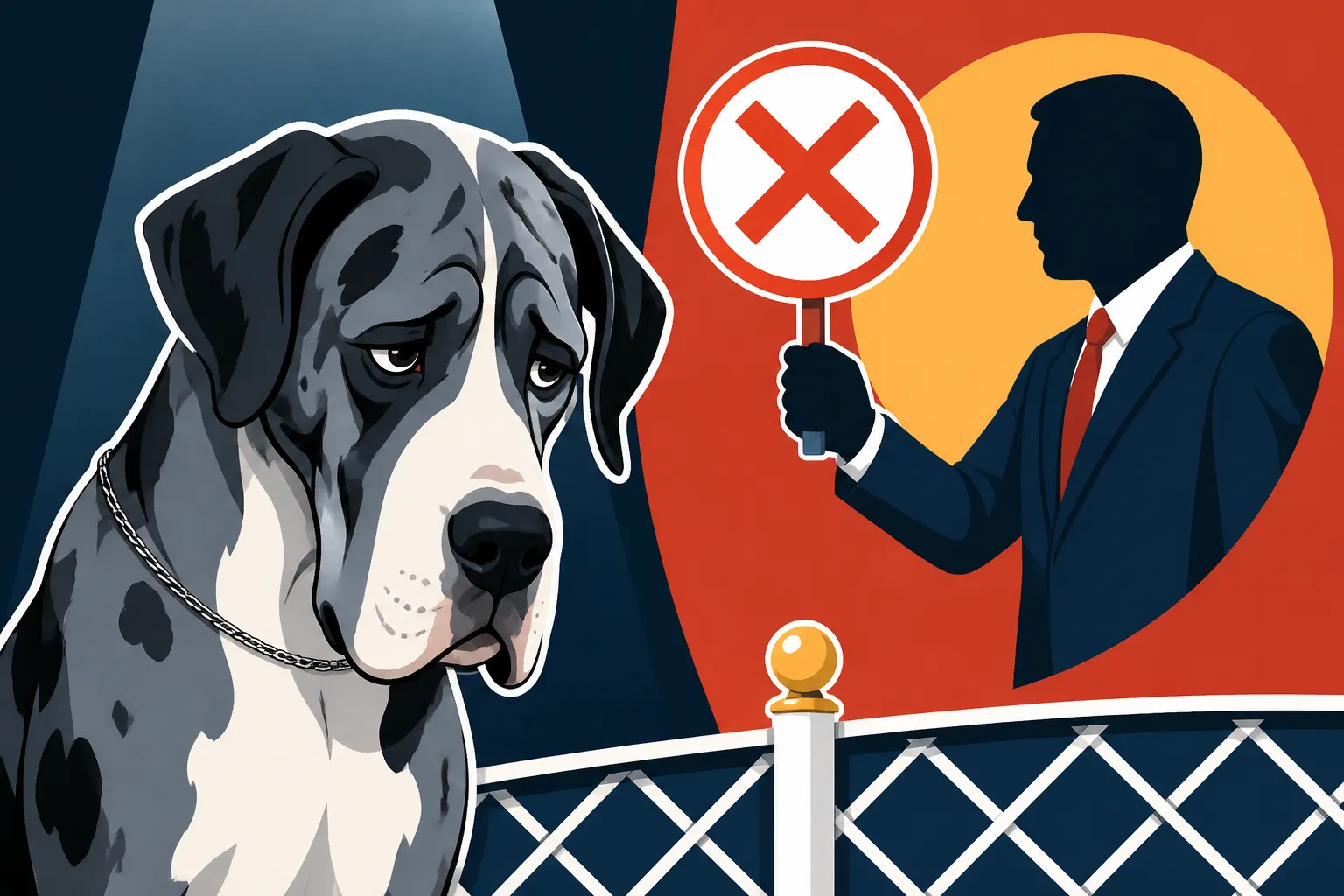
A disqualification, however, is an absolute, non-negotiable trait that immediately renders a dog ineligible to compete. It's like an instant ejection from the game. These are usually severe deviations that fundamentally undermine the breed's type, health, or temperament. A disqualified dog cannot earn championship points, nor can it advance to further rounds of judging. For example, if a Great Dane is shown to have an undershot bite, it’s a disqualification, no matter how perfect every other aspect of the dog might be. Knowing these DQs can save an aspiring exhibitor a lot of time and heartache, as a dog with a disqualifying trait can never be a conformation champion.
Physical Traits That Bar a Dane from the Ring
The Great Dane standard outlines very specific physical requirements, and any significant departure from these can quickly lead to disqualification in the show ring. These are often traits that either indicate a departure from the breed's intended function or could be linked to serious health issues.
Size, Substance, and Unacceptable Proportions
One of the most defining characteristics of a Great Dane is its imposing size and elegant build. The breed standard specifies minimum heights for both males and females. Generally, male Great Danes must be at least 30 inches tall at the shoulder, with 32 inches being preferred, while females should be at least 28 inches, with 30 inches preferred. A Great Dane that falls significantly under these minimums is usually subject to disqualification. Imagine bringing a dog to the ring that is simply too small to embody the "giant" aspect of the breed – it wouldn't fit the fundamental type.
Beyond just height, the standard also describes the desired "substance" and proportion. A Great Dane should be powerful and well-muscled, but also graceful and never cloddy or overly heavy. It should have a square or nearly square body, meaning its length from the point of shoulder to the point of buttock should be roughly equal to its height at the shoulder. A dog that is too long-backed, appearing much longer than it is tall, or one that is too short and cobby, would be considered faulty, and in extreme cases, a severe deviation in proportion could lead to disqualification if it impacts the dog's overall type and soundness. While being over height might be faulted, it’s typically the minimum height requirement that triggers a disqualification. The Thirty-Two Inch Male Great Dane outlines the preferred ideal, and dogs falling far outside this range may face issues.
The Crucial Details of the Head and Face
The Great Dane's head is often described as noble and elegant, with a long, rectangular shape, a distinct stop, and powerful jaws. Judges scrutinize every detail of the head, as it's a key indicator of breed type. Any major deviation here can be a serious issue. For instance, a "snipey" muzzle (one that's too pointed or weak) or a complete lack of a well-defined stop between the eyes would be considered very faulty.
The bite is another critical feature. The standard calls for a strong, full dentition with a scissor bite, where the upper teeth closely overlap the lower teeth. While a slight level bite might be a minor fault, a distinct overshot or undershot bite (where the upper jaw extends too far past the lower, or vice versa) is a disqualification. Missing teeth, other than the first premolars, can also lead to disqualification. Furthermore, eye color is important: dark eyes are generally preferred, and in certain coat colors, blue eyes can be a disqualifying fault. The Great Dane Head the Standard Wants delves into these specifics, highlighting how important these facial features are to the overall impression of a correct Dane. Even small details like the tightness of the eyelids – entropion (lids rolling inward) or ectropion (lids rolling outward) – can be serious faults that impede vision and potentially lead to DQs if severe.
When Color and Markings Go Beyond the Standard
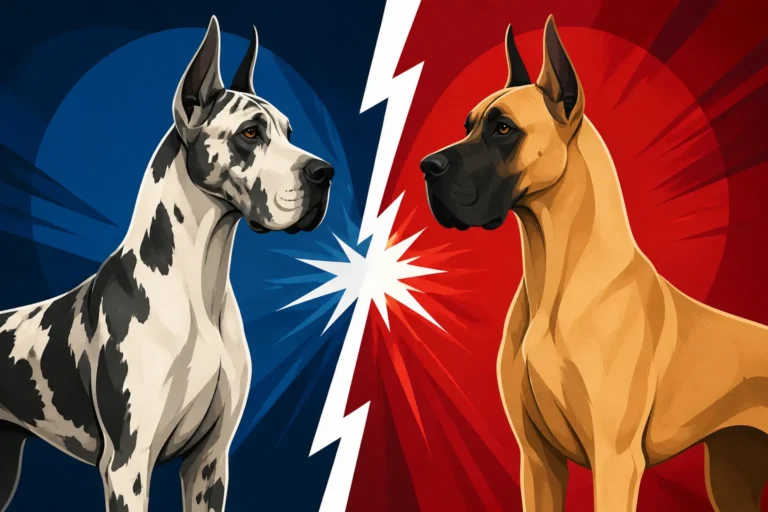
Great Danes come in a magnificent array of recognized colors, each with its own precise description in the breed standard. The six primary colors are Fawn, Brindle, Blue, Black, Harlequin, and Mantle. Any Great Dane presented in the show ring with a color or marking pattern that is not one of these recognized varieties is subject to immediate disqualification. This is one of the most common reasons pet owners are surprised their beautiful dog can't compete.
For example, a solid white Great Dane, or one with piebald markings (large, irregular patches of color on a white background, not fitting the Harlequin or Mantle patterns), would be disqualified. While merle was historically a disqualifying color, the breed standard has evolved, and Merle Great Danes Since 2019 are now allowed to compete and receive championship points. However, the merle pattern still needs to be presented correctly; dogs with excessive white, or those that look like a "double merle" (a genetic combination often leading to serious health issues like deafness and blindness), are heavily penalized or disqualified due to the health implications, even if the merle gene itself is now accepted. Understanding these color nuances is vital for anyone considering showing a Great Dane, as a stunning "rare" color found online might actually be a disqualifying fault in the ring.
Temperament and Movement: Non-Negotiables for the Show Ring
Beyond physical appearance, the Great Dane's disposition and its ability to move freely and powerfully are paramount in the show ring. A dog must not only look the part but also act and move as a Great Dane should.
The Gentle Giant's Temperament Under Scrutiny
The Great Dane is famously known as the "Gentle Giant," and this calm, friendly, and confident temperament is a cornerstone of the breed standard. In the show ring, a dog's temperament is under constant evaluation. Any sign of aggression towards people or other dogs, or extreme shyness that prevents the judge from examining the dog properly, will lead to immediate disqualification. A Great Dane that snarls, snaps, or lunges at a judge or fellow competitor, or one that cowers and tries to hide when approached, simply does not embody the required mental soundness of the breed.
Judges need to be able to safely and thoroughly examine the dog, including feeling its bone structure, checking its teeth, and assessing its coat. A dog that displays an unsound temperament makes this impossible and indicates a serious deviation from what a Great Dane should be. While it's natural for any dog to have moments of nervousness, persistent fear or unwarranted aggression is a red flag. A Great Dane That Is Anxious Rather Than Gentle might still be a wonderful pet, but such deep-seated anxiety could be a barrier in the high-pressure environment of the show ring. Judges are looking for a dog that is poised, self-assured, and cooperative, even in a busy and stimulating environment.
Movement That Fails the Test
A Great Dane's movement is a critical component of its evaluation. The standard calls for a long, powerful, and easy stride, indicating athleticism and structural soundness. The dog should move with grace and purpose, covering ground efficiently. Judges watch the dog move from the side, front, and rear to assess its gait, looking for proper reach and drive, level topline, and coordination.
Any major fault in movement can lead to disqualification. This includes severe lameness, obvious signs of uncoordinated movement, or a gait that is hampered by structural deformities. For example, a Great Dane that consistently "crabs" (moves with its body at an angle to its direction of travel), or one that has a short, choppy stride when it should be long and fluid, would be seriously faulted. Conditions like severe hip or elbow dysplasia, while not explicitly listed as an immediate DQ in the ring if the dog can still move, would almost certainly prevent a dog from ever being successfully shown due to the impact on its gait and overall soundness. Similarly, neurological conditions that cause incoordination, such as advanced stages of The Neck Condition That Trips a Great Dane Up (Wobbler's Syndrome), would render a dog unable to perform the required gait and would therefore be disqualified from competition.
Other Reasons a Dane Might Be Disqualified
Beyond the obvious physical and temperamental traits, there are other, sometimes less apparent, factors that can lead to a Great Dane being disqualified from the conformation ring. These often relate to maintaining the integrity of the breed's natural state or ensuring its overall health.
Hidden Health Issues and Unacceptable Alterations
While the show ring primarily assesses external conformation and temperament, certain underlying health conditions can indirectly lead to disqualification. For male Great Danes, cryptorchidism (the failure of one or both testicles to descend into the scrotum) is an absolute disqualification. This is not only a cosmetic issue but can also have health implications for the dog itself. Judges will always check for the presence of two descended testicles in males. Similarly, any evidence of debilitating health conditions that severely impact the dog's ability to move or function could result in a DQ, even if not explicitly written into every standard. This reinforces the importance of responsible breeding and thorough health testing, such as those covered in The Health Testing a Great Dane Breeder Owes You, to ensure that only sound and healthy dogs contribute to the gene pool.
Furthermore, any deliberate alteration of a dog's appearance that is not specifically allowed by the breed standard is a disqualification. While ear cropping is permitted and traditional for Great Danes in many parts of the world (and thus not a DQ if done correctly), other forms of cosmetic surgery – such as altering the tail, removing dewclaws beyond the usual front ones if not allowed, or any procedure designed to "fix" a natural fault – are grounds for disqualification. Dying fur, tattooing markings, or using any artificial means to enhance or alter a dog's natural appearance are also strictly forbidden. The rule is simple: the dog must be shown as nature intended, with only allowed modifications.
The Ethical Implications of Showing
The world of dog shows is built on ethical practices aimed at preserving and promoting healthy, sound examples of each breed. Judges and breed clubs emphasize this not just for competition but for the future of the breed. When a Great Dane exhibits a disqualifying fault, it's often viewed as a significant departure from this ideal. For instance, while merle Great Danes are now accepted, the dangers of breeding two merles together – often resulting in "double merle" offspring with severe vision and hearing impairments – highlight the ethical responsibilities of breeders. Why Breeders Avoid Merle to Merle Great Danes underscores this point, showing that even with acceptable colors, ethical considerations run deep.
A dog being disqualified from the ring doesn't diminish its value as a cherished family member. Many Great Danes with minor faults or even DQs make exceptional companions. For example, a Dane with a slightly undershot bite, or an "incorrect" color, might still possess the incredible temperament and loving nature that makes the breed so beloved. The show ring is a very specific arena, focused on a very particular ideal. It's perfectly okay for a dog to be a wonderful pet and not fit the strict criteria for a conformation champion. Organizations like Chewy offer a wide range of products for all dogs, regardless of their show ring potential, ensuring every Dane gets the care they deserve.
Here's a quick overview of some common disqualifications for Great Danes:
| Category | Disqualifying Traits (Examples) | Notes |
|---|---|---|
| Size | Below minimum height (Males < 30", Females < 28") | Being significantly undersized is a clear DQ. Being over height is usually a fault, not a DQ. |
| Temperament | Undue shyness, aggression towards people or other dogs | Any behavior making examination unsafe or impossible, or showing an unsound disposition. |
| Head & Bite | Overshot or Undershot bite (severe), missing teeth (beyond P1s) | Serious deviations from the scissor bite. |
| Color | Any color or marking pattern not recognized by the standard | Includes solid white, piebald, unrecognised patterns. Merle is now accepted (since 2019), but certain merle combinations may still be problematic. |
| Testicles | Monorchid or Cryptorchid (one or both testicles undescended in males) | A key health and conformation check for male dogs. |
| Alterations | Any unpermitted cosmetic surgery or alteration | Dying fur, fixing faults, etc., unless specifically allowed (like ear cropping in Danes). |
| Movement | Severe lameness, uncoordinated gait, debilitating structural issues | Impaired movement that prevents the dog from exhibiting the required powerful and fluid gait. |
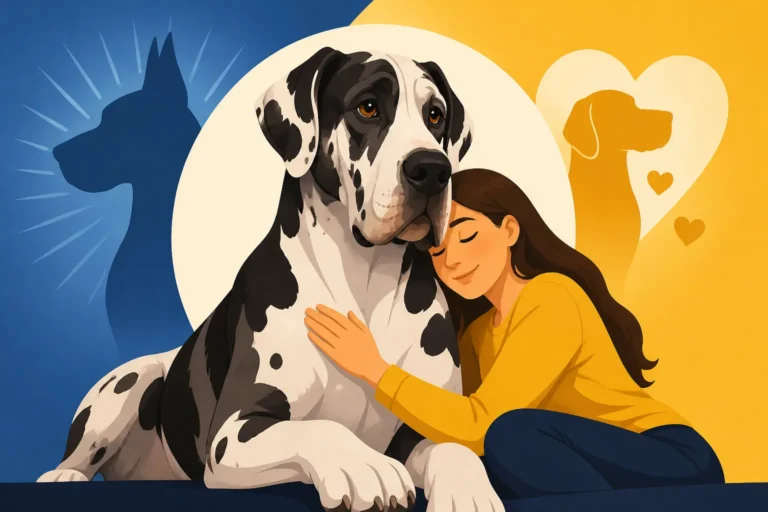
Ultimately, while the breed standard and disqualifications are vital for maintaining the integrity and future of the Great Dane breed, remember that the most important role your Great Dane plays is right by your side. A disqualification in the ring doesn't diminish the love, loyalty, and joy your gentle giant brings to your home every single day. Whether they're a show dog or a beloved couch potato, providing them with quality nutrition, like the wide variety available on Chewy, and regular veterinary care is what truly matters for their well-being.
Disclaimer
This article is for general informational purposes only and does not constitute professional advice. Laws, prices and regulations vary by location and change over time. Consult a qualified professional for guidance on your specific situation.