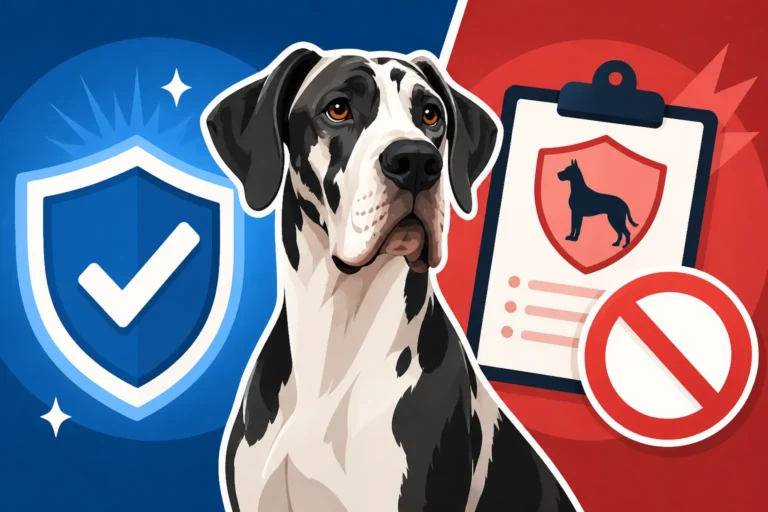
Questions to Ask Before Taking a Great Dane
Taking home a Great Dane can feel like welcoming a small horse into your living room—until the food bill, vet visit, crowded hallway, or enthusiastic greeting makes the decision feel much bigger. Asking practical questions before you commit helps you judge whether your home, schedule, budget, and expectations truly fit this giant breed, and gives you a better chance of choosing a dog whose needs you can meet.
Questions to Ask Yourself About Daily Life
Can my home and routine handle a giant dog?
A Great Dane does not necessarily need a sprawling estate, but it does need enough room to move comfortably. Think beyond floor area: Can the dog turn around in the space you have? Is there a clear path to the door? Will a full-sized bed fit without blocking a walkway? In a small apartment, a dog may technically fit but still make everyday tasks—carrying laundry, hosting guests, or getting to the kitchen—awkward.
Pay attention to your floors and stairs, too. Slippery surfaces can make it harder for a large dog to get up, turn, or navigate at speed. Runners can help create safer routes, while a plan for limiting access to steep stairs may be useful, especially for a puppy or a dog with mobility issues. If you rent, check your lease and building rules in writing rather than assuming that a dog-friendly policy includes a dog of this size.
Then look at your schedule. Great Danes need daily care, companionship, exercise suited to their age and condition, and regular opportunities to go outside. A dog left alone for long stretches may become distressed or destructive, and a young puppy needs more frequent supervision and bathroom breaks than an adult. If your workday is long, decide who can provide a midday visit before the dog arrives. Whether a Great Dane Manages a Full Work Day explores the practical realities of that schedule.
Can I safely manage the dog’s size and strength?
Be honest about how you would handle a dog that pulls toward a squirrel, rushes to greet a visitor, or plants its feet when it does not want to move. A Great Dane may be gentle and affectionate, but even a friendly dog can knock someone over or pull an unprepared handler off balance. Your plan should include leash training, calm greetings, reliable household boundaries, and the physical ability to guide the dog without relying on force.
Consider everyone who will share responsibility. A child should not be expected to control a powerful dog on a leash, and an older adult or someone with limited balance may need another person’s help for walks and veterinary visits. Even routine tasks—helping the dog into a vehicle, holding it steady for nail care, or supporting it if it becomes ill—can be demanding because of its size.
Ask yourself what you will do if the dog becomes frightened or uncomfortable. Will you have a secure way to keep visitors from crowding it? Can you separate it from other pets during meals? Do you have a safe car setup for transport? If you have a small vehicle, measure the cargo area and consider how a ramp or other assistance would work. Fitting a Great Dane Into a Car is worth considering before you bring home a dog that may not fit easily into your current vehicle.
Am I ready for the mess, space, and everyday logistics?
A short coat does not mean a mess-free home. Great Danes shed, track in dirt, and can leave drool on floors, furniture, and clothing—sometimes at a height that surprises people. Food and water bowls need enough room to use safely without becoming a constant obstacle, and a large dog’s bedding takes up more space than an ordinary cushion.
Before committing, picture a normal week rather than an ideal one. Where will the dog sleep? Where will wet paws be cleaned? Who will wipe drool from the wall or cabinet after a vigorous drink? Where will food be stored so the dog cannot reach it? If you are preparing a shopping list, compare measurements carefully. Chewy may be one place to check product dimensions for oversized beds, crates, or bowls, but confirm that an item fits your room and your dog rather than relying on a product label alone. The Kit a Great Dane Puppy Needs First can help you think through the practical setup.
Questions to Ask About the Dog’s Temperament and Needs
What does this particular dog act like around people and other animals?
Breed descriptions can offer a starting point, not a guarantee. One Great Dane may greet every visitor with a wagging tail; another may need time and space to feel comfortable around strangers. Ask what the dog has actually experienced: How does it respond to unfamiliar adults, children, other dogs, cats, handling, and ordinary household sounds? “Friendly” is less useful than a specific example, such as how the dog behaved when a visitor entered the home.
If children live in or visit your home, think about supervision and physical space. A Dane can accidentally step on a toddler, sweep a tail across a child’s face, or lean heavily against someone who is not expecting it. Children need simple, consistent rules: do not climb on the dog, disturb it while eating or sleeping, or approach it when it tries to move away. Adults remain responsible for supervising interactions. Great Danes in Homes With Small Children and A Great Dane Playing With a Small Dog offer more context for households with children or smaller pets.
For a rescue dog, ask about observed behavior and what is unknown. A dog may never have lived with cats or young children, which means the honest answer is “not tested,” not “definitely safe.” Plan introductions gradually, use barriers when appropriate, and give each animal a quiet place to retreat. If a dog growls, freezes, hides, or tries to escape, treat that as information about its comfort rather than a challenge to overpower.
How much activity and training will fit my life?
Great Danes benefit from regular movement, but puppies and young dogs need age-appropriate activity while they grow. Long forced runs, repetitive jumping, or strenuous exercise may not suit a growing giant-breed dog. Ask the breeder, rescue, or veterinarian how to structure activity for the dog’s age and health, and favor calm training, controlled walks, and safe opportunities to explore over trying to exhaust the dog.
Training is a practical safety issue, not an optional extra. A dog that can settle on a mat, wait at a doorway, walk without dragging its handler, and accept routine handling is easier to live with at any size. Start early and reward the behaviors you want. Physical corrections can be risky and may increase fear or resistance; consistent, reward-based teaching is generally a safer foundation. If you are choosing a trainer, ask whether they have experience with giant breeds and can demonstrate humane methods.
Build enrichment into ordinary life, too. A quiet sniffing walk, a food puzzle suited to the dog, or a short training session can provide useful mental activity without requiring an enormous yard. A yard can be convenient, but it does not replace companionship, supervision, or training. Whether a Great Dane Actually Uses a Big Yard and The Cues a Great Dane Needs Before Six Months can help you plan realistic routines.
What will change as the dog ages?
A puppy’s needs are very different from an adult’s, and an adult’s needs may change again with age. Ask what support the dog may need if it becomes less steady, struggles to rise, or cannot comfortably jump into a car. A ramp, non-slip flooring, appropriately supportive bedding, and a plan for getting the dog to veterinary care can become important parts of daily life.
It is also worth asking how you would respond if the dog developed a health problem that required frequent appointments or restricted activity. Would someone be able to help with transport? Can you adapt the home if stairs become difficult? These questions are not pessimistic; they are part of making a responsible plan for a large dog whose care may become physically demanding. Whether an Older Owner Can Manage a Great Dane may also be helpful if mobility or lifting is a concern in your household.
Questions to Ask About Health and Cost
Can I afford routine care and a sudden emergency?
The total cost of Great Dane ownership includes more than food. Budget for routine veterinary care, preventive medications, training, equipment, boarding or pet care, and replacing items that wear out or prove too small. Medication and equipment may need to be suitable for a very large dog, so ordinary household estimates can underestimate the expense.
Emergency care deserves its own plan. A sudden illness or injury can mean urgent transport, diagnostics, treatment, and follow-up visits. Before bringing a dog home, decide how you would cover an unexpected veterinary expense. Options vary by household and may include savings, insurance, or a combination. Review policy details carefully if you consider insurance, especially how it treats pre-existing conditions, exclusions, reimbursement, and the claims process. Do not assume that every condition or procedure will be covered.
| Planning area | Question to ask | Why it matters |
|---|---|---|
| Routine care | Can I budget for checkups, preventive care, and dental needs? | Ongoing care is part of ownership, not an occasional extra. |
| Emergency funds | What would I do if the dog needed urgent diagnostics or treatment? | A prepared plan can reduce stressful delays during an emergency. |
| Equipment | Have I measured for a bed, crate, bowls, and vehicle setup? | Giant-breed equipment takes space and may need replacing as a puppy grows. |
| Help at home | Who can assist with care if the dog is sick or difficult to move? | A large dog may be impossible for one person to lift safely. |
| Time | Who handles walks, training, and bathroom breaks when I am unavailable? | Reliable care matters every day, not only when it is convenient. |
If you are comparing food and equipment, use the dog’s needs and your storage space as the guide. Chewy may be useful for checking sizes and product descriptions for large-dog supplies, but compare measurements and return terms before ordering. A bed that looks generous online can still be too short for a Dane stretched out on its side.
What health information should I ask for?
For a puppy, ask the breeder what health screening has been completed on the parents and what records will accompany the puppy. Ask for the actual documentation, not only a verbal assurance that the parents are “healthy.” Find out which screening applies to the breed and what the results mean. A responsible breeder should be willing to discuss health honestly, answer follow-up questions, and explain the care history of the litter. The Health Testing a Great Dane Breeder Owes You provides a useful checklist of the kinds of information to discuss.
Ask about the puppy’s veterinary examination, vaccination and parasite-prevention history, feeding routine, and any signs of illness or injury. Find out what the puppy currently eats and how to transition food gradually if a change is needed. Be wary of pressure to make a rushed decision or claims that registration papers alone prove a puppy is healthy. Papers identify ancestry; they do not replace health records or a veterinary relationship.
For an adult or rescue Dane, ask for available medical records and a clear account of known diagnoses, medications, prior surgeries, and mobility concerns. Ask what the organization does not know, too. If records are incomplete, schedule a veterinary visit soon after adoption so you can establish a baseline and discuss a care plan. Reading a Great Dane Puppy's Health Papers can help you interpret puppy records, while Questions to Ask Before Taking a Great Dane is a helpful topic to revisit as you prepare your own list.
Questions to Ask a Breeder or Rescue Before You Commit
How will you assess whether this dog is a good match?
A thoughtful breeder or rescue should want to know about your household, schedule, experience, and plans for training. They should also be able to describe the dog as an individual: what it enjoys, what unsettles it, how it handles handling, and what kind of home may suit it. Ask how the organization made that assessment and whether the dog has lived in a home, foster setting, kennel, or another environment.
Be cautious if the conversation is focused only on getting a deposit or arranging a quick pickup. You should have time to ask questions, review records, meet the dog when possible, and consider whether the fit is right. For a puppy, ask to meet the mother when practical and appropriate, and learn about the environment in which the litter is raised. For an adult, ask how the dog behaves during ordinary routines—not only during a brief, exciting meeting.
A good match is about more than appearance or color. Ask whether the dog’s energy, confidence, training needs, and experience align with your home. If you have another dog, ask how introductions are handled and whether the dogs can meet safely. If you have children, be specific about their ages and routines rather than assuming a dog is comfortable with all children.
What support and records will I receive after bringing the dog home?
Ask what paperwork, veterinary records, identification details, and feeding instructions will come with the dog. Find out who to contact if you have questions after the transition and whether the breeder or rescue expects the dog to be returned to them if you can no longer care for it. Clarify any written agreement before signing; take time to read it rather than relying on a quick verbal explanation.
For a puppy, ask how the breeder starts socialization, what the puppy has experienced, and what routines are already established. Ask what food the puppy eats and how bathroom breaks, sleep, and handling have been introduced. For a rescue, ask about the transition plan, familiar commands, known fears, and what the organization recommends for the first few days. A dog that is quiet or withdrawn in a new environment may need time to show its usual personality.
Before pickup, prepare a calm arrival plan. Have food and water ready, clear a resting area, and limit visitors while the dog adjusts. Measure and arrange the sleeping space in advance; Chewy is another place where you can compare dimensions for large-dog supplies, but verify that the item will fit both your room and the dog’s expected size. If you need a few essentials quickly, prioritize safe containment, suitable bedding, food the dog already knows, and a secure leash and harness.
What are my non-negotiables before saying yes?
Write down the conditions that must be met before you commit. These might include landlord approval, a safe way to transport the dog, a plan for daily care during work hours, veterinary records, a realistic emergency-funding approach, and agreement among everyone in the household. If one of those pieces is missing, pause and solve it rather than hoping it will work out after the dog arrives.
A simple readiness check can make the decision clearer:
- Measure the spaces the dog will use, including doorways, sleeping areas, and vehicle access.
- Confirm that everyone responsible for the dog agrees on training, household rules, and daily care.
- Identify a veterinarian and discuss the dog’s records, preventive care, and any known health needs.
- Decide who will provide care when you travel, work late, or become ill.
- Review the breeder’s or rescue’s records and written agreement before making a final commitment.
- Make a first-week plan that gives the dog time to settle without a crowded schedule.
It is fine to decide that now is not the right time. Waiting until you have the space, support, and budget in place is kinder than bringing home a dog and discovering that essential parts of daily care are unmanageable. If you do move forward, your questions should leave you with a clear picture of both the dog’s needs and your own responsibilities.
Disclaimer
This article is for general informational purposes only and does not constitute professional advice. Laws, prices and regulations vary by location and change over time. Consult a qualified professional for guidance on your specific situation.