The Minimum Size a Great Dane Has to Reach
It's easy to look at a Great Dane and assume they're all just massive, towering dogs, often bigger than you even imagined. But what many new and prospective Great Dane owners don't realize is that while they are indeed a giant breed, there's actually a minimum size they must reach to be considered within the breed standard. This guide will delve into those precise measurements, why they matter, and what it means for owning one of these magnificent, albeit sometimes surprisingly compact (for a Dane!), dogs.
Understanding the Great Dane Breed Standard for Size
The Great Dane, often called the "Apollo of Dogs," is renowned for its imposing yet elegant stature. However, this isn't just about being "big"; it's about meeting specific physical criteria that define the breed. These standards aren't arbitrary; they’re carefully crafted to preserve the breed's historical function, health, and characteristic appearance. When you hear breeders talk about "type" or "conformation," they're often referring directly to how well a dog adheres to these detailed specifications, including size.
Why Standards Exist: More Than Just Bragging Rights
Breed standards serve multiple crucial purposes. First, they act as a blueprint, guiding ethical breeders in their efforts to produce healthy, predictable offspring that embody the ideal characteristics of the breed. Without these standards, you'd see a huge variation in appearance, temperament, and even health within what's supposed to be a single breed. For Great Danes, a breed with unique health challenges tied to its size, maintaining a consistent standard helps ensure that dogs are bred for soundness and function, not just extreme dimensions. It’s not just about winning ribbons in the show ring; it's about preserving the integrity and future well-being of the entire breed. Think of it as ensuring the Great Dane of tomorrow still looks, acts, and thrives like the Great Dane of yesterday.
The American Kennel Club's AKC Official Stance on Height
In the United States, the American Kennel Club (AKC) sets the official breed standard for the Great Dane, which is widely recognized and followed by breeders and enthusiasts. This standard is incredibly detailed, covering everything from head shape to tail set, but one of its most defining characteristics is the required height. The AKC standard explicitly states minimum heights for both males and females at the shoulder (withers). These aren't just suggestions; they are hard lines that define what is considered an acceptable Great Dane. A dog falling significantly below these minimums might not only be disqualified from conformation events but could also raise questions about its lineage or overall development, which is something a responsible breeder would always be transparent about. It helps protect the buyer from purchasing a dog that isn't truly representative of the breed.
Beyond Height: Weight and Overall Substance
While height is a primary focus when discussing a Great Dane's size, it's vital to remember that the standard also emphasizes "substance" and "proportion." A Great Dane isn't meant to be a tall, gangly dog; it should have a powerful, muscular build that's in proportion to its height. This means good bone structure and adequate weight to support its frame. A Great Dane that meets the minimum height requirement but is incredibly lean or fine-boned might still be considered outside the ideal standard because it lacks the necessary substance. Conversely, an overweight Dane, while perhaps appearing massive, is also not meeting the ideal. The balance between height, muscle, and bone contributes to the breed's characteristic powerful yet elegant silhouette. It’s about a harmonious overall picture, not just a single measurement.
The Specific Minimums: What Numbers Are We Talking About?
So, what are these all-important numbers? When you're looking at a Great Dane puppy or adult, knowing these minimums can give you a better idea of whether the dog truly meets the breed's established physical ideals. It’s not just for show-dog hopefuls; it’s for anyone who wants to understand what a well-bred Great Dane should embody. These figures are critical reference points for both breeders striving for excellence and owners seeking a true representation of the breed.
Diving into Male Great Dane Minimums
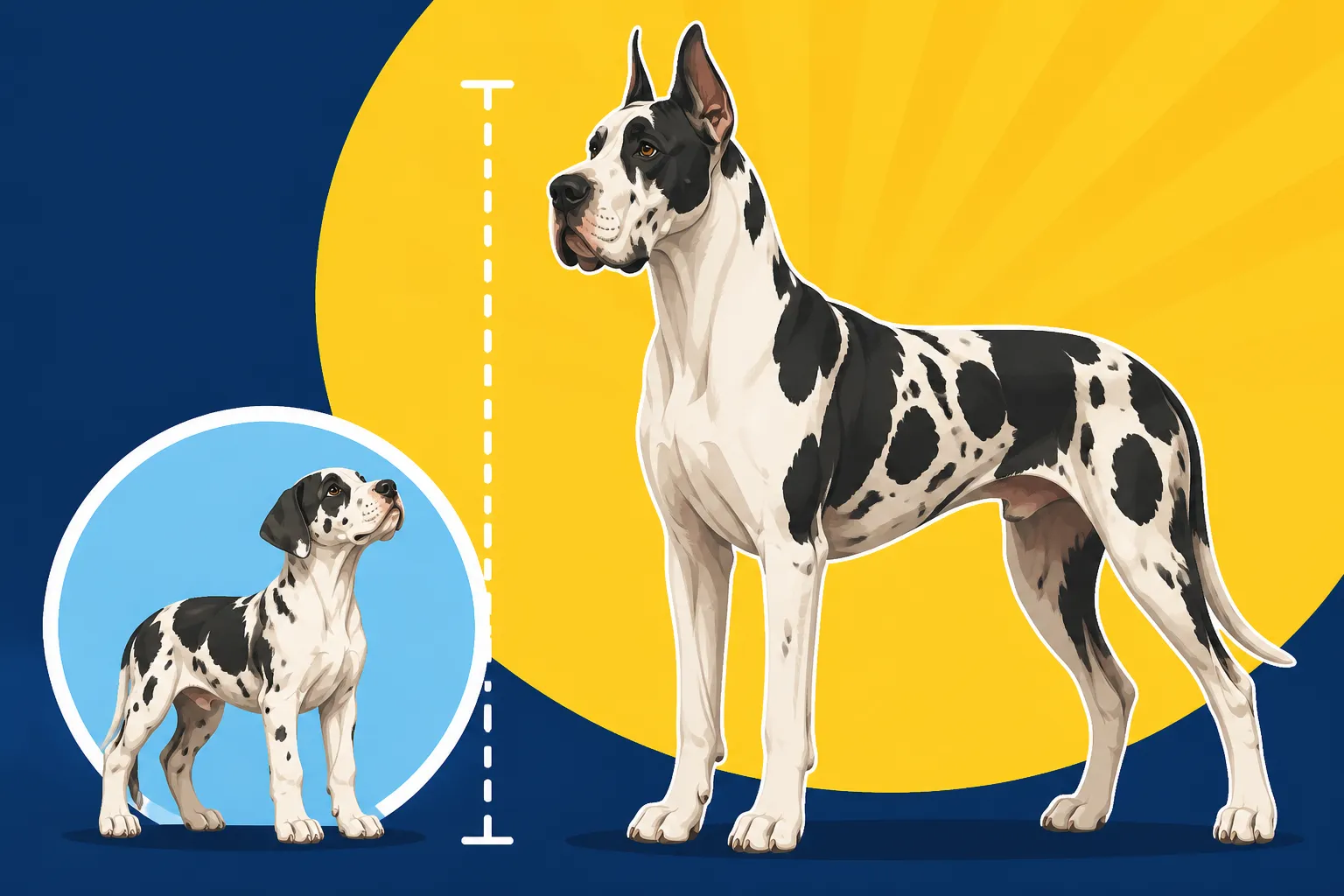
For male Great Danes, the AKC standard dictates a minimum height of 30 inches at the withers. The withers are the highest point of the shoulder blades, where the neck meets the back. This measurement is taken with the dog standing squarely on a flat surface. While 30 inches is the minimum, the ideal height for a male Great Dane is generally considered to be 32 inches or more. So, while a 30-inch male is acceptable, a taller, well-proportioned male is often preferred in the show ring, provided that height doesn't come at the expense of overall balance or soundness. You'll often hear discussions about The Thirty-Two Inch Male Great Dane when people are talking about the preferred height. Anything below this 30-inch mark for a male would be considered a serious fault by judges and potentially indicative of poor breeding practices or developmental issues.
Female Great Dane Minimums: A Different Scale
Females, as in many dog breeds, are typically smaller than their male counterparts, and the Great Dane standard reflects this. For female Great Danes, the AKC minimum height is 28 inches at the withers. Similar to males, while 28 inches is the minimum, the ideal female stands 30 inches or more. It’s not uncommon to find a well-bred female who is nearly as tall as some males, but they usually maintain a more feminine structure and overall appearance. Discussions like Whether a Female Great Dane Is Much Smaller often clarify these distinctions. Again, a female falling below 28 inches would be considered outside the standard and a fault. The difference in minimums ensures that breeders aren't trying to force females into a male's build, preserving the natural differences between the sexes while still adhering to the giant breed expectation.
The "Too Small" Great Dane and What It Means
When a Great Dane falls below the minimum height standard, it's considered a "fault." In the show ring, this could lead to disqualification. For pet owners, it might not seem like a big deal, but it can sometimes be a red flag. A significantly undersized Great Dane could be the result of poor nutrition during its critical growth phases, which could lead to lasting health issues. More concerning, it could indicate poor breeding practices, perhaps from a breeder who isn't prioritizing health and adherence to the standard, or who may be breeding runts or dogs with stunted growth. While a smaller Dane might still be a wonderful companion, it's important to understand why they are small. It's always wise to ask a breeder about the typical size of their lines and to see the parents if possible, to get a realistic expectation of your puppy's adult size. This isn't about shaming smaller Danes; it's about being informed.
Here's a quick overview of the AKC minimums:
| Category | Minimum Height at Withers | Ideal Height (approx.) | Notes |
|---|---|---|---|
| Male Great Dane | 30 inches | 32 inches or more | Must have good substance and bone in proportion to height |
| Female Great Dane | 28 inches | 30 inches or more | Must have good substance and bone in proportion to height |
How Great Danes Grow: From Tiny Pup to Titan
The journey from a tiny, floppy-eared Great Dane puppy to a majestic adult is nothing short of incredible. They are one of the fastest-growing breeds, experiencing an almost unbelievable growth spurt in their first year. This rapid development, however, comes with its own set of considerations, especially when it comes to hitting those all-important minimum size markers. Understanding their growth curve is key to ensuring they develop properly and healthily, reaching their full, impressive potential.
The Rapid Growth Phase: Hitting Those Milestones
Great Dane puppies are like little sponges, soaking up nutrients and growing at an astonishing rate. In their first year, they can go from a few pounds to well over 100 pounds, often doubling or even tripling their size in a matter of months. This intense growth period is when proper nutrition and controlled exercise are absolutely paramount. Feeding them the right large-breed puppy food, formulated with specific calcium and phosphorus ratios, is essential to prevent Why Fast Growth Wrecks Great Dane Joints. You don't want to encourage too rapid growth, even if it seems counterintuitive for a giant breed. Instead, a steady, healthy growth rate is the goal. Monitoring their weight and height, perhaps using a growth chart like The Great Dane Growth Curve Month by Month, can help ensure they're on track without overshooting or undershooting crucial milestones. Brands like Chewy offer a wide selection of large breed puppy foods designed specifically for these growth needs, so you can easily find options that support healthy development.
When Does a Great Dane Stop Growing Taller?
While Great Danes reach the bulk of their height in their first year, they don't typically stop growing entirely until they are closer to 18 to 24 months old. Most of their vertical growth – the "getting taller" part – usually slows down significantly by 12 to 14 months. After this point, any further increase in height is minimal. However, they continue to "fill out" and gain substance, muscle, and chest depth well into their second year. So, while your Great Dane might hit that 30-inch mark for males or 28-inch mark for females around a year old, they will still look a bit gangly and adolescent. It's during this second year that they truly mature into the powerful, imposing adults we recognize. It’s a bit like a teenager who gets tall very quickly but then takes a couple more years to fill out into an adult physique.
Filling Out: The Later Stages of Development
After the initial burst of vertical growth, the focus shifts to horizontal development. Your Great Dane will continue to add muscle, widen in the chest, and gain overall body mass. This filling-out process can continue until they are two, sometimes even three years old. This is why maintaining appropriate exercise and nutrition remains important even after their first birthday. You're no longer trying to prevent rapid growth, but rather to support the development of strong muscles and a healthy, mature physique. Regular vet check-ups can help monitor their progress, ensuring they're developing appropriately and not becoming either underweight or overweight, which can both be detrimental to their long-term joint health. Choosing age-appropriate foods, which you can easily find on Chewy, is also a good idea during this phase to support their changing needs.
The Health Implications of Size and Conformation
The size of a Great Dane is inextricably linked to its health. While meeting the minimum standard is important for breed integrity, their very large stature also predisposes them to certain health conditions. Understanding these connections helps owners and breeders make informed decisions to ensure the best possible quality of life for these magnificent dogs. It's a delicate balance: achieving the ideal size without sacrificing the dog's well-being.
When "Too Small" Might Indicate Health Issues
While many people worry about Great Danes growing too large, being "too small" for the breed standard can also be a red flag for underlying health concerns. A Great Dane that fails to reach its minimum height might have experienced malnutrition during crucial growth periods, potentially leading to underdeveloped bones or organs. It could also indicate a genetic predisposition to stunted growth, or even an undiagnosed metabolic issue. In some cases, a smaller-than-average size might be a sign of improper breeding, where health and genetic soundness were not prioritized. For example, some conditions can affect growth plates or overall development. This is why when looking for a puppy, it's so important to ask about Bone Development Problems in a Great Dane Puppy and ensure that breeders are transparent about the health history of their lines.
The Challenges of Extreme Size: Both Too Small and Too Large
The inherent challenges of Great Dane ownership aren't just about managing a big dog; they're about managing a giant dog with a unique physiology. Whether a Great Dane is slightly undersized or exceptionally large, both extremes can present health considerations.
For an undersized Dane, beyond potential developmental issues, their structure might not be as robust, potentially making them more prone to certain injuries.
On the other end of the spectrum, exceptionally large Great Danes (well over the ideal 32 inches for males or 30 inches for females) can face increased strain on their joints, heart, and other organ systems. While impressive to behold, extreme size can exacerbate common Great Dane health problems such as The Heart Muscle Disease Great Danes Are Prone To or orthopedic issues like hip and elbow dysplasia. Their sheer weight can also make routine activities like getting up or navigating stairs more challenging as they age. This highlights why the breed standard aims for an ideal size, not just the biggest possible.
Ethical Breeding and Adhering to the Standard
Responsible breeding is the cornerstone of Great Dane health and proper conformation. Ethical breeders don't just aim for pretty puppies; they strive to produce dogs that meet the breed standard in terms of size, temperament, and, most importantly, health. This involves extensive health testing of parent dogs for conditions common in the breed, such as cardiac issues, thyroid disease, and orthopedic problems. You'll want to ask about The Health Testing a Great Dane Breeder Owes You when considering a puppy. A breeder who consistently produces dogs that fall significantly below the minimum size might not be selecting for the robust health and genetic traits that lead to proper Great Dane development. Similarly, a breeder who prioritizes massive size above all else might inadvertently be breeding dogs prone to orthopedic or cardiac issues. Understanding What a Great Dane Breeder Should Be Screening For is crucial for ensuring you're getting a puppy from a responsible source committed to the breed's well-being, not just its size.
Living with a Great Dane: Accommodating Their Stature
Regardless of whether your Great Dane is at the minimum size or a bit taller, living with a dog of this magnitude requires some adjustments. Their sheer presence impacts everything from the layout of your home to the type of supplies you buy. Embracing their size and planning accordingly is a huge part of being a responsible and happy Great Dane owner. It’s not just about space; it’s about making their world, and yours, comfortable and safe.
Space Requirements for Even a "Minimum" Dane
Even a Great Dane at the minimum height of 28 or 30 inches is still a very large dog. They take up more floor space than most breeds, both when standing and when stretched out for a nap. While they are often described as "indoor dogs" who don't necessarily need a huge yard (as long as they get adequate walks), they do need enough room inside the house to move around comfortably without constantly knocking things over or feeling cramped. A small apartment might feel restrictive, especially for an active younger Dane. Consider their long reach – anything on a counter or low shelf is fair game! You'll often find yourself reorganizing your home, moving fragile items, and perhaps investing in heavier, more stable furniture to withstand an accidental tail wag. It's a common misconception that their calm demeanor means they don't need much space, but even a calm giant needs room to exist. For more on this, you might check out How Much Space a Great Dane Really Needs.
Equipment Sizing: Bowls, Beds, and Beyond
This is where the reality of Great Dane ownership really hits home. You can't just pick up standard dog supplies for a Dane; everything has to be appropriately sized.
- Food and Water Bowls: These need to be large capacity. You'll find yourself refilling water bowls frequently. Many owners opt for elevated bowls, though the debate around whether they truly prevent bloat is ongoing. Regardless, for comfort, an appropriately sized stand is helpful for a tall dog.
- Beds: Forget the small, plush cushions. Great Danes need large, orthopedic beds that can support their heavy joints and prevent pressure sores, especially on their elbows. Look for beds with high-density foam that won't flatten out under their weight. You can find robust, giant-sized options on Chewy that cater specifically to large breeds.
- Crates: If you plan to crate train, you'll need one of the largest crates on the market – often an "XXL" or "Giant" size. This is a significant investment, but crucial for safety and training.
- Collars, Harnesses, and Leashes: These need to be strong and durable, designed for a dog that can easily outweigh an adult human. A cheap leash won't cut it when you're walking a powerful Dane.
- Toys: Great Danes have powerful jaws, so toys need to be extra tough and too large to be a choking hazard.
Every piece of equipment needs to be scaled up, and these items often come with a higher price tag than those for smaller breeds.
The Gentle Giant Reality: Size vs. Temperament
One of the most enduring myths about Great Danes is that their immense size automatically makes them clumsy or aggressive. In reality, well-bred Great Danes are famously known as "gentle giants." Their temperament is typically calm, patient, and affectionate, especially with their families. They are often incredibly sensitive and seek closeness with their people, often attempting to be lapdogs despite their size.
However, their size does mean that manners are paramount. A playful nudge from a 150-pound dog can easily knock over an adult, let alone a child. This is why early and consistent training in The Manners a Great Dane Needs Before It Grows is non-negotiable. Teaching cues like "off" and "place" can prevent accidental body slams or counter-surfing incidents. Their gentle nature often means they are good with children and other pets, but supervision is always key because an accidental step or tail wag can still cause injury due to their sheer mass. It’s about teaching them to be mindful of their vast presence in the world.
Disclaimer
This article is for general informational purposes only and does not constitute professional advice. Laws, prices and regulations vary by location and change over time. Consult a qualified professional for guidance on your specific situation.