Insuring a Great Dane Against Bloat and Heart Bills
One of the biggest worries that keeps Great Dane owners up at night isn't just their dog's enormous presence, but the looming shadow of potential health crises. These magnificent giants, as much as we adore them, come with a predisposition to certain serious conditions like bloat and various heart diseases, which can lead to heartbreakingly high veterinary bills. This guide will walk you through the often-complex world of pet insurance, focusing on how it can offer a vital financial safety net for these specific, and often devastating, Great Dane health challenges.
Understanding the Financial Burden of Great Dane Health Issues
Let's be frank: owning a Great Dane is a significant financial commitment. Beyond the daily mountain of food and the necessity for oversized everything, there's the ever-present concern about their health. Unlike smaller breeds, even routine vet visits often cost more due to the sheer volume of medication, anesthesia, or even just the time required for a large dog. When a serious illness strikes, these costs can skyrocket into the thousands, sometimes tens of thousands, of dollars. It’s not just an inconvenience; it’s a potential financial catastrophe for many families.
Bloat as a Sudden, Costly Emergency
There are few phrases that strike more terror into a Great Dane owner's heart than "gastric dilatation-volvulus" or "bloat." It's a sudden, life-threatening condition where the stomach fills with gas and then twists upon itself, cutting off blood supply. The onset is rapid, often happening without much warning, and time is absolutely critical. We've all heard the stories, or worse, lived through them: frantic late-night dashes to the emergency vet, the agonizing wait, and then the stark reality of the bill. You can learn more about the critical nature of bloat in our detailed article, Bloat in a Great Dane and the One in Three Odds.
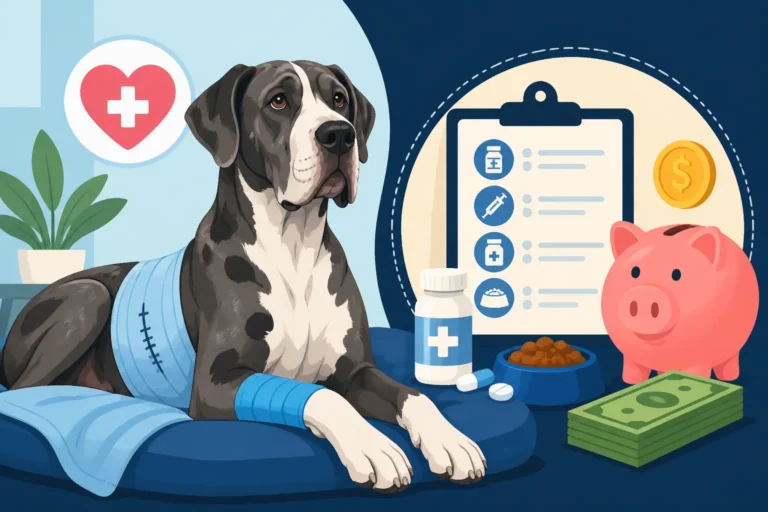
The costs associated with emergency bloat surgery are staggering. You're looking at initial emergency examination fees, X-rays, intravenous fluids, pain medication, and the highly specialized surgery itself to untwist the stomach and often perform a gastropexy (stomach tacking) to prevent future occurrences. Post-operative care includes overnight hospitalization, more medication, and follow-up visits. Without insurance, these bills can easily range from $3,000 to upwards of $10,000, depending on complications and the veterinary facility. This isn't a bill you can plan for; it's an immediate, unavoidable expense that demands swift action, often leaving owners reeling from the financial shock on top of the emotional trauma. For more on what this emergency might cost, see The Night a Great Dane Bloats and What It Costs.
Chronic Heart Conditions and Lifelong Management
Great Danes are unfortunately prone to certain serious heart conditions, with Dilated Cardiomyopathy (DCM) being particularly prevalent. DCM is a disease of the heart muscle that causes the heart chambers to enlarge and their walls to thin, making it difficult for the heart to pump blood efficiently. This condition often progresses slowly, but once symptoms appear, they can worsen rapidly. The diagnosis itself involves expensive cardiac workups, including echocardiograms, EKGs, and potentially Holter monitoring to track heart rhythms over a longer period. Many owners have been through the harrowing experience of their beloved Dane struggling with breathing, coughing, or simply not having the energy they once did, only to discover a heartbreaking diagnosis. For a deeper dive, check out The Heart Muscle Disease Great Danes Are Prone To.
Managing DCM or other heart issues in a Great Dane is a lifelong commitment, both emotionally and financially. It involves a regimen of daily medications, which, given a Great Dane's large size, are dosed at significantly higher levels than for a smaller dog. These medications can be expensive, and they're often necessary for the remainder of the dog's life. Regular follow-up appointments with a veterinary cardiologist, repeat echocardiograms, and blood tests to monitor organ function and medication levels all add up. The cumulative cost over several years can easily reach tens of thousands of dollars. Pet insurance can be a lifeline here, covering a significant portion of these ongoing expenses, making it feasible to provide the best possible care for your dog without completely depleting your savings. The article on Monthly Medications Dosed at Great Dane Weight further highlights these ongoing costs.
The Reality of Giant Breed Vet Bills
It's not just bloat and heart conditions, though those are certainly two of the most significant concerns for Great Dane owners. These large dogs are susceptible to a range of other health issues, including orthopedic problems like hip and elbow dysplasia, various cancers such as osteosarcoma, and neurological conditions like Wobbler Syndrome. Each of these can lead to extensive diagnostic testing, specialist consultations, surgeries, physical therapy, and long-term medication. The sheer scale of a Great Dane means everything from a dose of antibiotics to the cost of an MRI is amplified.
Consider a Great Dane with a fracture from something as simple as misstepping off a curb. The cost of anesthesia, complex orthopedic surgery, and several weeks of recovery and rehabilitation can be astronomical. Or think about the impact of Bone Cancer in a Great Dane, which often requires amputation and chemotherapy – a path that is both emotionally and financially draining. The common thread here is that every veterinary procedure, every medication, and every diagnostic test is scaled up, simply because our dogs are so much bigger. This reality makes a robust financial plan, often involving pet insurance, not just a good idea, but a near necessity for responsible Great Dane ownership. You can find more details about other joint issues in Great Dane Hips, Elbows and Growing Joints.
How Pet Insurance Works for Great Danes
Pet insurance, at its core, is designed to help alleviate the financial strain of unexpected veterinary care. For Great Dane owners, this isn't a luxury; it's a strategic tool to manage the high costs associated with their breed-specific health challenges. Understanding the different components of a policy – deductibles, reimbursement rates, and annual limits – is crucial for making an informed decision that truly protects your gentle giant.
Deductibles, Reimbursement Rates, and Annual Limits Explained
When you're looking at pet insurance policies, you'll inevitably encounter these three key terms, and understanding them is fundamental to knowing what you're actually paying for and what you'll get back.
-
Deductible: This is the amount of money you need to pay out of pocket for covered veterinary services before your insurance plan starts to reimburse you. Think of it like the deductible on your car insurance or health insurance. Common deductible amounts for pet insurance might be $250, $500, or even $1,000. Generally, a higher deductible means a lower monthly premium, and vice-versa. For a Great Dane, given the potential for high-cost incidents like bloat surgery or long-term heart medication, choosing a deductible you can comfortably afford to pay once in a year (or per condition, depending on the policy structure) is vital. You don't want the deductible itself to be a barrier to seeking urgent care.
-
Reimbursement Rate: This is the percentage of the covered veterinary bill that the insurance company will pay after your deductible has been met. Common reimbursement rates are 70%, 80%, or 90%. So, if your vet bill is $5,000 and your deductible is $500, and you have an 80% reimbursement rate, you'd pay the $500 deductible, leaving $4,500. The insurer would then pay 80% of that $4,500 ($3,600), and you'd be responsible for the remaining 20% ($900). For expensive procedures, even a 70% reimbursement rate can save you thousands, but opting for 80% or 90% can provide even greater peace of mind, especially considering the higher baseline costs of Great Dane care.
-
Annual Limit: This is the maximum amount of money the insurance company will pay out for covered services within a 12-month policy period. Limits can range from $5,000 to unlimited. For a Great Dane, unlimited annual coverage is often the most prudent choice, if your budget allows. As we've discussed, a single major event like complicated bloat surgery or a year of advanced DCM treatment can easily exceed lower annual limits. Imagine having a $5,000 annual limit, only for your Great Dane to need $8,000 worth of care. You'd quickly hit your cap and be responsible for the remaining $3,000 yourself. Companies like Healthy Paws are known for offering unlimited annual benefits, which can be a huge comfort for Great Dane owners facing potentially massive bills.
Accident & Illness Plans vs. Wellness Plans
When you're sifting through pet insurance options, you'll generally find two main types of coverage: Accident & Illness plans and Wellness plans. It's important to understand the distinction, especially for a breed with specific health predispositions like the Great Dane.
-
Accident & Illness Plans: These are the most common and comprehensive types of pet insurance policies, and frankly, the most critical for Great Dane owners. They cover unexpected events such as injuries (like a broken leg from a fall) and illnesses (like cancer, bloat, or heart disease). This coverage typically includes diagnostic tests (X-rays, ultrasounds, bloodwork), emergency care, surgeries, hospitalizations, prescription medications, and specialist visits. This is where you get protection against the truly crippling vet bills that can arise from conditions like Bloat in a Great Dane and the One in Three Odds or the onset of The Heart Muscle Disease Great Danes Are Prone To. For Great Danes, whose potential for high-cost, breed-specific issues is well-documented, a robust accident and illness plan is absolutely essential. It's designed to cover the very scenarios that keep us worried sick.
-
Wellness Plans: These are typically add-ons or separate policies designed to cover routine and preventive care. This might include annual vet check-ups, vaccinations, deworming, flea and tick prevention, and sometimes even dental cleanings. While these plans can be beneficial for budgeting routine costs, they generally do not cover unexpected accidents or illnesses. For a Great Dane, where the cost of routine medications like heartworm prevention is scaled up for their size, a wellness plan could help spread those predictable expenses. However, if you have to choose between a wellness plan and an accident & illness plan due to budget constraints, always prioritize the accident & illness coverage. The financial impact of a serious illness far outweighs the cost of routine care, especially for a breed with such significant health vulnerabilities. Many owners weigh these decisions carefully, especially when considering the sheer volume of products needed, from medications to specialized diets available through retailers like Chewy.
Understanding Waiting Periods and Age Restrictions
Before you sign on the dotted line, it's crucial to understand the rules around waiting periods and age restrictions, as these can significantly impact when and if your Great Dane's conditions will be covered.
-
Waiting Periods: Almost all pet insurance policies have waiting periods – a specific amount of time from when your policy becomes active until coverage for certain conditions begins. There are usually separate waiting periods for accidents and illnesses. Accident waiting periods are often shorter, sometimes just a few days, while illness waiting periods can be 14 days or even longer. For orthopedic conditions like hip or elbow dysplasia, some policies impose even longer waiting periods, sometimes 6 to 12 months, or may even exclude them if signs were present before or during the waiting period. It's imperative to enroll your Great Dane in pet insurance as early as possible, ideally as a puppy, to get ahead of these waiting periods and ensure comprehensive coverage before any issues arise. Waiting until your dog is older or already showing symptoms will likely mean that condition is considered pre-existing and won't be covered.
-
Age Restrictions: While many providers will insure dogs of any age, some have age limits for new enrollments, particularly for older pets. For example, a company might not offer new accident & illness policies for dogs over the age of 8 or 10. Even if they do, the premiums for older dogs are typically much higher due to the increased likelihood of health problems. Great Danes, sadly, have a shorter lifespan, often living only seven to ten years. This means they can be considered "senior" earlier than smaller breeds. It is a harsh reality that these magnificent dogs often show signs of aging earlier in their lives, as highlighted in Why a Great Dane Ages Faster Than Smaller Dogs. Therefore, enrolling your Great Dane when they are young is the smartest strategy to secure the best rates and comprehensive coverage throughout their life, especially into their senior years when conditions like DCM are more likely to manifest. Once enrolled, most policies will continue to renew coverage for the life of the pet, regardless of age.
| Feature / Condition | Typical Cost (Uninsured) | Impact on Great Dane Ownership | How Insurance Helps (Example) |
|---|---|---|---|
| Emergency Bloat Surgery | $3,000 – $10,000+ | Immediate, life-threatening crisis, massive upfront cost | Covers 80-90% after deductible, turning a $7,000 bill into $700-$1,400 out-of-pocket |
| DCM Diagnosis (Echo, Holter) | $800 – $2,500 | Essential for early detection, often requires specialist | Covers specialist fees and diagnostic tests, reducing initial burden |
| DCM Medication (Monthly) | $100 – $400+ per month | Lifelong expense, costs grow with dose and multiple drugs | Reimburses for ongoing prescription costs, easing monthly budget strain |
| Orthopedic Surgery (e.g., Cruciate) | $3,000 – $6,000+ | Can cause lameness, long recovery, potential for re-injury | Covers surgery and often physical therapy, critical for mobility |
| Cancer Treatment (e.g., Osteosarcoma) | $5,000 – $15,000+ | Amputation, chemotherapy, radiation – emotionally & financially taxing | Significant reimbursement for aggressive treatments, allowing best care choices |
| Annual Vet Exam & Vaccinations | $150 – $300 | Routine but essential preventive care | Potentially covered by a separate wellness plan, helping budget regular costs |
| Emergency Visit (Non-Surgical) | $300 – $1,000 | Unexpected injuries/illnesses requiring urgent assessment | Covers emergency fees, diagnostics, and initial treatment |
Key Considerations When Choosing a Policy for a Great Dane
Choosing the right pet insurance for your Great Dane isn't a one-size-fits-all decision. Due to their unique breed-specific health challenges and larger size, there are particular aspects you need to scrutinize when comparing policies. Overlooking these details could leave you with inadequate coverage precisely when you need it most.
Pre-Existing Conditions: The Elephant in the Room
This is arguably the most crucial aspect of any pet insurance policy, especially for a Great Dane, and it's where many owners get caught out. A "pre-existing condition" is generally defined as any illness or injury that showed symptoms or was diagnosed before your policy's start date or during its waiting period. The stark reality is that pet insurance providers, almost universally, do not cover pre-existing conditions. This means if your Great Dane exhibited signs of hip dysplasia before you enrolled them, any future treatment for that hip dysplasia would likely be excluded.
For Great Danes, this means you need to be particularly proactive. If your Dane has already had a bloat episode (and a gastropexy wasn't performed or was performed and the policy wasn't in place), that condition might be considered pre-existing. Similarly, if your vet has noted a heart murmur or a slight limp that could indicate future orthopedic problems, those might fall under the pre-existing clause. This is precisely why early enrollment is so vital – ideally when they are a puppy, before any health issues have a chance to develop or manifest. Waiting until your Great Dane is older and starting to show signs of age or illness, which for them often happens around The Great Dane Years That Count as Senior, can severely limit your coverage options. Thoroughly read the policy's definition of a pre-existing condition and understand how they determine if something falls into this category. Some companies may differentiate between "curable" and "incurable" pre-existing conditions, offering coverage for the former after a certain waiting period with no recurring symptoms.
Breed-Specific Conditions and Exclusions
While many pet insurance policies aim to be comprehensive, it's essential to dig into the fine print regarding breed-specific conditions. Some insurers might have specific exclusions or limitations for certain breeds known to have particular health vulnerabilities. For Great Danes, the big ones to watch out for are bloat (GDV) and Dilated Cardiomyopathy (DCM).
Most reputable providers do cover these conditions, as they are common and treatable. However, it's not unheard of for older, less flexible policies to have caveats or higher premiums if they do. You want to ensure that treatments for bloat, including emergency surgery and subsequent gastropexy, are clearly covered. Similarly, confirm that diagnostic tests, medications, and specialist visits for heart conditions like DCM are included without undue restrictions. Some policies might also have specific requirements, like an orthopedic exam or a cardiac screening within a certain timeframe of enrollment, to ensure future coverage for those body systems. Always ask directly about bloat and DCM coverage when getting quotes. A good insurer will be transparent about their stance on The Lifetime Bloat Risk in a Great Dane and their approach to cardiac health.
Comparing Premiums and Coverage for Giant Breeds
Comparing pet insurance premiums and coverage for a Great Dane isn't quite the same as for a Chihuahua. The sheer size and inherent health risks of a giant breed mean that premiums will generally be higher, and the need for comprehensive coverage is more acute. Don't be surprised if your Great Dane's premium is significantly more than a friend's smaller dog.
When comparing quotes, don't just look at the monthly price. Instead, consider the overall value of the policy.
- Coverage for Critical Conditions: Does the policy offer robust coverage for bloat, DCM, cancer, and orthopedic issues? Some policies might seem cheaper upfront but have lower reimbursement rates or lower annual limits that will quickly be exhausted by a major Great Dane health crisis.
- Deductible and Reimbursement Rate Combination: Play around with these numbers. A higher deductible might lower your premium, but will you be able to comfortably pay it if an emergency strikes? A lower reimbursement rate (e.g., 70% vs. 90%) means you'll pay more out-of-pocket for every claim. For a $10,000 bloat surgery, the difference between 70% and 90% reimbursement is thousands of dollars.
- Annual Limit: As discussed, for a Great Dane, an unlimited annual payout is highly recommended, or at least a very high one ($20,000+).
- Reputation and Customer Service: This is harder to quantify but incredibly important. When you're dealing with a sick pet and high vet bills, you want an insurer that is easy to work with, processes claims efficiently, and offers clear communication. Look at reviews and ask other Great Dane owners for their experiences. Companies like Healthy Paws are often highly rated for their straightforward policies and good customer service, which can be invaluable during stressful times. Their commitment to unlimited lifetime benefits is also a big draw for giant breed owners.
Comparing these factors thoughtfully, rather than just choosing the cheapest option, will ensure you have true financial protection for your Great Dane.
Major Health Risks to Insure Your Great Dane Against
When you own a Great Dane, you become acutely aware of certain health conditions that are unfortunately common in the breed. These aren't just minor ailments; they are often life-threatening or debilitating conditions that demand immediate, expensive, and sometimes lifelong care. Pet insurance becomes a critical tool to help manage these significant risks.
Gastropexy: Proactive Protection Against Bloat
Bloat, or gastric dilatation-volvulus (GDV), is arguably the most feared condition among Great Dane owners. It strikes suddenly, progresses rapidly, and requires immediate emergency surgery. The statistics are chilling: Great Danes have a one-in-three chance of experiencing bloat in their lifetime. This is why many owners choose to proactively have a gastropexy performed on their Great Dane. A gastropexy is a surgical procedure where the stomach is permanently attached to the abdominal wall, preventing it from twisting. While it doesn't prevent the stomach from dilating with gas, it dramatically reduces the risk of the much more dangerous "volvulus" (twisting). You can learn more about this vital procedure in Stomach Tacking Surgery for a Great Dane.
A preventive gastropexy can be performed as a standalone procedure, often laparoscopically (minimally invasive), or it can be done at the same time as spaying or neutering. The cost of a preventive gastropexy can range from $400 to $1,500, depending on the method (open vs. laparoscopic) and your veterinary clinic's rates. While this is a planned expense, pet insurance policies often do cover a preventive gastropexy when it's medically indicated for high-risk breeds, considering it a crucial part of preventative care against a covered illness (bloat). However, always confirm this with your specific insurer before the procedure. Some policies might cover it under an accident & illness plan if it's deemed a medical necessity due to the breed's risk, while others might require a wellness add-on. Investing in this procedure, covered by insurance, can provide immense peace of mind, knowing you've significantly reduced the risk of that terrifying late-night emergency and the associated, much higher costs of emergency bloat surgery. For more details on the timing, refer to When to Book a Great Dane Gastropexy.
Dilated Cardiomyopathy DCM: A Silent Threat
Dilated Cardiomyopathy (DCM) is a devastating primary heart muscle disease that is disproportionately common in Great Danes. It causes the heart's chambers to enlarge and its walls to thin, making it less effective at pumping blood. Sadly, many Danes show no outward symptoms until the disease is quite advanced, making early detection through regular screening crucial. The initial signs can be subtle: a decrease in energy, a cough, or even just a slight reluctance to exercise. However, as the disease progresses, signs can become more severe, including difficulty breathing, lethargy, and even collapse. You can read more about how this condition affects the heart in How a Great Dane Heart Enlarges.
Diagnosing DCM typically involves an echocardiogram (an ultrasound of the heart), EKGs, and possibly a Holter monitor (a 24-hour EKG) to detect irregular heart rhythms. These diagnostic tests are expensive, especially when performed by a board-certified veterinary cardiologist. Once diagnosed, DCM requires lifelong management with multiple medications, such as Pimobendan, diuretics, and ACE inhibitors, all dosed for a giant breed. These medications can cost hundreds of dollars monthly. Pet insurance is invaluable for DCM, as it covers the vast majority of these costs, from initial diagnostics to ongoing medication and specialist consultations. It means you can afford the best possible care, extend your Great Dane's quality of life, and reduce the agonizing choice between your pet's health and your financial stability. Annual screening for DCM is also something to consider, and you can learn more about it in Screening a Great Dane's Heart Each Year.
Other Common Ailments: Cancer, Orthopedic Issues
While bloat and DCM are front of mind, Great Danes are also prone to a host of other serious and expensive health problems. Insuring against these broader categories is just as important for truly comprehensive protection.
- Cancer: Great Danes have a higher incidence of several types of cancer, including osteosarcoma (bone cancer), lymphoma, and mast cell tumors. Cancer diagnosis often involves expensive imaging (X-rays, ultrasounds, CT scans), biopsies, and specialist consultations. Treatment can include surgery, chemotherapy, and radiation therapy, which can easily run into the tens of thousands of dollars. Pet insurance with high annual limits or unlimited coverage is absolutely critical here, allowing you to pursue aggressive treatment options that might otherwise be financially out of reach. For insights into one of the most aggressive forms, refer to Bone Cancer in a Great Dane.
- Orthopedic Issues: Due to their rapid growth and immense size, Great Danes are susceptible to various orthopedic problems, including hip and elbow dysplasia, osteochondritis dissecans (OCD), and even cruciate ligament tears. These conditions often require diagnostic imaging, potentially surgery (which is always more complex and expensive for a large dog), and extensive rehabilitation, including physical therapy. The costs for a single orthopedic surgery can easily exceed $3,000 to $6,000, and if both hips or elbows are affected, these costs multiply. While some policies have longer waiting periods for orthopedic conditions, getting your Great Dane insured as a puppy helps ensure these issues are covered if they arise later in life. Our article, Great Dane Hips, Elbows and Growing Joints, goes into more detail about these common problems.
Given the potential for any of these major health issues to arise, a comprehensive pet insurance policy isn't just a safety net; it's a fundamental part of responsible Great Dane ownership, ensuring you can always put your dog's health first without financial ruin.
Navigating the Claims Process and Maximizing Your Benefits
Once you have pet insurance for your Great Dane, understanding how to use it is just as important as choosing the right policy. The claims process can sometimes feel daunting, but with a little preparation and knowledge, you can ensure you maximize your benefits and receive the reimbursements you're entitled to.
Submitting Claims and Reimbursement Timelines
The process for submitting a pet insurance claim is fairly standardized across most providers, but the specifics can vary slightly. Generally, after your Great Dane has received veterinary care, you'll pay the vet bill in full at the time of service. This is a crucial point: pet insurance is typically a reimbursement model, meaning you pay upfront, and then the insurer pays you back. This is why it's important to have an emergency fund or access to credit for immediate large bills, even with insurance.
Once the vet visit is complete and you have your invoice, you'll need to submit a claim. Most modern pet insurance companies, including popular ones like Healthy Paws, offer convenient online portals or mobile apps where you can easily submit claims by uploading a photo of your itemized invoice and your vet's medical notes. Some providers still accept claims via email or mail. The invoice should clearly detail all services rendered, their costs, and the diagnosis. Be sure to submit claims promptly, as there's usually a time limit (e.g., 90 days from the date of service) to file a claim. Reimbursement timelines can vary significantly, from a few days to a few weeks, depending on the insurer and the complexity of the claim. Healthy Paws, for example, often boasts quick processing times for electronic submissions. Keeping good records of all your vet visits, diagnoses, and treatments for your Great Dane will make the claims process much smoother.
Choosing a Vet Without Network Restrictions
One of the great advantages of most pet insurance policies, especially when compared to human health insurance, is the freedom to choose any licensed veterinarian. Unlike HMOs or PPOs, pet insurance generally doesn't restrict you to a specific network of providers. This is incredibly beneficial for Great Dane owners, as it means you can take your dog to:
- Your trusted family vet: The one who knows your Great Dane best and who you feel comfortable with.
- Specialty clinics: If your Great Dane develops a complex condition like DCM or requires orthopedic surgery, you can seek out a board-certified veterinary cardiologist, oncologist, or orthopedic surgeon without worrying if they're "in-network." This is particularly important for Great Danes, who often need specialized care for their breed-specific issues.
- Emergency veterinary hospitals: In a true emergency like bloat, time is of the essence, and you need to go to the closest, most capable emergency facility. Pet insurance allows you to do this without concern for network limitations.
This flexibility ensures that you can always prioritize your Great Dane's health and get them the best possible care, regardless of the veterinary provider. When your Great Dane has a sudden episode, such as A Great Dane That Collapses and Recovers, the ability to go to any emergency vet immediately is priceless. This freedom to choose is a significant benefit that adds immense value to pet insurance for giant breeds, where specialized and emergency care can be the difference between life and death.
Understanding Policy Changes and Renewals
Pet insurance policies, like all insurance, are subject to changes and renewals. It's crucial to stay informed to avoid any surprises, especially as your Great Dane ages.
- Annual Renewals: Most pet insurance policies renew annually. At renewal time, your insurer will typically send you updated policy documents, which may include changes to your premium, terms, or conditions. Premiums often increase annually, particularly as your Great Dane gets older and the statistical likelihood of them developing health issues increases. This is a normal part of pet insurance, but it's important to budget for these potential increases.
- Policy Changes: While your coverage for a specific condition generally remains consistent once it's covered (i.e., if your Great Dane develops DCM while insured, that condition will continue to be covered in subsequent years, assuming you maintain continuous coverage), the overall policy terms can be updated. This is why it's vital to review your renewal documents carefully. Look for any new exclusions, changes to reimbursement rates, or increases in deductibles that might have been implemented.
- Preventative Care: Remember that wellness benefits, if you have them, might also change. Things like routine parasite prevention or specialized foods (which you might purchase from retailers like Chewy) sometimes have specific allowances or limits that can be adjusted. If your Great Dane requires a specific diet for a condition, such as a heart-healthy food, you'll want to know if any part of that might be covered under a wellness rider or if your accident and illness policy might help if it's prescription food. Similarly, companies like Ollie, which provide fresh, high-quality dog food, often emphasize the long-term health benefits of good nutrition. While insurance focuses on illness, preventative nutrition can indirectly support overall health.
By proactively understanding your policy's renewal process and carefully reviewing any changes, you can ensure your Great Dane remains adequately protected throughout their life. If you have questions about specific medications or ongoing treatment plans, don't hesitate to reach out to your insurer for clarification.
Beyond Insurance: Building a Financial Safety Net
While pet insurance is an incredibly powerful tool for managing the high costs of Great Dane healthcare, it shouldn't be your only financial strategy. A truly robust financial safety net involves a multi-pronged approach, ensuring you're prepared for any scenario, especially given the unpredictable nature of giant breed health.
Emergency Savings Accounts: A Crucial Backup
Even with the best pet insurance policy, an emergency savings account specifically for your Great Dane is an absolute must-have. Remember, most pet insurance operates on a reimbursement model, meaning you pay the vet bill upfront and then get reimbursed. For a major emergency like bloat surgery, you might need to pay several thousand dollars out-of-pocket immediately, before your reimbursement kicks in. Having a dedicated fund ensures you can make those critical payments without delay or resorting to high-interest credit.
Think of it as your deductible fund, plus a buffer for uncovered costs (like your reimbursement percentage) and any unexpected extras not covered by your policy. A good target would be at least $2,000 to $5,000 in an easily accessible savings account. This fund also covers things that insurance might not, such as certain holistic treatments, specialized grooming if your Dane needs extra care, or even the costs associated with end-of-life care, which can be significant for a Great Dane. Creating this financial cushion provides immense peace of mind, knowing that if your beloved Dane needs urgent care, the money is there, regardless of insurance timelines. This fund can also cover initial diagnostic workups for issues like A Great Dane That Limps Without an Injury, where you might be waiting for insurance approval.
Veterinary Payment Plans and Credit Options
Despite careful planning, sometimes life throws a curveball, and your emergency fund might not be enough, or you might not have insurance yet. In these situations, understanding available payment plans and credit options can be a lifesaver.
- Veterinary Payment Plans: Many veterinary clinics, especially larger specialty hospitals, understand the financial strain of unexpected care and offer in-house payment plans. These usually involve an initial down payment, followed by scheduled payments over a few weeks or months. It's always worth asking your vet if this is an option for significant bills.
- Third-Party Medical Credit: Services like CareCredit are specifically designed for healthcare expenses, including veterinary care. They offer special financing options, often with deferred interest for a certain period (e.g., 6 or 12 months), if the balance is paid in full within that time frame. It essentially acts like a credit card for medical expenses. While these can be a valuable tool in an emergency, it's crucial to understand the terms and interest rates, as standard rates can be high if you don't pay off the balance within the promotional period.
- Personal Loans or Credit Cards: For those without other options, personal loans or existing credit cards can be a last resort. However, be mindful of the interest rates, as these can significantly increase the total cost of care.
While these options can provide immediate financial relief, they often come with interest or repayment obligations. They should be considered after exhausting insurance benefits and personal savings, making a strong case for proactive insurance and savings.
The Value of Preventive Care and Early Detection
An ounce of prevention is worth a pound of cure, and nowhere is this truer than with a Great Dane. While insurance helps with the unexpected, good preventative care and diligence in early detection can sometimes prevent conditions from becoming critical, or at least catch them when they are more manageable and less expensive to treat.
- Regular Vet Check-ups: Consistent annual (or even bi-annual for seniors) veterinary visits are crucial. Your vet can monitor your Great Dane's overall health, catch subtle changes, and recommend appropriate screenings. For a Great Dane, these check-ups are essential for tracking growth, joint health, and listening for heart murmurs that could indicate the early onset of DCM. You can refer to Caring for a Great Dane Past Six for more on senior care.
- Appropriate Nutrition: Feeding your Great Dane a high-quality, breed-appropriate diet is foundational to their health. For puppies, this means a large-breed puppy formula designed for slow growth to protect their developing joints, as discussed in Whether a Great Dane Puppy Should Be Kept Lean. For adults, it means a balanced diet that supports their size and activity level. Brands like Ollie, known for their fresh, human-grade food, often highlight the benefits of superior nutrition in supporting overall health, which can potentially reduce the frequency of certain vet visits.
- Maintaining a Healthy Weight: Keeping your Great Dane lean, especially during their growth phases and into adulthood, reduces stress on their joints and overall organ systems. Obesity can exacerbate conditions like arthritis and heart disease.
- Awareness of Breed-Specific Symptoms: As a Great Dane owner, educating yourself about the early signs of bloat (pacing, restlessness, attempting to vomit, distended abdomen) and heart disease (coughing, lethargy, reduced exercise tolerance) is paramount. Knowing The Signs of a Great Dane Stomach Twisting could literally save your dog's life, allowing you to seek emergency care faster, regardless of insurance.
- Grooming and Dental Care: Regular grooming helps you notice skin issues, lumps, or bumps early. Consistent dental care prevents painful oral diseases that can lead to more serious systemic infections.
By investing time and effort in preventative care and being vigilant about early detection, you not only improve your Great Dane's quality of life but can also potentially reduce the number and severity of costly veterinary interventions, making your overall financial safety net even stronger.
Comparing Top Pet Insurance Providers for Great Danes
When it comes to insuring a Great Dane, not all pet insurance providers are created equal. You need a company that understands the unique needs and potential health challenges of a giant breed. While I cannot provide real-time quotes or direct endorsements, I can discuss common features to look for in providers generally well-regarded by large breed owners, and how to evaluate them.
Evaluating Coverage for Bloat and DCM
The absolute first thing on your checklist should be explicit confirmation of coverage for Gastropexy (both emergency and potentially preventive), bloat (GDV) treatment, and Dilated Cardiomyopathy (DCM) diagnostics and ongoing management.
- Bloat (GDV): Ensure the policy covers emergency surgery, hospitalization, and any related complications without special exclusions or ridiculously long waiting periods. As mentioned earlier, ask specifically if preventive gastropexy is covered, and under what conditions. Some policies might cover it under an accident and illness plan if it's considered medically necessary due to breed risk, while others might offer it as part of a wellness add-on. Given The Lifetime Bloat Risk in a Great Dane, this coverage is non-negotiable.
- Dilated Cardiomyopathy (DCM): Confirm that diagnostic tests like echocardiograms and Holter monitoring, consultations with veterinary cardiologists, and long-term prescription medications are covered. Since DCM is a chronic, progressive condition, ongoing medication costs are significant. You want to be sure these are covered year after year, as long as the policy remains in force and continuous. Look for companies that clearly state their coverage for these conditions and don't try to hide limitations in dense legal jargon.
When researching, pay close attention to reviews from other Great Dane or giant breed owners. Their experiences can provide invaluable insight into how a particular company handles claims for these specific, high-cost conditions.
Assessing Customer Service and Ease of Use
Beyond the numbers, the human element of pet insurance is incredibly important. When you're dealing with a sick Great Dane, the last thing you want is a frustrating, confusing, or slow claims process.
- Customer Service Reputation: Look for companies with a reputation for excellent customer service. Are they responsive? Do they have knowledgeable agents who can clearly explain policy details and claims procedures? Can you easily reach them by phone, email, or online chat? Companies like Healthy Paws are often praised for their dedicated customer support and straightforward approach, which can be a huge relief during stressful times.
- Ease of Claims Submission: Modern insurance providers should offer multiple convenient ways to submit claims, such as user-friendly mobile apps or online portals. The ability to simply snap a picture of your vet invoice and medical records and upload them directly can save a lot of time and hassle.
- Claim Processing Speed: How quickly does the company process claims and issue reimbursements? While you'll still pay upfront, a quick turnaround means your money isn't tied up for extended periods. This is especially important for Great Dane owners who might face multiple, high-cost vet visits in a short span, perhaps if their dog has A Great Dane That Collapses and Recovers and requires extensive diagnostics.
- Transparency: A good insurer will be transparent about what's covered, what's not, and why. They shouldn't make you jump through hoops to understand your policy.
Ultimately, you want an insurance partner that makes the process as smooth as possible, allowing you to focus on your Great Dane's recovery, not on fighting with bureaucracy.
Cost-Benefit Analysis of Different Plans
When you're looking at various plans, it's easy to get fixated on the monthly premium. However, for a Great Dane, a true cost-benefit analysis goes much deeper. A seemingly cheaper plan might end up costing you more in the long run if it has low annual limits, high deductibles you can't meet, or exclusions for critical breed-specific conditions.
Consider a hypothetical scenario:
Plan A: Lower monthly premium, $1,000 deductible, 70% reimbursement, $10,000 annual limit.
Plan B: Higher monthly premium, $250 deductible, 90% reimbursement, unlimited annual limit.
If your Great Dane needs a $7,000 emergency bloat surgery:
- Plan A: You pay $1,000 (deductible) + 30% of ($7,000-$1,000) = $1,000 + $1,800 = $2,800 out of pocket.
- Plan B: You pay $250 (deductible) + 10% of ($7,000-$250) = $250 + $675 = $925 out of pocket.
The immediate savings from Plan B are significant, even with a higher monthly premium. Over a year, or multiple years, these differences compound. For chronic conditions like DCM where you might have recurring costs for specialist visits and ongoing medications, an unlimited annual limit and higher reimbursement rate (like those often seen with Healthy Paws or similar comprehensive plans) offer far greater protection and value, even if the monthly premium is higher. The peace of mind alone is often worth the extra monthly cost. Remember, the true benefit of insurance is not just covering a small accident, but providing a financial shield against the catastrophic costs associated with serious illnesses common in Great Danes.
Disclaimer
This article is for general informational purposes only and does not constitute professional advice. Laws, prices and regulations vary by location and change over time. Consult a qualified professional for guidance on your specific situation.